
What power and lumen ratings matter for LED beam lights?
- 1) What power and lumen ratings should I pick to get a tight 2° beam with usable lux at 20 m?
- 2) How do I compare wattage vs lumen specs when manufacturers only list watts for LED beam moving heads?
- 3) How can I estimate lux on camera (front-of-house) for different lumen/beam specs and avoid disappointing broadcast results?
- 4) How many lumens/watts per fixture do I need to evenly cover a 500-seat theatre using LED beam lights without hotspots?
- 5) What lumen maintenance (L70) and LM-79/LM-80 test reports should I demand when buying high-power LED beam lights?
- 6) How do efficacy (lm/W), driver dimming, thermal management and CRI/TLCI trade off when selecting LED beam lights for long tours?
1) What power and lumen ratings should I pick to get a tight 2° beam with usable lux at 20 m?
Why it matters: beginners see watts on datasheets and assume “more watts = brighter beam.” For narrow beam fixtures the beam angle (optical concentration) matters far more than raw wattage. Use photometry rather than raw watts to size a tight-throw beam.
How to calculate it (practical formula):
- Convert beam angle θ to solid angle Ω (radians): Ω = 2π (1 − cos(θ/2)).
- For a fixture rated Φ (lumens), approximate luminous intensity I (candela) ≈ Φ / Ω.
- Illuminance at distance d (lux) E ≈ I / d².
Consequence: to reach 1,000 lux on a performer at 20 m with a 2° beam you only need roughly 380 lm into that beam (because Φ = E·d²·Ω). But in real fixtures some lumens are lost in optics and gobos, so always add a 20–50% safety margin and ask for measured lux charts.
Buying checklist for tight throws:
- Ask for IES/IESNA photometric files or lux-at-distance charts for the beam angle you need.
- Verify fixture output is “fixture lumens” (LM-79) not just chip lumens.
- Confirm cooling/thermal specs — overheating reduces flux and shifts color temperature.
2) How do I compare wattage vs lumen specs when manufacturers only list watts for LED beam moving heads?
Problem: many spec sheets list electrical power (W) without giving system lumen output, or they quote LED chip lumens that don't account for optics and drivers.
Practical distinctions:
- Wattage = electrical input. It tells you how much power the fixture draws from dimmer rows, PSU and whether you need distro upgrades.
- Lumens = luminous flux (what you actually get out of the fixture). For lighting quality and punch, lumens (or better, candela/lux charts) matter more.
- Efficacy (lm/W) = useful metric: fixture lumens divided by input watts. Modern stage beam fixtures commonly deliver ~60–140 lm/W overall depending on optical losses and LED engine; touring-grade moving heads often sit in the 80–120 lm/W band.
How to compare: if a manufacturer lists only watts, request LM-79 reports (fixture photometric test) or at minimum a measured lux table. You can estimate rough fixture lumens by multiplying rated watts by an expected efficacy band (e.g., 80 lm/W). But never base buying decisions on watts alone — always get photometrics and power factor/inrush data for distro planning.
3) How can I estimate lux on camera (front-of-house) for different lumen/beam specs and avoid disappointing broadcast results?
Broadcast and high-speed cameras require specific attention: TLCI/TM-30 and CRI affect color rendering; PWM dimming frequency and flicker-free operation matter for shutter speeds. For lux planning use the photometric method above and factor camera needs.
Steps:
- Decide target lux for camera: general guideline — 800–2,000 lux for broadcast-style shots (varies with camera sensor, lenses and ISO). Film/TV often demands higher uniform lux than live-audience-only shows.
- Calculate required fixture lumens: Φ = E_target · d² · Ω. For wider beams, Ω grows and Φ grows proportionally.
- Request manufacturer test data: measured lux at distances with specified beam angle, TLCI, CRI and flicker specification (PWM frequency and flicker-free modes). For broadcast aim for TLCI ≥ 90 and CRI ≥ 90 where possible.
Don’t forget:
- Camera exposure, ISO and lens T-stop change required lux. Test with camera samples under manufacturer-supplied photometric setup.
- Ask for high-speed flicker tests if you’ll use slow-shutter or high-frame-rate capture.
4) How many lumens/watts per fixture do I need to evenly cover a 500-seat theatre using LED beam lights without hotspots?
Problem: beam lights are designed for punch and aerial effects, not even stage washes. Using them to evenly light an acting area can create hotspots and gaps unless you plan beam angles and positions carefully.
Guidelines:
- Define the coverage area and mounting distances first (distance d from rig to stage, stage width/height).
- Choose beam/spot/wash types correctly: use narrow-beam fixtures (1–6°) for shafts and aerial effects; use spot (6–25°) or zoom/ellipsoidal for keying and even coverage; wash fixtures (>25°) for even lighting.
- Calculate lux-target for the room: typical theatrical stage key: 300–750 lux for most plays; musicals and camera capture often need 1,000+ lux on performers.
Practical approach: for even coverage combine fixture types. Example workflow for a 500-seat house:
- Determine target lux (e.g., 500 lux on performance area).
- For each planned fixture position compute required lumens using Φ = E·d²·Ω and pick spot/zoom fixtures whose optics create overlapping light fields (use 30–50% overlap to eliminate hotspots).
- Run a CAD/lighting plot with IES files to verify uniformity (U0 and U1 metrics); ask vendors for photometric files for the exact zoom settings you’ll use.
Rule of thumb: narrow beam fixtures can deliver the same lux as a higher-lumen wash but will look harsher. For even stage key, favor fixtures that quote fixture lumens for a given zoomed beam angle plus photometric files — those guarantee real-world uniformity.
5) What lumen maintenance (L70) and LM-79/LM-80 test reports should I demand when buying high-power LED beam lights?
Specification gaps here lead to premature performance loss on tours. Ask for documented, independent photometric and lumen maintenance testing.
What to require:
- LM-79 report — standardized full-fixture photometric test. This gives fixture lumens, CCT, CRI and power measurements.
- LM-80 report — LED package level lumen maintenance data (chip/LED manufacturer test) used as input for TM-21 projections.
- IES TM-21 extrapolation — projects L70/L80 lifetimes from LM-80 data. Expect reputable fixtures to publish L70 ≥ 30,000–50,000 hours for professional stage products; many touring fixtures advertise L70 > 50,000 hrs when properly cooled.
- Photometric files (.ies) showing lux at distances and beam angles so you can model throws and overlap.
Also demand:
- Factory/third-party report of color stability (ANSI binning and chromaticity coordinates) and power factor/inrush current for distro planning.
- Warranty terms tied to lumen maintenance (e.g., 5 years with defined L70 threshold) and service/repair SLA for touring gear.
6) How do efficacy (lm/W), driver dimming, thermal management and CRI/TLCI trade off when selecting LED beam lights for long tours?
Touring requirements push multiple parameters at once: you want high efficacy to reduce power and heat, but you also need robust drivers, stable color, and flicker-free dimming for cameras.
Key trade-offs and specs to verify:
- Efficacy (lm/W): Higher overall fixture efficacy reduces power draw and heat. Good touring beam fixtures typically achieve 80–120 lm/W as an assembled product. Very high lm/W claims should be validated by LM-79 data.
- Driver quality & dimming: Look for constant-current, wide range dimming with high PWM frequency or linear dimming modes to prevent camera flicker. RDM/DMX512/RDM and network control (Art-Net/sACN) are essential for complex rigs.
- Thermal management: Active vs passive cooling affects lumen maintenance. Overstressed thermal designs accelerate lumen depreciation and color shift. Request thermal characterization and L70 projections under rated ambient temperatures.
- Color fidelity: For broadcast and mixed lighting, demand CRI ≥ 90 and TLCI ≥ 90 where possible. Also verify CCT stability across dimming and the presence of calibrated color mixing (e.g., CMY or calibrated RGBW/CMW engines) for consistent on-tour color reproduction.
- Mechanical and serviceability: touring fixtures should have tool-less access to LED engines or modular replaceable parts, clear IP and ingress specs, and documented inrush current to avoid distro trips.
Bottom line: specify fixture lumens and photometric files, then cross-check efficacy, LM-79/80/TM-21 data, driver/flicker specs and thermal testing. That ensures the product you buy maintains output and color across long tours with predictable power and rigging behavior.
Concluding summary — advantages of choosing LED beam lights with the right power and lumen specs: LED beam fixtures deliver high luminous intensity with lower electrical consumption, precise beam control via optics and zoom, long service life when verified by LM-79/LM-80/TM-21 data, reduced maintenance and heat load, and superior color control for modern staged and broadcast applications. When you rely on fixture lumen ratings, photometric files (IES), and real test reports rather than watts alone, you avoid underpowered rigs, camera flicker, and premature lumen loss.
For precise quotes, photometric modelling, or to request LM-79/LM-80/IES files for specific products, contact us for a tailored quote: www.litelees.com — litelees@litelees.com
Company
What certifications do your products have?
All LiteLEES products are certified by CE, RoHS, FCC, and BIS. Our factory is ISO9001 quality management system certified.
What is LiteLEES’s main business?
LiteLEES specializes in the design, development, manufacturing, and sales of professional stage lighting, including moving head lights, beam lights, spot lights, wash lights, and LED par lights.
Where is LiteLEES located?
Our headquarters and manufacturing facility are located in Guangzhou, China, with products exported to over 70 countries worldwide.
Products
Do your lights support DMX512 and other control protocols?
Yes. All LiteLEES stage lights are fully compatible with DMX512. Many models also support RDM, Art-Net, and wireless DMX (optional), ensuring seamless integration with modern lighting control systems.
What is the lifespan of your LED stage lights?
Our LED lights use high-quality chips with a rated lifespan of over 50,000 hours. Proper usage and maintenance ensure long-term reliability and stable performance, making them a smart investment for any venue.
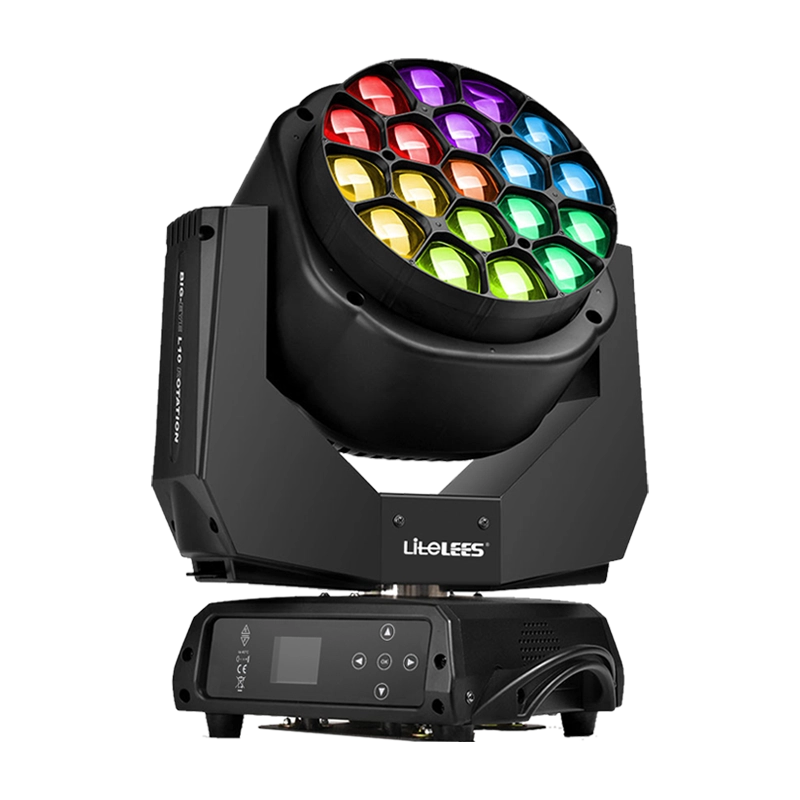
Magic Cube V6 IP

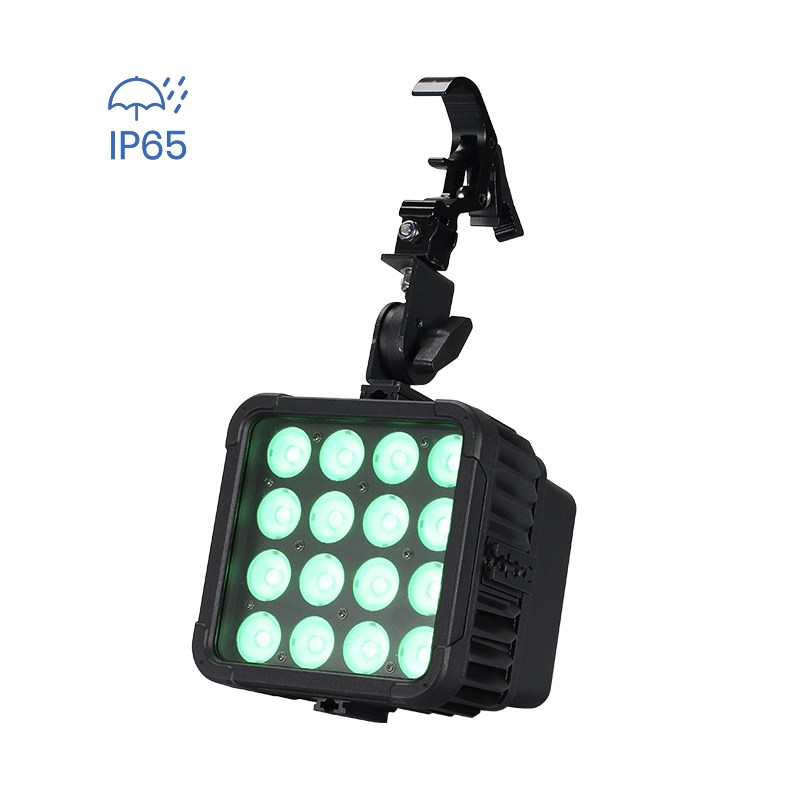
Stormy Shake Blinder IP
Want to get more up-to-date news?
If you have any comments or good suggestions, please leave us a message; later our professional staff will contact you as soon as possible.

We are professional stage lighting manufacturers offering OEM and ODM LED stage lights.
Contact
Email us
Call us
Address
No.6 Longnan Road, Huashan Town, Huadu District Guangzhou, Guangdong Province, China.
LiteLEES Professional
Less Lighting