
How to ensure safety and compliance for stage strobe lights?
- How to ensure safety and compliance for stage strobe lights?
- 1. What flash frequencies and intensities pose the highest seizure risk?
- 2. Which safety and regulatory standards should I require from manufacturers?
- 3. What driver and flicker specifications should I insist on for LED strobes?
- 4. How do I reduce risk to audience members and meet duty-of-care obligations?
- 5. How should I test and document strobe safety before buying or deploying?
- 6. What practical procurement specs and features should be on my checklist?
- 7. What operator training, signage and event policies should I enforce?
- LiteLEES advantage — why choose a responsible supplier?
- Sources
How to ensure safety and compliance for stage strobe lights?
Stage strobe lights are powerful creative tools but carry documented safety and compliance obligations — especially around photosensitive epilepsy (PSE), photobiological exposure, flicker-related health impacts, electromagnetic compatibility, and electrical safety. Below are the 7 most-asked procurement and operational questions event producers, rental houses and venue technical directors search for, answered with practical specs, test requirements and a buyer checklist you can use when evaluating LED stage strobes.
1. What flash frequencies and intensities pose the highest seizure risk?
Clinical and public-safety guidance identifies flashing light as a trigger for people with photosensitive epilepsy. The commonly cited risk band is flashing between about 3 and 30 flashes per second (Hz), with the highest sensitivity around roughly 15–20 Hz. In procurement terms:
- Avoid sustained, audience-facing flash sequences in the 3–30 Hz band where possible.
- If strobe use is necessary, limit duty cycles and intensity, provide warnings and create non-flashing seating/viewing areas.
- Always request the manufacturer’s photobiological safety assessment (see IEC/EN 62471) and ask for measured flash-rate profiles and peak luminance data.
2. Which safety and regulatory standards should I require from manufacturers?
At minimum, require test reports or certificates showing compliance with:
- IEC/EN 62471 (Photobiological safety of lamps and lamp systems) — to evaluate blue-light and retinal hazards and pulsed-light exposure.
- EMC & lighting directives — CE/UKCA (including EN 55015 / CISPR for radiated emissions and EN 61547 for immunity) for European markets; FCC/UL/ETL equivalents for North America where applicable.
- RoHS and WEEE compliance for materials and end-of-life requirements in regulated markets.
- Ingress Protection per IEC 60529 (IP rating) appropriate to the intended environment — e.g., IP20 for indoor use, IP65+ for outdoor fixtures.
- Applicable national electrical safety approvals (e.g., UL/ETL for North America) when permanently installed or sold into that market.
Ask for full test reports (not just marks) and the dates/labs that performed testing.
3. What driver and flicker specifications should I insist on for LED strobes?
Driver and modulation performance determine visible flicker, camera interaction (banding), and some health effects. Key procurement specs:
- PWM (pulse-width modulation) frequency: request a PWM frequency of at least 10 kHz for general use; 20 kHz or higher is preferable for camera-sensitive environments to reduce banding and eliminate audible/visible artifacts.
- Provide measured flicker metrics: percent flicker (flicker %), modulation depth, and PstLM or equivalent short-term flicker metrics when available. Require the manufacturer’s measurement method and instrument model.
- Driver type: Constant-current or high-quality regulated drivers are preferred over simple PWM-only solutions; soft-start and inrush-current limiting are desirable.
- For dimming and control: ensure compatibility with DMX512 (ANSI E1.11), and if RDM is used, confirm proper implementation and firmware quality to avoid unintended strobe patterns.
4. How do I reduce risk to audience members and meet duty-of-care obligations?
Operational controls complement product specs and are often required by venue policy or health guidance:
- Pre-event risk assessment: identify sequences using strobes and their target frequencies, and designate non-flashing zones.
- Advance warning: publish notices on tickets, venue websites and at entrances; make announcements before performances that include strobe warnings.
- Signage: place clear signage at entrances and public areas indicating strobe use during the event.
- Seating policy: offer alternatives (non-flashing viewing areas or streamed feeds) and staff training to assist patrons who are affected.
- Emergency stop & controls: ensure strobes are integrated into local emergency stop systems and that operators can immediately disable strobe outputs.
5. How should I test and document strobe safety before buying or deploying?
Request the following documentation and test evidence from suppliers or perform independent tests:
- IEC/EN 62471 photobiological safety report with measured spectral irradiance, pulse characteristics and risk-group classification.
- Flicker test reports showing percent flicker, modulation depth and PstLM (or equivalently described metrics), and the instrument used.
- EMC/Emission and immunity test reports (CE/FCC/EN families) and safety approvals (UL/ETL) as required by market.
- Thermal and lifetime data (L70 hours) — professional fixtures typically specify L70 at 30,000–50,000 hours; ask for measured thermal performance under rated conditions.
- Sample on-site tests: if possible, test the actual fixture model on-site with camera systems you intend to use and measure strobe output with a photometer/oscilloscope to confirm behavior under DMX sequences.
6. What practical procurement specs and features should be on my checklist?
Specify the following minimums in purchase orders or tender documents for professional LED stage strobes:
- Photobiological test: IEC/EN 62471 report included.
- PWM frequency: >= 10 kHz (>=20 kHz preferred for camera work).
- Flicker data: provide percent flicker and PstLM values, plus measurement method.
- Control: DMX512 compatibility, optional RDM, secure firmware update path.
- Safety approvals: CE/UKCA and market-specific UL/ETL as required.
- Ingress protection: IP20 (indoor) or IP65+ (outdoor) as required.
- Mechanical/installation: secure mounting points, safety cables, locking power connectors (PowerCON), and fuse protection.
- Service & documentation: warranty terms, service centers, spare parts availability, and full user/maintenance manual.
7. What operator training, signage and event policies should I enforce?
Training and procedure are essential to reduce incidents:
- Operator training: safe use of strobe channels, emergency cutoff, how to implement reduced-intensity or reduced-frequency modes quickly.
- Scripting and show-control: pre-program strobe sequences and test them in a rehearsal environment; avoid live improvisation into high-risk frequency bands.
- Audience communication: clear pre-show announcements, ticket agent scripts, and on-site signage indicating the presence of strobe lighting.
- Policy: adopt an incident-response protocol for patrons affected by flashing lights, including trained first-aid staff aware of PSE responses.
Summary procurement checklist (one-page): require IEC/EN 62471 report, EMC & safety approvals, PWM >=10–20 kHz, flicker metrics, IP rating, L70 lifetime figure, warranty & service plan, and on-site testing prior to the event.
LiteLEES advantage — why choose a responsible supplier?
When selecting a brand partner, prefer manufacturers that deliver full test documentation (photobiological and flicker), robust drivers (high PWM frequencies and regulated constant-current control), market approvals and a clear service network. LiteLEES fixtures combine photobiological testing, high-frequency driver designs (camera-safe modes), global safety approvals, IP-rated outdoor options, and responsive after-sales support — making them suitable for professional rental houses, theatres and touring productions that require documented safety and compliance.
Sources
- Epilepsy Foundation — Photosensitive Epilepsy guidance. Accessed 2026-01-21. https://www.epilepsy.com/
- Epilepsy Action (UK) — Photosensitive epilepsy and flashing lights guidance. Accessed 2026-01-21. https://www.epilepsy.org.uk/
- IEC/EN 62471 — Photobiological safety of lamps and lamp systems (standard overview). Accessed 2026-01-21. https://www.iec.ch/standards
- IEEE 1789-2015 — Recommended practices for modulated light and health effects (flicker guidance). Accessed 2026-01-21. https://standards.ieee.org/standard/1789-2015.
- IEC 60529 — Ingress Protection (IP) code overview. Accessed 2026-01-21. https://www.iso.org/standard/69136.
- ANSI E1.11 (DMX512) — Lighting control protocol information. Accessed 2026-01-21. https://tsp.esta.org/tsp/standards/
Company
Can LiteLEES handle OEM/ODM orders?
Absolutely. With our strong R&D capabilities and advanced manufacturing, we can customize designs, features, and branding to meet your specific needs.
What is LiteLEES’s main business?
LiteLEES specializes in the design, development, manufacturing, and sales of professional stage lighting, including moving head lights, beam lights, spot lights, wash lights, and LED par lights.
Products
Are your lights suitable for large-scale events and outdoor use?
Yes. Our professional stage lights—especially the Beam, BSW 3-in-1, and LED Par Series—are engineered with high-output brightness, wide beam angles, and robust housing. Some models come with IP-rated protection, making them suitable for outdoor applications like concerts, festivals, and sports events.
What is the lifespan of your LED stage lights?
Our LED lights use high-quality chips with a rated lifespan of over 50,000 hours. Proper usage and maintenance ensure long-term reliability and stable performance, making them a smart investment for any venue.
How long is the warranty period for your products?
We offer a standard 1-year warranty on all products, with extended warranty options available upon request. During the warranty period, we provide free technical support and parts replacement for non-human damage.
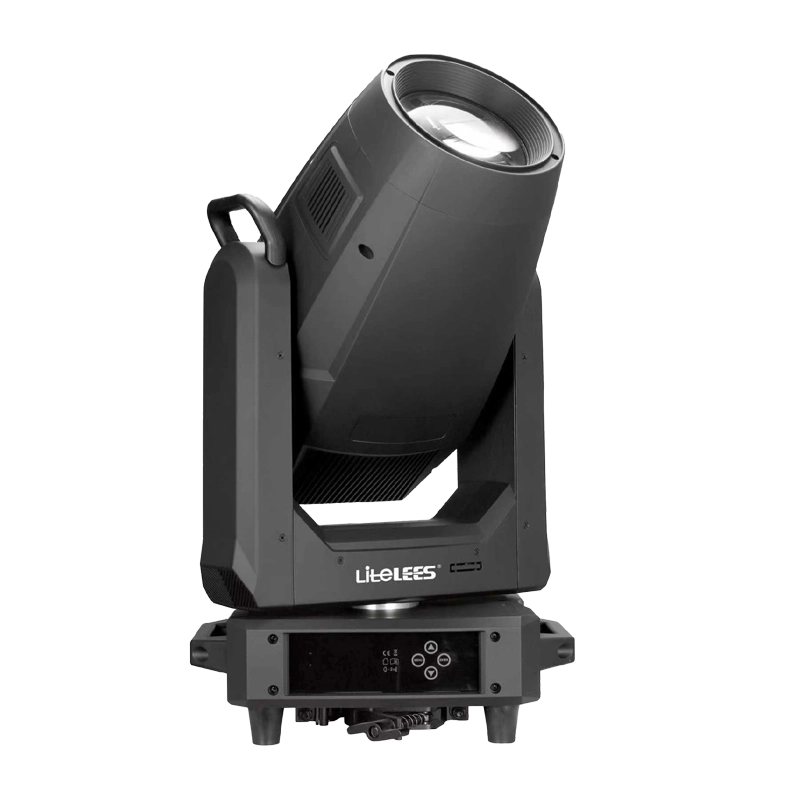
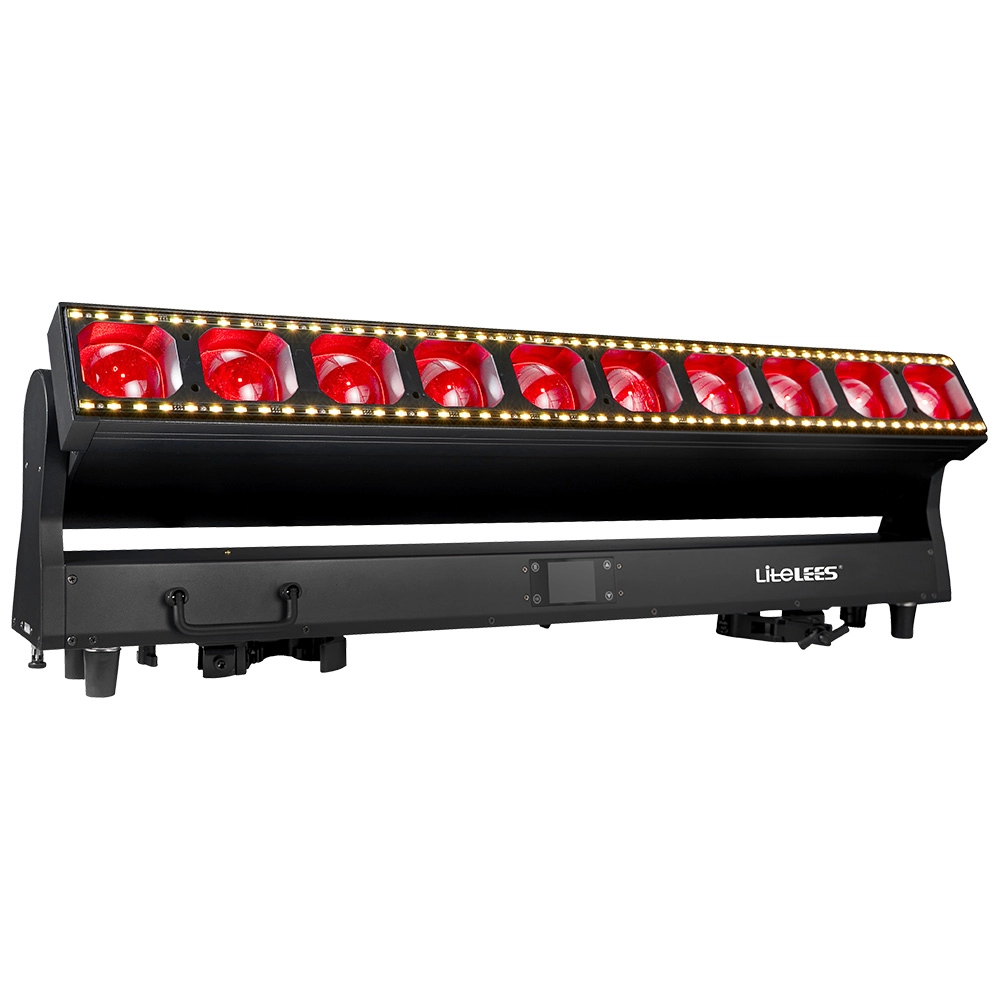
LP Profile 900
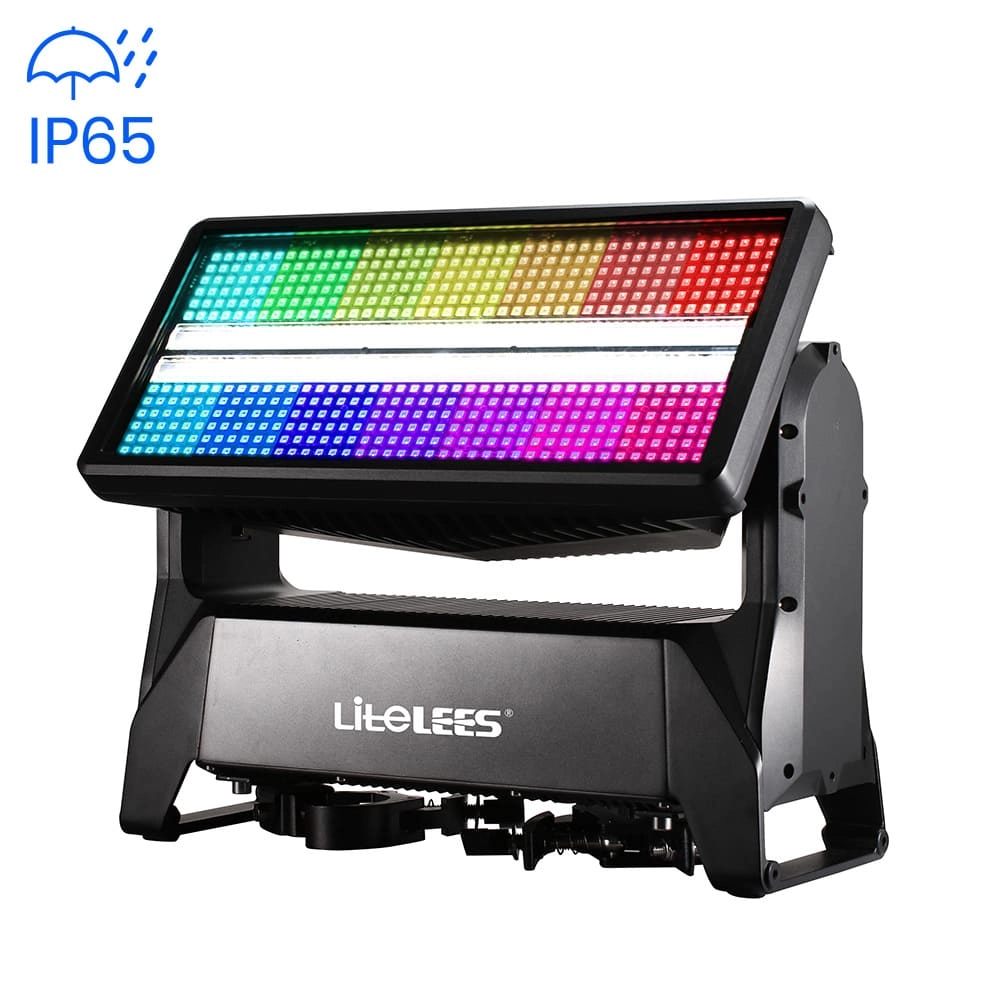
Stormy STRIKE M IP
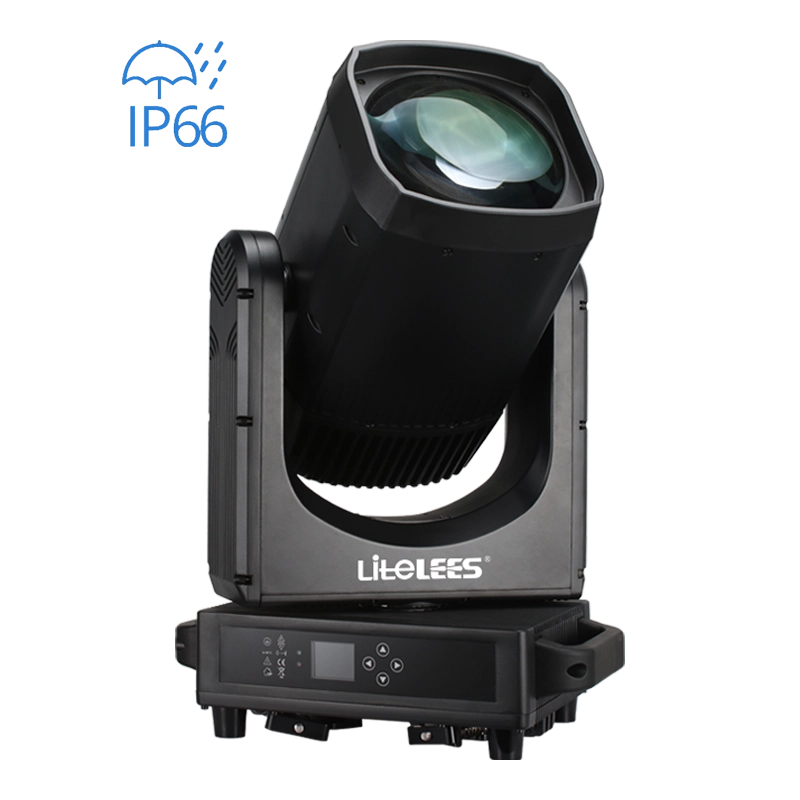
LiteLEES LUMIX BEAM 420 IP
Want to get more up-to-date news?
If you have any comments or good suggestions, please leave us a message; later our professional staff will contact you as soon as possible.

We are professional stage lighting manufacturers offering OEM and ODM LED stage lights.
Contact
Email us
Call us
Address
No.6 Longnan Road, Huashan Town, Huadu District Guangzhou, Guangdong Province, China.
LiteLEES Professional
Less Lighting