
How to evaluate brightness and flash rate of strobe lights?
- How to evaluate brightness and flash rate of strobe lights?
- 1. How do you measure the brightness of a strobe light?
- 2. What’s the difference between peak vs average brightness and why does it matter?
- 3. How do you evaluate flash rate, pulse width, and pulse shape?
- 4. What tools and methods should I use to measure strobe brightness and flash timing?
- 5. How do PWM frequency and driver design affect flicker and camera compatibility?
- 6. What safety and regulatory standards should buyers check?
- 7. What spec sheet items and test data should I request before buying?
- 8. How to test a candidate fixture on-site before purchase or on first delivery?
- Quick buyer’s checklist (one-page)
- Conclusion — Why these checks matter for LED stage strobes
- LiteLEES brand advantages
- References
How to evaluate brightness and flash rate of strobe lights?
Professional buyers of LED stage strobes need to look beyond a single “lumens” number. Strobe performance is defined by peak intensity, pulse shape (pulse width & duty cycle), flash frequency, beam geometry, and driver characteristics such as PWM frequency and DMX control. Below are the most common buyer questions and practical, testable answers to help you compare fixtures and avoid surprises on the rig.
1. How do you measure the brightness of a strobe light?
Brightness for strobes should be evaluated using three complementary photometric measures:
- Peak luminous intensity (candela, cd) — the instantaneous directional intensity at pulse peak. Most relevant for short pulses and perceived flash impact.
- Illuminance (lux, lx) at a specific distance — what the surface receives (useful for stage planning). Report lux at one or more distances/angles.
- Total luminous flux (lumens, lm) — integrated light output over the fixture’s beam; less useful alone for strobes because of short pulse duration.
To convert between candela and lux for a given distance (d in meters):
lux = candela / d^2 (when measured on-axis and perpendicular)
To relate lumens (Φ) and candela (I) you need the beam solid angle Ω (steradians):
I (cd) = Φ (lm) / Ω, where Ω = 2π(1 − cos(θ/2)) and θ is the full beam angle in radians/degrees.
2. What’s the difference between peak vs average brightness and why does it matter?
LED strobes often produce extremely high peak brightness for short pulses but lower average luminous flux over time. For human perception and photosensitive risk, peak intensity and pulse width are crucial. For continuous camera exposure and thermal considerations, average power and duty cycle matter.
- Peak brightness determines instantaneous visual impact and glare.
- Pulse width (ms) describes how long each flash lasts — a short, high peak pulse can look brighter even if average lumens are modest.
- Duty cycle (%) = pulse duration × flash frequency. Lower duty cycles reduce average power and heat but keep high peaks.
3. How do you evaluate flash rate, pulse width, and pulse shape?
Key pulse parameters to check on spec sheets or to measure:
- Flash rate — given in flashes per second (Hz) or BPM; confirm full range and whether it’s adjustable/synchronizable (DMX, MIDI, external trigger).
- Pulse width — duration of each flash (milliseconds); sometimes shown as full-width at half-maximum (FWHM) for the pulse shape.
- Pulse shape — square, peaked, or rounded; shape influences perceived intensity and risk profile.
Why these matter: two strobes with the same peak cd can look different if one has much shorter pulses (higher peak but shorter duration) or if duty cycles differ. For safety, note the flash rate band that most provokes photosensitive epilepsy (generally 3–30 Hz, with many sources highlighting 5–30 Hz as particularly provocative) and design shows to avoid extended patterns in that band for high-contrast flashes.
4. What tools and methods should I use to measure strobe brightness and flash timing?
Professional measurement methods:
- Photodiode + oscilloscope — best for capturing pulse waveform, peak amplitude, pulse width and frequency. Use a calibrated photodiode or fast photodetector and record at a sampling rate at least 5–10× the expected PWM/frequency components.
- High-speed lux meter or light sensor with fast sampling — some lab-grade lux meters have fast-response modes; verify sample rate (prefer >1 kHz for many strobes).
- Integrating sphere + spectroradiometer — use when you need accurate lumens or spectral power distribution (SPD). LM-79 testing procedures use integrating spheres for LED measurement.
- High-speed camera — useful for visualizing pulse timing and camera-band interactions (rolling shutter banding).
Practical measurement steps:
- Mount photodiode at defined distance on-axis from the fixture.
- Capture a time-domain trace on the oscilloscope while running the strobe at target settings.
- Extract pulse rate (Hz), pulse width (ms), peak voltage (relative to lux if calibrated) and duty cycle.
- If you need absolute illuminance, use a calibrated lux meter at a fixed distance and convert to peak candela if appropriate.
5. How do PWM frequency and driver design affect flicker and camera compatibility?
LED drivers typically regulate brightness with pulse-width modulation (PWM). Two buyer risks:
- Visible flicker and photosensitive risk — low-frequency PWM (under a few hundred Hz) can cause visible flicker and discomfort. For strobes this is typically intentional, but ensure full control and warnings for use cases where continuous modes are used.
- Camera banding / rolling-shutter artifacts — PWM at low to mid kHz ranges can interact with camera shutter speeds and frame rates, producing flicker bands. Professional broadcast applications prefer drivers with very high PWM frequencies (>10 kHz) or techniques that eliminate low-frequency modulation.
Ask manufacturers for the driver PWM frequency, whether the strobe offers “flicker-free” modes, and camera-test reports if you plan to use fixtures on broadcast productions.
6. What safety and regulatory standards should buyers check?
Key standards and safety notes for strobes:
- Photosensitivity / seizure risk — many health organizations and epilepsy charities note that flash rates between roughly 3–30 Hz are the most likely to trigger photosensitive seizures. Show designers should avoid sustained, high-contrast flashing in this band and provide warnings for audiences.
- IEC 62471 — photobiological safety of lamps and lamp systems: evaluates risks such as photochemical and retinal hazards. Check whether the fixture has been assessed for photobiological safety.
- IES LM-79 / LM-80 — industry methods for measuring electrical and photometric data (LM-79) and lumen maintenance testing for LED packages (LM-80 with TM-21 projection). Ask for LM-79 reports for reliable photometric data.
7. What spec sheet items and test data should I request before buying?
When comparing LED strobes, request the following definitive data:
- Peak candela (cd) and lux at one or more distances and on-axis.
- Pulse width (ms), pulse shape (waveform), and maximum/minimum flash rate (Hz) or BPM.
- Duty cycle or energy per pulse (if available).
- Driver PWM frequency and any flicker-free modes (with camera test reports if possible).
- Photometric report (LM-79), spectral data (SPD) and photobiological safety assessment (IEC 62471) if available.
- Control protocols supported: DMX512, RDM, Art-Net, MIDI, external trigger, master/slave.
- Thermal/duty-cycle limits and recommended continuous operating constraints.
8. How to test a candidate fixture on-site before purchase or on first delivery?
Simple on-site checklist:
- Run the fixture at maximum strobe settings and use a photodiode + scope or high-speed lux meter to capture pulse waveform, frequency, and peak lux.
- Test at the installation distances you’ll use and record lux and beam spread.
- Record camera tests with the actual cameras and frame rates you’ll use (test for banding and rolling-shutter artifacts at common shutter speeds).
- Confirm DMX/trigger behavior — ensure latency, sync and remote-control functions match your show requirements.
- Check heat under the expected duty cycle and verify thermal cutback behavior if present.
Quick buyer’s checklist (one-page)
- Peak cd and lux @ distance — provided and measured.
- Pulse width (ms) and duty cycle — provided.
- Flash rate range & sync options — DMX/external trigger available?
- PWM frequency and flicker-free/camera test data — provided?
- LM-79 / SPD / IEC 62471 documentation — available?
- Thermal limits, warranty and service network.
Conclusion — Why these checks matter for LED stage strobes
Strobe lights are complex because instantaneous peak intensity and timing behavior determine both creative impact and safety/camera behavior. By asking for peak intensity, pulse width, duty cycle, PWM frequency and standard lab reports (LM-79, IEC 62471), and by doing simple photodiode/oscilloscope or camera tests, you can compare fixtures objectively and avoid field surprises.
LiteLEES brand advantages
LiteLEES builds a catalog focused on performance and professional integration. Key practical advantages for buyers looking at LiteLEES include clear photometric data on request, flexible control options (DMX and external triggers), and fixtures engineered for live events with attention to driver design and thermal behavior. When evaluating any brand, confirm that LiteLEES (or any supplier) provides pulse-waveform data, PWM frequency, LM-79/photometric reports and IEC 62471 safety assessment — these documents make procurement decisions straightforward and reduce operational risk.
References
- IES LM-79 and LM-80 standards information — Illuminating Engineering Society. Accessed 2026-01-21. https://www.ies.org/standards/
- IEC 62471: Photobiological safety of lamps and lamp systems — International Electrotechnical Commission (IEC) webstore. Accessed 2026-01-21. https://webstore.iec.ch/publication/7042
- Photosensitive epilepsy — Epilepsy Action (UK). Guidance on provocative flash frequencies. Accessed 2026-01-21. https://www.epilepsy.org.uk/info/photosensitive-epilepsy
- Photosensitivity and seizures — Epilepsy Foundation (US). Accessed 2026-01-21. https://www.epilepsy.com/learn/triggers-seizures/photosensitivity
- Photodetectors & measurement basics — Thorlabs tutorials and application notes (photodiode/oscilloscope measurement methods). Accessed 2026-01-21. https://www.thorlabs.com/
- SI photometry and radiometry unit definitions — NIST optics/photometry resources. Accessed 2026-01-21. https://www.nist.gov/
Company
What is LiteLEES’s main business?
LiteLEES specializes in the design, development, manufacturing, and sales of professional stage lighting, including moving head lights, beam lights, spot lights, wash lights, and LED par lights.
Where is LiteLEES located?
Our headquarters and manufacturing facility are located in Guangzhou, China, with products exported to over 70 countries worldwide.
Products
Do your lights support DMX512 and other control protocols?
Yes. All LiteLEES stage lights are fully compatible with DMX512. Many models also support RDM, Art-Net, and wireless DMX (optional), ensuring seamless integration with modern lighting control systems.
What is the lifespan of your LED stage lights?
Our LED lights use high-quality chips with a rated lifespan of over 50,000 hours. Proper usage and maintenance ensure long-term reliability and stable performance, making them a smart investment for any venue.
Can I customize the functions or software of the lights?
Absolutely. As a manufacturer with independent R&D capabilities, we offer customization for both hardware and software (such as DMX channel layout, built-in programs, or UI language). Contact us with your project needs, and our team will provide tailored solutions.
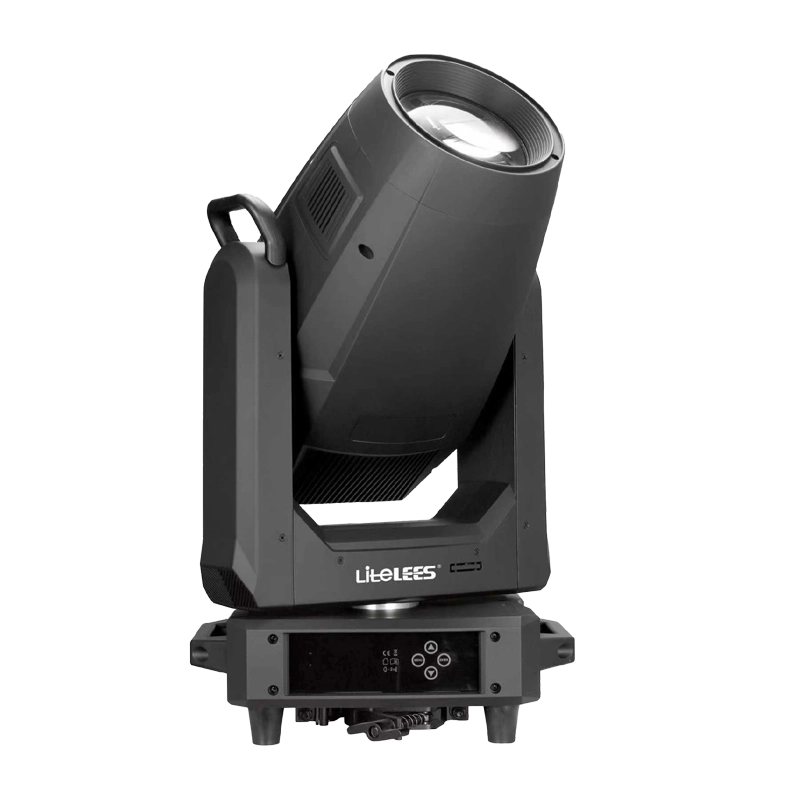
LP Profile 900
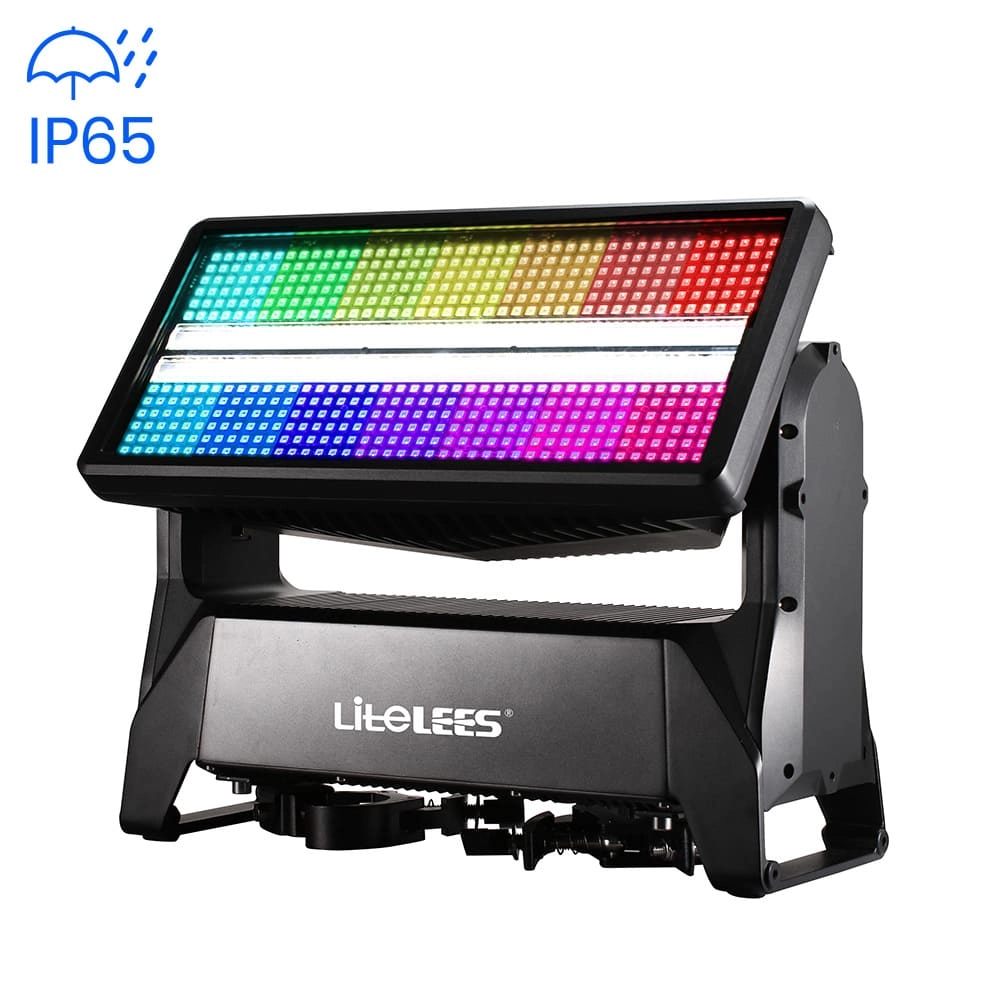
Stormy STRIKE M IP
LiteLEES LUMIX BEAM 420 IP
Want to get more up-to-date news?
If you have any comments or good suggestions, please leave us a message; later our professional staff will contact you as soon as possible.

We are professional stage lighting manufacturers offering OEM and ODM LED stage lights.
Contact
Email us
Call us
Address
No.6 Longnan Road, Huashan Town, Huadu District Guangzhou, Guangdong Province, China.
LiteLEES Professional
Less Lighting