
Stage hybrid light vs separate beam and wash: Which is better?
- 1) How much luminous output and lux at 10 m can I realistically expect from a stage hybrid light versus separate beam and wash fixtures for a 2,000-seat concert hall?
- 2) Can stage hybrid lights truly match the color rendering (TLCI/CRI) and white balance consistency of dedicated LED wash fixtures for broadcast?
- 3) How does thermal management and maintenance frequency compare between hybrid moving heads and using separate beam and wash fixtures on long tours?
- 4) Are stage hybrid lights more cost-effective than buying separate beam and wash fixtures once you factor in upfront cost, flight cases, rigging weight and power consumption for a 10-fixture rig?
- 5) What are the control and programming trade-offs when using hybrid fixtures versus separate beam and wash (DMX channel counts, cue complexity, and latency)?
- 6) Which failure modes are most common for stage hybrid lights in outdoor festivals, and what IP rating, ingress protection, and preventive measures should I require in my specs?
1) How much luminous output and lux at 10 m can I realistically expect from a stage hybrid light versus separate beam and wash fixtures for a 2,000-seat concert hall?
A common rookie mistake is treating manufacturer lumen numbers as directly comparable. Luminous flux (lumens) is a source property; lux is what performers and cameras actually receive and depends on beam angle, optics, throw distance and fixture type. For a 2,000-seat concert hall you typically want 300–750 lux on performer faces for general coverage (higher for TV broadcast key levels). Here’s a practical way to compare.
- Typical modern hybrid moving-head ranges (industry 2022–2024 specs): compact hybrids 8,000–18,000 lm, touring-class hybrids 18,000–35,000 lm. Zoom/beam ranges commonly 3.5°–45° (spot/beam) and 12°–60° (wash/flood) depending on the model.
- Separate fixtures: high-output beam/spot heads can exceed 30,000 lm with tight 1.5°–7° beams; dedicated LED washes often provide 10,000–40,000 lm but with wide optics (15°–60°).
Approximate lux calculation (practical approach): use the measured candela or use this simple estimator for a focused spot: lux ≈ lumens / (π × (d × tan(θ/2))^2), where d is throw distance and θ is beam angle. Because hybrid optics are compromise designs, expect 15–30% lower on-axis lux than a dedicated beam of similar advertised lumens.
Example: a touring hybrid rated 25,000 lm with a narrow spot at 5° on-axis at 10 m will produce approximate on-axis lux in the mid-to-high thousands — usually enough for key/front light for a large stage. A dedicated beam head with the same lumen rating and optimized optics will give higher on-axis lux and tighter aerial beams. A paired solution (one beam + one wash per FOH position) will usually give the highest peak lux and best uniform wash respectively.
Bottom line: For a 2,000-seat hall where both punch and even coverage matter, hybrids rated 18k–30k lm and with tight zoom (~3.5°–40°) can meet requirements if you accept some tradeoffs in peak tightness. If you need maximum on-axis intensity for aerial beams or enormous projection distances, separate beam fixtures will outperform hybrids in raw lux and beam penetration.
2) Can stage hybrid lights truly match the color rendering (TLCI/CRI) and white balance consistency of dedicated LED wash fixtures for broadcast?
Short answer: Yes — but only when you specify the right LED engine, color system and calibration workflow.
Key points:
- CRI/TLCI/TM-30: For broadcast and camera work, aim for TLCI ≥ 90 and CRI ≥ 90 (many pro fixtures now provide TLCI 90–98 in white modes). Manufacturers often list CRI; TLCI is the preferred metric for cameras.
- Color mixing: High-end hybrids use 6- or 7-color LED engines (RGBALC, RGBW+Amber + Lime + Cyan) or a separate white LED chip with variable CCT. These achieve smoother white balance and narrower color metamerism than simple RGB mixes.
- White balance stability: Dedicated LED washes with calibrated white engines and robust thermal compensation typically deliver better CCT stability across intensity ranges. Hybrids with advanced onboard calibration and linear dimming curves can match them if they use the same LED and calibration tech.
- Practical recommendation: For critical broadcast you should request manufacturer TLCI test sheets at multiple intensities and CCT points. If TLCI > 95 is required, prefer fixtures that publish those numbers and support engine re-calibration and presets.
In practice, stage hybrid light lines intended for touring/pro AV often include broadcast-level engines. If color fidelity is a top priority, specify TLCI-tested hybrid models or augment hybrids with small dedicated soft key/wash fixtures for skin tones and camera-critical fills.
3) How does thermal management and maintenance frequency compare between hybrid moving heads and using separate beam and wash fixtures on long tours?
Thermal management drives reliability and LED life. Hybrids are optically denser: they cram high-output LEDs, zoom optics, gobos and multiple effects into one yoke. That increases heat density compared with separate fixtures that each spread heat across simpler optics.
Observed industry practices and manufacturer guidance:
- LED life: most pro LED engines are rated 50,000–100,000 hours, but that assumes adequate thermal dissipation. Higher junction temperatures accelerate lumen depreciation.
- Cooling: hybrids commonly use a mix of heatsinks + active fan cooling. Touring-focused models may use larger heat sinks, variable-speed fans and heat pipes. Passive-cooled wash fixtures (with larger body volume) often run cooler per lumen.
- Maintenance intervals: touring rigs with hybrids generally need optical cleaning and fan checks every 4–8 weeks (depending on environment). Outdoor festival use increases dust/fine particulate maintenance frequency.
- Failure modes: fan failure, lens coating degradation, and pan/tilt gearbox wear are more common on hybrids due to mechanical complexity. Separate washes and beams spread mechanical risk across fixtures; one failure is less likely to remove multiple lighting functions.
Recommendation: If you tour frequently and demand minimal downtime, prioritize hybrids with robust thermal design, replaceable fan modules, accessible service panels, and a 24–36 month service contract. Factor in spare modules (fans, control boards, power supplies) and plan scheduled optical cleaning every 1–2 months in dusty conditions.
4) Are stage hybrid lights more cost-effective than buying separate beam and wash fixtures once you factor in upfront cost, flight cases, rigging weight and power consumption for a 10-fixture rig?
You must model real costs across acquisition, transport, rigging labor, power, and lifecycle service. Typical market ranges (industry 2020–2024): single touring-class hybrid head: $3,000–$12,000 depending on lumen class and features. Equivalent high-output dedicated beam might be $4,000–$10,000 and a wash $1,500–$6,000. These ranges vary widely by brand.
Cost drivers to include:
- Purchase price: Hybrids often cost less than the sum of a top beam + wash pair, but some high-end hybrids approach the cost of High Quality dedicated fixtures.
- Weight & rigging: One hybrid reduces hang points and truss load compared with two fixtures (beam + wash). This lowers rigging labor/time and can reduce truss and motor requirements—real savings on touring rigs.
- Cases & road space: fewer fixtures reduce flight cases and road volume—important for international touring where freight costs dominate.
- Power: hybrids consolidate power draw but may draw more per unit than a single dedicated wash. Overall power consumption often remains lower than the sum of separate beam + wash (depends on models).
- Service & spares: hybrids concentrate functions into one moving head — a single failure can remove both beam and wash functionality, which may make redundancy planning (extra spares) more expensive.
Example 10-fixture rig scenario (illustrative): buying 10 hybrids at $7k each = $70k vs buying 10 beams ($5k) + 10 washes ($3k) = $80k. But the separate solution needs twice the hang points, more cabling and cases, and likely higher freight. Conversely, if you require top-tier beam punch and the wash is secondary, separate fixtures might be better value.
Bottom line: For mid-to-high-end touring where rigging efficiency and inventory reduction matter, hybrids often win cost-effectiveness. For maximum optical specialization (big arena beams and ultra-smooth washes), separate beam + wash can be more effective despite higher logistic costs.
5) What are the control and programming trade-offs when using hybrid fixtures versus separate beam and wash (DMX channel counts, cue complexity, and latency)?
Hybrids consolidate functions — pan/tilt, color mixing, gobo, prism, frost, zoom, focus — into a single DMX address. This simplifies physical addressing but increases DMX channel count and patch complexity.
Practical considerations:
- DMX channels: hybrids with full feature sets commonly expose 30–80 DMX channels (or more if pixel-mapped LED rings are included). Separate fixtures typically have fewer channels each but combined may equal or exceed the hybrid channels.
- Networked control: modern fixtures support RDM, Art-Net and sACN; hybrids with onboard Ethernet and fixture personalities are easier to integrate into complex networks.
- Cue complexity: one hybrid reduces the number of fixtures you need to program for coordinated beam-to-wash transitions, simplifying cue stacks. However, because a single fixture handles multiple roles, some cues become more complex (e.g., switching between tight spot and wide wash within a single movement may require ramping multiple parameters simultaneously).
- Latency and responsiveness: pan/tilt and effect motors in hybrids are comparable to separate fixtures. Latency is generally negligible for modern controllers; main concern is DMX bandwidth if many high-channel-count fixtures are patched on a single universe.
Recommendation: If your workflow values fewer patch addresses and faster set-up, hybrids help. If you need separate dedicated control for beam choreography and wash mapping (e.g., pixel-mapped wash cells and separate aerial beams), separate fixtures can give cleaner programming separation. For large shows, use multiple DMX universes or Art-Net/sACN to avoid bandwidth bottlenecks.
6) Which failure modes are most common for stage hybrid lights in outdoor festivals, and what IP rating, ingress protection, and preventive measures should I require in my specs?
Outdoor festival environments expose fixtures to dust, moisture, temperature swings and physical impact. Hybrids are mechanically and optically complex, so their vulnerability profile differs from simpler washes.
Common failure modes outdoors:
- Water/dust ingress into cooling fans and electronics, causing short circuits or corrosion.
- Condensation and lens fogging inside the optical path, reducing output and creating halos.
- Fan burnout from heavy duty cycles or clogged filters.
- Pan/tilt gearbox wear from vibration and impact.
Spec recommendations:
- IP rating: require at least IP54 for occasional outdoor use under shelter; IP65 is recommended for unprotected outdoor installations and festival touring where rain exposure is possible. Many manufacturers now offer IP65-rated moving heads with sealed optics and pressure-equalizing membranes.
- Sealing & coatings: ask for conformal-coated PCBs, sealed connectors and hydrophobic coatings on lenses. Specify IP-rated cabling (water-tight power-in/out) and robust gaskets.
- Serviceability: require replaceable external filters, accessible desiccant/silica gel compartments, and field-replaceable fans/modules.
- Preventive measures: deploy rain covers during stage transitions, use climate-controlled flight cases, schedule pre- and post-show inspections, and secure fixtures to prevent impact.
If the use-case is recurring outdoor festivals, insist on IP65-rated hybrids or plan to supplement hybrids with dedicated IP65 beam and wash fixtures. Factor the higher procurement cost of IP-rated hybrids against the downtime and replacement costs of non-IP fixtures damaged by weather.
For specification, procurement or touring packages, we provide measured photometric reports, TLCI/CRI test sheets and lifecycle service contracts on request. Contact us to request model-specific lux charts and real-world rigging case studies.
Concluding summary: stage hybrid lights deliver unmatched flexibility — combining LED spot/beam optics, color mixing, gobos and wash in one moving head. The advantages include reduced hang points, lower road cases and simplified programming. Hybrids are ideal for touring and multi-purpose venues where inventory, transport and rigging efficiency matter. However, for maximum raw beam punch, absolute broadcast-critical white fidelity, or when absolute redundancy is required, separate beam and wash fixtures remain superior. Choose hybrids when you need consolidated functionality and operational efficiency; choose dedicated beam+wash when optical specialization and maximum output are the priority.
For model-specific photometrics, IP-rated hybrid options, or a detailed quote for a 10+ fixture rig, contact www.litelees.com or email litelees@litelees.com.
Company
Where is LiteLEES located?
Our headquarters and manufacturing facility are located in Guangzhou, China, with products exported to over 70 countries worldwide.
Do you have your own factory?
Yes. We own a sheet metal factory and a complete in-house production line—from PCB to final assembly—ensuring strict quality control and fast delivery.
What certifications do your products have?
All LiteLEES products are certified by CE, RoHS, FCC, and BIS. Our factory is ISO9001 quality management system certified.
Can LiteLEES handle OEM/ODM orders?
Absolutely. With our strong R&D capabilities and advanced manufacturing, we can customize designs, features, and branding to meet your specific needs.
Products
What is the lifespan of your LED stage lights?
Our LED lights use high-quality chips with a rated lifespan of over 50,000 hours. Proper usage and maintenance ensure long-term reliability and stable performance, making them a smart investment for any venue.
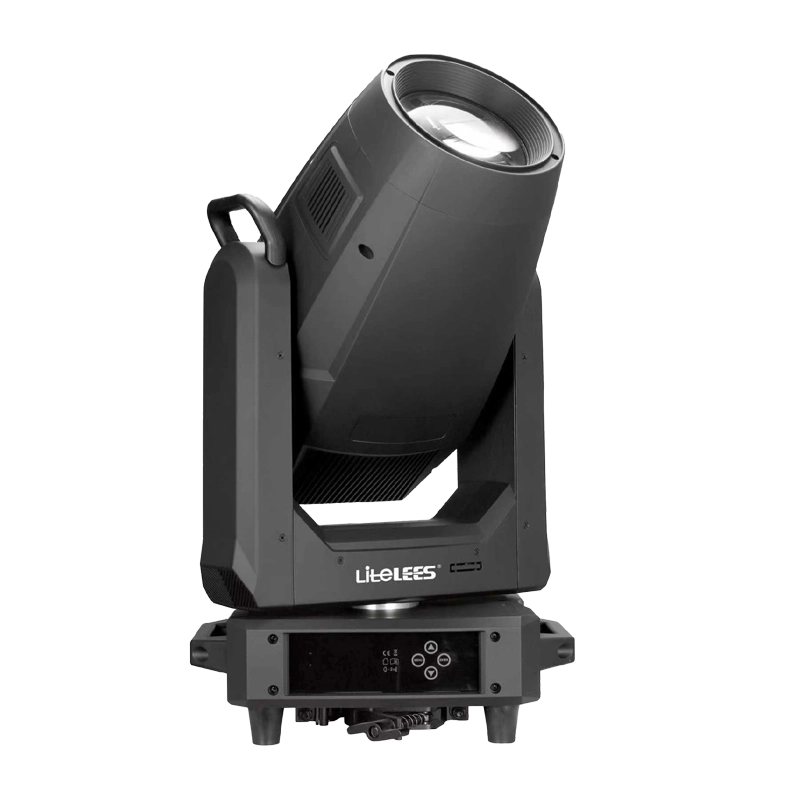
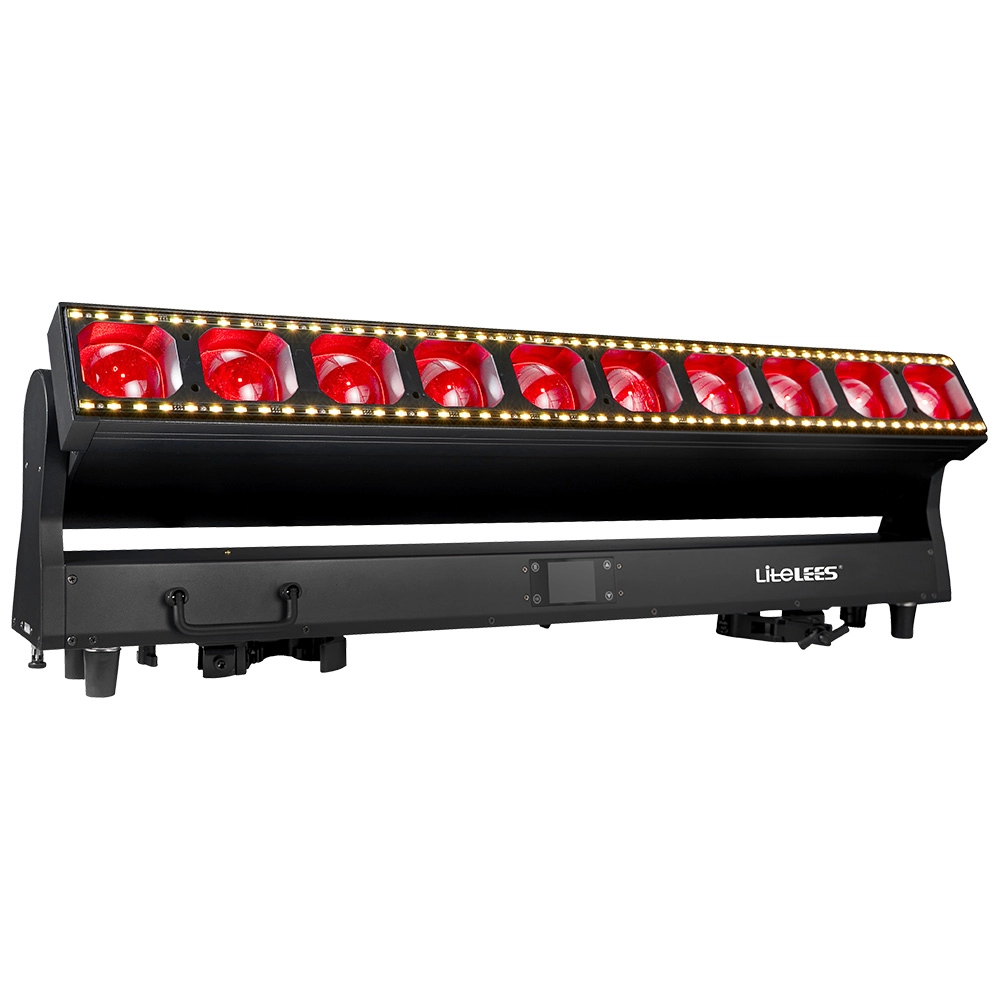
LP Profile 900
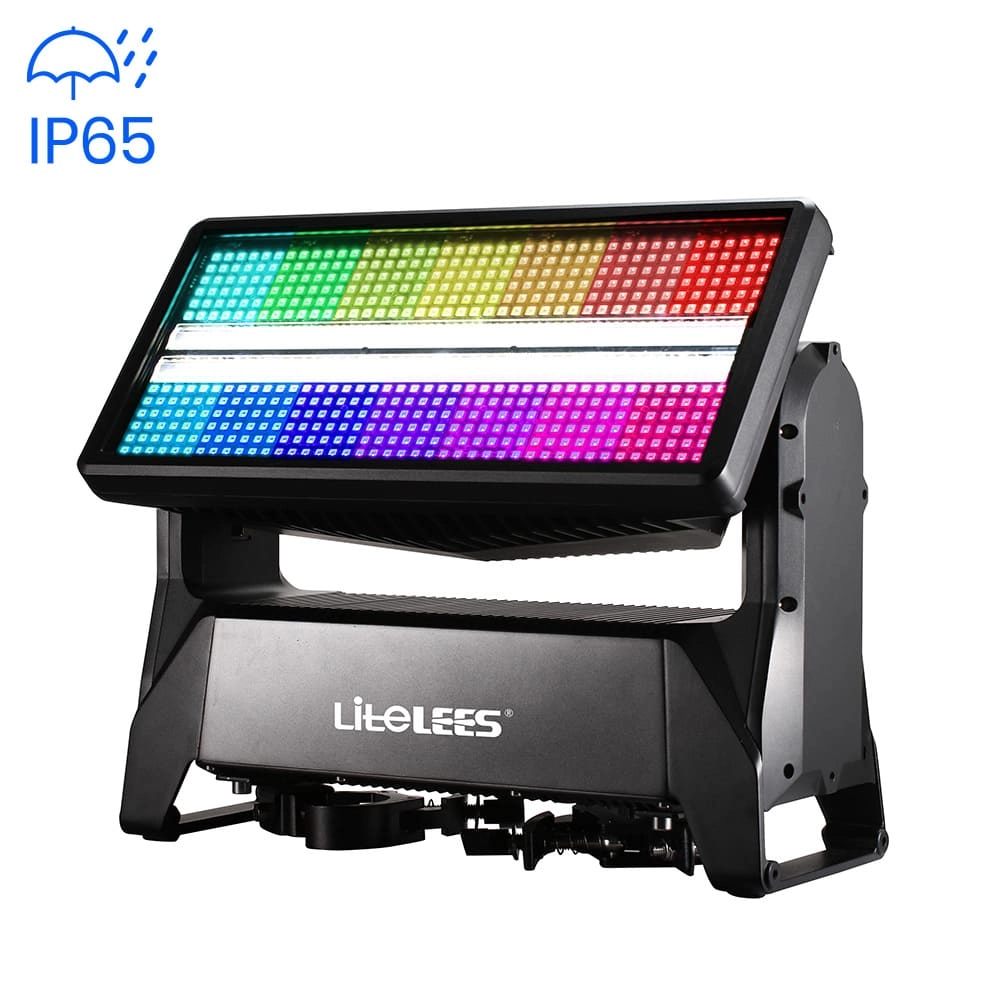
Stormy STRIKE M IP
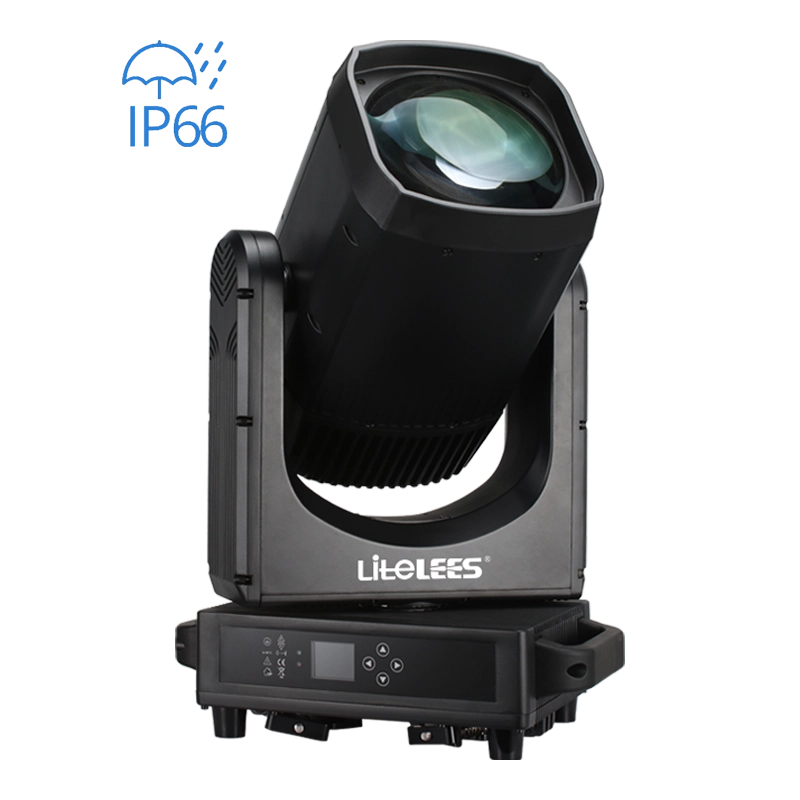
LiteLEES LUMIX BEAM 420 IP
Want to get more up-to-date news?
If you have any comments or good suggestions, please leave us a message; later our professional staff will contact you as soon as possible.

We are professional stage lighting manufacturers offering OEM and ODM LED stage lights.
Contact
Email us
Call us
Address
No.6 Longnan Road, Huashan Town, Huadu District Guangzhou, Guangdong Province, China.
LiteLEES Professional
Less Lighting