
Which stage hybrid light offers the best brightness and color?
- 1. Which stage hybrid light gives the highest usable beam lux at 10 m for small-to-medium venues without sacrificing color fidelity?
- 2. How do I compare color quality between hybrid fixtures — do I need high CRI or TM-30 data for stage use?
- 3. Can one hybrid moving head replace separate spot, wash and beam fixtures in a rental rig without compromising output?
- 4. What measurement data should I request from suppliers to verify claimed brightness and color performance?
- 5. How do LED engine age, thermal design and driver dimming affect long-term brightness and color accuracy of hybrid fixtures?
- 6. Which hybrid fixture features are essential for broadcast/film use where camera color fidelity and flicker-free operation at variable shutter speeds are critical?
Which Stage Hybrid Light Offers the Best Brightness and Color? Expert Buyer's Guide
Stage hybrid lights (moving head hybrid fixtures combining spot, wash and beam functions) promise flexibility for theatres, rental companies and broadcast. Below are six common long-tail buyer questions beginners ask but rarely find solid, up-to-date answers for — each followed by practical, data-driven guidance you can use when evaluating hybrid moving head fixtures.
1. Which stage hybrid light gives the highest usable beam lux at 10 m for small-to-medium venues without sacrificing color fidelity?
Why this matters: Manufacturers often quote lumen totals (which can be misleading for narrow beams). The critical metric for perceived brightness on stage is lux at distance (e.g., lux @ 5 / 10 / 20 m) using the fixture’s narrow-beam settings. A hybrid that looks bright at close range may spread energy into a wide wash and lose punch at 10 m.
How to evaluate:
- Ask for photometric files (IES or LDT) and measured lux charts at standard distances. Reliable suppliers will provide lux readings at 5, 10 and 20 meters using the narrowest beam angle.
- Prioritize center-beam lux and beam profile (Gaussian vs flat-top). A high center-beam lux and tight beam angle (1–3°) indicate strong long-throw punch.
- Check optical efficiency: LED engine wattage alone is not definitive — optical losses (lenses, gobos, prisms) change usable lux. A fixture with a well-designed reflector/zoom and high-quality collimation will deliver more lux on-target than a higher-wattage unit with poor optics.
- Compare zoom range: a hybrid with a true 1–40° or 2–50° zoom gives both tight beam output and wide wash. Confirm measured beam angle (FWHM) not just nominal values.
Practical tip: For small-to-medium theaters expect to require a center-beam lux of several thousand lux at 10 m for hard-edged spots used as key lighting. Ask vendors for measured photometrics at your expected throw distance rather than trusting lumen claims.
2. How do I compare color quality between hybrid fixtures — do I need high CRI or TM-30 data for stage use?
Why this matters: Color rendering affects skin tones, costume colors, and broadcast camera fidelity. Many entertainment fixtures emphasize saturated RGB colors over faithful white-light replication; CRI alone can be misleading for LED fixtures because it’s optimized for broadband sources.
What to request and how to interpret it:
- Request TM-30 reports and the Spectral Power Distribution (SPD) chart if accurate color reproduction matters (theatre, opera, broadcast). TM-30 gives a more nuanced view than CRI about hue fidelity (Rf) and gamut (Rg).
- If camera/broadcast use is primary, look for an Rf (TM-30) in the high 80s–90s or detailed SPD showing balanced spectrum across red, green and blue wavelengths. Avoid relying on CRI alone; some high-CRI numbers still lack saturated primaries needed for deep theatrical colors.
- Check the color-mixing system: true CMY plus CTO (or CMY+RGBW with additional whites) gives smoother pastel and neutral whites than pure RGB mixing at some color points.
- Verify adjustable color temperature (2700–8000 K) and presets for skin tones. For consistent white across multiple fixtures, ensure color calibration and presets produce matching SPD curves.
Practical tip: If you need accurate flesh tones and camera-friendly output, insist on TM-30 data and recorded camera tests (with your intended camera and shutter speeds) before purchase.
3. Can one hybrid moving head replace separate spot, wash and beam fixtures in a rental rig without compromising output?
Why this matters: Rental companies and small houses consider hybrids to reduce inventory and transport costs. The key question is whether a single hybrid can perform all three roles well enough for a given gig.
Trade-offs and checklist:
- Zoom and optical design: a true hybrid needs a wide zoom (e.g., 1–40° or greater) and optics capable of producing a tight, hard-edged beam and a smooth, even wash. Check measured beam homogeneity at both extremes.
- Gobo and framing features: spot replacement requires crisp gobos, a framing shutter or iris and good focus. Verify gobo projection fidelity at working distances.
- Wash quality: a good wash requires uniform field and soft edges. Some hybrids sacrifice wash smoothness for beam punch; ask for wash-field photometrics and visual samples.
- Output compromise: hybrids often have less specialized output than dedicated fixtures. For arena shows or large festivals, dedicated beam/spot fixtures will outperform hybrids in raw intensity and coverage. For club, theatre and mid-size events a high-quality hybrid can often replace a mixed rig.
Practical recommendation: Define your common use cases and test-run a candidate hybrid on a real show setup. If more than 25–40% of your shows require maximum arena output or continuous large-area wash, hybrids may not fully replace specialist fixtures.
4. What measurement data should I request from suppliers to verify claimed brightness and color performance?
Why this matters: Marketing specs vary; verified photometrics and lab reports reduce risk.
Must-request test data:
- IES / LDT photometric files and lux charts at standard distances for narrow and wide zoom settings.
- ANSI/IES LM-79 photometric reports if available — these provide standardized lumen and intensity reporting for LEDs.
- Spectral Power Distribution (SPD) graphs and TM-30 report (or CRI as minimum). SPD helps identify spectral gaps that affect skin tone reproduction and camera performance.
- Measured center-beam lux and beam-angle (FWHM) numbers.
- Flicker / PWM test results and allowable camera shutter speed ranges (for broadcast/film). Look for documentation of flicker-free performance at variable frame rates and shutter angles.
- Thermal and photometric aging: L70 / L80 projections (hours until output drops to 70%/80%) and LED binning info. Warranty terms covering output and color shift.
Practical tip: If vendors cannot provide these documents, ask for on-site demonstrations with calibrated lux meters and your camera to verify real-world performance.
5. How do LED engine age, thermal design and driver dimming affect long-term brightness and color accuracy of hybrid fixtures?
Why this matters: Fixtures look good new; long-term performance determines lifecycle cost and reliability.
Key technical factors:
- Lumen depreciation: LEDs gradually lose output (L-digits). Look for L70/L80 projections (e.g., 50,000–100,000 hours typical for modern high-power LEDs). These numbers should come from standardized testing or manufacturer data.
- Thermal management: heat raises junction temperature, accelerating lumen depreciation and color shift. Robust heat-sinking, active cooling and temperature monitoring maintain brightness and color stability over years.
- Driver and dimming: quality constant-current drivers and appropriate dimming curves (engineered linear or logarithmic dimming profiles) keep color stable through full dim range. Avoid fixtures that rely on low-frequency PWM that can cause color shifts or visible flicker in cameras.
- LED binning and color consistency: good manufacturers bin LEDs to consistent color coordinates so multiple fixtures match. Ask about bin tolerances (e.g., MacAdam steps) and factory calibration procedures.
Practical suggestion: Request the fixture’s expected maintenance schedule, LED engine replacement policy, and warranty terms covering lumen depreciation and color shift.
6. Which hybrid fixture features are essential for broadcast/film use where camera color fidelity and flicker-free operation at variable shutter speeds are critical?
Why this matters: Broadcast/film imposes stricter requirements than live audience lighting — cameras reveal spectral gaps, flicker, and inconsistent whites.
Essential features to require:
- Flicker-free operation validated at multiple frame rates and shutter angles. Look for high PWM carrier frequencies (>10–20 kHz) or linear drive modes and documented test results at common camera frame rates (24/25/30/50/60 fps and variable shutter angles).
- High TM-30 (Rf) and an SPD with continuous energy across visible wavelengths to produce natural skin tones and consistent camera response.
- Precise color temperature control and calibration options, plus selectable white presets and micro-adjustments for tint/hue to match studio reference lights.
- Low color shift across dimming range — manufacturers should provide dimming curve data and camera test clips at various output levels and shutter speeds.
- Support for remote control protocols (Art-Net, sACN) and accurate pixel/timing control if using hybrids in mapped arrays for camera moves.
Practical workflow: Insist on on-site camera tests with your production camera, including high-speed shots and multiple shutter angles, before signing off on rentals or purchases.
Conclusion — Advantages of stage hybrid lights
Stage hybrid lights deliver powerful flexibility: they reduce fixture count, cut transport and rigging time, and provide rapid role changes (spot → beam → wash) during shows. When you select hybrids using measured photometrics (lux at distance), TM-30/SPD data for color fidelity, and verified flicker-free performance, hybrids can serve theatres, houses of worship, mid-sized tours and broadcast productions effectively. The critical buying approach is evidence-based: request IES/LM-79 data, TM-30/SPD graphs, lux charts, flicker tests, and L70/L80 life projections; run camera and lux tests in your real environment whenever possible.
Contact us for a quote or to request photometric and TM-30 test files — www.litelees.com or litelees@litelees.com.
Products
What is the lifespan of your LED stage lights?
Our LED lights use high-quality chips with a rated lifespan of over 50,000 hours. Proper usage and maintenance ensure long-term reliability and stable performance, making them a smart investment for any venue.
How long is the warranty period for your products?
We offer a standard 1-year warranty on all products, with extended warranty options available upon request. During the warranty period, we provide free technical support and parts replacement for non-human damage.
Are your lights suitable for large-scale events and outdoor use?
Yes. Our professional stage lights—especially the Beam, BSW 3-in-1, and LED Par Series—are engineered with high-output brightness, wide beam angles, and robust housing. Some models come with IP-rated protection, making them suitable for outdoor applications like concerts, festivals, and sports events.
Do your lights support DMX512 and other control protocols?
Yes. All LiteLEES stage lights are fully compatible with DMX512. Many models also support RDM, Art-Net, and wireless DMX (optional), ensuring seamless integration with modern lighting control systems.
Company
Where is LiteLEES located?
Our headquarters and manufacturing facility are located in Guangzhou, China, with products exported to over 70 countries worldwide.
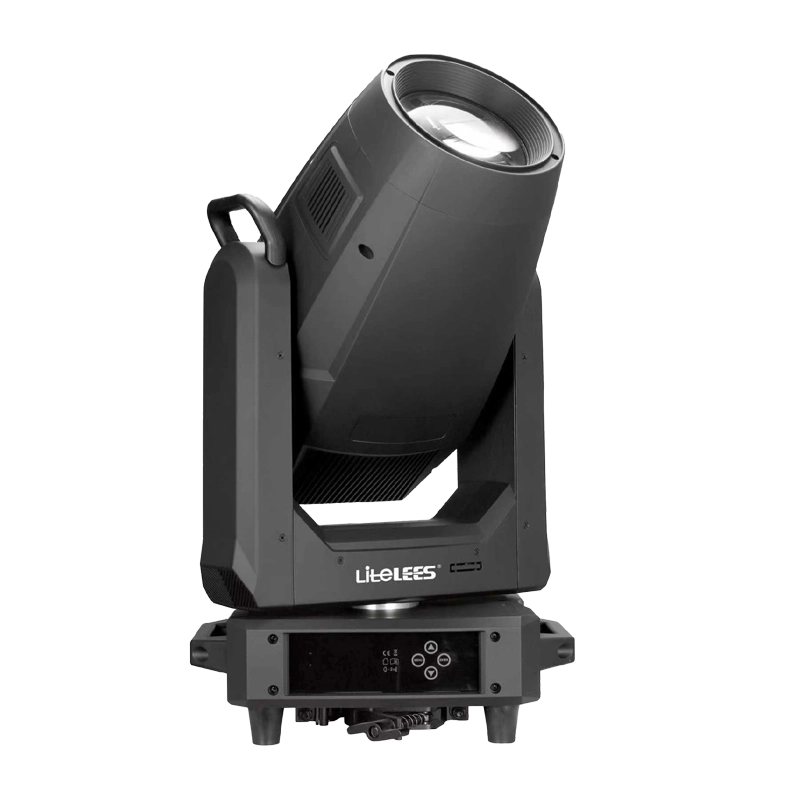
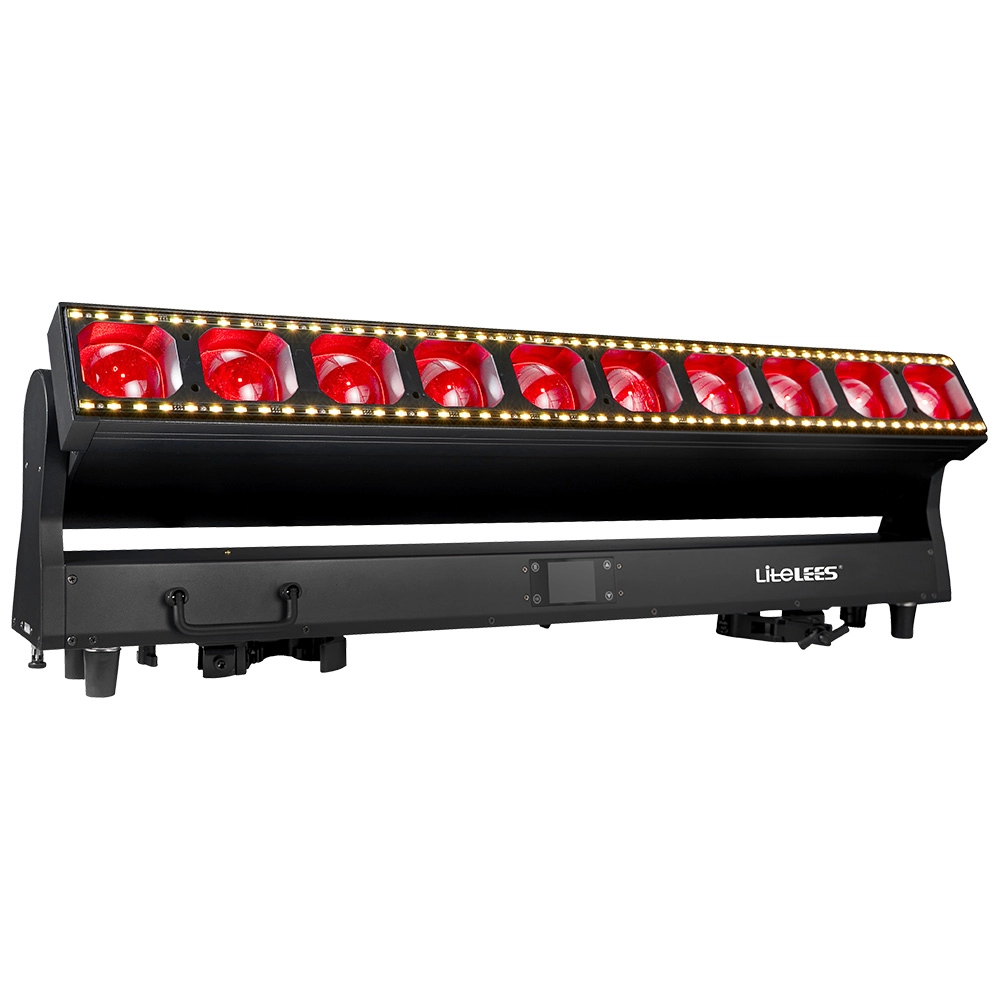
LP Profile 900
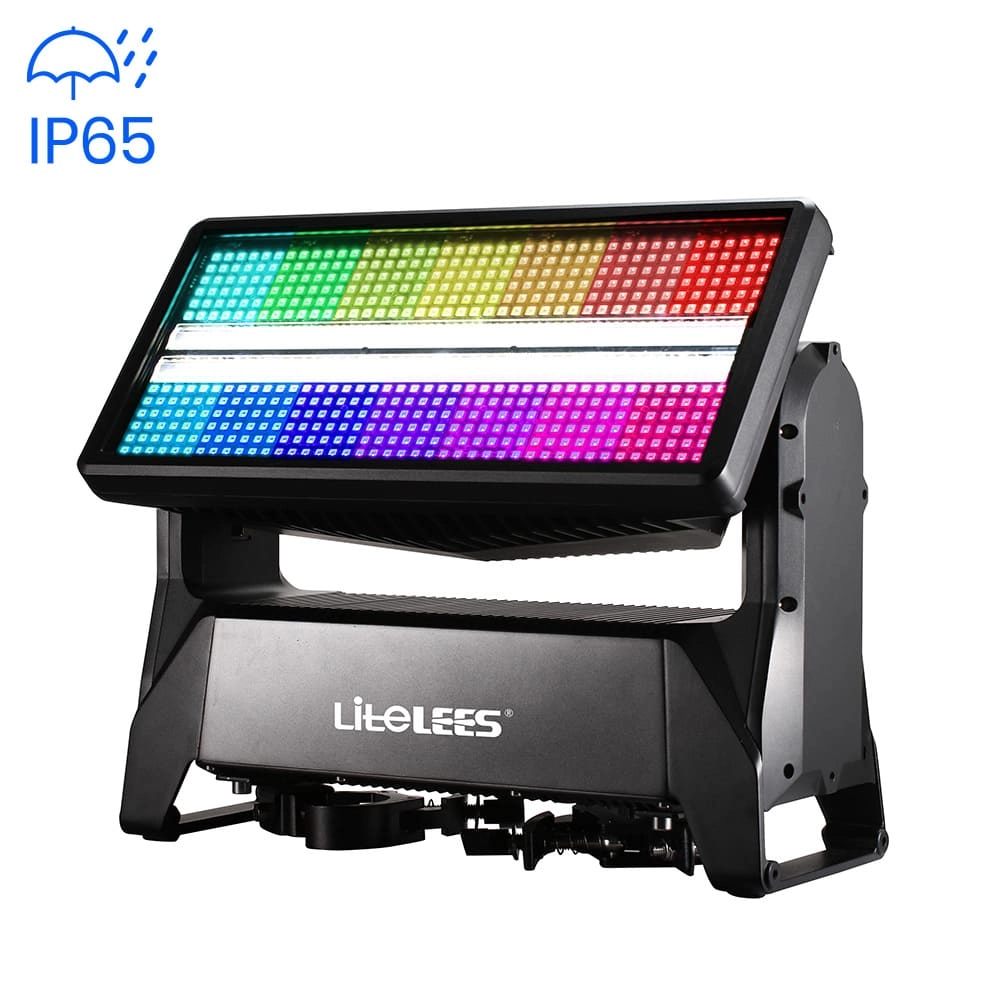
Stormy STRIKE M IP
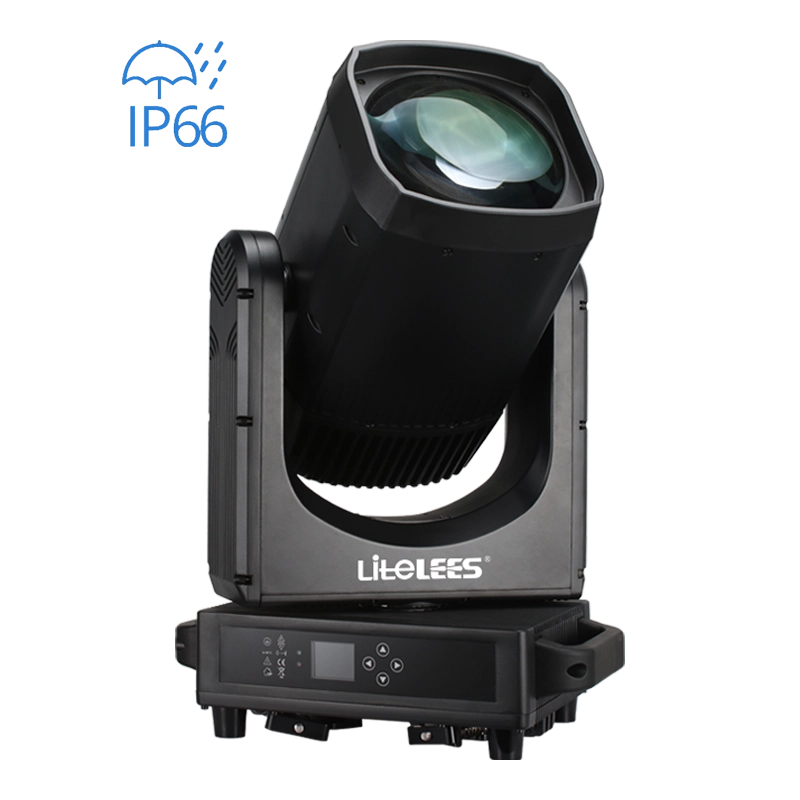
LiteLEES LUMIX BEAM 420 IP
Want to get more up-to-date news?
If you have any comments or good suggestions, please leave us a message; later our professional staff will contact you as soon as possible.

We are professional stage lighting manufacturers offering OEM and ODM LED stage lights.
Contact
Email us
Call us
Address
No.6 Longnan Road, Huashan Town, Huadu District Guangzhou, Guangdong Province, China.
LiteLEES Professional
Less Lighting