
Stage flood lights: Which models offer the best color accuracy?
- Stage flood lights: Which models offer the best color accuracy?
- 1. What is color accuracy and which metrics should I use?
- 2. How does LED architecture affect color fidelity (RGB vs RGBW vs RGBACL etc.)?
- 3. Which fixture types typically deliver the best color accuracy for stage wash and flood applications?
- 4. Which brands and model families are known for strong color accuracy?
- 5. How should I test and verify color accuracy before buying or leasing fixtures?
- 6. How do control, firmware and calibration affect perceived color?
- 7. Procurement checklist: what specs and contract points should I require?
- 8. Common mistakes buyers make — and how to avoid them
- 9. Quick model-selection guide by use case
- 10. Why LiteLEES can be a strong choice for accurate stage flood lighting
- Sources
Stage flood lights: Which models offer the best color accuracy?
Color accuracy is a top priority for theatrical, corporate, broadcast and concert lighting because it determines how costumes, scenery and skin tones appear to an audience and camera. This article answers the most common procurement questions lighting professionals ask when selecting LED stage flood lights and offers practical, testable criteria you can use when evaluating fixtures.
1. What is color accuracy and which metrics should I use?
Color accuracy is how faithfully a light source reproduces colors compared to a reference illuminant (usually daylight or tungsten). Key metrics to evaluate are:
- CRI (Ra): general color rendering index; values above 90 indicate good general rendering for many stage uses, but CRI has known limitations with saturated colors.
- R9 (red rendering): critical for skin tones and saturated reds; look for R9 values well above 20–30 for acceptable stage color, and >50 for excellent reproduction.
- TLCI (Television Lighting Consistency Index): optimized for camera work; higher is better (closer to 100).
- TM-30 (Rf/Rg): provides a more complete picture—Rf is fidelity (higher = better), Rg indicates gamut change; TM-30 is more informative than CRI for LEDs.
- Spectral Power Distribution (SPD): the full spectrum plot that shows which wavelengths the fixture emits; a smooth, broad SPD with energy in the red band often indicates better color rendering.
When manufacturers publish TM-30 and SPD data alongside CRI and R9, they’re giving you the best information to compare fixtures.
2. How does LED architecture affect color fidelity (RGB vs RGBW vs RGBACL etc.)?
LED fixtures use different primary mixes. Common types and impacts:
- RGB: mixes red, green and blue LEDs. Good for saturated colors and beam effects, but less accurate whites and skin tones unless backed by a white emitter.
- RGBW/RGBA: adds a white or amber LED to improve whites and pastel colors. This usually raises CRI and stabilizes CCT tuning.
- RGBACL (red, green, blue, amber, cyan, lime): multi-primary engines increase gamut and can produce more accurate saturated colors and better spectral coverage—often used in higher-end fixtures to approach incandescent-like rendering.
- White-engine / tunable white: some fixtures use a dedicated white LED system (tunable CCT) that delivers very stable whites and is easier to characterize for camera work.
In short: the more primaries and the better the white engine, the easier it is to achieve high color fidelity across hues and CCTs.
3. Which fixture types typically deliver the best color accuracy for stage wash and flood applications?
Fixture form factors affect beam shaping and mixing quality:
- Panel/Softlight (e.g., LED soft panels): often have good color mixing and smooth SPD when built with high-quality multi-chip LEDs or dedicated white engines—excellent for front-fill and facial modeling.
- Fresnel / Ellipsoidal wash fixtures: when fitted with high-quality LED engines, these provide good mixed whites and controlled edge, important for theatrical work.
- LED PARs and Acres: can be accurate if they use multi-primary LEDs and quality optics, but cheaper PAR-style fixtures may show color separation (5–7° cones) and lower R9.
For color-critical stage work, prioritize fixtures with documented SPD/TM-30 reports and a proven white engine rather than relying on form factor alone.
4. Which brands and model families are known for strong color accuracy?
No single model suits every use case, but several established families and manufacturers are consistently referenced for high color fidelity:
- ARRI SkyPanel (film/TV soft LED panels) — widely used in broadcast/film for very high CRI/TLCI and full spectral control.
- ETC ColorSource / Source Four LED lines (theatre-focused) — ETC has long emphasis on theatrical white engines and consistent color output across fixtures.
- Chauvet Professional Ovation series (LED ellipsoidals and soft lights) — models aimed at theatre and broadcast with strong white-engine performance.
- Robe and Martin moving-wash/profile lines — higher-end moving fixtures from these brands use multi-primary engines and robust color calibration systems.
- Claypaky, GLP and other pro lighting brands — offer fixtures with wide gamut color mixing; look to their spec sheets for TM-30/R9 info.
When evaluating models, look for published CRI/TLCI/TM-30 values and SPD charts. Many reputable manufacturers publish these on product pages and datasheets.
5. How should I test and verify color accuracy before buying or leasing fixtures?
Practical pre-purchase tests and checks:
- Request SPD and TM-30/TLCI datasheets from the manufacturer or distributor. Compare multiple fixtures under the same CCT.
- Check R9 (red) value specifically—it's often the weakest on LEDs and crucial for skin tones.
- Ask for a demo unit on your stage with real costumes and set pieces (and, if used for video, with camera tests). Visual inspection under production conditions is critical.
- Bring a handheld spectrometer/color meter (for procurement teams) to measure CCT, CRI, TM-30 Rf and Rg and SPD in-situ.
- Test dimming behavior and flicker under camera (verify PWM frequency or sensor-based flicker ratings). Film/broadcast requires much higher PWM or flicker-correct modes.
6. How do control, firmware and calibration affect perceived color?
Factory color specs assume properly calibrated firmware and control. Important operational points:
- White-balance and CCT tuning: fixtures with accurate, repeatable CCT presets and fine-tune color controls produce consistent results across shows.
- Dimming curves: theatrical curves (e.g., S-curve) preserve color across dimming ranges better than basic linear or electronic curves; look for selectable dimming modes.
- Firmware updates and factory calibration: vendors that provide ongoing firmware support and field calibration tools help maintain long-term color consistency.
- Networking protocols (DMX/RDM/Art-Net/sACN/CRI-based metadata): integrated control ecosystems make color presets and pixel mapping more reliable and repeatable.
7. Procurement checklist: what specs and contract points should I require?
For procurement, include measurable and contractual items:
- Minimum published metrics: CRI (Ra) and R9, TM-30 (Rf/Rg), TLCI (if used for camera), published SPD for representative CCTs.
- Flicker specs and camera-friendly modes (include test procedure in acceptance criteria).
- Driver/dimming behavior options and selectable dimming curves.
- Warranty, expected LED life (L70/L80 ratings), on-site service or depot repair terms, and firmware update policy.
- Field calibration capability (e.g., factory calibration certificates) and availability of spare parts or modules.
- Power, weight, rigging points, and IP rating if used outdoors.
8. Common mistakes buyers make — and how to avoid them
Common procurement errors include:
- Relying only on CRI numbers — CRI alone can hide deficiencies in saturated color rendering; always check R9 and TM-30.
- Ignoring SPD — two fixtures with similar CRI can look very different on stage if their SPD differs (especially in red and deep-green wavelengths).
- Not testing under real conditions — lab numbers don’t always translate to real costumes, scenery, and camera chains.
- Overlooking dimming/flicker behavior — especially critical when lights will be used in broadcast or slow-motion capture.
9. Quick model-selection guide by use case
- Broadcast/film: favor soft panels and fixtures with published high TLCI/TM-30 and SPD data (e.g., film-grade LED panels).
- Theatre/house wash: fixtures that combine strong white engines with robust R9 and theatrical dimming curves (e.g., theatre-focused ellipsoidals and bars).
- Concerts and color effects: multi-primary moving washes with wide gamut mixing—but validate skin-tone handling at key CCTs.
10. Why LiteLEES can be a strong choice for accurate stage flood lighting
LiteLEES products are designed with procurement and live-production needs in mind. Key advantages to consider when evaluating LiteLEES fixtures:
- Focused R&D on white engines and multi-primary mixing to improve CRI, R9 and TM-30 performance for stage and broadcast uses.
- Flicker-free driver options and camera-friendly modes for film and live broadcast.
- Practical serviceability and support options for rental houses and venues, with clear firmware/update practices.
- Competitive price-to-performance ratio—LiteLEES often positions itself to deliver pro-grade color accuracy without the very highest-deck price of cinema-specific brands.
- Configurable control and dimming curves to match theatrical expectations and ensure consistent cross-fixture matching.
For any purchase, ask LiteLEES for SPD plots, TM-30/R9 values and to run a demo under your production conditions to confirm color reproduction for your specific needs.
Sources
- ARRI SkyPanel product documentation and specifications — ARRI official website. (Accessed 2024-06)
- ETC ColorSource and Source Four LED technical datasheets — ETC official website. (Accessed 2024-06)
- Chauvet Professional Ovation series datasheets and white papers — Chauvet Professional. (Accessed 2024-06)
- Robe, Martin and Claypaky product pages and spectral documentation — respective manufacturer sites. (Accessed 2024-06)
- Industry best-practice articles on TM-30 and LED spectral evaluation — professional lighting trade publications (e.g., Lighting & Sound America, Live Design). (Accessed 2024-06)
Products
Do your lights support DMX512 and other control protocols?
Yes. All LiteLEES stage lights are fully compatible with DMX512. Many models also support RDM, Art-Net, and wireless DMX (optional), ensuring seamless integration with modern lighting control systems.
Are your lights suitable for large-scale events and outdoor use?
Yes. Our professional stage lights—especially the Beam, BSW 3-in-1, and LED Par Series—are engineered with high-output brightness, wide beam angles, and robust housing. Some models come with IP-rated protection, making them suitable for outdoor applications like concerts, festivals, and sports events.
How long is the warranty period for your products?
We offer a standard 1-year warranty on all products, with extended warranty options available upon request. During the warranty period, we provide free technical support and parts replacement for non-human damage.
Company
Do you have your own factory?
Yes. We own a sheet metal factory and a complete in-house production line—from PCB to final assembly—ensuring strict quality control and fast delivery.
What certifications do your products have?
All LiteLEES products are certified by CE, RoHS, FCC, and BIS. Our factory is ISO9001 quality management system certified.
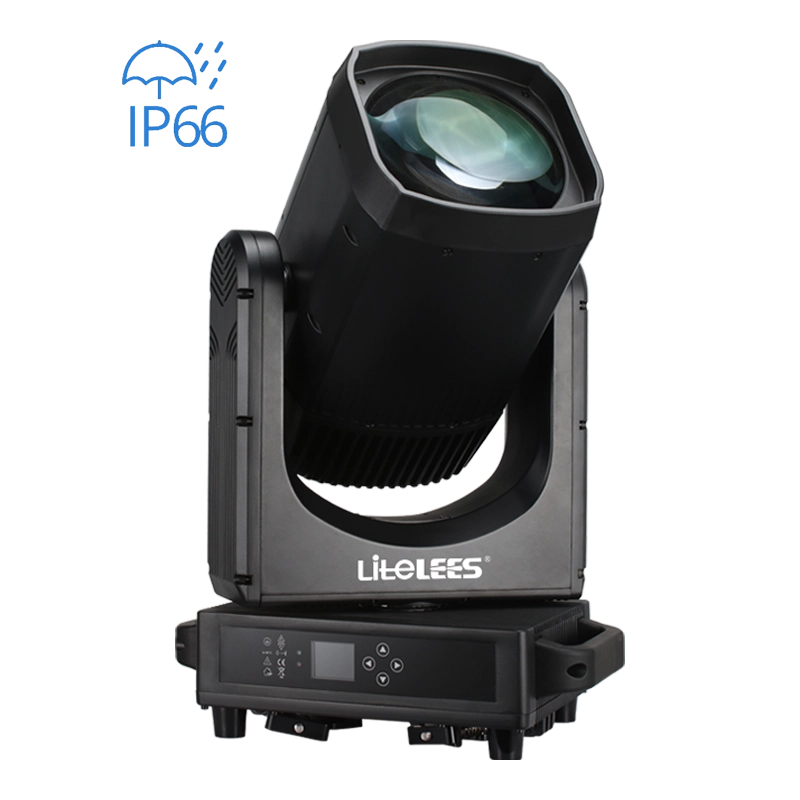
LiteLEES LUMIX BEAM 420 IP

Stormy Shake Blinder IP
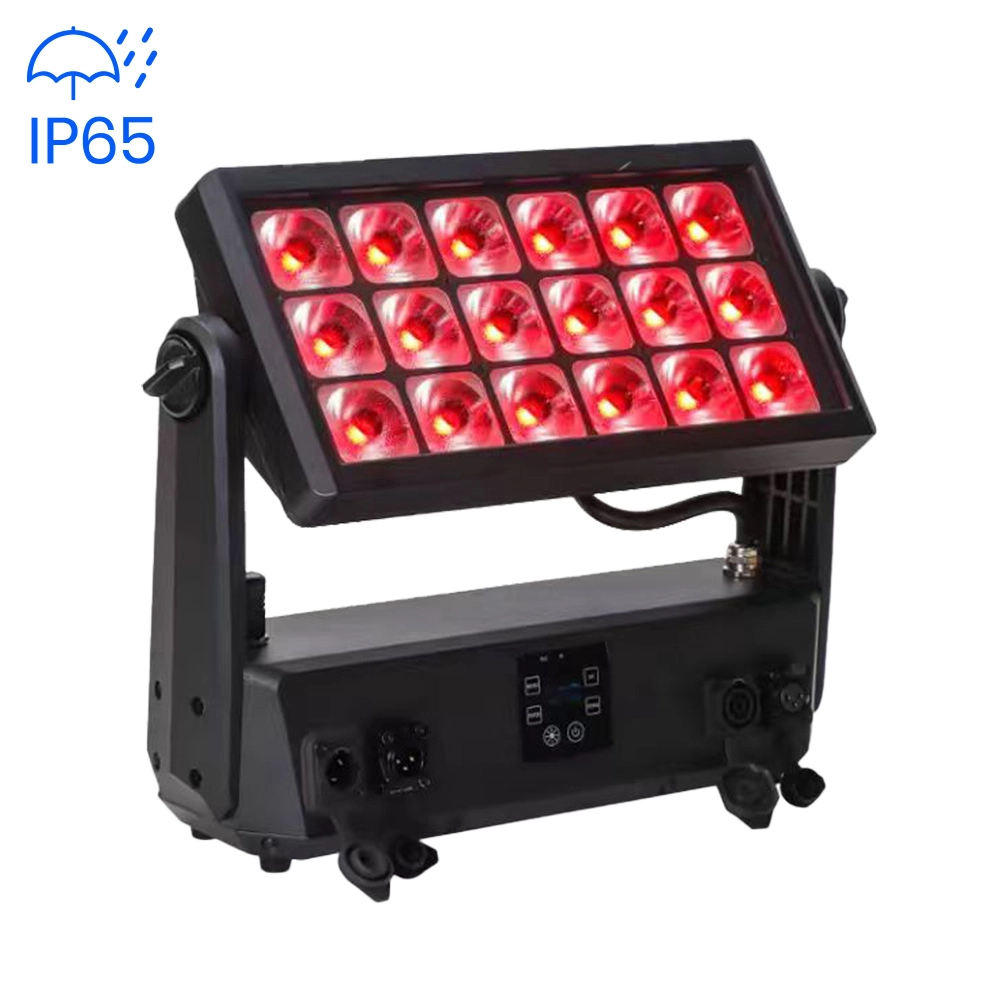
Stormy Battery Flood Light 1820 IP
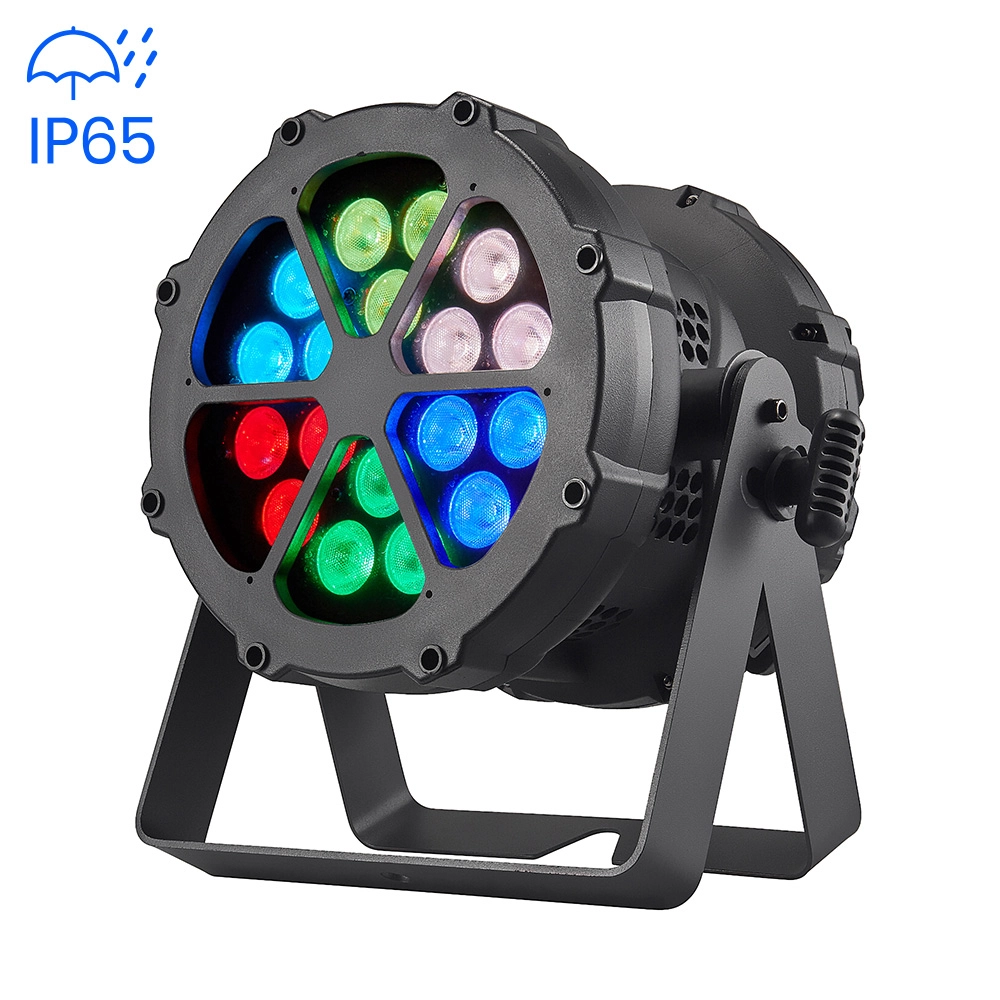
Stormy par 1812 IP
Want to get more up-to-date news?
If you have any comments or good suggestions, please leave us a message; later our professional staff will contact you as soon as possible.

We are professional stage lighting manufacturers offering OEM and ODM LED stage lights.
Contact
Email us
Call us
Address
No.6 Longnan Road, Huashan Town, Huadu District Guangzhou, Guangdong Province, China.
LiteLEES Professional
Less Lighting