
How to select durable outdoor LED stage lighting for events?
- 1) What exact IP rating details and design features ensure an outdoor LED wash or moving head won't fail after storms or dusty festivals?
- 2) How do I calculate lumens, beam angle and lux for outdoor stages so performers are evenly lit at 10–50 meters?
- 3) How can I be sure LED stage fixtures are truly flicker‑free for mixed live and broadcast events?
- 4) Which power connectors, cable specs and surge protection should I insist on to avoid failures at festivals and touring events?
- 5) How should I evaluate thermal design and lumen depreciation for LED moving heads used outdoors under sun and high ambient temps?
- 6) What warranty, certification and field‑service features should rental companies or production buyers insist on for long‑term outdoor LED stage lighting?
- Concluding summary — advantages of selecting durable outdoor LED stage lighting
How to Select Durable Outdoor LED Stage Lighting for Events
Choosing the right outdoor LED stage lighting requires more than picking a bright fixture. This article answers six detailed, frequently overlooked buyer questions about ingress protection, photometrics, flicker, connectors and surge protection, thermal design, and warranties so you can specify reliable LED wash lights, moving heads and pixel fixtures that survive festivals, touring and rental use. Semantic concepts such as IP65/IP66 sealing, DMX/RDM, Art‑Net/sACN, luminous efficacy, L70 lifetime, flicker‑free PWM, powerCON/Neutrik connectors and LM‑79/LM‑80 reports are embedded where relevant.
1) What exact IP rating details and design features ensure an outdoor LED wash or moving head won't fail after storms or dusty festivals?
Beginners often read IP65 and assume a fixture is fully weatherproof. In practice you must evaluate sealing, drainage, venting and serviceability in addition to the nominal IP code.
Key points to require:
- Minimum rating: IP65 for rain-shedding fixtures; IP66 or IP67 preferred for fixtures exposed to jetting water, washdown or immersion risks.
- Sealing details: silicone or EPDM gaskets at every enclosure seam, IP‑rated cable glands for power and control entries, and potting or gel on PCBs where feasible. Ask manufacturers to identify gasket materials and expected compression set life.
- Breathers/vents: truly sealed units need a pressure-equalizing GORE vent to avoid condensation; watch for vents placed under vulnerable housings that can trap water. For outdoor moving heads, a filtered vent plus labyrinth drainage channels prevents direct ingress while allowing thermal equalization.
- Corrosion resistance: marine-grade powder coat or anodized aluminum housings and stainless-steel fasteners (A2/A4) for coastal venues. Check salt-spray test exposure if used near the sea.
- Impact and serviceability: an IK rating (e.g., IK08) demonstrates impact resistance for touring/rental. Replaceable front optics and sealed but accessible service covers allow field repairs without compromising the overall seal.
- Beam radius r = distance × tan(beam_angle/2)
- Beam area A = π × r²
- Average illuminance (lux) ≈ lumens / A
- Fixture lumen output: 20,000 lm
- Beam angle: 10° → beam_angle/2 = 5°
- r = 30 × tan(5°) ≈ 30 × 0.0875 = 2.63 m
- A = π × 2.63² ≈ 21.7 m²
- lux ≈ 20,000 / 21.7 ≈ 920 lx
- Fixture lumen output: 30,000 lm
- Beam angle: 40° → beam_angle/2 = 20°
- r = 20 × tan(20°) ≈ 20 × 0.364 = 7.28 m
- A = π × 7.28² ≈ 166.5 m²
- lux ≈ 30,000 / 166.5 ≈ 180 lx
- Fixture lumens are useful but manufacturer beam intensity (cd) is better when provided; lux at distance = candela / distance².
- Account for fixture efficiency (optical losses): 80–95% depending on lens system.
- For even coverage across a wide stage, plan fixture overlap: target 10–30% overlap depending on visual uniformity needs.
- Always request IES files from the vendor for photometric modeling (software like AGi32 or Capture will give accurate lux maps).
- PWM/dimming frequency: drivers should use PWM ≥ 20–25 kHz or a high‑frequency current control method. Frequencies below ~5–10 kHz can produce visible strobing or camera rolling‑shutter artifacts at common frame rates.
- Driver and dimming method: look for hybrid dimming (linear + digital) or constant‑current drivers with high refresh rate. Avoid fixtures that only use mains-frequency or low-frequency switching.
- Flicker metrics: ask for oscilloscope traces and flicker percentage or modulation index measured per IEC TR 61547‑1 test methods and for camera compatibility tests at 24, 25, 30, 50 and 60 fps. Manufacturers should provide flicker index and percent flicker.
- DMX refresh and pixel control: for pixel‑mapped LED strips and battens, ensure the fixture supports artifact‑free refresh at the required frame rates. For larger shows, prefer Art‑Net/sACN over Ethernet for pixel data with sufficient throughput.
- Onsite test: always demo with the same broadcast camera and frame rates you’ll use; rolling shutter issues are highly camera‑dependent.
- Power: prefer Neutrik powerCON TRUE1 or IEC locking connectors with weatherproofing. For outdoor power distro, use IP‑rated distribution boxes and CEE/16A or 32A (per local standard) protected outlets where applicable.
- Control: use 5‑pin XLRs for DMX512 with IP‑rated boots (Neutrik XLR with rubber covers) or IP65 RJ45 glands if using Ethernet for Art‑Net/sACN. Avoid 3‑pin XLR for permanent setups—it's unofficial for DMX and less robust.
- Cable gauge: follow local electrical codes. As a guideline, use 12 AWG (∼2.5 mm²) for 20 A/120 V circuits in the US and appropriately sized conductors for long runs to limit voltage drop—consult an electrician for exact runs and derating.
- Termination: DMX trunks must be 120 Ω terminated at run ends and use differential (balanced) cable to minimize noise over long runs.
- Require built‑in transient protection in fixtures (MOVs/TVS) plus external SPDs on distro panels. For festival environments with long overhead runs, SPD Type 3 protection at the point of use reduces flash failures.
- Grounding and GFCI: enforce proper grounding and GFCI/RCD protection per local codes to protect personnel and electronics.
- Lightning policy: no SPD will make a system lightning‑proof; include lightning protection at site entry points and avoid fixtures during lightning events.
- Rated ambient temperature (Ta): a fixture specified for Ta ≤ 45°C is safer for hot climates. If Ta is 25–30°C, expect better lumen maintenance; for Ta >35°C require derating curves from the manufacturer.
- Cooling method: passive heatsinks are preferable for silent operation and fewer moving parts; active cooling (fans) must be specified as high‑MTBF and weather‑protected if used outdoors. Fans in sealed units should be isolated behind filtered vents with drainage.
- LED junction temperature (Tj) data: request the supplier's junction temperature management strategy and maximum allowable Tj. Excessive Tj accelerates lumen depreciation.
- Lumen maintenance (LM‑80 + TM‑21): require LM‑80 test data for the LED packages and TM‑21 extrapolation so you can verify L70 hours (commonly 50,000–100,000 hours at specified drive currents). Ask for test conditions to match your expected operating current and temperature.
- Optical window heat buildup: highly sealed fixtures can trap heat behind front lenses. Verify front‑glass or polycarbonate optical assemblies are ventilated or use low‑absorption coatings to prevent internal heat accumulation.
- Certifications: CE, RoHS, and where applicable ETL/UL for North America. For outdoor luminaires, UL 1598 (luminaires) or local equivalent is relevant. Ask for test reports, not just marks.
- Photometric & lifetime reports: LM‑79 photometric reports and LM‑80 LED package data with TM‑21 extrapolated life predictions (L70) are critical for verifying lumen maintenance claims.
- Warranty and RMA policy: minimum 3‑year warranty is recommended for rental fleets; 5 years is preferable for critical festival gear. Confirm clearly which parts are covered (LED modules, drivers, electronics, moving parts) and expected turnaround time for RMAs. Prefer vendors that maintain depot spare parts in your region for fast repair.
- Modular serviceability: fixtures with replaceable LED engines, driver modules, fans and sealed optical modules reduce downtime. Insist on quick‑swap modules and local spare‑part availability.
- Field repair manuals and parts kits: require comprehensive service schematics, diagnostics (RDM support helps), and replacement parts (gaskets, connectors, lenses) for field servicing.
- Testing and validation: ask for environmental (salt spray, thermal cycling) and vibration/test reports if your fixtures will tour frequently.
Ask your supplier for objective evidence: IP test certificates (IEC 60529 test report), photos of gasket integration, and service/access instructions explaining how sealing is preserved during maintenance.
2) How do I calculate lumens, beam angle and lux for outdoor stages so performers are evenly lit at 10–50 meters?
Many online answers give rule‑of‑thumb candlepower numbers but not a repeatable calculation. Use this practical formula and examples to size fixtures for throws between 10–50 m.
Approximate method (circular beam):
Example 1 — narrow spot for 30 m throw:
Example 2 — wider wash for 20 m throw:
Practical caveats:
3) How can I be sure LED stage fixtures are truly flicker‑free for mixed live and broadcast events?
Flicker‑free is often marketing copy. For live events combined with broadcast cameras you need technical assurances and measurement.
What to require:
Demand documentation: technical white papers, oscilloscope screenshots at different dim levels, and camera‑test videos from the vendor. Practical minimum: PWM >20 kHz, documented flicker index <5% at all dim levels is a reasonable target for mixed live/broadcast use.
4) Which power connectors, cable specs and surge protection should I insist on to avoid failures at festivals and touring events?
Connector and power design failures are common at outdoor events. Prioritize industrial‑grade, IP‑rated components and verified surge protection.
Power connectors and cabling:
Surge and transient protection:
Ask vendors for wiring diagrams, connector part numbers (e.g., Neutrik powerCON TRUE1 IP65), and test certificates for built‑in surge protection. For rental fleets, insist on replaceable cable looms and easily serviceable connectors.
5) How should I evaluate thermal design and lumen depreciation for LED moving heads used outdoors under sun and high ambient temps?
Thermal management determines reliability and lumen maintenance. Outdoor fixtures see high ambient temps and sometimes direct sun; both shorten LED life if not designed correctly.
What to check:
Operational guidance: reduce drive current or duty cycle in high ambient temperature situations, schedule night runs in hot climates, and monitor fixture internal temperatures during long daytime events. Require manufacturers to supply derating curves showing lumen output vs ambient temperature.
6) What warranty, certification and field‑service features should rental companies or production buyers insist on for long‑term outdoor LED stage lighting?
Warranty length alone is not enough. Inspect the service model, certifications and test evidence behind a warranty.
Must‑have documentation and features:
Procurement checklist: require LM‑79/80 files, IP/IK test certificates, warranty terms, a spare parts list, and an RMA SLA before purchase. This reduces hidden lifecycle costs and rental downtime.
Concluding summary — advantages of selecting durable outdoor LED stage lighting
Investing in properly specified outdoor LED stage lighting (IP‑rated housings, proven thermal design, documented LM‑80/L70 data, high PWM dimming frequency for flicker‑free operation, industrial connectors and surge protection, plus a clear warranty and service plan) gives measurable benefits: lower downtime, predictable photometric performance, energy savings from high luminous efficacy, improved on-camera results and reduced long‑term maintenance costs. For touring and rental use, modular serviceability and regional spare parts are particularly valuable.
For a tailored quote and to discuss IP66 LED wash lights, flicker‑free moving heads, pixel‑mapped battens and full touring specs, contact us for a quote: www.litelees.com or email litelees@litelees.com.
Company: Litelees — technical support and fleet options available for rental houses, festivals and production companies.
Products
Can I customize the functions or software of the lights?
Absolutely. As a manufacturer with independent R&D capabilities, we offer customization for both hardware and software (such as DMX channel layout, built-in programs, or UI language). Contact us with your project needs, and our team will provide tailored solutions.
How long is the warranty period for your products?
We offer a standard 1-year warranty on all products, with extended warranty options available upon request. During the warranty period, we provide free technical support and parts replacement for non-human damage.
What is the lifespan of your LED stage lights?
Our LED lights use high-quality chips with a rated lifespan of over 50,000 hours. Proper usage and maintenance ensure long-term reliability and stable performance, making them a smart investment for any venue.
Are your lights suitable for large-scale events and outdoor use?
Yes. Our professional stage lights—especially the Beam, BSW 3-in-1, and LED Par Series—are engineered with high-output brightness, wide beam angles, and robust housing. Some models come with IP-rated protection, making them suitable for outdoor applications like concerts, festivals, and sports events.
Company
Can LiteLEES handle OEM/ODM orders?
Absolutely. With our strong R&D capabilities and advanced manufacturing, we can customize designs, features, and branding to meet your specific needs.
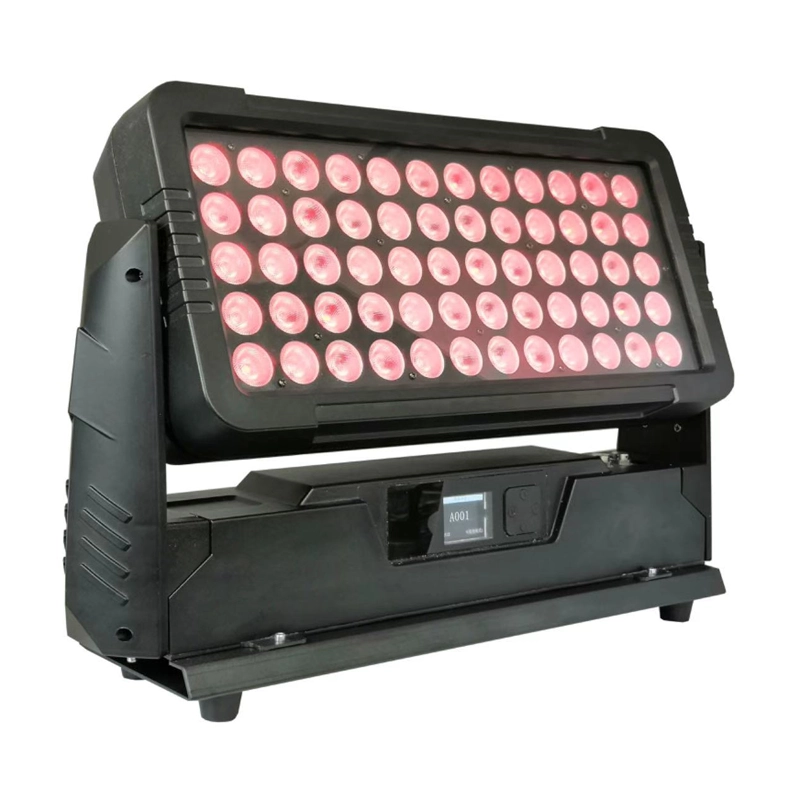
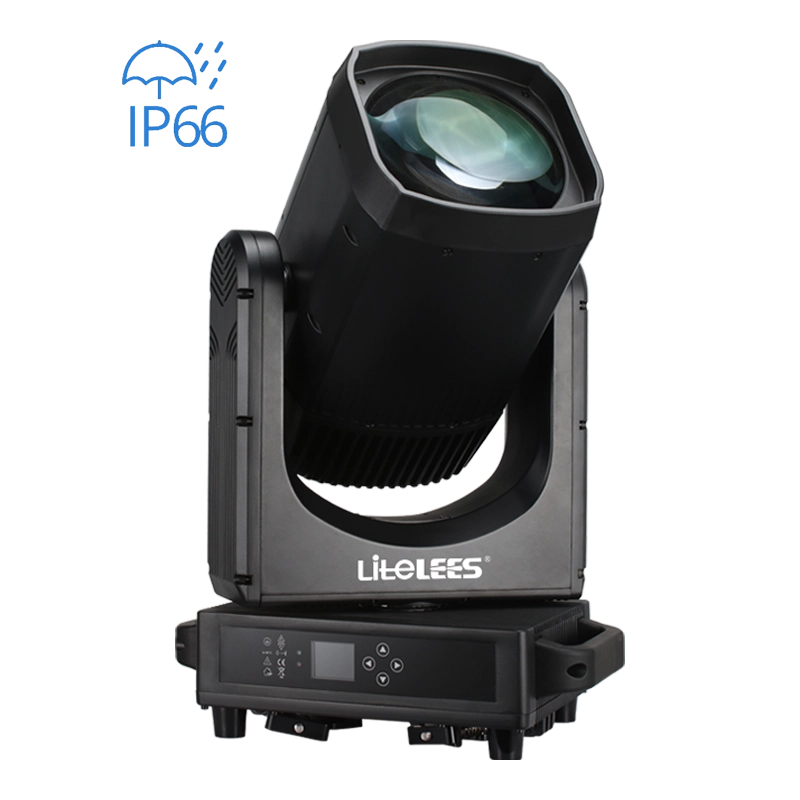
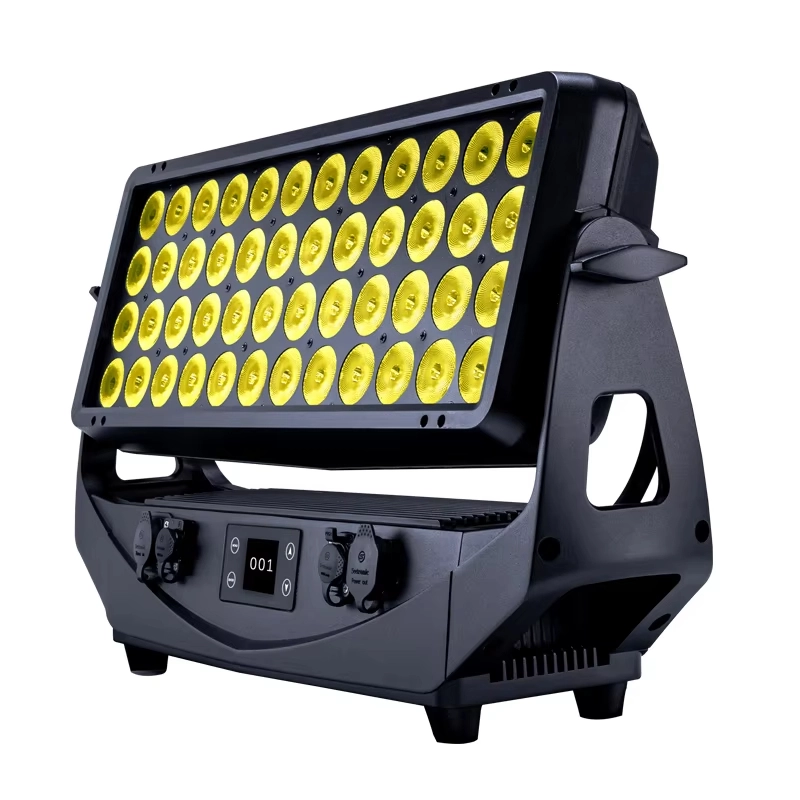
LiteLEES LUMIX BEAM 420 IP
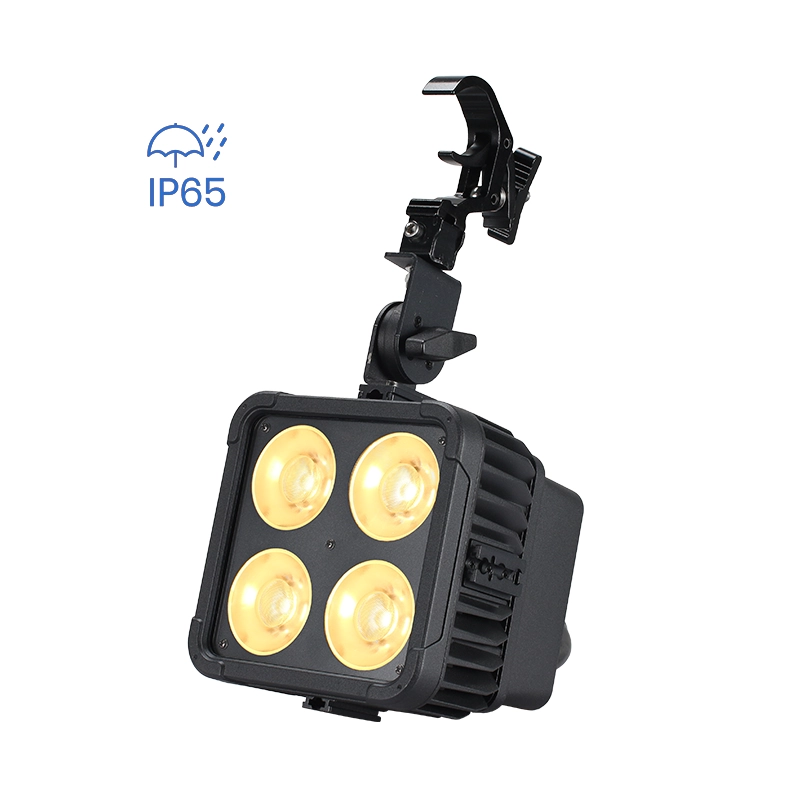
Magic Cube V8 IP
Want to get more up-to-date news?
If you have any comments or good suggestions, please leave us a message; later our professional staff will contact you as soon as possible.

We are professional stage lighting manufacturers offering OEM and ODM LED stage lights.
Contact
Email us
Call us
Address
No.6 Longnan Road, Huashan Town, Huadu District Guangzhou, Guangdong Province, China.
LiteLEES Professional
Less Lighting