
What energy savings to expect from RGB LED stage lights?
- 1) How do I calculate real energy savings and ROI when replacing 1000W halogen PARs with 150W RGB LED wash lights for a 50-fixture touring rig?
- 2) What inrush current and breaker-sizing issues should I expect when powering hundreds of RGB LED stage lights on a touring rig, and how do I prevent nuisance tripping?
- 3) Which RGB LED stage lights produce camera-friendly whites and skin tones: what CRI/TLCI specs and color-mixing architecture should I require?
- 4) How can I verify manufacturer's lumen/lux output claims for RGB LED moving heads versus traditional fixtures before purchase?
- 5) What's the expected maintenance schedule and real lifetime costs (drivers, fans, LED modules) of RGB LED stage lights compared to discharge fixtures?
- 6) What measurable energy savings and heat-load reductions can venues expect from switching to RGB LED lights, and how does that affect HVAC sizing?
1) How do I calculate real energy savings and ROI when replacing 1000W halogen PARs with 150W RGB LED wash lights for a 50-fixture touring rig?
Practical calculation steps and realistic assumptions are essential. Use these inputs: fixture steady-state wattage, annual operating hours, local electricity cost, and incremental purchase cost. Example scenario (conservative, real-world numbers):
- Legacy fixture: 1000W halogen PAR (steady-state ~1.0 kW)
- Replacement: 150W RGB LED wash (steady-state ~0.15 kW)
- Fixtures changed: 50
- Use pattern: 8 hours per show × 200 shows per year = 1,600 hours/year
- Electricity: $0.15 per kWh (adjust for your region)
- Price delta: LED fixture costs $450 more per unit than a basic halogen fixture (example; get exact quotes)
Step-by-step energy calculation per fixture per year
- Halogen: 1.0 kW × 1,600 h = 1,600 kWh → 1,600 × $0.15 = $240/year
- LED: 0.15 kW × 1,600 h = 240 kWh → 240 × $0.15 = $36/year
- Annual electricity savings per fixture = $240 − $36 = $204
Scale to 50 fixtures: $204 × 50 = $10,200 saved per year in electricity alone.
Include lamp and maintenance savings:
- Halogen lamps & maintenance: stage halogen bulbs or HID lamps typically require replacement every 500–2,000 hours; moving-head discharge lamps often cost $150–$500 each.
- LED lifetime: LED engines commonly specify L70 at 50,000–100,000 hours—effectively decades under typical gig schedules—so lamp replacement costs are nearly eliminated.
ROI example:
- Incremental capital: $450 × 50 = $22,500
- Annual direct payback: $10,200 → simple payback ≈ 2.2 years (ignoring maintenance savings)
Key buying tips: get manufacturers' photometric charts, confirm actual wattage draw (not nameplate max), and run calculations with your real local kWh and expected hours. For touring rigs, factor in dimmer/sound co-location and truck weight savings (LED fixtures are often lighter).
2) What inrush current and breaker-sizing issues should I expect when powering hundreds of RGB LED stage lights on a touring rig, and how do I prevent nuisance tripping?
LED fixtures generally have low steady-state current but can produce short, high inrush currents when their drivers charge input capacitors. Problems that arise on tours and installations include nuisance breaker trips and false overloads when many fixtures are hot-started or power-cycled simultaneously.
What to check and best practices:
- Request the manufacturer's steady-state current (A @ voltage) and measured inrush current (peak A and duration in ms). Typical 150W LED fixtures steady-state current at 230VAC ≈ 0.65 A; inrush can be 10–60 A for a few ms depending on driver design.
- Breaker sizing: size breakers using steady-state current plus code-required margin (NEC/IEC differ). For long cable runs and multiple fixtures, calculate aggregated continuous load (continuous defined typically as >3 hrs) and select breakers with appropriate trip curves (type B/C/D for EU; use compatible trip curves for inrush). If inrush is high, choose breakers less sensitive to short ms peaks or use inrush limiting.
- Staggered power-up: distribute fixtures across power circuits and use staggered switching (soft-start controllers or multiple breakers) to keep aggregate inrush below trip thresholds.
- Inrush limiters (NTC) and soft-start units: for fixed installs add these on dimmer racks or distro bars; on tour rigs use soft-start PDUs or inrush-limited power distro.
- Check power factor: prefer fixtures with PF > 0.9 and low THD to reduce apparent power and utility penalties in commercial venues.
- RCD/GFCI nuisance trips: some LED drivers can generate leakage currents; ensure RCD sensitivity and select fixtures with low earth-leakage and proper insulation.
Practical staging tip: before a major buy, ask for inrush and steady-state test reports (often on the datasheet) and run a rack-level power test with the actual number of fixtures to validate breaker choices and PDUs.
3) Which RGB LED stage lights produce camera-friendly whites and skin tones: what CRI/TLCI specs and color-mixing architecture should I require?
RGB-only color mixing creates whites by combining narrow red, green and blue emitters. That white can look acceptable on stage but often lacks spectral completeness—so whites and skin tones can be desaturated or odd on camera. For broadcast and filmed events, require better color-rendering metrics.
Specifications and recommendations:
- Prefer RGBW or 4/5-color engines (e.g., RGBW, RGBA, RGB+deep red, or 6-in-1) for improved white balance and fuller spectrum.
- Specify TLCI (Television Lighting Consistency Index) and CRI (Ra) — for broadcast aim for TLCI ≥ 90 and CRI ≥ 90. LED chips with supplementary white (or additional amber/deep red) enable higher TLCI.
- Check manufacturer white-point controls: ability to set CCT (correlated color temperature) and firm control over green-magenta balance is crucial for camera pipelines.
- Request measured spectral power distribution (SPD) or TLCI test reports—not just CRI numbers. SPC/TLCI charts show how different wavelengths are represented and whether skin tones render accurately.
- For fast color-matching on multi-brand rigs choose fixtures that support presets in CCT and have fine-grain dimming curves and calibration via RDM or onboard calibration tools.
Field tip: if you will regularly broadcast, insist on pre-purchase test footage under the same camera setup (frame rates, shutter angles), and verify flicker (see next answer) and white fidelity in-camera.
4) How can I verify manufacturer's lumen/lux output claims for RGB LED moving heads versus traditional fixtures before purchase?
Manufacturers often publish lumen and lux charts, but they can use different testing conditions. Verify with this checklist and tests:
- Request full photometric files: lux-at-distance tables for each beam angle and goniophotometer or integrating sphere test results. Look for lux at common working distances (5 m, 10 m, 20 m) and beam-angle charts.
- Confirm test conditions: supply voltage used, drive current, color mode (full white, amber, or maximum white output), and whether values are peak LED die output vs measured fixture output through optics.
- Insist on published ANSI/IES LM-79 or LM-80 test data when available. LM-79 provides measured luminous flux from complete fixtures; LM-80 deals with LED package lifetime.
- Compare lux rather than only lumens: lumens are useful for total flux but lux at the stage or distance is what you perceive. Get beam spread numbers (FWHM) and relative intensity distribution curves.
- Perform a side-by-side demo: request the manufacturer or dealer run both the LED and the legacy fixture in the intended application and measure with a calibrated lux meter at representative distances and angles. For moving heads, test both spot and wash modes.
Note: LED fixtures may report high lumen numbers from summed LED emitters, but optical losses in lenses and diffusion significantly change usable lux on stage—so validate with real-world photometry.
5) What's the expected maintenance schedule and real lifetime costs (drivers, fans, LED modules) of RGB LED stage lights compared to discharge fixtures?
LED fixtures reduce recurring lamp costs but introduce other long-term considerations. Typical lifecycle components and maintenance expectations:
- LED engine lifetime: most stage LEDs are rated L70@50,000–100,000 hours. L70 means 70% of initial lumen output remains; designers typically trigger service or replacement after L70 or when optical degradation affects performance.
- Drivers/electronics: high-quality mean-time-between-failure (MTBF) varies; select fixtures with replaceable drivers and good thermal design. Drivers often have warranties of 2–5 years; budget for eventual driver replacement in 5–10 years depending on runtime and ambient conditions.
- Fans and moving parts: moving heads with active cooling have fans—expect periodic fan replacements every 2–7 years depending on duty cycle and dust environment. Look for ball-bearing fans and easily serviceable fan modules.
- Optics and lenses: dust and gobo wear can reduce output and uniformity; schedule optical cleaning (quarterly for dusty environments, annually for controlled environments).
- Discharge lamp comparison: moving-head discharge lamps often require replacement every 500–2,000 hours and cost $150–$500 per lamp. Multiply that by fixture count and active years: LED total lifecycle costs are typically substantially lower over 5–10 years.
Example cost comparison (illustrative): running 50 moving heads with discharge lamps each needing replacement every 1,000 hours at $300 per lamp, and annual runtime 1,600 hours → 50 × (1.6 × $300) ≈ $24,000/year in lamp costs alone. LED replacement/maintenance costs are usually a fraction of that.
Buyers should verify warranty terms (LED engine, driver, motors), availability of replaceable modules (LED boards, fans), and local service options to minimize downtime. For tours prioritize ruggedized connectors, modular parts, and easy field-replaceability.
6) What measurable energy savings and heat-load reductions can venues expect from switching to RGB LED lights, and how does that affect HVAC sizing?
LED fixtures convert a higher percentage of electrical energy to visible light; incandescent and discharge fixtures waste much more as radiant heat. This affects both direct electricity bills and venue HVAC loads.
Typical heat load reduction:
- Example: replace 1,000W halogen with a 150W LED (same apparent output for a wash). Net electrical reduction per fixture = 850W. If 50 fixtures are replaced, % electrical reduction = 42.5 kW reduction in stage load when all on.
- Heat to HVAC: nearly all electrical input eventually becomes heat in the conditioned space (visible light becomes heat on surfaces and is absorbed); so reducing 42.5 kW of electrical load reduces instantaneous heat load by roughly the same amount (minus small losses to exterior). That is substantial—over an 8-hour show, this is 340 kWh less heat dumped into the venue compared to legacy fixtures.
- HVAC sizing: for venues with large numbers of lights, this reduction can downsize make-up air and cooling requirements or reduce runtime/capacity wear. Consult an HVAC engineer with the exact load table: provide per-fixture steady-state wattages, duty cycles, and schedules.
Quantified example for annual HVAC energy impact (illustrative): if venue cooling COP results in 0.3 kW of electricity to remove each kW of heat (varies widely), then cutting 42.5 kW heat reduces chiller energy needs significantly—savings compound across many shows.
Operational benefits beyond energy numbers: reduced on-stage heat improves performer comfort, lowers HVAC runtime and maintenance, and can enable more compact backstage cooling designs.
Buying checklist (quick): verify steady-state wattage, inrush specs, PF/THD, flicker-free PWM frequency (for camera work), TLCI/CRI for white, photometrics (lux/beam charts), IP rating for outdoors, driver & LED warranty, modular serviceability, and DMX/Art-Net/sACN control compatibility and pixel-mapping capability.
We base recommendations on typical industry test standards (LM-79/LM-80 when available), published driver and LED lifetimes from leading manufacturers, and common utility rate and runtime scenarios used by touring and venue operators. Always ask vendors for test reports and run a demo in your actual working environment.
Contact us for a custom quote and fixture selection tailored to your rig and regional electricity rates: www.litelees.com or email litelees@litelees.com
Concluding summary of advantages of RGB LED stage lights: RGB LED stage lights deliver substantial energy and HVAC savings (typically 50–85% lower power draw versus equivalent halogen/HID fixtures), far longer operational life (L70 50k–100k hours), lower recurring lamp and maintenance costs, lighter rigging weights, and flexible control (DMX512, Art-Net, pixel mapping). For broadcast or critical color work choose RGBW/extended-color engines with TLCI ≥ 90 and flicker-free drivers. Consider inrush and driver quality when planning power distribution; validate photometric claims with LM-79 data or side-by-side lux measurements for confident purchasing.
Products
What is the lifespan of your LED stage lights?
Our LED lights use high-quality chips with a rated lifespan of over 50,000 hours. Proper usage and maintenance ensure long-term reliability and stable performance, making them a smart investment for any venue.
How long is the warranty period for your products?
We offer a standard 1-year warranty on all products, with extended warranty options available upon request. During the warranty period, we provide free technical support and parts replacement for non-human damage.
Company
Can LiteLEES handle OEM/ODM orders?
Absolutely. With our strong R&D capabilities and advanced manufacturing, we can customize designs, features, and branding to meet your specific needs.
What certifications do your products have?
All LiteLEES products are certified by CE, RoHS, FCC, and BIS. Our factory is ISO9001 quality management system certified.
Where is LiteLEES located?
Our headquarters and manufacturing facility are located in Guangzhou, China, with products exported to over 70 countries worldwide.
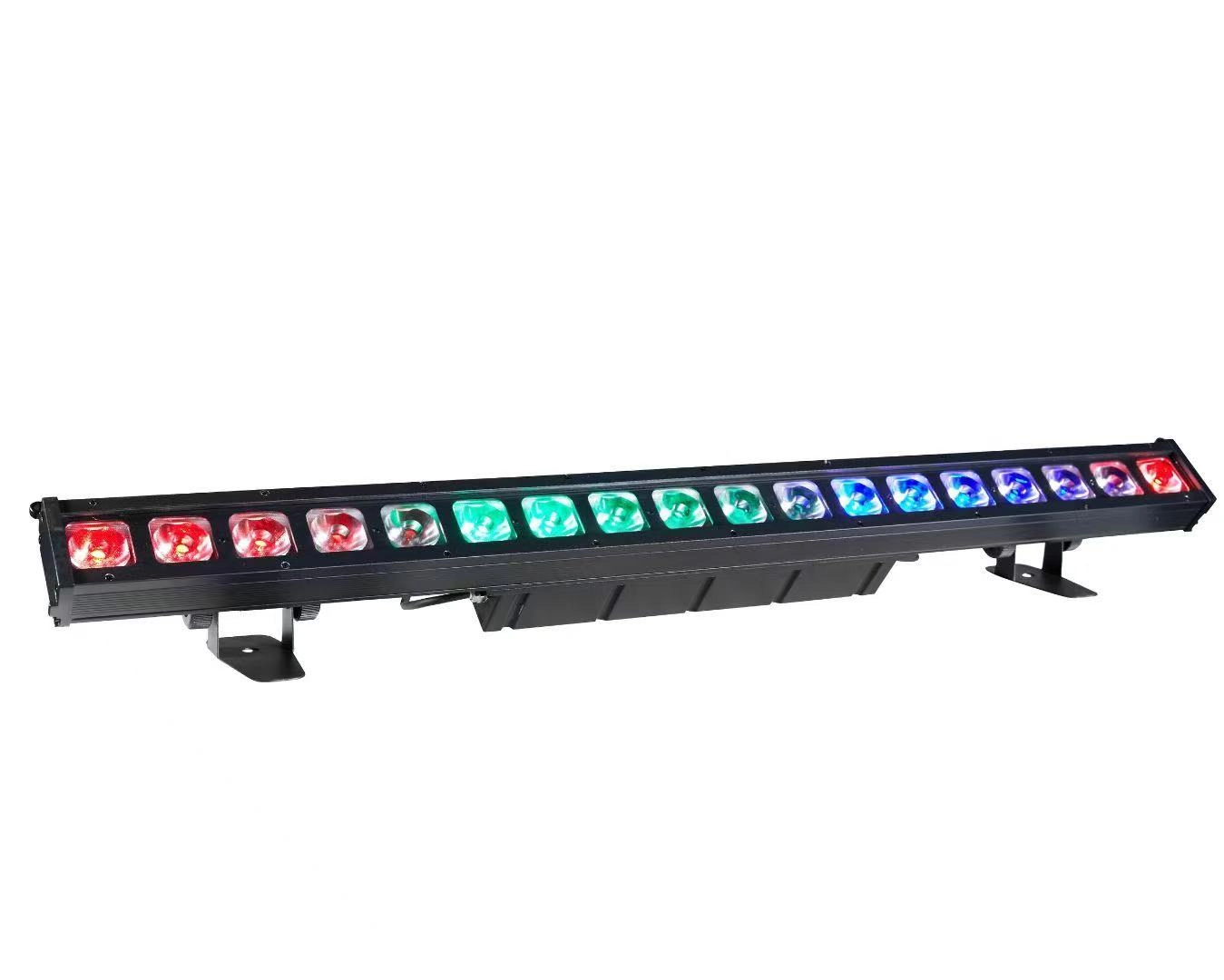
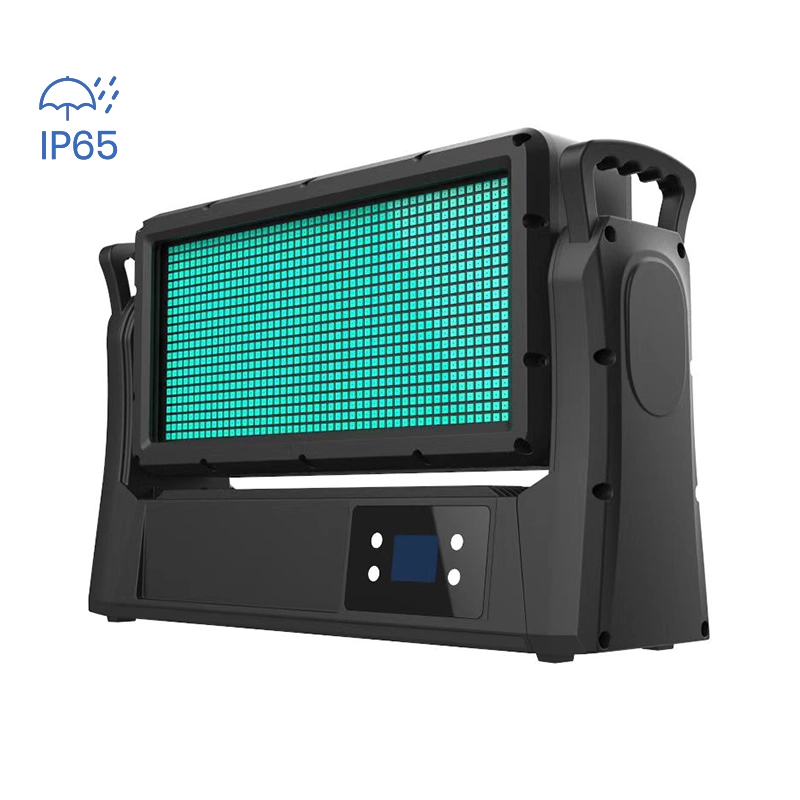
Stormy Supreme 600 IP
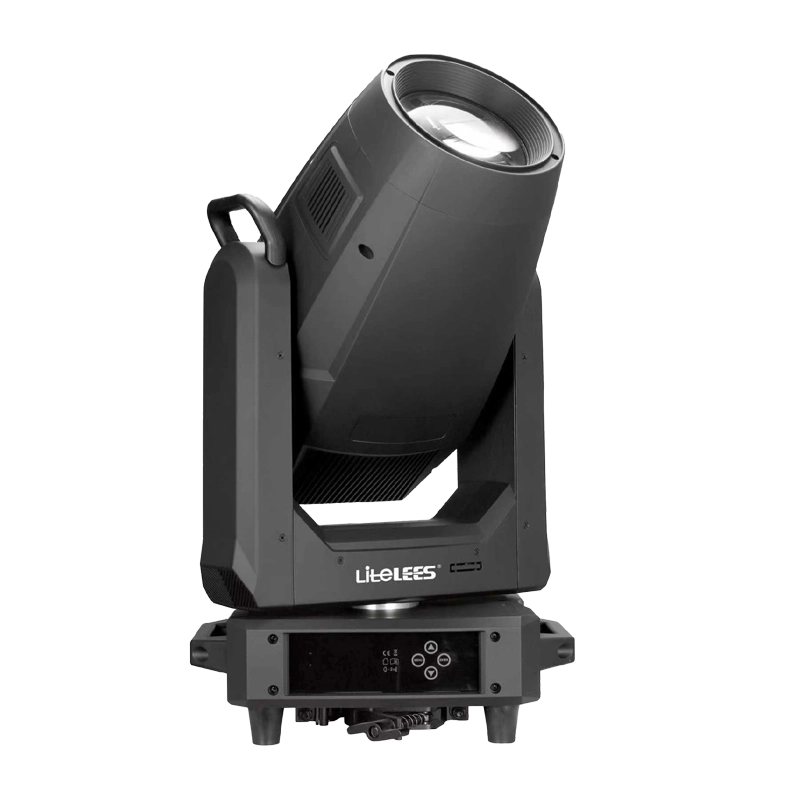
LP Profile 900
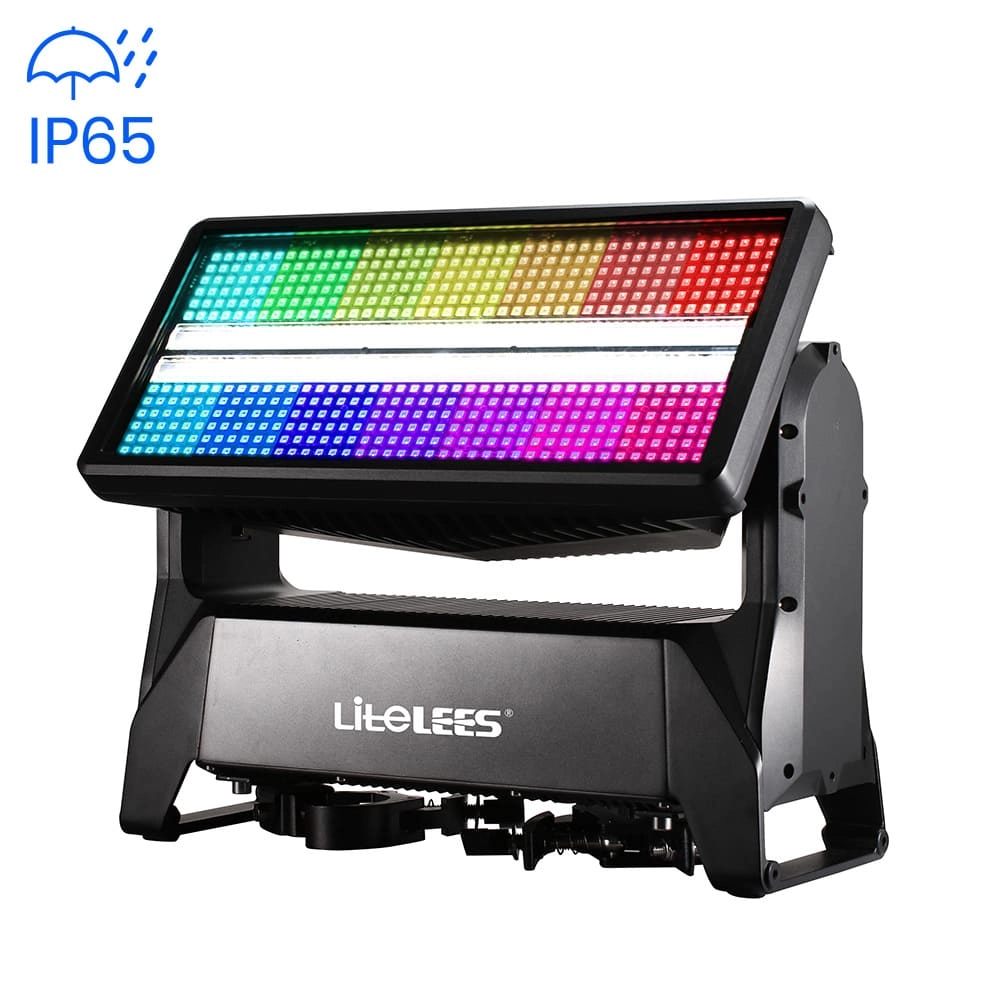
Stormy STRIKE M IP
Want to get more up-to-date news?
If you have any comments or good suggestions, please leave us a message; later our professional staff will contact you as soon as possible.

We are professional stage lighting manufacturers offering OEM and ODM LED stage lights.
Contact
Email us
Call us
Address
No.6 Longnan Road, Huashan Town, Huadu District Guangzhou, Guangdong Province, China.
LiteLEES Professional
Less Lighting