
What are the benefits of RGB vs RGBW LED stage lights?
- 1. How does adding a dedicated white LED (RGBW) change white balance and color temperature control for live stage lighting and multi-camera shoots?
- 2. Can RGB fixtures reproduce pastel skin tones accurately without RGBW or extra amber, and if not, what specs should I require?
- 3. Real-world: What is the difference in lumen output and power consumption between a 200W RGB wash and a 200W RGBW wash?
- 4. How do PWM frequency and refresh rates differ between RGB and RGBW fixtures, and how will that affect camera flicker and high-speed recording?
- 5. When budgeting for a touring rig, how does adding RGBW fixtures affect DMX channel counts, console complexity, and setup time compared to RGB fixtures?
- 6. Are there durability or maintenance trade-offs (heat, lifespan, color shift) when choosing RGBW over RGB fixtures for outdoor festivals?
- Conclusion: Why RGBW often wins for professional stage and broadcast work
1. How does adding a dedicated white LED (RGBW) change white balance and color temperature control for live stage lighting and multi-camera shoots?
A dedicated white LED changes the way you obtain white significantly. RGB fixtures make white by additive mixing of red, green and blue emitters; that results in a white that often has low spectral completeness, poor color rendering (lower CRI/TLCI), and unstable correlated color temperature (CCT) when dimmed. An RGBW fixture includes a separate white emitter (often tunable warm or cool white) so you can generate controlled CCTs and higher-quality whites without forcing the colored channels into unnatural drive levels.
Practical effects and what to look for:
- Color rendering: RGB-mixed white typically gives CRI in the 50–70 range for complex skin tones and fabrics. RGBW with a properly specified white LED or a warm/cool white pair can reach CRI/TLCI values in the 80–95 range, which is a real advantage when filming in 4K or 8K. For broadcast, ask for TLCI test data where available.
- Camera behavior: Camera sensors expect a physically accurate spectrum. RGB-mixed whites can cause camera auto-white-balance hunting and clipped highlights. RGBW avoids this by providing a continuous white spectrum that sits naturally on camera.
- Control: RGBW simplifies achieving exact CCT (e.g., 3200K or 5600K) and maintains that CCT when dimming if the fixture supports linearized dim curves or color temperature presets.
Actionable checklist: Request the fixture's published CRI/TLCI, spectral power distribution (SPD) graph, and any factory CCT presets. Test the fixture on camera in the same color space and frame rate you intend to use, and ask the manufacturer for flicker/frequency specs (see question 4).
2. Can RGB fixtures reproduce pastel skin tones accurately without RGBW or extra amber, and if not, what specs should I require?
Short answer: Not reliably. Pastel and natural skin tones often require spectral output in the long red and warm-yellow bands that RGB-only chips don't reproduce cleanly. RGB mixing can approximate colors but tends to produce desaturated or slightly magenta/green-leaning skin rendering under many conditions.
Which specifications matter:
- CRI/TLCI: For skin tones, target at least CRI 90 or TLCI 90+. Many RGB-only fixtures don’t meet this without additional emitters.
- Spectral data: Ask for SPD charts showing energy in 600–700 nm (deep red) and 560–600 nm (amber) bands. If those bands are lacking, skin tones will look flat.
- Additional emitters: Fixtures labeled RGBW, RGBWA (amber), RGBA (amber), or RGBAL (amber + lime) are better for nuanced flesh tones. Some modern “tunable white” LED engines combine dedicated whites plus amber/amber-red to improve reproduction.
Practical test: Put a color chart (X-Rite ColorChecker) and a human subject under the fixture and photograph at your typical camera settings. If skin tones require heavy color correction in post, the fixture is not adequate.
3. Real-world: What is the difference in lumen output and power consumption between a 200W RGB wash and a 200W RGBW wash?
Important principle: Wattage alone doesn’t tell the whole story because color mixing and LED emitter efficiencies differ. White LEDs (phosphor-converted) typically have higher lumen-per-watt efficacy than colored LEDs used for red/green/blue. Therefore, a 200W RGBW fixture dedicating a portion of its power to a white channel will generally produce higher perceptual lumen output when producing white or near-white scenes than a 200W RGB-only unit that attempts to create white by balancing RGB channels.
Guidelines and ranges (industry-observed, verify with IES):
- White output: A 200W RGBW wash commonly reports higher lux and lumens for white modes — sometimes 20–40% greater measured lux at a given throw compared with a 200W RGB fixture running RGB-mixed white. The difference varies by emitter efficacy and optical design.
- Color modes: For saturated colors (pure red, green, blue), RGB-only and RGBW with matching color LEDs can be comparable. But when creating pastel or white washes, RGBW is markedly more efficient and visually brighter.
- What to request: Manufacturer photometric files (IES/IESNA) and lux-at-distance charts for specific beam angles and modes. These files are the objective way to compare real-world performance rather than nominal wattage.
Advice: When sizing rigs for white-heavy applications (front wash, cyc light, camera work), prioritize fixtures with a capable white channel and request measured photometry. For color-heavy theatrical designs where whites are rarely used, RGB-only may be cost-efficient.
4. How do PWM frequency and refresh rates differ between RGB and RGBW fixtures, and how will that affect camera flicker and high-speed recording?
Core concept: Flicker and banding on camera are driven by how the fixture modulates LED output — commonly one of two methods: high-frequency PWM (pulse-width modulation) or current-steering driver methods. PWM rate is the number of pulses per second; lower rates produce visible flicker or rolling bands on cameras, especially at high shutter speeds or frame rates.
Practical differences and what to require:
- RGB vs RGBW: The addition of a white channel doesn’t inherently change the need for high PWM bandwidth — but some fixtures place the white channel on a separate driver or dimming stage, which can have different PWM characteristics. Inconsistent modulation between channels can produce color banding in camera images.
- Recommended specs: For broadcast and high-frame-rate capture, request a flicker-free mode or a PWM/refresh specification above 8–10 kHz. Many manufacturers now offer 10–30 kHz or a “flicker-free” rating for 24/25/30/50/60 fps and higher-frame rates. For high-speed capture (120 fps+), ask for explicit testing data or adjustable high-frequency modes.
- Testing: Always test fixtures with the exact cameras, frame rates, shutter angles, and ISO used in production. Ask manufacturers for test footage or an oscilloscope trace of the driver output if possible.
Operational tip: Use constant-current drivers with proper filtering and request unified modulation across RGB and W channels to avoid channel misalignment artifacts in slow-motion orpanning shots.
5. When budgeting for a touring rig, how does adding RGBW fixtures affect DMX channel counts, console complexity, and setup time compared to RGB fixtures?
Channel count and modes:
- Basic RGB mode: 3 channels (R,G,B) plus optional master dim and strobe — often 4–6 channels depending on fixture features.
- RGBW mode: At minimum 4 color channels (R,G,B,W), plus dimmer, strobe, CCT or macros — widely used fixtures often expose 6–16 channels depending on control granularity and pixel mapping capability.
Practical implications:
- Universe planning: More channels per fixture reduce the number of fixtures per DMX universe. Example: In a 512-channel universe, 170 fixtures at 3 channels each vs ~85 fixtures at 6 channels each. For pixel-mapped beam arrays or high-resolution pixel control (individual LED control), channel counts explode and Art-Net/sACN with node merging becomes essential.
- Console programming: RGBW fixtures with dedicated white and color-mixing controls offer faster, more reliable presets for whites and skin tones, but they require more complex baseline programming and possibly more memory for scenes. Pixel-mapping and effects often push consoles to use Art-Net/sACN instead of pure DMX512.
- Setup time: More modes and DMX addressing options increase initial setup time because you must decide which control mode to use (e.g., RGB vs RGBW vs pixel). However, once profiles and fixture libraries are prepared in the lighting console, operating time can be faster due to dedicated white controls and accurate presets.
Budgeting tips: Enumerate fixture control modes and channel counts from spec sheets and calculate how many fixtures per universe you can run. Factor in network nodes, backup consoles, and the need for preloaded fixture profiles to reduce load-in time.
6. Are there durability or maintenance trade-offs (heat, lifespan, color shift) when choosing RGBW over RGB fixtures for outdoor festivals?
Thermal management and lifespan:
- Heat load: Adding more LED emitters (including a white LED or additional amber/UV emitters) increases internal heat generation. Proper thermal design (heatsinks, forced-air where applicable) is essential to maintain LED junction temperatures and prolong lifespan. Fixtures with poor thermal paths will suffer accelerated lumen depreciation and color shift.
- L70 and lumen depreciation: Most quality fixtures are rated with an L70 lifetime (hours to 70% initial lumen output). Typical good fixtures are rated 50,000+ hours, but this depends on drive current and cooling. Request L70 data and driver lifecycle specs.
Outdoor readiness:
- IP rating and coatings: For festivals you need at least IP65-rated housings for wash fixtures exposed to weather; internal conformal coating and sealed connectors reduce corrosion. RGBW fixtures often have more internal components, so IP sealing is even more important.
- Color shift and binning: Over time, different LEDs (R, G, B, and W) can age at different rates leading to color balance shifts. High-quality manufacturers perform color binning and provide calibration profiles to minimize divergence; some offer field re-calibration or firmware color correction.
Maintenance reality: RGBW fixtures often require slightly more careful servicing because of the added channel and driver complexity, but the trade-off in color performance and camera friendliness is usually worth it for broadcast and festival use. For outdoor fleets, insist on IP rated components, spares for power supplies/drivers, and documented firmware update procedures.
Conclusion: Why RGBW often wins for professional stage and broadcast work
Contact us for a custom quote and photometric comparisons: www.litelees.com or litelees@litelees.com
Company
What is LiteLEES’s main business?
LiteLEES specializes in the design, development, manufacturing, and sales of professional stage lighting, including moving head lights, beam lights, spot lights, wash lights, and LED par lights.
Where is LiteLEES located?
Our headquarters and manufacturing facility are located in Guangzhou, China, with products exported to over 70 countries worldwide.
Can LiteLEES handle OEM/ODM orders?
Absolutely. With our strong R&D capabilities and advanced manufacturing, we can customize designs, features, and branding to meet your specific needs.
Do you have your own factory?
Yes. We own a sheet metal factory and a complete in-house production line—from PCB to final assembly—ensuring strict quality control and fast delivery.
What certifications do your products have?
All LiteLEES products are certified by CE, RoHS, FCC, and BIS. Our factory is ISO9001 quality management system certified.
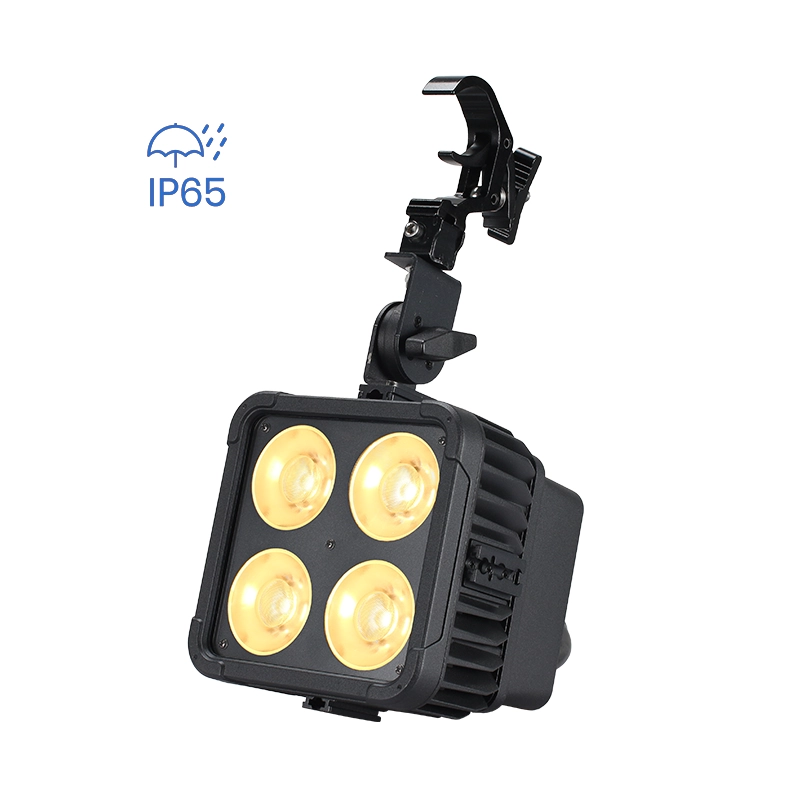
Magic Cube V8 IP
Want to get more up-to-date news?
If you have any comments or good suggestions, please leave us a message; later our professional staff will contact you as soon as possible.

We are professional stage lighting manufacturers offering OEM and ODM LED stage lights.
Contact
Email us
Call us
Address
No.6 Longnan Road, Huashan Town, Huadu District Guangzhou, Guangdong Province, China.
LiteLEES Professional
Less Lighting