
What are the best RGB LED lights for concert stages?
- 1. How many lumens / what lux target should I plan from RGB LED wash fixtures to evenly cover a 20 m wide concert stage (and how many fixtures will that likely require)?
- 2. Which RGB LED fixtures are reliably flicker-free for high-frame-rate concert cameras and how do I verify a fixture’s PWM/refresh specs?
- 3. For outdoor festival stages, which IP-rated RGB LED fixtures best balance brightness, pixel control for mapping, and weatherproofing without breaking the budget?
- 4. Should I choose RGB, RGBW, RGBA, or RGBAW fixtures for accurate saturated colors and natural whites on a live concert stage?
- 5. What is the realistic power draw and dimming headroom I must plan for a 50-fixture RGB LED rig to avoid tripping stage distribution?
- 6. Which RGB LED moving-head washes and pixel fixtures should I evaluate right now for large concert stages (brightness, color, pixel mapping, and serviceability)?
- Conclusion: Why RGB LED lights remain the optimal choice for modern concert stages
What Are the Best RGB LED Lights for Concert Stages? Practical Answers for Buyers
As a lighting professional and content strategist with deep experience in LED stage lighting, DMX pixel mapping, and broadcast-camera requirements, I answer six hard, long-tail questions beginners (and many production managers) still cannot find thorough answers to online. This post embeds lighting terms like lumen output, beam angle, DMX512, pixel mapping, PWM refresh rate, IP65 outdoor rating, CRI/TLCI considerations, and power-draw planning so you can evaluate RGB LED lights for concert stages with confidence.
1. How many lumens / what lux target should I plan from RGB LED wash fixtures to evenly cover a 20 m wide concert stage (and how many fixtures will that likely require)?
Why beginners struggle: manufacturers often publish “lumen” claims but don’t provide realistic lux at distance for a given beam angle on a chosen stage size. You need a simple, repeatable calculation plus the right expectations for live vs broadcast work.
Method (step-by-step):
- Measure area to light: for a stage 20 m wide × 10 m deep = 200 m².
- Decide target average lux (illuminance): typical ranges: concert/general visibility 300–800 lux; pro concert for broadcast or live TV 1,000–2,000 lux on performance plane. Use the higher range for televised events or music competitions.
- Compute required total lumens: total lumens ≈ target lux × area. Example: for 800 lux over 200 m² → 160,000 lumens total.
- Use good photometric values from fixtures: the fixture datasheet will show total lumen output and recommended throw/beam angle. For a wash at a typical throw, a modern high-output RGBW LED wash might quote 8,000–30,000 lumens depending on tier. Divide total lumens required by per-fixture usable lumens (account for beam spread and mixing losses) to estimate fixture count.
Practical example (conservative approach): if you select a wash that produces 12,000 delivered lumens in a 20°–40° motorized zoom setting, then 160,000 / 12,000 ≈ 13–14 fixtures. Add 20% margin (hot spots, overlap inefficiency, and color-mixing losses with saturated colors) → specify 16–18 fixtures.
Key checks before purchase:
- Request photometric lux charts from the manufacturer (lx at distance for each zoom/beam). These remove guesswork compared with headline lumens.
- Confirm beam angle and zoom mechanics — wider beam requires more fixtures; narrower beam needs fewer but increases contrast and hotspots.
- Account for colored gel equivalence: saturated colors reduce perceived lux; plan with RGBW or dedicated white channel figures if accurate whites are needed.
2. Which RGB LED fixtures are reliably flicker-free for high-frame-rate concert cameras and how do I verify a fixture’s PWM/refresh specs?
Why beginners struggle: many LED fixtures use PWM dimming that can cause banding or strobing on camera. Manufacturer marketing sometimes says “suitable for broadcast” without meaningful numbers.
What to look for:
- Manufacturer statement of flicker-free performance at specific frame rates (e.g., “flicker-free up to 4,000 fps” is strong; “suitable for HD broadcast” is ambiguous).
- PWM (pulse-width modulation) frequency / LED driver design: higher PWM frequency reduces visible banding — targets for concert and broadcast: minimum 2–4 kHz PWM for 24–60 fps broadcast, 5–20 kHz for slow-motion/ high-speed cameras. Some fixtures use analog or hybrid constant-current drivers that behave better on camera.
- Look for “linear dimming curves,” “flicker-free for broadcast,” or explicit refresh-rate specs. If absent, ask the manufacturer or distributor for a white-paper test or an oscilloscope capture of the driver output.
Simple onsite test (fast and reliable):
- Bring a high-frame-rate-capable camera (or a smartphone that can record slow motion). Set shutter speed to fast (1/500–1/2000s) and capture the LED at various dim levels. Visible bands indicate PWM issues.
- Test with the lighting cues you plan to run (strobing, chase, fades) — some fixtures behave worse at mid-dim ranges.
Production tip: when planning a broadcast or camera-heavy concert, insist on a “camera test day” with rented fixtures before final purchase to confirm flicker-free performance across all cues and color mixes. Use fixtures that explicitly state broadcast compatibility and PWM frequency.
3. For outdoor festival stages, which IP-rated RGB LED fixtures best balance brightness, pixel control for mapping, and weatherproofing without breaking the budget?
Why beginners struggle: weatherproofing and pixel mapping are often sold as separate features — you need both for outdoor video-looking effects and long-term reliability.
Key selection criteria:
- IP rating: aim for IP65 or higher for fixtures exposed to rain and dust. IP65-rated LED bars and pixel fixtures are standard for festivals.
- Pixel control: pick fixtures with true pixel mapping (addressable pixels per LED segment) and support for sACN/Art-Net or RDM for remote addressing and monitoring. Look for tight pixel pitch on linear bars or tubes if you need high-resolution effects.
- Cooling and thermal design: outdoor fixtures often operate in heat and humidity. Passive-cooled IP fixtures are preferred (less risk of fan failure); confirm thermal derating curves in the datasheet.
- Connectors and cabling: waterproof power and signal connectors and strain-relief designs—avoid fixtures with aftermarket tape-on seals.
Where to allocate budget vs. where to save:
- Spend on high-quality sealed optics and rugged housing (you’ll save on repairs). Trusted mid-high brands offer IP65 pixel bars that support per-pixel control and high lumen output.
- Save on accessories you can standardize across festivals: reusable IP-rated power distro, stage-specific clamps, and protective covers.
Operational tips:
- Plan power and data redundancy (dual signal paths or Art-Net/sACN backup) for outdoors.
- Set up regular salt/oxidation inspections if used near coastlines and pressure-test waterproof connectors during prep.
4. Should I choose RGB, RGBW, RGBA, or RGBAW fixtures for accurate saturated colors and natural whites on a live concert stage?
Why beginners struggle: manufacturers focus on color-saturation demos. The practical trade-offs between additive RGB mixing and dedicated white/amber emitters are not always clear.
How color mixing works and what it means in practice:
- RGB: three-channel additive mixing gives saturated colors and is efficient for bright hues. However, RGB cannot reproduce high-quality, neutral whites (especially warm whites) without color casts.
- RGBW: adds a dedicated white LED (usually cool or warm white) that improves white quality, pastel tones, and increases luminous efficacy when you need white. RGBW is the most common compromise for event lighting where true whites and pastel tints are required.
- RGBA and RGBAW: the A (amber) enhances warm tones and orange shades. RGBAW (or variants with additional mint/amber) expand the color gamut and improve theatre-style skin tones without sacrificing saturated colors.
Decision matrix:
- If the show prioritizes saturated, highly saturated color mixes (EDM-style), RGB fixtures can be adequate and cheaper.
- If you need accurate neutral whites for camera/skin tones, go RGBW or RGBAW. The dedicated white and amber channels produce cleaner whites and smoother gel-like pastels.
- For broadcast or corporate events on concert stages, specify fixtures with additional color chips (RGBAW or multi-chip LED engines) and check TLCI/CRI-like indicators for whites where provided.
Practical checklist before buy:
- Request color-gamut diagrams from the manufacturer and ask for on-stage photo proofs with performers under white and mixed color states.
- Insist on firmware or color-calibration options (calibrated white points and selectable color profiles make matching older fixtures much easier).
5. What is the realistic power draw and dimming headroom I must plan for a 50-fixture RGB LED rig to avoid tripping stage distribution?
Why beginners struggle: LED fixtures advertise maximum power draw but show huge peaks during full white or strobe. Proper planning uses peak and average draws and circuit layout.
Rules of thumb and safe planning:
- Check each fixture’s max power draw from the datasheet — this is the worst-case. Typical mid-size wash fixtures are often rated between 200–800 W max; moving-heads can be 600–1,500 W depending on LED engine and motors.
- Estimate average running power: most concert cues rarely hold fixtures at full white continuously; a conservative average factor is 40–70% of max draw depending on program intensity. For high-intensity lighting designers and RGB full-white cues, use 80–100%.
- Apply 80% continuous load rule for breakers and distro: design circuits so the expected continuous draw does not exceed 80% of breaker capacity.
Sample calculation (conservative):
- Assume 50 fixtures, each 400 W max → total max = 20,000 W (≈ 87 A on a 230 V single-phase system, or distributed three-phase).
- Assume average in-show draw ~60% → 12,000 W (≈ 52 A). Apply 80% breaker rule = you need capacity for 65 A continuous, so split across circuits or three-phase distro appropriately. On 120 V systems the current will be higher; plan accordingly.
Practical infrastructure checklist:
- Use proper power distribution boxes with per-circuit breakers and in-rack sequencing soft-start or in-rush limiting to prevent nuisance trips on power-up.
- Implement DMX/RDM or network power status telemetry if available so you can monitor actual consumption in real time.
- Design for redundancy and phase balancing: distribute fixtures evenly across phases to avoid neutral overload and unbalanced currents.
6. Which RGB LED moving-head washes and pixel fixtures should I evaluate right now for large concert stages (brightness, color, pixel mapping, and serviceability)?
Why beginners struggle: many “top lists” are outdated or biased; you need categories and selection criteria rather than an unqualified product ranking.
Categories and what to evaluate in each:
- High-output moving-head washes (front and key wash): evaluate LED engine luminous efficacy, zoom range (beam spread versatility), color engine (RGB vs multi-chip + white/amber), PWM/driver design for camera, and service access (LED modules, driver access, and replaceable optics).
- Pixel-mappable line/strip/tube fixtures: focus on per-pixel addressability, pixel count per meter, IP rating for outdoors, power/PWM considerations for camera, and control protocols (sACN/Art-Net compatibility and per-pixel DMX addressing).
- Outdoor-rated pixel fixtures and blinder panels: choose IP65+ housings, sealed connectors, and proven cooling solutions. Look for vendors with global spare-part networks and clear warranty terms.
Representative manufacturers and product types to evaluate (by category):
- High-end moving heads & washes: Robe (wash and hybrid moving heads), Elation Professional (Artiste and high-output lines), and Claypaky/C.A. (for profile/moving-profile hybrid fixtures). These brands are widely used on concert tours for reliability and service networks.
- Mid-range fixtures with strong value: Chauvet Professional and ADJ offer reliable wash and effect fixtures that are common in rental fleets and grassroots touring with good value-to-brightness ratios.
- Pixel-mapped strips, bars and tubes: look at specialist pixel fixture makers and also recognized pro brands offering IP-rated pixel bars. For portable, battery-powered pixel tubes, consider industry-accepted companies providing wireless DMX and strong color calibration.
- LED video & multifunction: for stage video backdrops and high-density pixel mapping, LED panel manufacturers (e.g., ROE, Absen) provide true pixel pitch control and are often integrated with LED pixel fixtures for effects.
How to shortlist:
- Ask rental houses for the make/models in current touring rigs — rental houses choose by serviceability, spare part ecosystem, and fixture durability.
- Request photometric reports, PWM/flicker documentation, and firmware update history from manufacturers.
- Insist on local service and parts availability: global tours require quick replacement — choose brands that have a rental/service footprint in your region.
Final operational tip: always run a small-scale on-stage mock-up with the exact fixtures you plan to purchase (or rent short-term) to validate brightness, color rendering, camera-friendliness, and pixel-mapping workflows before you commit to replacement at scale.
Conclusion: Why RGB LED lights remain the optimal choice for modern concert stages
RGB LED lights provide unmatched flexibility for dynamic color palettes, lower overall power and cooling needs compared with discharge fixtures, and high reliability when you select fixtures with robust thermal and driver design. For concert stages, prioritize fixtures with published photometric data, camera-friendly PWM/driver specs, pixel-mapping capability (if you plan large effects), IP-rated housings for outdoors, and clear service/warranty support. Use the lux/lumen math and power-planning templates above to size rigs accurately, test for flicker with cameras, and always validate color mixes on live performers before final purchases.
Need help specifying a stage lighting package or getting a quote? Contact us for a tailored proposal: www.litelees.com — litelees@litelees.com
Company
Can LiteLEES handle OEM/ODM orders?
Absolutely. With our strong R&D capabilities and advanced manufacturing, we can customize designs, features, and branding to meet your specific needs.
Do you have your own factory?
Yes. We own a sheet metal factory and a complete in-house production line—from PCB to final assembly—ensuring strict quality control and fast delivery.
Products
Can I customize the functions or software of the lights?
Absolutely. As a manufacturer with independent R&D capabilities, we offer customization for both hardware and software (such as DMX channel layout, built-in programs, or UI language). Contact us with your project needs, and our team will provide tailored solutions.
How long is the warranty period for your products?
We offer a standard 1-year warranty on all products, with extended warranty options available upon request. During the warranty period, we provide free technical support and parts replacement for non-human damage.
What is the lifespan of your LED stage lights?
Our LED lights use high-quality chips with a rated lifespan of over 50,000 hours. Proper usage and maintenance ensure long-term reliability and stable performance, making them a smart investment for any venue.
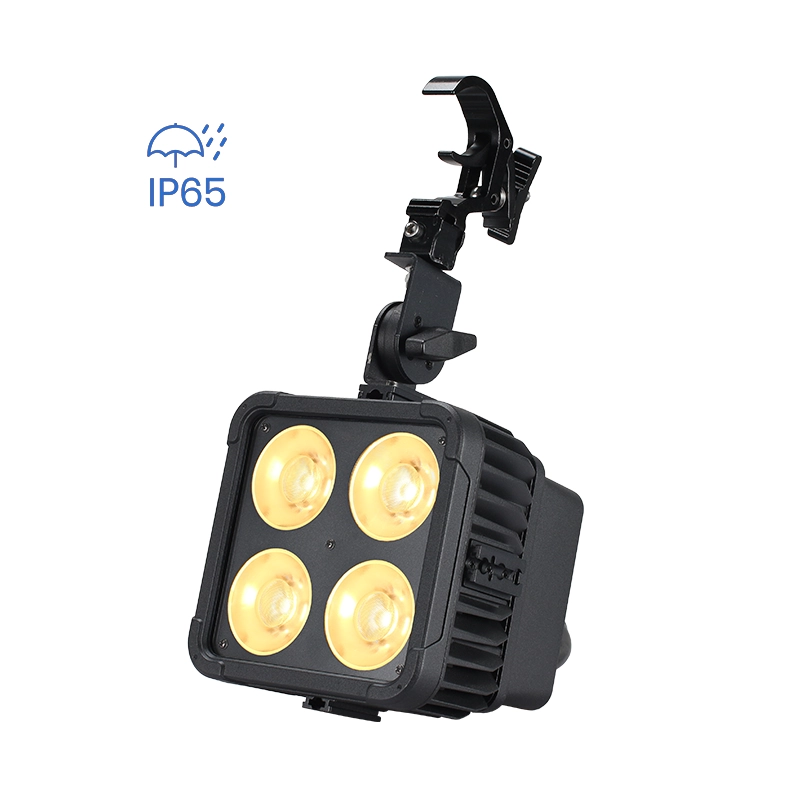
Magic Cube V8 IP
Want to get more up-to-date news?
If you have any comments or good suggestions, please leave us a message; later our professional staff will contact you as soon as possible.

We are professional stage lighting manufacturers offering OEM and ODM LED stage lights.
Contact
Email us
Call us
Address
No.6 Longnan Road, Huashan Town, Huadu District Guangzhou, Guangdong Province, China.
LiteLEES Professional
Less Lighting