
How energy-efficient are LED moving heads lighting units?
- 1) How much real energy (kWh) and operating cost will I save replacing 1000W discharge moving heads with LED moving heads — a worked example?
- 2) How do I compare perceived brightness (lux on stage/audience) between LED moving heads and older discharge fixtures — and what calculations should I use?
- 3) I’m outfitting a broadcast stage — how do I ensure LED moving heads are truly flicker-free on camera (including high-frame-rate and variable shutter angles)?
- 4) What electrical planning should I do for large LED moving head rigs — accounting for power factor, inrush, and breaker sizing (examples for US and EU mains)?
- 5) I need consistent color across a mixed fleet purchased over several years — how do I achieve and maintain matching CRI/TLCI and CCT across LED moving heads?
- 6) What maintenance and serviceability factors most affect long-term energy efficiency and uptime for LED moving heads?
As professional rigging and production teams move from discharge lamps to LED moving heads, a lot of online content repeats general claims but lacks the actionable detail buyers need. Below are six specific, beginner-pain-point questions with in-depth, verifiable answers to help you choose and spec LED moving head lights for theatre, concert, corporate AV, and broadcast use. The guidance is based on typical manufacturer datasheets, standard electrical practice and measured metrics commonly published by fixture makers.
1) How much real energy (kWh) and operating cost will I save replacing 1000W discharge moving heads with LED moving heads — a worked example?
Why this matters: many buyers see “LED uses 60% less power” claims but can’t translate that into kWh or budget projections for a tour, venue or festival.
How to calculate: use this formula for each fixture: kWh per event = (rated wattage ÷ 1000) × hours per event. For cost: multiply kWh by your local electricity price.
Worked example (realistic, conservative numbers): Replace 20 discharge moving heads rated 1000 W (lamp ballast + lamp + cooling losses) with 20 LED moving heads rated 400 W.
- Discharge consumption: 20 × 1.0 kW × 6 hours = 120 kWh/event
- LED consumption: 20 × 0.4 kW × 6 hours = 48 kWh/event
- Saving per event = 72 kWh
If your venue pays $0.15/kWh (typical published US average ranges $0.12–0.20/kWh depending on location), saving per event = 72 × $0.15 = $10.80. For 100 events/year that’s $1,080. If you run bigger rigs (50–100 fixtures) or longer strike/greenrooms, savings scale linearly: a 100-fixture rig with the same swap saves ~360 kWh per 6-hour show.
Notes and caveats:
- Discharge fixture “1,000 W” ratings often understate ballast losses and auxiliary cooling; actual consumed power may be higher. LED fixture wattages are steady-state values listed on datasheets.
- Don’t compare lamp wattage to LED driver wattage alone — compare measured power draw (use a power meter). Manufacturers often publish measured input power and lux curves.
- Also consider lifecycle costs: lower lamp replacement, less HVAC load, and reduced rigging weight translate to additional savings beyond raw kWh.
2) How do I compare perceived brightness (lux on stage/audience) between LED moving heads and older discharge fixtures — and what calculations should I use?
Why this matters: lumen numbers are often quoted, but perceived brightness at the target (stage, cyclorama, audience) depends on beam angle, optics, distance and fixture optical losses.
Key facts:
- Manufacturer lux charts (measured lux at distance/beam angle) are the most reliable spec for comparing fixtures — request them and compare at the same distance.
- Use the conversion: lux = lumens ÷ beam area. For a circular beam at distance r (meters) with beam angle θ (radians): beam radius = r × tan(θ/2); area = π × (beam radius)^2; lux = lumens ÷ area.
Example method (use manufacturer lumen value or measured beam lumen):
- Get the fixture’s total output in lumens (or better: beam lumens for beam-type moving heads) from the datasheet.
- Choose your working distance (e.g., 15 m from stage center to truss).
- Compute beam area with the beam angle and distance, then compute lux. Compare the two fixtures’ lux numbers side-by-side.
Practical guidance:
- Modern LED moving heads typically deliver higher luminous efficacy (lm/W) in the LED engine and more usable beam lumens at narrow angles because optics waste less light than older discharge fixtures.
- For tight beam applications (beam fixtures with <5° beams) manufacturers often publish lux at specific distances — always request the lux table for the beam angle you plan to use (spot vs beam vs wash presets change optics).
- If a vendor only gives total lumens, insist on measured lux curves. Two fixtures with similar lumens but different beam angles produce very different illuminance on target.
3) I’m outfitting a broadcast stage — how do I ensure LED moving heads are truly flicker-free on camera (including high-frame-rate and variable shutter angles)?
Why this matters: LEDs are driven by electronics. Low PWM frequency or poorly implemented drivers cause banding and flicker on cameras; what’s invisible to the eye can ruin a broadcast.
What to check in specs and what to test:
- Flicker-free statement: look for explicit manufacturer claims such as “flicker-free at any shutter angle” or specified flicker-free operation up to X kHz. Terms like “flicker-free” without conditions are insufficient.
- PWM frequency: for broadcast and high-frame-rate cameras, prefer fixtures using high-frequency PWM or constant-current/regulation solutions. A practical target is PWM frequencies ≥ 20 kHz (above audible range and beyond typical camera rolling shutter aliasing). Many pro fixtures guarantee flicker-free at standard TV frame rates with dedicated modes (e.g., 0–360° shutter equivalence) — ask for documentation.
- Camera testing: test fixtures with your actual cameras at expected shutter angles and frame rates (e.g., 24/25/30/50/60/120/240 fps). Use the highest required frame rate and adjust shutter angles; look for banding/strobing and test moving gobo/iris effects.
- Driver topology: fixtures that advertise specialized LED drivers with active current regulation or hybrid analog dimming produce smoother output than cheap PWM-only drivers.
Recommendation: for broadcast or high-speed capture, require a sample fixture test and ask vendors to run the fixture under your camera conditions. Keep an acceptance clause in procurement that guarantees flicker-free operation under your camera specs.
4) What electrical planning should I do for large LED moving head rigs — accounting for power factor, inrush, and breaker sizing (examples for US and EU mains)?
Why this matters: improper planning causes nuisance tripping, unbalanced loads and stalled shows. LED fixtures are more efficient but their electronics introduce apparent power and inrush behaviors that must be planned for.
Steps and formulas:
- Total active power (kW) = sum of each fixture’s rated input (W) ÷ 1000.
- Apparent power (kVA) = active power (kW) ÷ power factor (PF). Many modern LED moving heads ship with active PFC and PF ≥ 0.90–0.98; ask for measured PF at full power.
- Line current: single-phase I (A) = (kVA × 1000) ÷ line voltage (V). Three-phase I per phase = (kW) ÷ (√3 × V_line × PF).
Example (EU 400 V 3-phase, conservative numbers): 100 fixtures at 450 W each = 45 kW. Assume PF = 0.95.
- Apparent power = 45 kW ÷ 0.95 = 47.37 kVA
- Phase current = 45 kW ÷ (1.732 × 400 V × 0.95) ≈ 68.1 A per phase
Practical notes:
- Inrush current: LED driver inrush can be several times steady-state current at switch-on. For many moving-head drivers, measured inrush is 5–20× nominal for milliseconds. Use soft-start, staggered powering, or inrush limiters for large parallel arrays.
- Breaker sizing: size breakers per local electrical code and account for continuous vs non-continuous loads. Don’t size to exactly steady-state current; include 125% rule where applicable and coordination with upstream distribution.
- Distribution best practice: distribute fixtures across phases and circuits to balance loads; consider dedicated, labeled breaker circuits per truss segment; use true RMS meters for verification on site.
5) I need consistent color across a mixed fleet purchased over several years — how do I achieve and maintain matching CRI/TLCI and CCT across LED moving heads?
Why this matters: LED binning, firmware and age cause color shifts; mixing different batches can produce visible mismatches that hurt broadcast and high-end theatre results.
Practical approach:
- Set procurement criteria: require vendor-specified correlated color temperature (CCT) drift tolerance, delta uv and binning specification. Ask for factory-matched groups or serial-number batches if color matching is critical.
- Target metrics: for broadcast, demand TLCI ≥ 90 (TLCI better predicts camera color accuracy). For general theatrical purposes, CRI ≥ 80–90 is common; for accurate skin tones and film, aim higher (TLCI/CRI ≥ 90).
- Calibration & firmware: require fixtures to support calibrated color presets and RDM/Art-Net remote firmware updates. When adding new fixtures, load the same color profiles and firmware versions.
- On-site measurement: use a spectrometer or colorimeter to measure CCT and delta uv of sample fixtures. Adjust color calibration in the lighting desk or fixture LUT if available. Keep a record of measured offsets for each fixture.
- Age and temperature effects: LEDs shift color with age and junction temperature. Ensure adequate thermal management; run long burn-in cycles during acceptance testing to measure shift.
Result: with vendor cooperation (bin matching, LUTs, firmware), regular on-site measurement and consistent maintenance, you can keep a mixed fleet within acceptable color tolerances for broadcast and high-end theatre.
6) What maintenance and serviceability factors most affect long-term energy efficiency and uptime for LED moving heads?
Why this matters: LED engines degrade less quickly than lamps, but drivers, fans, optics and mechanics determine real-world lifetime, heat, and efficiency.
Maintenance checklist and expected lifetimes:
- LED engine: many pro fixtures are specified with L70 (70% lumen maintenance) at 50,000–100,000 hours per manufacturer TM-21 extrapolations. But L70 depends on operating temperature (Tc). Verify the vendor’s TM-21/L70 statement and test conditions.
- Fans and cooling: active cooling fans are common; fans typically have shorter lifespans (10,000–50,000 hours). Clean filters and replace fans on preventative schedule to avoid thermal throttling that reduces output.
- Power supplies and drivers: these are the most common field-replaceable electronic failures. Keep spare drivers and test replacement procedures during acceptance. Ask about MTBF and warranty terms.
- Optics and gobos: dust on lenses reduces beam efficiency and changes beam quality. Include optical cleaning in routine maintenance and stock spare gobos/irises if production-critical.
- Mechanical wear: pan/tilt gearboxes, belts and encoders should be inspected. Proper lubrication and routine calibration (homing/limits) reduce motor stress and energy spikes during positioning moves.
- IP rating and outdoor use: for outdoor shows use fixtures with appropriate IP ratings; ingress leads to corrosion that degrades thermal paths and optical efficiency.
Serviceability recommendations:
- Choose designs with modular, field-replaceable LED engines, drivers, and fans.
- Keep a small stock of critical spares (drivers, fans, fuses, gobos) sized to your fleet and tour schedule.
- Document routine cleaning and thermal checks (measure LED Tc) to detect early drift or degradation that affects luminous efficacy.
Concluding summary — advantages of LED moving heads
LED moving heads deliver measurable energy savings, reduced HVAC load, lighter rigging, and lower lamp-replacement costs. They provide advanced control (pixel mapping, CMY/RGBW color mixing, programmable gobos), faster lamp-start and dimming flexibility, and—when specified correctly—broadcast-safe flicker-free operation. The net result is lower total cost of ownership and expanded creative control. For reliable results, require measured lux curves, documented power factor and inrush data, TM-21/L70 statements, flicker tests with your cameras, and serviceability options at procurement.
If you’d like a tailored spec sheet or a quote to compare specific moving heads lighting models for your venue or tour, contact us for a quote at www.litelees.com or email litelees@litelees.com.
Products
Can I customize the functions or software of the lights?
Absolutely. As a manufacturer with independent R&D capabilities, we offer customization for both hardware and software (such as DMX channel layout, built-in programs, or UI language). Contact us with your project needs, and our team will provide tailored solutions.
Are your lights suitable for large-scale events and outdoor use?
Yes. Our professional stage lights—especially the Beam, BSW 3-in-1, and LED Par Series—are engineered with high-output brightness, wide beam angles, and robust housing. Some models come with IP-rated protection, making them suitable for outdoor applications like concerts, festivals, and sports events.
Company
Do you have your own factory?
Yes. We own a sheet metal factory and a complete in-house production line—from PCB to final assembly—ensuring strict quality control and fast delivery.
What is LiteLEES’s main business?
LiteLEES specializes in the design, development, manufacturing, and sales of professional stage lighting, including moving head lights, beam lights, spot lights, wash lights, and LED par lights.
Can LiteLEES handle OEM/ODM orders?
Absolutely. With our strong R&D capabilities and advanced manufacturing, we can customize designs, features, and branding to meet your specific needs.
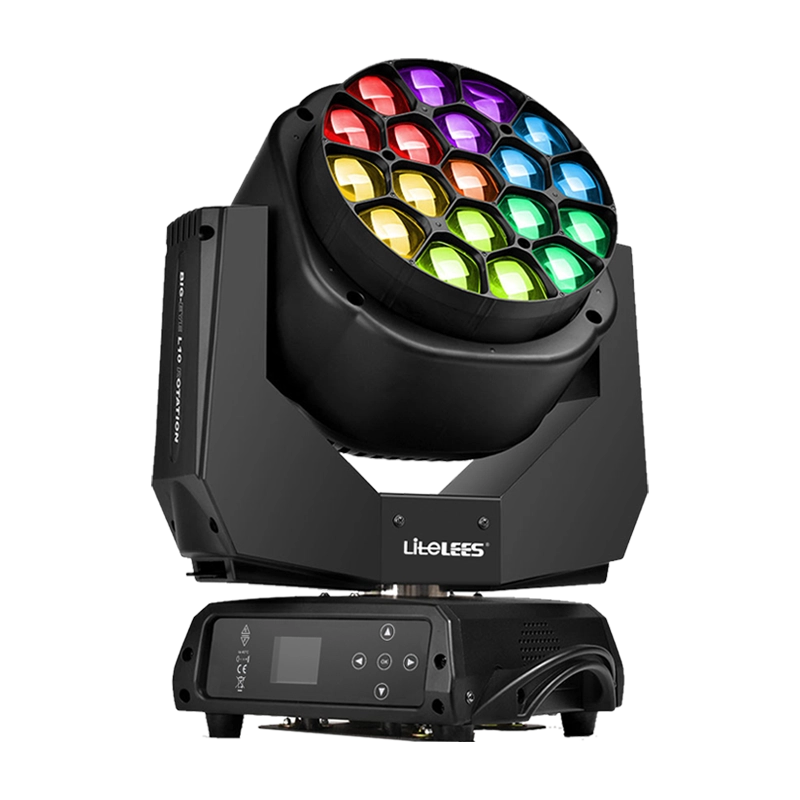

Stormy Shake Blinder IP
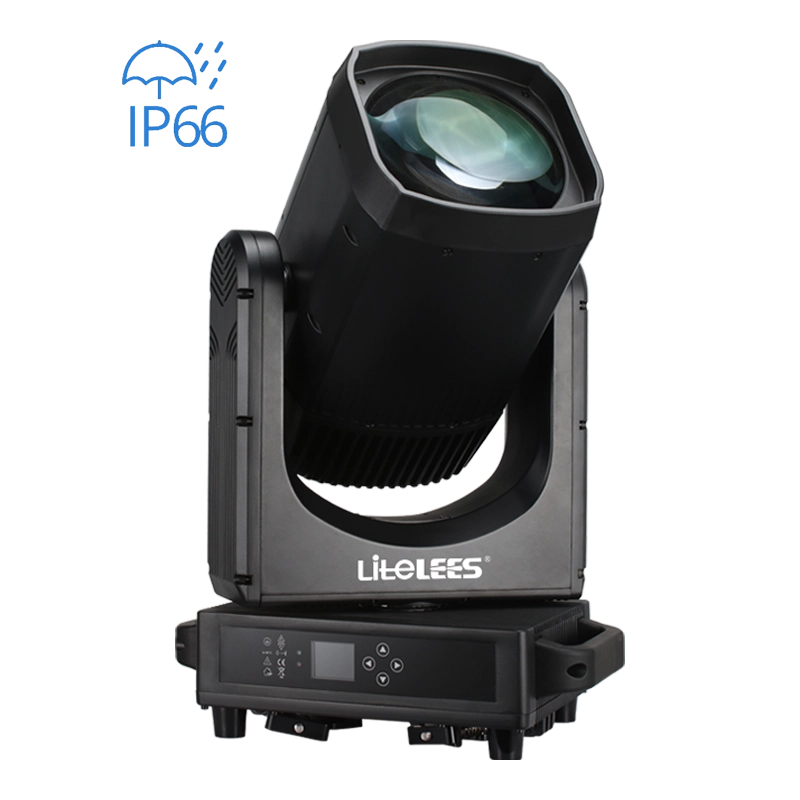
LiteLEES LUMIX BEAM 420 IP
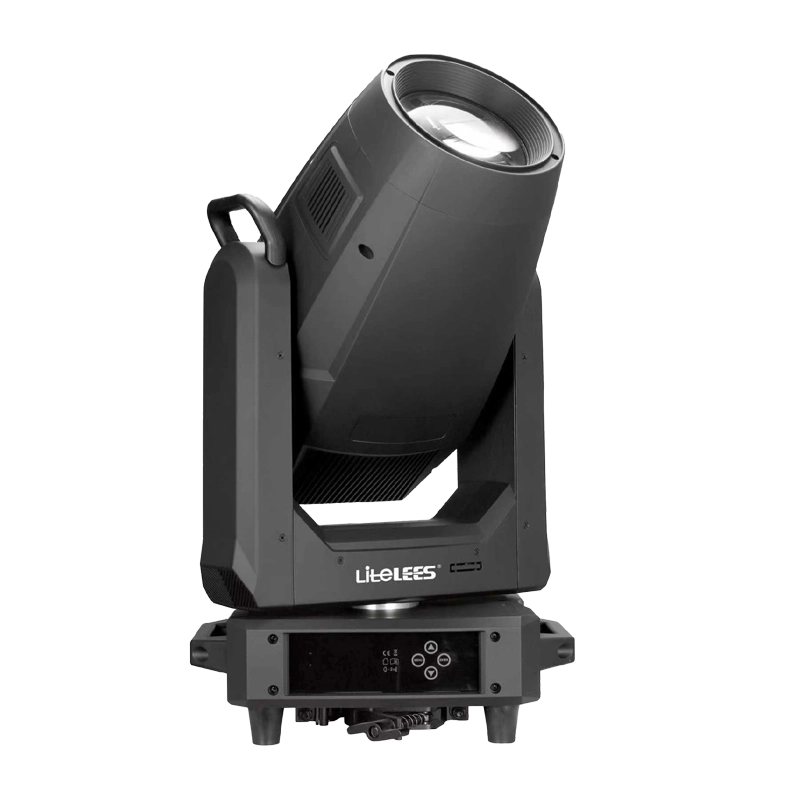
LP Profile 900
Want to get more up-to-date news?
If you have any comments or good suggestions, please leave us a message; later our professional staff will contact you as soon as possible.

We are professional stage lighting manufacturers offering OEM and ODM LED stage lights.
Contact
Email us
Call us
Address
No.6 Longnan Road, Huashan Town, Huadu District Guangzhou, Guangdong Province, China.
LiteLEES Professional
Less Lighting