
A Stage of Limitless Possibilities: Moving Head lights Deliver Precise Control and Versatile Effects
- Quick Summary: Key Takeaways for Lighting Designers
- What Are Moving Headlights, and Why Are They Essential?
- Core Benefits
- The Trinity of Versatility: Beam, Spot, and Wash Explained
- Fixture Types Breakdown
- Engineering Precise Control: The Mechanics Behind the Movement
- Technical Control Features
- Unlocking Visual Creativity: Gobos, Prisms, and Color Mixing
- Creative Tools
- Expert Tips: Programming Complex Light Shows
- Programming Best Practices
- Future Outlook: Moving Head Trends for 2026 and Beyond
- Emerging Trends
- Conclusion & Call to Action
Modern stage lighting relies on the dynamic range of motion and intensity provided by moving head fixtures. Whether illuminating a concert arena or a theater stage, DMX512 intelligent lighting control allows designers to manipulate these powerful tools with exact precision, transforming static environments into immersive visual experiences.
Quick Summary: Key Takeaways for Lighting Designers
Moving headlights are the most versatile tools in a lighting rig, offering 360-degree motion, dynamic beam shaping, and efficient LED technology to create complex visual narratives. They allow designers to replace multiple static fixtures with a single, multi-functional unit that can change color, position, and texture instantly.
- Flexibility: Combine pan/tilt motion with real-time beam adjustments.
- Efficiency: Modern LED and hybrid units reduce power draw while boosting output.
- Synchronization: Complex shows are orchestrated via precise DMX protocols.
- Variety: Distinct beam, spot, and wash functions serve specific design roles.
What Are Moving Headlights, and Why Are They Essential?
Moving headlights are intelligent lighting fixtures equipped with motorized yokes that pan and tilt the light source, enabling dynamic beam movement across any axis of the stage. Unlike static PAR cans or ellipsoidals, these automated luminaires can reorient themselves remotely, essentially serving as multiple lights in one location.
These fixtures are the backbone of modern touring and theatrical productions because they maximize rig efficiency. Instead of hanging twenty static lights to cover different positions, a designer can hang five moving heads that reprogram their focus points instantly. This versatility is powered by DMX512 intelligent lighting control, the industry-standard protocol that manages every attribute from movement speed to color saturation.
Core Benefits
- Dynamic Movement: Create sweeping aerial effects or subtle focus shifts.
- Multifunctionality: One fixture can act as a spot, wash, or beam light.
- Real-Time Effects: Change gobos, prisms, and colors mid-show without manual intervention.
The Trinity of Versatility: Beam, Spot, and Wash Explained
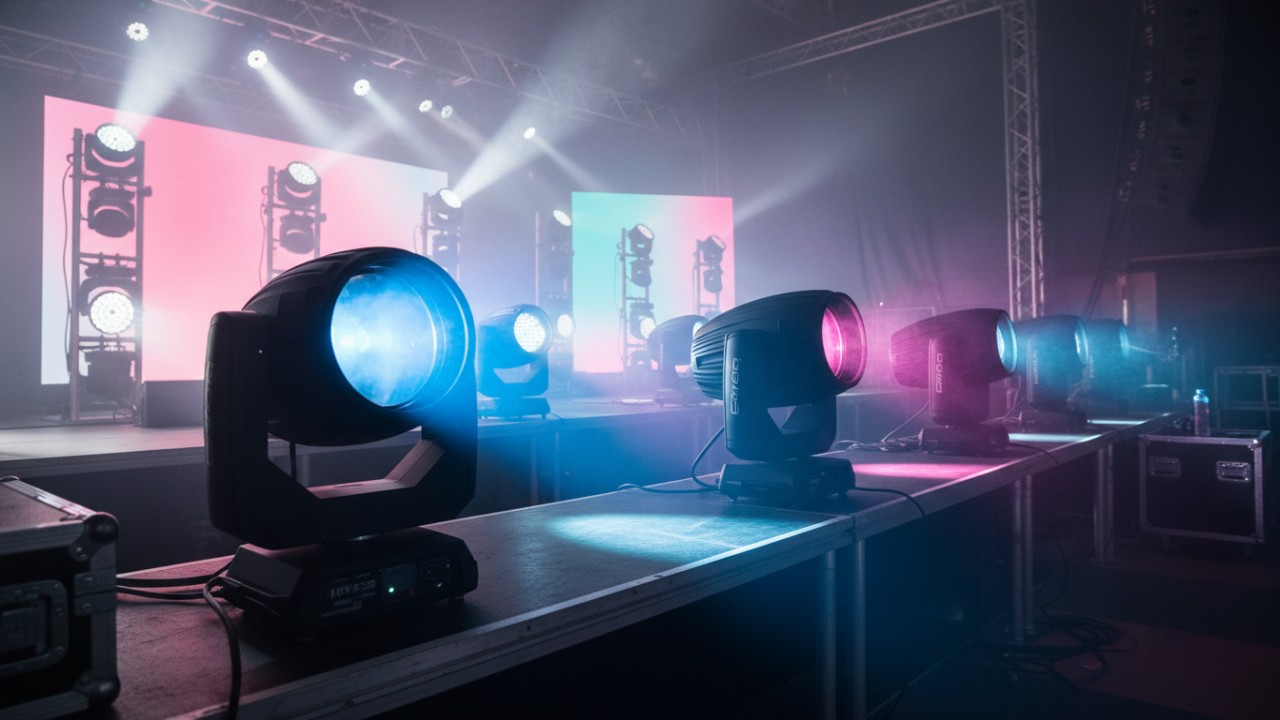
Lighting fixtures are generally categorized into three primary optical types—Spot, Wash, and Beam—each designed to fulfill a specific photometrical purpose on stage. Understanding the distinction between these types is critical for building a balanced rig that provides both atmospheric texture and targeted visibility.
While traditional rigs required separate units for each role, the industry is shifting toward hybrid moving head fixtures. Manufacturers like LiteLEES (Guangzhou Lees Lighting Co., Ltd.) have pioneered 3-in-1 solutions that integrate all three optical modes into a single chassis. This innovation allows a single fixture to transition from a razor-sharp beam to a soft-edge wash instantly, saving significant truck space and budget.
Fixture Types Breakdown
- Spot Fixtures: The primary tools for texture and focus. They feature sharp edges perfect for projecting patterns and illuminating specific performers.
- Wash Fixtures: These produce soft-edged pools of light used to bathe the stage in uniform color, blending seamlessly to eliminate dark spots.
- Beam Fixtures: Known for their narrow, intense shafts of light (often under 5 degrees), these cut through fog for high-energy aerial effects.
- Hybrid Solutions: Versatile units that utilize variable zoom and frost filters to mimic all three functions effectively.
Engineering Precise Control: The Mechanics Behind the Movement
Precise control in moving heads refers to the fixture's ability to execute smooth, non-jittery movements and repeatable positioning through high-resolution stepper motors and advanced digital protocols. High-quality fixtures utilize 16-bit resolution for pan and tilt, offering 65,536 steps of movement compared to the coarse 256 steps of standard 8-bit control.
According to the Entertainment Services and Technology Association (ESTA), the ANSI E1.11 standard (DMX512-A) ensures that these complex digital instructions are transmitted reliably across manufacturers. Automated luminaire programming relies on this standardization to manage the massive channel counts required by modern fixtures. A single high-end hybrid light might consume 30+ DMX channels to manage fine motor control, effect speeds, and color mixing wheels.
Technical Control Features
- 16-Bit Resolution: Essential for slow, cinematic pans without visible "stepping."
- Stepper Motors: Provide the mechanical torque and braking needed for rapid stops and starts.
- Feedback Sensors: Optical encoders that automatically correct the head's position if it is physically bumped.
- DMX Channel Allocation: Granular management of fine pan/tilt and speed channels for fluid motion.
Unlocking Visual Creativity: Gobos, Prisms, and Color Mixing
Visual creativity in stage lighting is unlocked through optical modifiers like gobos (patterns), prisms, and color mixing systems that manipulate the beam's texture and hue. These components allow designers to sculpt light into 3D forms, turning a simple beam into a complex array of rotating textures.
Gobo projection effects are central to this capability. By inserting a metal or glass disc into the optical path, the light projects images ranging from abstract breakups to corporate logos. When combined with LED stage lighting photometrics, designers can achieve saturated, punchy colors without the heat of traditional discharge lamps. For accurate color representation, engineers reference standards defined by the International Commission on Illumination (CIE), ensuring that LED sources render costumes and sets naturally.
Creative Tools
- Gobo Morphing: Rack focusing between two gobo wheels to create animated, organic textures.
- Prism Effects: Using 3-facet or linear prisms to split the beam, covering a wider area with rotating shafts of light.
- CMY vs. RGBW: Subtractive (Cyan-Magenta-Yellow) mixing offers deep, paint-like palettes, while additive (Red-Green-Blue-White) provides high-intensity saturation.
- Frost & Zoom: Variable frost filters diffuse the beam edge, instantly converting a hard spot into a soft wash.
Expert Tips: Programming Complex Light Shows
Programming moving heads requires a strategic approach to data management, utilizing palettes and presets to streamline the creation of complex cues and chase sequences. Efficient programming is not just about creativity; it is about organizing the underlying data so that updates—like changing a focus position for a new venue—take minutes rather than hours.
Automated luminaire programming is best handled by first building a "library" of building blocks: Position Palettes (where the lights point), Color Palettes, and Beam Palettes. This object-oriented workflow ensures consistency. For example, if you update the "Lead Singer" position palette, every cue in the show referencing that palette updates automatically.
Programming Best Practices
- Use Palettes/Presets: Never program raw DMX values directly into cues; always reference presets for easy editing.
- Marking (Move-in-Black): Pre-position fixtures while the dimmer is at 0% to prevent visible, distracting movements during dark scenes.
- Fan Effects: Utilize the "fan" function on your console to spread beams symmetrically across the stage without manually focusing each light.
- Group Management: Divide your rig into logical subgroups (e.g., Odd/Even, Upstage/Downstage) to create dynamic, flowing chase effects.
Future Outlook: Moving Head Trends for 2026 and Beyond
The future of moving head technology is trending toward AI-integrated tracking, higher efficiency eco-designs, and robust weather resistance becoming standard for all fixtures. As we look toward 2026, the industry is moving away from the fragile, power-hungry fixtures of the past in favor of intelligent, sustainable units.
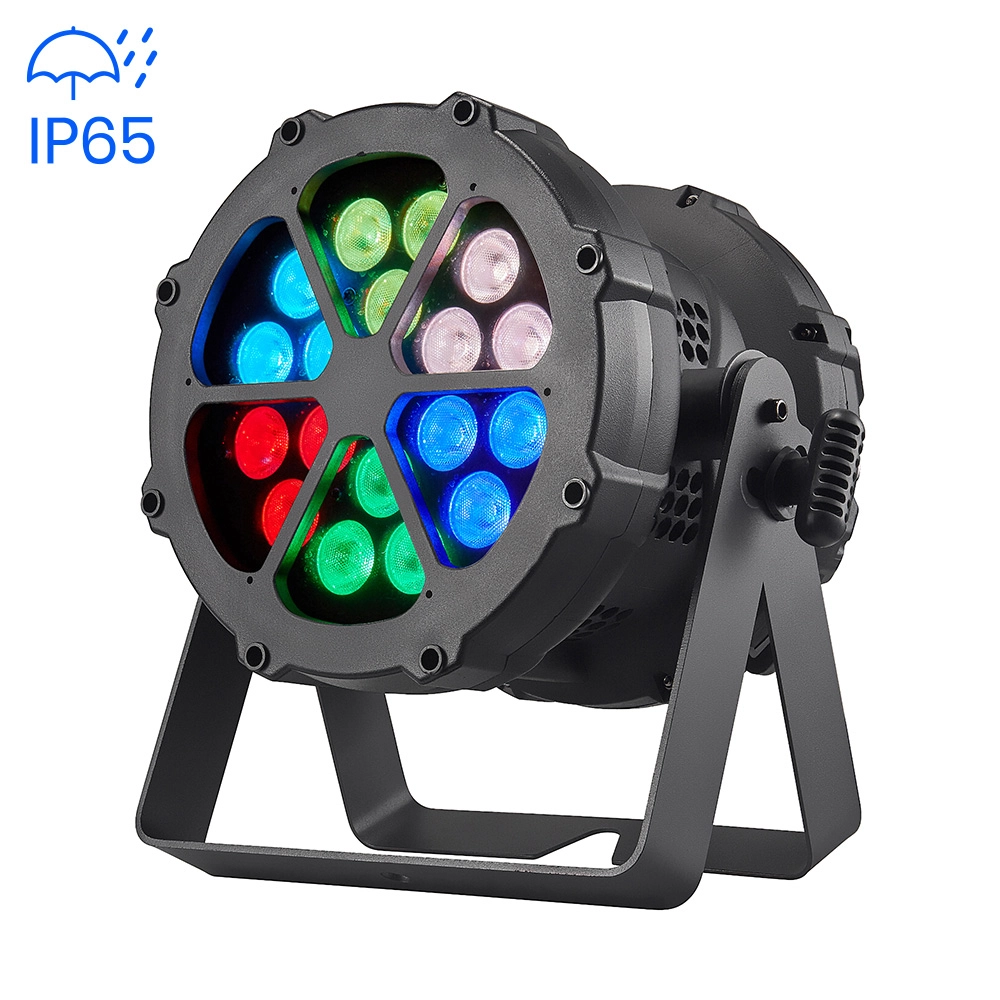
One significant shift is the standardization of IP65 ratings. According to the International Electrotechnical Commission (IEC), an IP65 rating guarantees protection against dust ingress and low-pressure water jets. Previously reserved for outdoor-specific lights, this durability is becoming standard for indoor fixtures as well, reducing maintenance caused by fog fluid residue and dust accumulation.
Emerging Trends
- AI-Assisted Tracking: Fixtures that use cameras and algorithms to automatically follow performers, reducing the need for manual spot operators.
- IP65 Standardization: Waterproof housing is becoming the norm to extend fixture lifespan and reduce maintenance cycles.
- Eco-Design: A focus on recyclable materials and higher lumens-per-watt efficiency to meet stricter environmental regulations.
- Wireless DMX: Built-in wireless protocols (like LumenRadio) eliminate the need for extensive copper data cabling.
Conclusion & Call to Action
Moving headlights represent the pinnacle of stage lighting technology, offering the perfect blend of artistic versatility and mechanical precision. From the robust DMX512 intelligent lighting control to the optical brilliance of hybrid moving head fixtures, these tools empower designers to create environments limited only by their imagination.
With over a decade of experience and 50+ patents, Guangzhou Lees Lighting Co., Ltd. (LiteLEES) continues to lead this evolution, delivering ISO9001-certified solutions that power stages in over 100 countries. Whether you need high-performance beam lights or versatile 3-in-1 fixtures, our R&D team ensures every unit meets rigorous international standards.
Contact LiteLEES today to discuss your specific lighting needs and elevate your next production.
![Moving Head Stage Lighting Guide: Mastering the Technical and Artistic Essence [2026 Edition] - LiteLEES](https://static.gooecloud.com/upload/img/GY160908357145/moving-head-stage-lighting-guide-mastering-the-technical-and-artistic-essence-2026-edition.png?x-oss-process=image/format,webp/quality,Q_100 "Moving-Head-Stage-Lighting-Guide:-Mastering-the-Technical-and-Artistic-Essence-[2026-Edition] - LiteLEES")
Products
Do your lights support DMX512 and other control protocols?
Yes. All LiteLEES stage lights are fully compatible with DMX512. Many models also support RDM, Art-Net, and wireless DMX (optional), ensuring seamless integration with modern lighting control systems.
What is the lifespan of your LED stage lights?
Our LED lights use high-quality chips with a rated lifespan of over 50,000 hours. Proper usage and maintenance ensure long-term reliability and stable performance, making them a smart investment for any venue.
Company
Where is LiteLEES located?
Our headquarters and manufacturing facility are located in Guangzhou, China, with products exported to over 70 countries worldwide.
Can LiteLEES handle OEM/ODM orders?
Absolutely. With our strong R&D capabilities and advanced manufacturing, we can customize designs, features, and branding to meet your specific needs.
Do you have your own factory?
Yes. We own a sheet metal factory and a complete in-house production line—from PCB to final assembly—ensuring strict quality control and fast delivery.
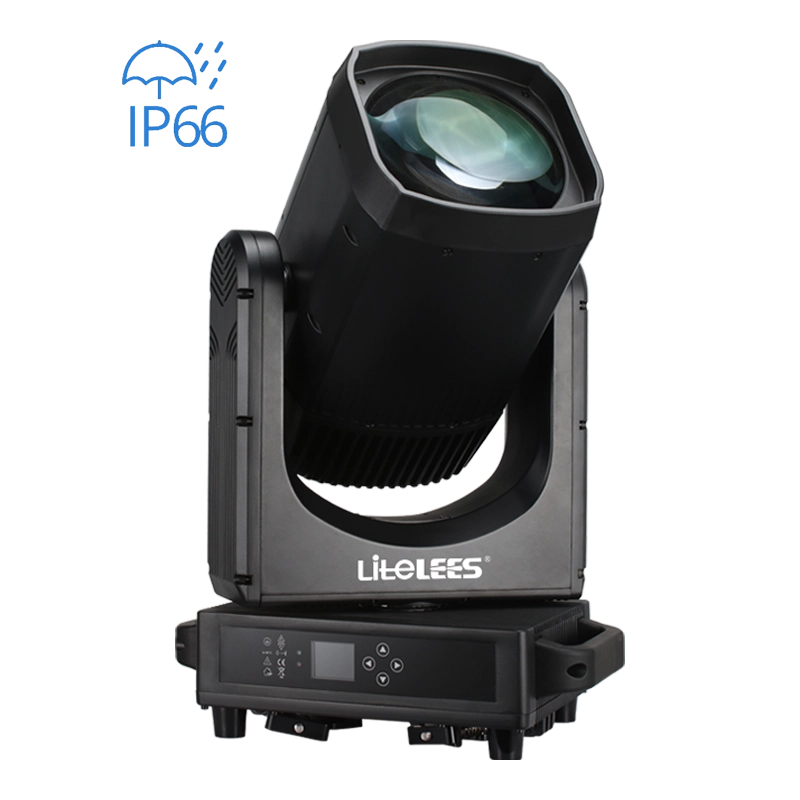
LiteLEES LUMIX BEAM 420 IP

Stormy Shake Blinder IP
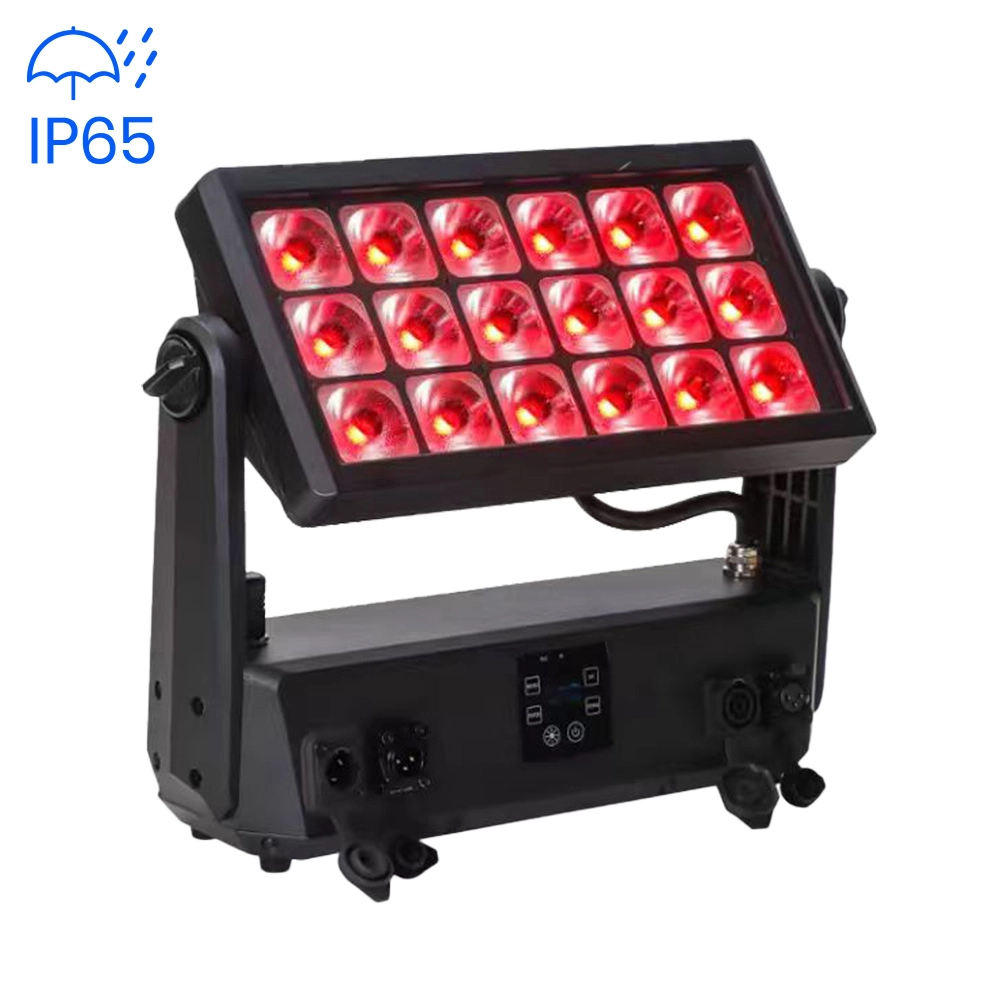
Stormy Battery Flood Light 1820 IP
Stormy par 1812 IP
Want to get more up-to-date news?
If you have any comments or good suggestions, please leave us a message; later our professional staff will contact you as soon as possible.

We are professional stage lighting manufacturers offering OEM and ODM LED stage lights.
Contact
Email us
Call us
Address
No.6 Longnan Road, Huashan Town, Huadu District Guangzhou, Guangdong Province, China.
LiteLEES Professional
Less Lighting