
Moving Head Light: 2026 Professional Guide to Stage Lighting
- What is a Moving Head Light?
- Core Components and Functionality
- Key Takeaways for Event Production
- Why Professionals Prioritize Intelligent Fixtures
- Comparing the Four Core Fixture Types
- 1. Beam Lights
- 2. Spot Lights
- 3. Wash Lights
- 4. Hybrid Fixtures (Beam/Spot/Wash 3-in-1)
- Technical Specifications and Optics
- Advanced Color and Movement Systems
- Expert Tips and Common Pitfalls
- Maximizing Performance and Longevity
- Future Trends: Moving Head Lights in 2026 and Beyond
- Emerging Technologies
- Frequently Asked Questions
- What is the difference between a spot and a wash moving head?
- How many DMX channels does a typical moving head light use?
- Can I use indoor moving head lights outside?
- What are the benefits of LED vs Discharge lamps in 2026?
- How do I sync my moving head lights to music?
- What does a 'Gobo' do in a moving head light?
- What is CMY color mixing?
- What maintenance do moving head lights require?
- References
Modern stage design relies on the versatility and dynamic range of intelligent lighting fixtures. Whether for a stadium concert or an intimate corporate event, understanding the mechanics and software behind moving head lights is essential for any lighting designer in 2026.

What is a Moving Head Light?
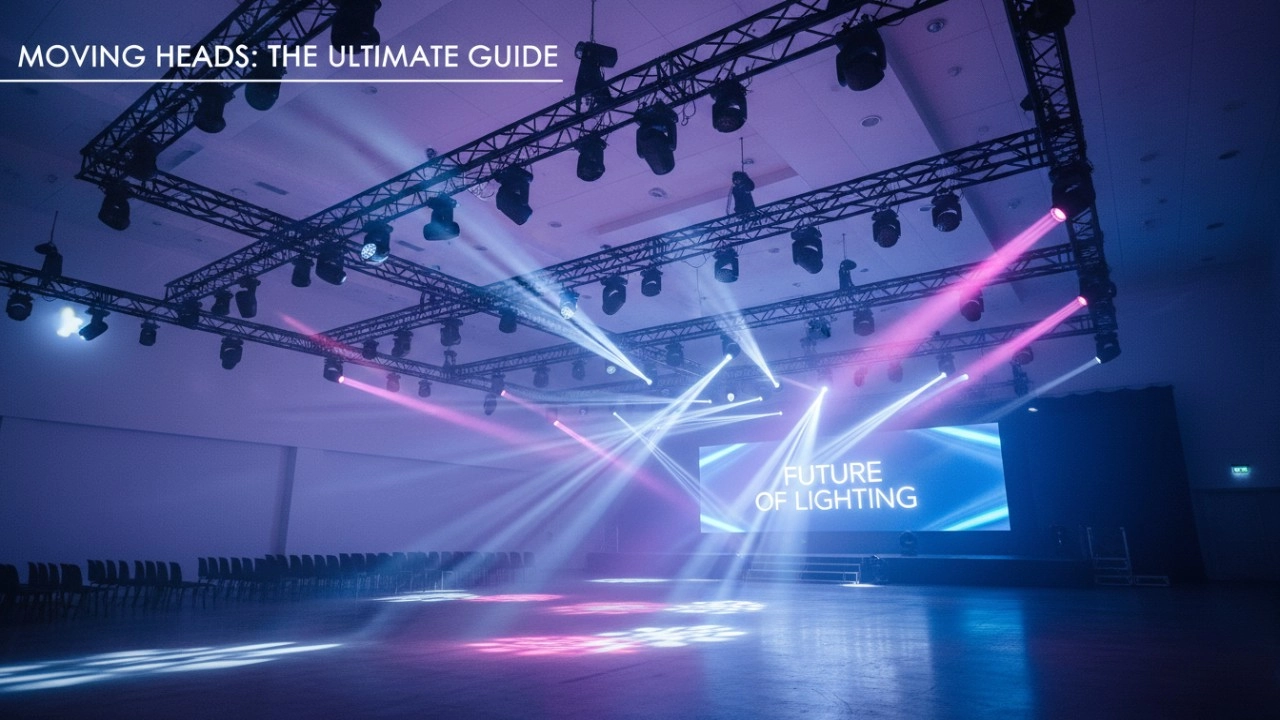
A moving head light is a programmable intelligent lighting fixture that utilizes motorized pan and tilt mechanisms to direct light beams anywhere within a 360-degree sphere. Unlike static fixtures (like PAR cans), moving heads allow designers to change color, focus, shape, and position in real-time using digital control protocols.
Core Components and Functionality
At the heart of every moving head is the yoke, which connects the base (containing the electronics and power supply) to the head (containing the light source and optics). This design enables rapid movement and precise positioning. The primary function of these units is to replace the need for multiple static lights; a single moving head can spotlight a performer, wash the stage in color, and project aerial effects all in the same show sequence.
- Motorized Yoke: Provides Pan (horizontal) and Tilt (vertical) movement.
- Optical Train: Contains lenses, prisms, and frost filters to shape the beam.
- Effect Modules: Houses gobo wheels, color wheels, and iris mechanisms.
Key Takeaways for Event Production
Moving head lights maximize production value by consolidating multiple visual effects into a single, space-saving unit that reduces rigging time and transport costs. For event producers, this translates to higher ROI and more creative flexibility without increasing the hardware footprint.
Why Professionals Prioritize Intelligent Fixtures
Data from the Global Stage Lighting Market Report 2025 indicates that the shift toward automated lighting is driven by the need for efficiency. One moving head can effectively cover the same area as 4-6 static fixtures, drastically reducing cabling and power consumption.
- Space Efficiency: Replaces multiple conventional fixtures, freeing up truss space.
- Automation: Pre-programmed cues via DMX512 control protocols ensure perfect synchronization.
- Versatility: Adaptable for concerts, TV studios, nightclubs, and architectural installations.
- Energy Standards: Modern LED moving head fixtures offer high lumen output with significantly lower power draw than legacy discharge lamps.
Comparing the Four Core Fixture Types
Lighting fixtures are categorized by their optical characteristics, specifically the beam angle and edge sharpness. Choosing the right type is critical for achieving the desired visual impact, whether it is a sharp aerial beam or a soft stage wash.
1. Beam Lights
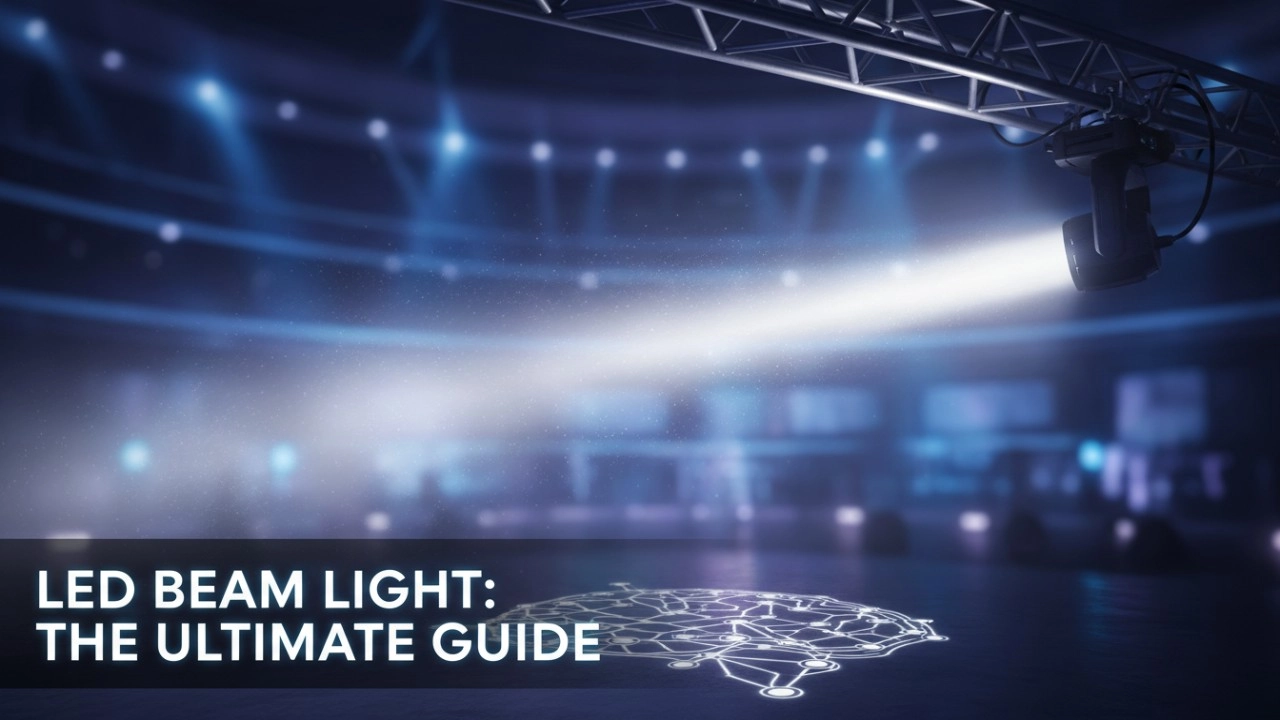
Beam lights produce an ultra-narrow, laser-like shaft of light (often 0°–4°) designed to cut through the air for high-impact aerial effects. They are less about illuminating a subject and more about creating structural geometry in the air.
2. Spot Lights
Spot lights feature a sharp-edged beam capable of projecting detailed images and textures using Gobo projection patterns. They typically include motorized focus and zoom, making them ideal for highlighting specific performers or projecting logos.
3. Wash Lights
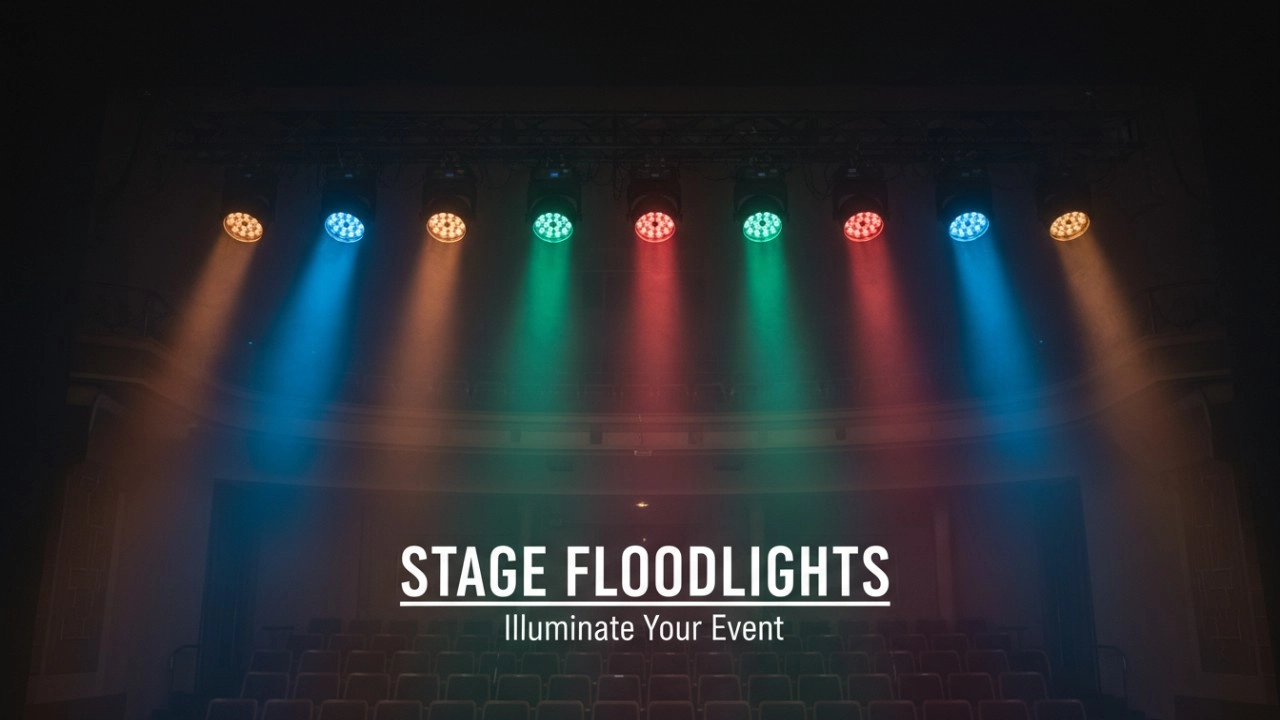
Wash lights utilize a soft-edged, wide-angle lens (often with a Fresnel optic) to bathe large areas of the stage in uniform color. They are essential for setting the mood and providing general illumination (base light).
4. Hybrid Fixtures (Beam/Spot/Wash 3-in-1)
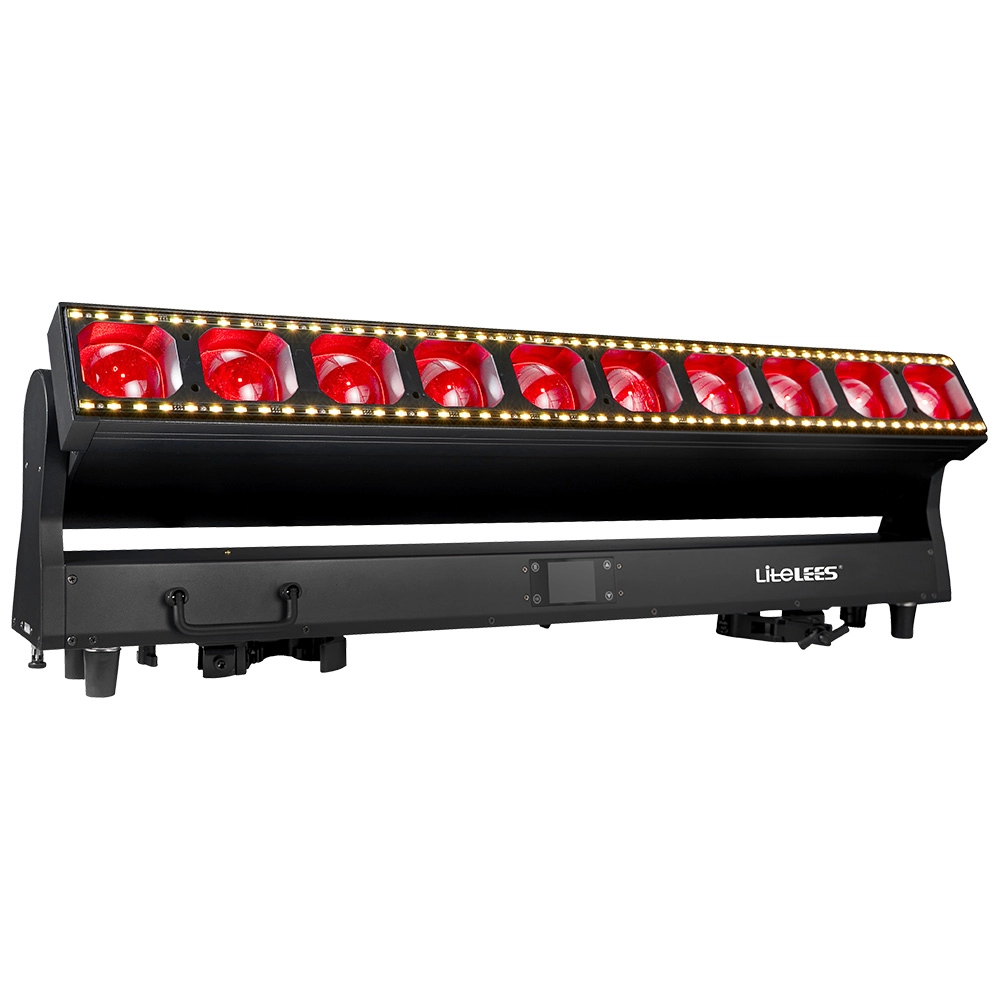
The Hybrid fixture is the industry favorite for 2026, combining the optics of beam, spot, and wash lights into a single versatile unit. At Guangzhou Lees Lighting Co., Ltd. (LiteLEES), our R&D team has focused heavily on this category. Our "3-in-1" fixtures allow rental companies to stock fewer unit types while meeting diverse client needs, a key factor in our growth to serving over 6,000 customers worldwide.
Technical Specifications and Optics
Professional-grade moving heads are defined by the precision of their internal components, specifically the quality of color mixing, movement resolution, and environmental protection. When evaluating fixtures, look beyond raw wattage and focus on optical efficiency and control standards.
Advanced Color and Movement Systems
- CMY Color Mixing Technology: Unlike a standard color wheel with fixed slots, CMY (Cyan, Magenta, Yellow) mixing uses three graduated flags to subtractively mix light. This allows for millions of color nuances and smooth, seamless cross-fades between hues.
- Pan/Tilt Precision: High-end fixtures utilize 16-bit resolution for movement. This ensures that even during extremely slow pans, the light moves smoothly without "stepping" or jitter.
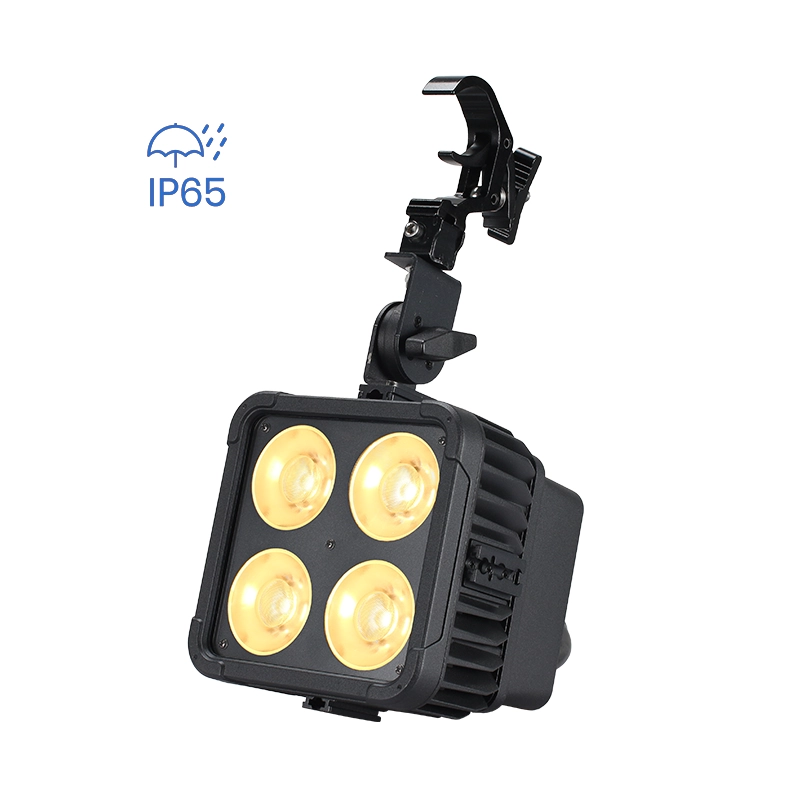
- IP65 Ratings: As outdoor festivals grow, the demand for waterproof fixtures has surged. LiteLEES produces IP65-rated waterproof stage lighting that withstands rain and dust, protecting internal optics and extending the fixture's lifespan significantly compared to standard IP20 units.
Expert Tips and Common Pitfalls
Achieving a professional light show requires more than just owning high-end gear; it demands proper configuration, maintenance, and atmospheric support. Neglecting the physical environment is the most common reason for underwhelming lighting performance.
Maximizing Performance and Longevity
- Haze is Mandatory: Beam lights and aerial effects are invisible in a vacuum. To see the beams mid-air, you must use a hazer or fog machine to provide particulate matter for the light to refract off.
- DMX Addressing: Plan your DMX universe carefully. LED moving head fixtures in "extended mode" can consume 30+ channels each. Use software tools to patch your show before arriving at the venue.
- RDM (Remote Device Management): Utilize RDM-enabled controllers. This allows you to change DMX addresses and monitor fan health remotely, eliminating the need to climb a ladder to adjust a fixture once it is rigged.
- Regular Maintenance: Clean the optical train (lenses and gobos) every 100 hours of operation. Dust accumulation on the lens can reduce brightness by up to 20% and cause internal overheating.
Future Trends: Moving Head Lights in 2026 and Beyond
The future of Stage lighting design 2026 is moving toward autonomous operation, higher energy efficiency, and laser-based light sources. As technology matures, the gap between creativity and technical limitation continues to narrow.
Emerging Technologies
- AI-Driven Tracking: New systems allow moving heads to automatically track a performer via infrared sensors or camera vision, removing the need for a manual follow-spot operator.
- Laser Phosphor Engines: High-end beam lights are shifting from discharge lamps to laser sources, offering throws of over 100 meters with minimal power consumption.
- Wireless DMX (6GHz): The industry is moving away from copper cables toward stable, encrypted wireless control networks, simplifying setup for complex touring rigs.
- Sustainable Manufacturing: Companies like LiteLEES are adopting ISO9001 quality management systems to reduce waste and produce fixtures that are modular and easier to repair, aligning with global sustainability goals.
Frequently Asked Questions
What is the difference between a spot and a wash moving head?
Spots produce a hard-edged beam capable of projecting patterns (gobos) and sharp geometric shapes. Washes produce a soft-edged beam designed to cover large areas with uniform color and generally lack gobo wheels.
How many DMX channels does a typical moving head light use?
Channel usage depends on the fixture's complexity. Entry-level lights typically use 10-15 channels, while professional hybrid fixtures can utilize 30-50+ channels to control fine pan/tilt, individual LED colors, prism rotation, and focus.
Can I use indoor moving head lights outside?
Generally, no. Indoor lights are usually IP20 rated and are not sealed against moisture. For outdoor use, you must use IP65-rated fixtures or protective weather domes. Moisture and dust are the leading causes of circuit failure in intelligent lighting.
What are the benefits of LED vs Discharge lamps in 2026?
LEDs offer lower power consumption, less heat generation, and a lifespan of 50,000+ hours, eliminating the need for expensive bulb replacements. However, high-intensity discharge lamps are still used in massive stadium settings where extreme brightness is required.
How do I sync my moving head lights to music?
For professional results, use a DMX controller or software (like SoundSwitch or grandMA) to program cues that align with the music's grid. While many lights have a "Sound-to-Light" auto mode, it is often too chaotic for professional stage productions.
What does a 'Gobo' do in a moving head light?
A Gobo (Go Between Optics) is a stencil or template placed inside the light's optical path. It projects shapes, logos, or textures (like foliage or breakups) onto stage surfaces or creates volumetric effects in the air.
What is CMY color mixing?
CMY color mixing uses Cyan, Magenta, and Yellow flags to subtract light from the white source, allowing for continuous color blending. This provides millions of possible colors and smoother transitions compared to a standard color wheel, which snaps between fixed colors.
What maintenance do moving head lights require?
Regular maintenance is crucial for longevity. This includes cleaning the fans to prevent overheating, wiping down lenses to maintain brightness, lubricating moving gears (pan/tilt motors), and performing periodic firmware updates.
References
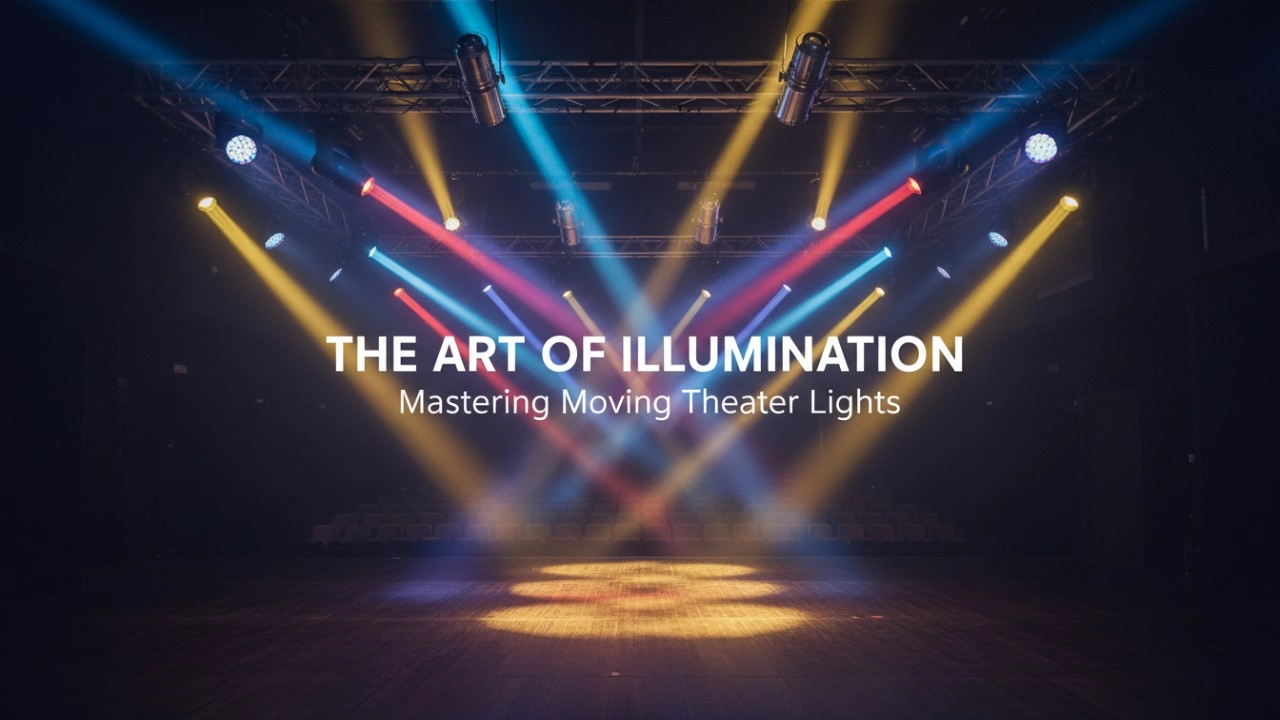
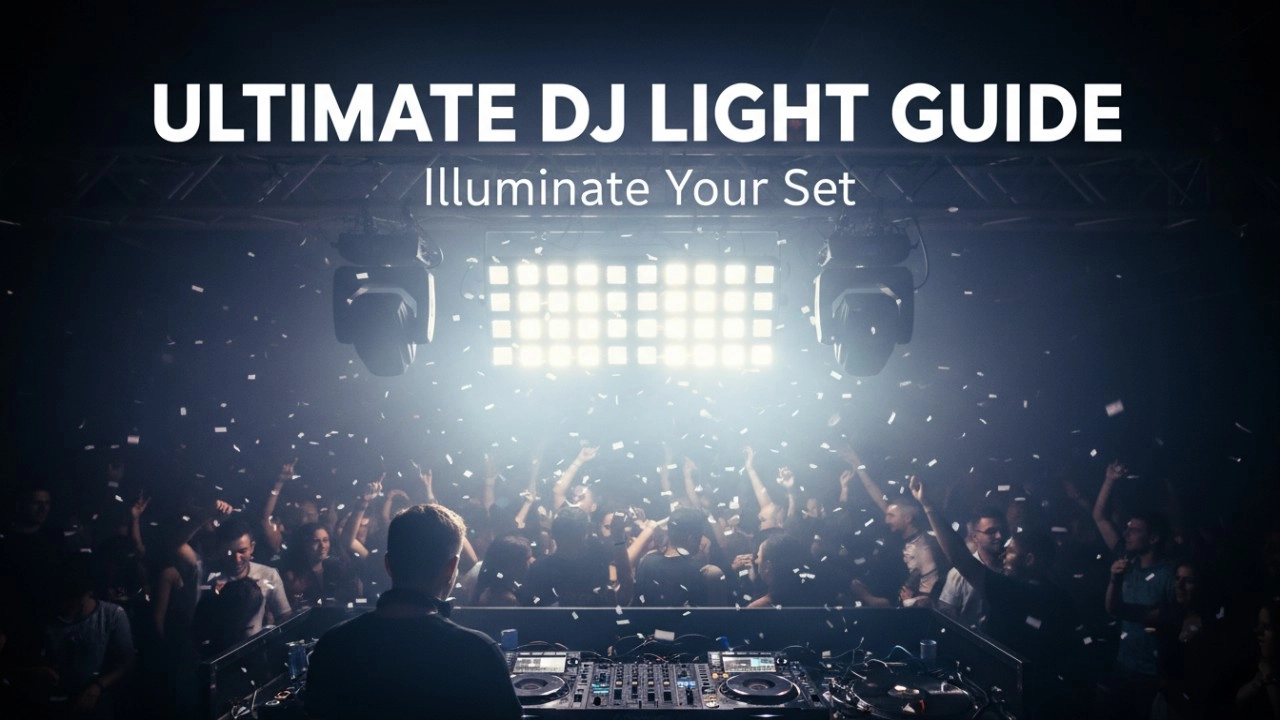
Products
Do your lights support DMX512 and other control protocols?
Yes. All LiteLEES stage lights are fully compatible with DMX512. Many models also support RDM, Art-Net, and wireless DMX (optional), ensuring seamless integration with modern lighting control systems.
What is the lifespan of your LED stage lights?
Our LED lights use high-quality chips with a rated lifespan of over 50,000 hours. Proper usage and maintenance ensure long-term reliability and stable performance, making them a smart investment for any venue.
Company
What is LiteLEES’s main business?
LiteLEES specializes in the design, development, manufacturing, and sales of professional stage lighting, including moving head lights, beam lights, spot lights, wash lights, and LED par lights.
Can LiteLEES handle OEM/ODM orders?
Absolutely. With our strong R&D capabilities and advanced manufacturing, we can customize designs, features, and branding to meet your specific needs.
What certifications do your products have?
All LiteLEES products are certified by CE, RoHS, FCC, and BIS. Our factory is ISO9001 quality management system certified.
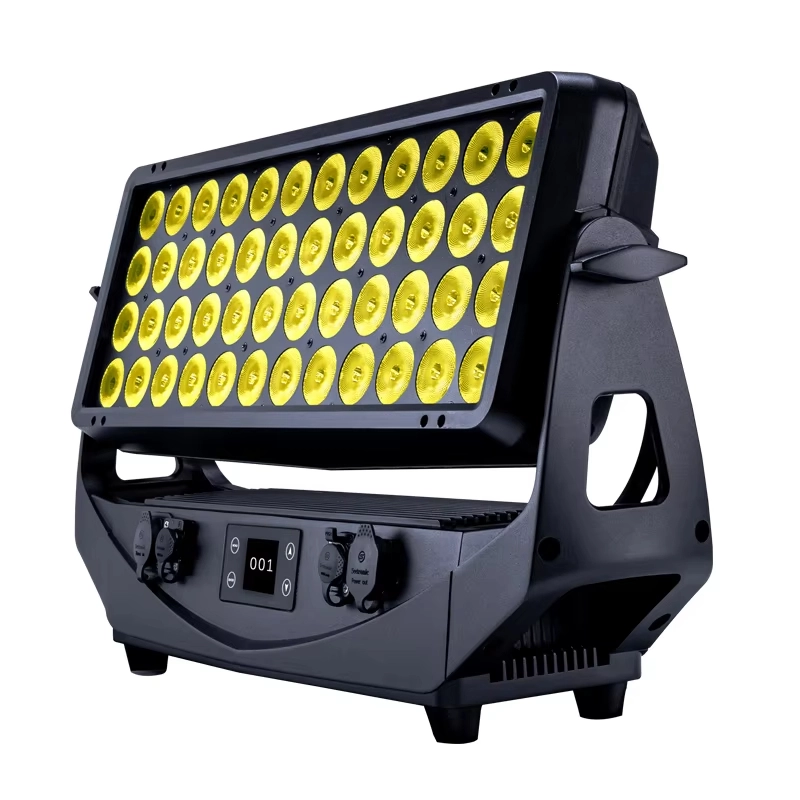
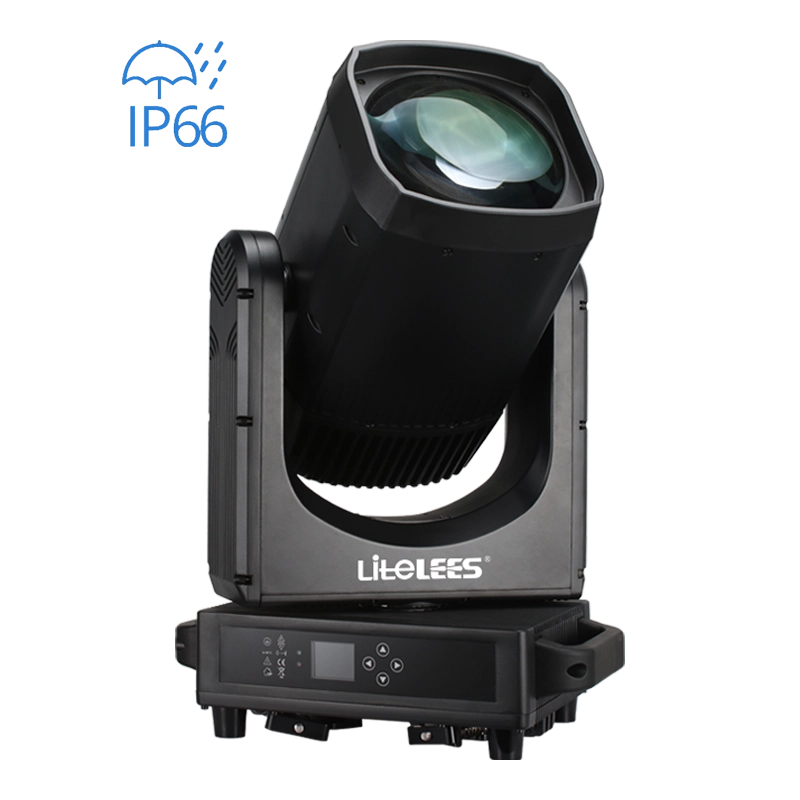
LiteLEES LUMIX BEAM 420 IP
Magic Cube V8 IP
Want to get more up-to-date news?
If you have any comments or good suggestions, please leave us a message; later our professional staff will contact you as soon as possible.

We are professional stage lighting manufacturers offering OEM and ODM LED stage lights.
Contact
Email us
Call us
Address
No.6 Longnan Road, Huashan Town, Huadu District Guangzhou, Guangdong Province, China.
LiteLEES Professional
Less Lighting