
LED stage lighting vs traditional fixtures: which is best for my budget?
- 1. How do I calculate the true operating cost (energy + maintenance + HVAC) when replacing 1 kW tungsten fixtures with LED equivalents for a small blackbox used 4 nights/week?
- 2. Which LED fixture types best replace tungsten ellipsoidals and PAR cans for a small theatre while preserving beam quality and gobo sharpness?
- 3. What are realistic lux expectations when switching from a 750W Fresnel to a 100W LED Fresnel at 6 m, and how should I compare photometric charts?
- 4. How do I evaluate CRI, TLCI, and TM-30 when accurate skin tones are essential for broadcasted theatre shows?
- 5. Can I mix LED fixtures and legacy discharge/halogen fixtures in the same rig without visible flicker or color shift on camera? What DMX and power considerations must I take?
- 6. What is the expected total cost of ownership and likely trade-in timeline for LED moving heads vs traditional moving mirror profile fixtures for a mid-size touring company?
As a professional content writer, multilingual SEO specialist, and seasoned LED stage lights expert working with theatres, rental houses, and touring productions, I wrote these six long-tail, beginner-pain-oriented questions and in-depth answers to help you make confident lighting purchases. The guidance embeds stage lighting semantic terms—LED wash lights, moving head, DMX controllers, lumen output, CRI/TLCI/TM-30, color temperature, maintenance cost, and power consumption—so you can compare spec sheets and get the right fixtures for your budget and show.
1. How do I calculate the true operating cost (energy + maintenance + HVAC) when replacing 1 kW tungsten fixtures with LED equivalents for a small blackbox used 4 nights/week?
Why this matters: Many buyers only compare purchase price. Energy, lamp replacement, labor, and cooling change the total cost of ownership (TCO) and payback period.
Step-by-step method to calculate realistic operating cost:
- Inventory and usage: Count fixtures, note wattage (e.g., 750W Fresnel or 1 kW ellipsoidal), and estimate weekly hours (4 nights × show length + rehearsals). Use annual hours = weekly hours × 52.
- Energy consumption (kWh): Multiply fixture wattage (kW) × annual hours. Do separately for tungsten and LED equivalents (LED replacement wattage is usually 60–90% lower for similar perceived output). Example method: If 1 kW fixture runs 4 hours × 4 nights = 16 hours/week → 832 hours/year per fixture.
- Energy cost: Multiply kWh × your local electricity rate ($/kWh). Use real local utility rate for accuracy; many US venues range $0.10–0.20/kWh as a starting point.
- Maintenance & lamp replacement: For tungsten, include bulb costs and crew hours. Tungsten bulbs commonly need replacement after 750–2,000 hours depending on lamp type—factor in bulb cost + average labor to replace (e.g., 30–60 minutes per fixture if using lifts). For LED fixtures, manufacturers commonly rate LEDs at ~50,000 hours; include minimal driver replacement risk and occasional fan/optics service. Typical LED maintenance costs are far lower but budget for 2–5% of purchase price annually for spare parts over first 5 years.
- HVAC savings: Calculate waste heat reduction. A 1 kW tungsten emits most of its energy as heat; an LED replacing it at 200W reduces heat load by ~800W. Multiply that heat reduction by HVAC efficiency and local cooling cost to estimate savings—this is non-trivial for long-run venue operations and should be included for multi-hour nightly use.
- Sum and compare: Annual energy + maintenance + extra HVAC cost (for tungsten) vs LED. Divide incremental purchase cost by annual savings to get simple payback years.
Practical thresholds and rules of thumb (based on widely available industry data):
- LED fixtures typically yield 60–90% energy savings versus equivalent tungsten fixtures for the same perceived stage illumination.
- For venues with high hours (>1,000 hrs/year), LED capex often pays back in 1–3 years. For low-use venues (<300 hrs/year), payback can be much longer; evaluate financing, rebates, and maintenance labor costs.
- Always request manufacturer's photometric and power draw spreadsheets; run them through your hours and local $/kWh to derive an accurate TCO.
2. Which LED fixture types best replace tungsten ellipsoidals and PAR cans for a small theatre while preserving beam quality and gobo sharpness?
Why this matters: Small theatres rely on defined beams and crisp gobos from ellipsoidals (ERS) and the soft wash of PAR/Fresnel. Not all LED fixtures reproduce the optical quality you need.
Direct replacement priorities:
- For ellipsoidals / ERS (profiles): choose LED profile fixtures with true optical ellipsoidal barrels, interchangeable shutters, and gobo wheels. Look for zoom ranges that cover your focal distances and a projected gobo size/edge comparable to your legacy ERS. Key specs: zoom range in degrees, beam edge control, fixture throw distance chart, and whether the fixture supports glass gobos (for crisp images).
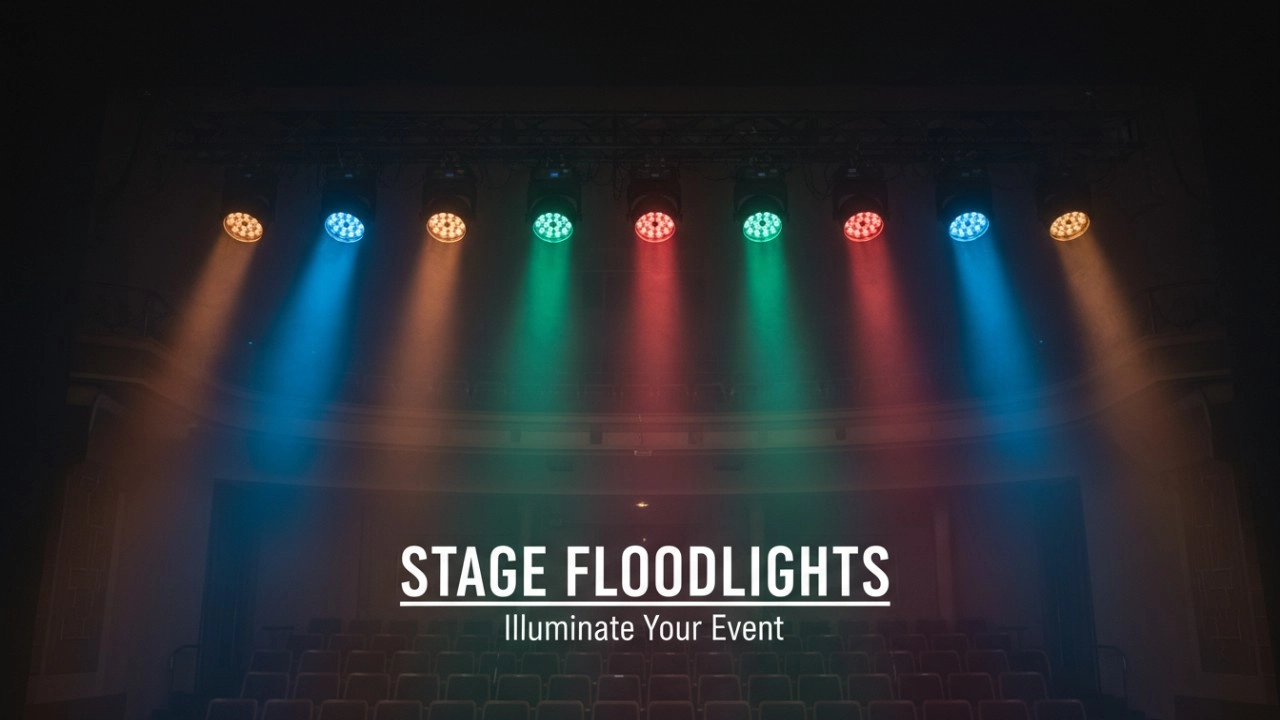
- For PAR cans and Fresnels: LED par-style and Fresnel fixtures can match the soft edge stage wash, but compare beam homogeneity and lens combinations. LED Fresnels with proper lens barrels and diffusers preserve that soft falloff better than cheap par-box style fixtures.
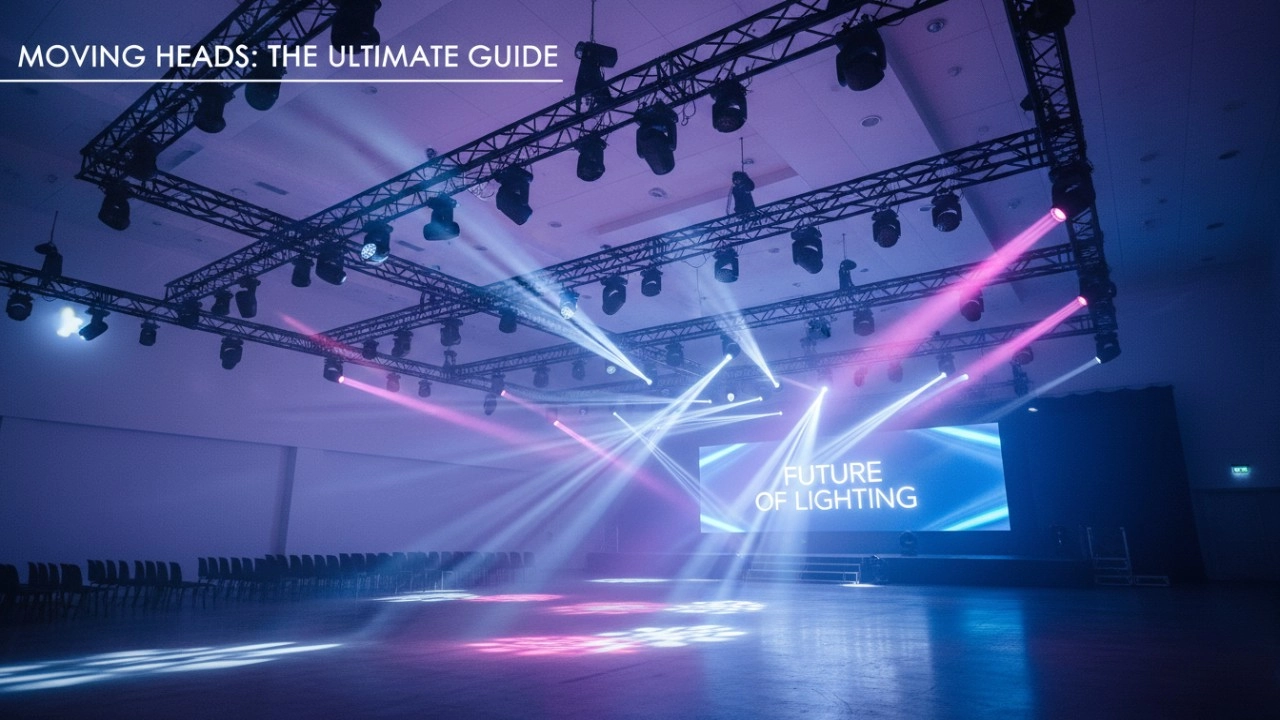
- For spot/beam work: LED moving head profile or spot fixtures with high-quality optics will produce sharper beams and retain iris/gobo function.
Spec checklist when evaluating replacement fixtures:
- Photometric charts and lux at distance (not just lumens).
- Optical design (glass lenses vs plastic, number of optical elements).
- Color mixing technology (RGBW or additive + dedicated white LED for better whites) and adjustable color temperature (2700–6500K).
- Ability to accept glass gobos or rotate metal gobos with defined edges.
How to pilot test: Rent a single LED profile from a reputable brand, mount it in your usual ERS position, and test gobo sharpness, focus range, and photometrics on your stage at typical distance. Trust on-site photometric verification over marketing lumens.
3. What are realistic lux expectations when switching from a 750W Fresnel to a 100W LED Fresnel at 6 m, and how should I compare photometric charts?
Why this matters: Buyers see wattage drop and assume lower lux. Wattage is not a direct proxy for light output; lens, optics, and LED efficacy matter. Use photometric charts and beam angle information.
How to compare correctly:
- Ignore raw wattage when comparing output. Instead compare luminous flux (lumens) and intensity (candelas) reported on photometric sheets. Manufacturer lux-at-distance charts are the best direct comparison—compare lux at your mounting distance.
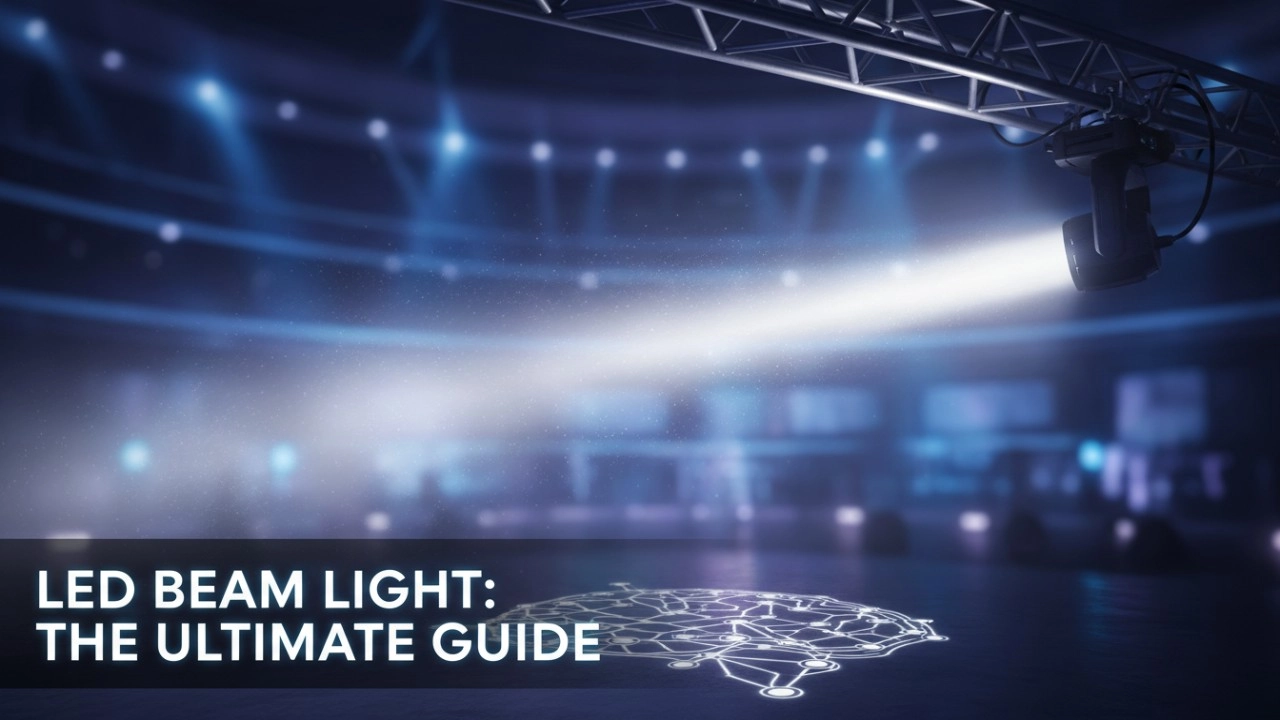
- Use the inverse-square principle and beam angle: lux ≈ luminous intensity (cd) / distance^2. When you have beam angle and lumen output, you can estimate lux: a narrower beam concentrates lumens into higher lux.
- Practical approach: Request the exact photometric data (lux at 6 m for flood and spot positions) from vendors. If a vendor only supplies lumen values, request beam angle and lux calculations or the IES file so you can run it in your lighting CAD (WYSIWYG, Capture).
Example guidance (not a substitute for manufacturer data): some modern 100–150W LED Fresnels—depending on LED efficacy and optics—can match or exceed the stage lux of older 750W tungsten Fresnels on certain beam settings because LEDs are more efficient at directing light and avoid filament losses. But outcomes vary widely by model; always validate with photometrics and an on-stage test.
4. How do I evaluate CRI, TLCI, and TM-30 when accurate skin tones are essential for broadcasted theatre shows?
Why this matters: Camera workflows reveal spectral deficiencies that human eyes might not notice. CRI alone can be insufficient for modern LED sources used with broadcast cameras.
Key metrics and procurement targets:
- CRI (Ra or R1–R15): useful baseline, but Ra can hide spectral spikes and color bias. For theatre with human faces, target CRI (Ra) ≥ 90 for high-quality fixtures.
- TLCI (Television Lighting Consistency Index): Designed for cameras; aim for TLCI ≥ 90 for broadcast work to reduce camera color correction required in-client. TLCI > 95 preferred for calibrated studio-grade lighting.
- TM-30 (Rf and Rg): TM-30 gives fidelity (Rf) and gamut (Rg). Aim for Rf ≥ 80 and Rg close to 100 for balanced color rendering; higher Rf (≥90) is ideal for critical skin tone rendering.
Procurement tips:
- Request spectral power distribution (SPD) graphs for candidate fixtures; look for smooth spectral output with minimal narrow spikes.
- Evaluate manufacturer TLCI and TM-30 test reports performed at typical color temperatures (e.g., 3200K and 5600K). Beware of cherry-picked data at a single temperature if you plan to use multiple CCTs.
- Perform camera tests with your production camera and pipeline; camera sensors respond differently. A fixture that scores high on TLCI but shows a magenta shift on your camera is not acceptable.
5. Can I mix LED fixtures and legacy discharge/halogen fixtures in the same rig without visible flicker or color shift on camera? What DMX and power considerations must I take?
Why this matters: Many venues migrate gradually. Mixed rigs create interoperability problems—flicker on camera, inconsistent dimming curves, and power harmonics.
Flicker and camera issues:
- LED drivers and PWM dimming: Cheap drivers with low PWM frequency (<1–2 kHz) can produce visible flicker with cameras (rolling shutter). Use fixtures marketed as flicker-free or with driver frequencies ≥ 10 kHz for camera work.
- Discharge lamps and HID ballasts also flicker differently and can create beat frequencies when combined with LEDs—this is especially problematic on video. For broadcast, avoid mixing unless you can confirm flicker-free operation under the exact frame rates and shutter speeds you will use.
DMX and dimming behavior:
- Legacy fixtures expect a 0–10V or leading-edge dim curve; modern LED fixtures use 8/16-bit DMX with different dimming curves. Ensure your lighting console can assign fixture profiles and curve compensation (gamma correction) so fades match across fixture types.
- Use 16-bit dimming where smooth fades are critical. Check that both fixture types respond predictably to blackout and restore sequences.
Power and electrical considerations:
- LED fixtures draw lower steady-state current but may have inrush currents from switching power supplies. Use proper circuiting and breakers sized for peak inrush as specified by manufacturer to avoid nuisance tripping when powering many fixtures at once.
- Check power factor and inrush rating; consider soft-start or staggered power-on routines for large rigs.
Best practices for mixed rigs: perform a full camera test with the intended shutter speed, frame rate, and console cues; use DMX universe patches to isolate different fixture classes and apply fade curve compensation; and when possible, standardize on flicker-free LED fixtures for broadcast environments.
6. What is the expected total cost of ownership and likely trade-in timeline for LED moving heads vs traditional moving mirror profile fixtures for a mid-size touring company?
Why this matters: Touring companies need predictable TCO, residual values, and service strategies; LED moving heads changed the economics of lighting rigs.
TCO components:
- Initial purchase price: LED moving heads typically cost more upfront than older discharge lamp moving profiles but prices have fallen. For touring, choose robust build quality, serviceability (field-replaceable fans, driver modules), and compact weight for road logistics.
- Operational costs: LED moving heads save substantially on power (lower genset load) and eliminate frequent lamp replacements. Lower heat output also reduces climate control needs at load-in/load-out and in transit if power is used in freight storage areas.
- Maintenance and downtime: LEDs reduce lamp failures but add electronic failure modes. For touring, build a spare strategy: carry common spare parts (drivers, fans, gobos) and schedule preventive maintenance checks every few months depending on hours.
- Residual and trade-in value timeline: Historically, compact, high-performance LED fixtures from leading brands retain resale value for 3–6 years depending on model popularity and market supply. Rapid LED innovation can accelerate obsolescence for low-cost models; invest in reputable brands with good service networks for better trade-in value.
Practical estimate and decision framework:
- Estimate yearly hours (tour intensity). For heavy touring (2,000+ hrs/year), LED moving heads will often pay back in 1–3 years when factoring energy and lamp replacement avoidance plus lower freight and power demands.
- For mid-size touring companies, expect LED fixtures to be serviceable for 7–10 years with proper routine maintenance; however, lighting spec demands can evolve—budget for partial refresh after 4–6 years to remain competitive.
Recommendation: build a financing model (spreadsheet) that includes purchase cost, electricity savings, lamp replacement avoidance, spare parts, and expected resale value after 3–5 years. Use brand-specific warranty and service offerings to reduce downtime risk on the road.
Conclusion — Advantages of LED stage lighting over traditional fixtures
LED stage lighting delivers major advantages: significantly lower power consumption and operating costs, longer rated lifespans (commonly 30,000–100,000 hours for LEDs versus under 2,000 hours for many tungsten lamps), reduced heat load and HVAC expenses, more flexible color control and color temperature options, more compact and lighter fixtures for touring, and lower routine maintenance. For camera and broadcast work, choose fixtures with verified TLCI/TM-30 performance and flicker-free drivers. For any purchase decision—even when replacing a single fixture—insist on photometric charts, IES files, spectral power distribution (SPD) graphs, and an on-site test. That approach will save money and avoid production surprises.
If you'd like a custom fixture selection, a photometric comparison, or a quote for LED stage lighting, contact us for a tailored proposal.
Website: www.litelees.com · Email: litelees@litelees.com
Products
How long is the warranty period for your products?
We offer a standard 1-year warranty on all products, with extended warranty options available upon request. During the warranty period, we provide free technical support and parts replacement for non-human damage.
What is the lifespan of your LED stage lights?
Our LED lights use high-quality chips with a rated lifespan of over 50,000 hours. Proper usage and maintenance ensure long-term reliability and stable performance, making them a smart investment for any venue.
Are your lights suitable for large-scale events and outdoor use?
Yes. Our professional stage lights—especially the Beam, BSW 3-in-1, and LED Par Series—are engineered with high-output brightness, wide beam angles, and robust housing. Some models come with IP-rated protection, making them suitable for outdoor applications like concerts, festivals, and sports events.
Company
What certifications do your products have?
All LiteLEES products are certified by CE, RoHS, FCC, and BIS. Our factory is ISO9001 quality management system certified.
What is LiteLEES’s main business?
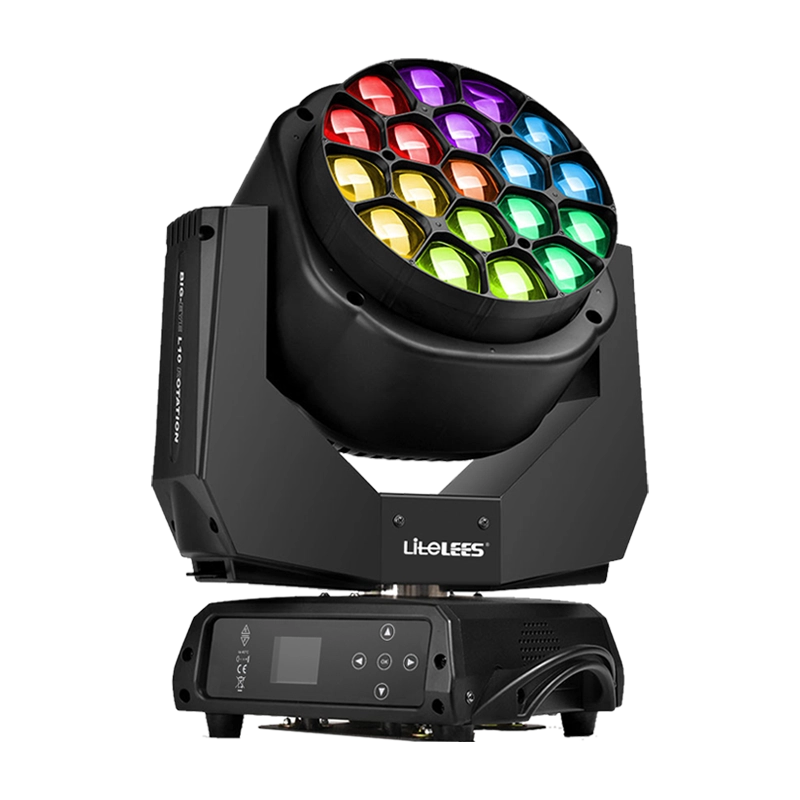
LiteLEES specializes in the design, development, manufacturing, and sales of professional stage lighting, including moving head lights, beam lights, spot lights, wash lights, and LED par lights.
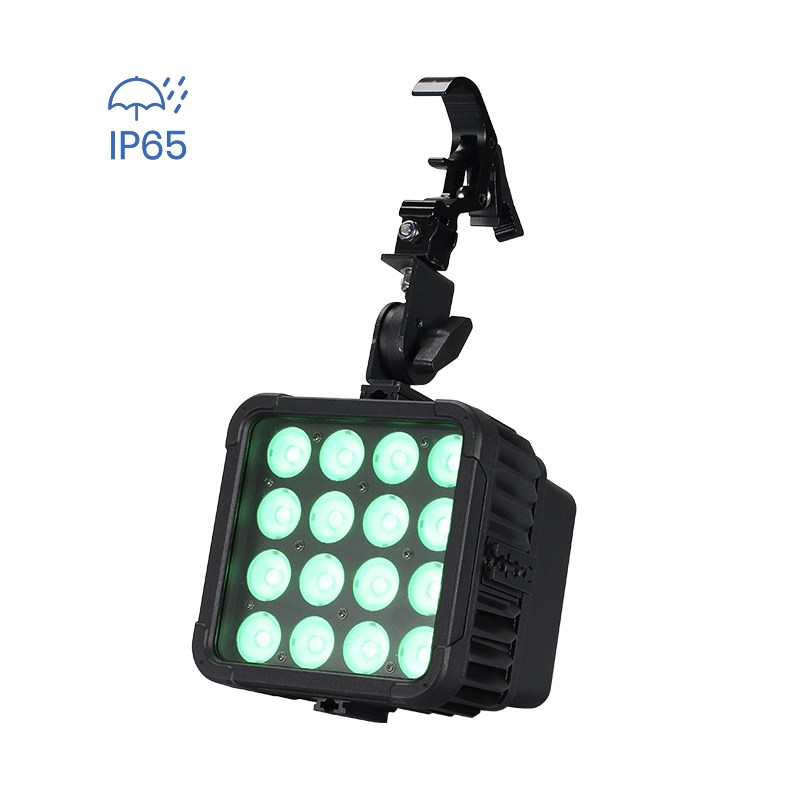
Magic Cube V6 IP
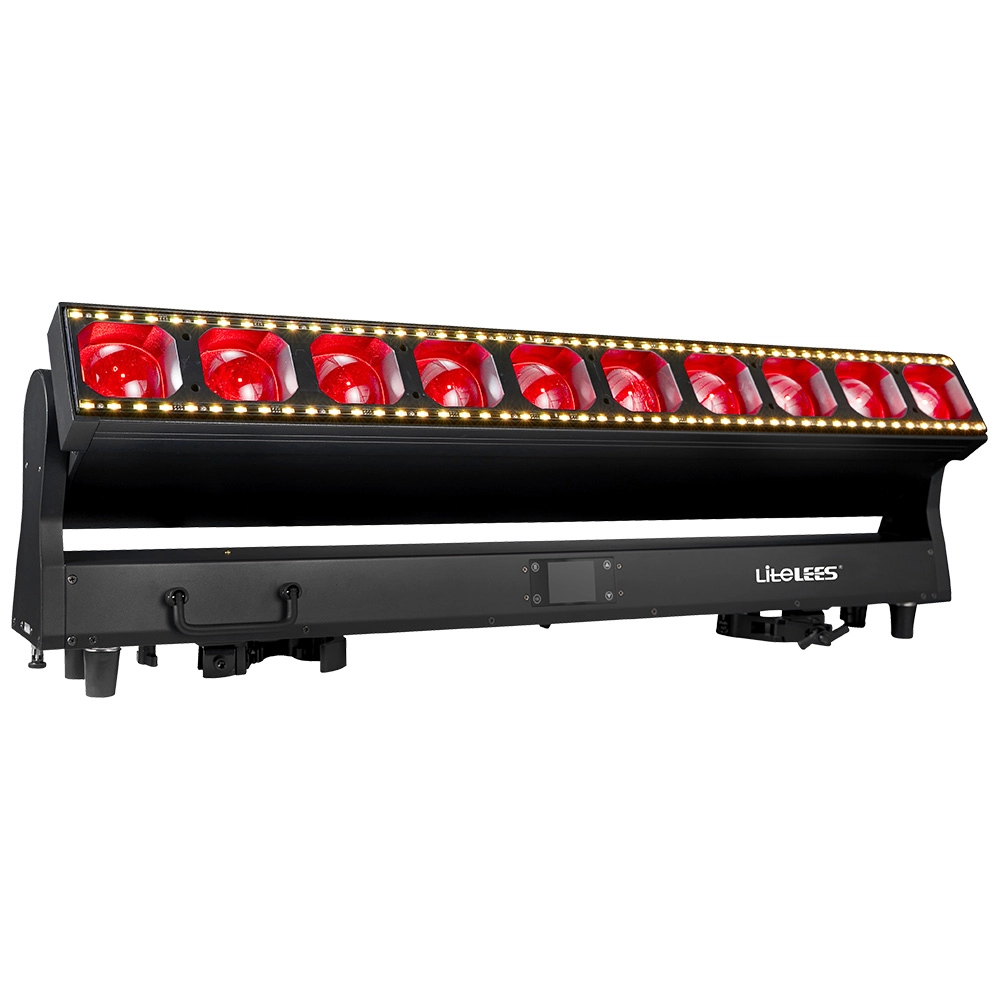

Stormy Shake Blinder IP
Want to get more up-to-date news?
If you have any comments or good suggestions, please leave us a message; later our professional staff will contact you as soon as possible.

We are professional stage lighting manufacturers offering OEM and ODM LED stage lights.
Contact
Email us
Call us
Address
No.6 Longnan Road, Huashan Town, Huadu District Guangzhou, Guangdong Province, China.
LiteLEES Professional
Less Lighting