
How Energy Efficient Are LED Stage Strobe Lights?
- 1) How do I calculate real-world energy use per show for a 200W LED stage strobe vs a 1000W xenon strobe?
- 2) What duty cycle should I expect for LED strobe effects and how does it affect average power, heat, and reliability?
- 3) How do I choose LED strobes to avoid flicker and banding on 24/30/60/120fps cameras and smartphones?
- 4) How should I size power distribution and circuit protection for a rig of 12 LED stage strobes?
- 5) How do I compare peak intensity (lux/candela) between LED strobes and xenon strobes when manufacturers use different metrics?
- 6) How energy efficient are LED stage strobe lights over their lifecycle, including maintenance and replacement parts?
1) How do I calculate real-world energy use per show for a 200W LED stage strobe vs a 1000W xenon strobe?
Many spec sheets list peak wattage (instantaneous draw while emitting a flash) — but actual energy consumed depends on duty cycle (how long the light is on vs off during a strobe sequence). Use this simple formula:
- Average power (W) = Rated peak power (W) × Duty cycle (decimal)
- Energy per show (kWh) = Average power (W) × Show duration (h) ÷ 1000
Example calculation (typical rig):
- LED strobe: 200 W peak, 10% duty cycle → Avg = 20 W per unit
- Xenon strobe: 1000 W peak, same 10% duty cycle → Avg = 100 W per unit
- For a 3-hour show: LED energy = 20 W × 3 h = 60 Wh = 0.06 kWh per unit; Xenon = 300 Wh = 0.3 kWh per unit
Scale up to your rig: multiply by the number of fixtures. At an electricity rate of $0.15/kWh, one LED unit costs $0.009 per show, while one xenon costs $0.045 — an 80% reduction in this scenario. Note: duty cycle varies widely with programming (dense beat-driven strobes may push duty to 20–30%); always measure or conservatively estimate duty cycle for budgeting.
2) What duty cycle should I expect for LED strobe effects and how does it affect average power, heat, and reliability?
Stage strobes are designed to produce high peak intensity in short bursts. Typical programmed duty cycles: 2–20% for performance strobes, higher only for sustained wash effects. Key consequences:
- Average electrical load: directly proportional to duty cycle (see formula above). Even a high-rated LED is thermally less stressed if duty cycle is low.
- Heat dissipation: heat correlates with average (not peak) power. A 200W peak strobe at 10% duty gives heat similar to a 20W continuous LED — that’s far easier to cool. However, repeated high-frequency bursts can locally raise junction temperature; good fixtures have thermal throttling and adequate heatsinks.
- Reliability & lifetime: LEDs are rated in hours at rated junction temps. Lower average operating temperature (from low duty cycles and good passive/active cooling) preserves lumen maintenance (L70) and driver life. Expect 30,000–100,000 hours for modern professional LED engines depending on cooling and current design.
Operational tip: if your programming uses long sustained “on” periods rather than short bursts, treat the fixture as a continuous load and re-evaluate cooling and circuit sizing.
3) How do I choose LED strobes to avoid flicker and banding on 24/30/60/120fps cameras and smartphones?
Camera flicker is rarely about energy consumption — it’s about LED drive method, PWM frequency, and strobe timing relative to frame exposure. For pro productions:
- Prefer fixtures that advertise flicker-free drivers or constant-current drivers with high PWM frequency (typically >10 kHz for safest results on modern cameras).
- Look for explicit labelling: “flicker-free at 24/25/30/50/60 fps” or a specified maximum flicker percentage. If manufacturer data is missing, request test footage or an engineer statement.
- Avoid low-frequency PWM dimming (<1 kHz). Even if LED efficiency is high, visible or camera-detected flicker can ruin a shot.
- Test on your target cameras: film at all target frame rates, shutter angles, and ISO settings. Smartphone cameras and high-speed cameras can reveal issues not seen by the eye.
- When precise sync is required, use fixtures that accept external sync or high-resolution DMX/RDM control and provide selectable PWM/DAC modes to align with camera needs.
Summary: choose LED strobes with high-frequency drivers and documented flicker performance; always validate with camera tests before a live broadcast or recording.
4) How should I size power distribution and circuit protection for a rig of 12 LED stage strobes?
LED fixtures often draw less continuous power than their peak rating suggests, but you must plan for peak instantaneous draw, inrush, and power factor. Follow these steps:
- Estimate average draw: Use rated peak × expected duty cycle to compute average W per fixture and total.
- Consider peak/inrush: Some LED drivers have high inrush currents at turn-on. Consult datasheets for inrush current (A) and duration. If unknown, assume 5–10× steady current for sizing protective devices and inrush-limited distribution.
- Account for power factor (PF): Professional fixtures often include active PFC; still use apparent power VA = W / PF to size generators or UPS (use PF of 0.9 if unspecified).
- Breaker sizing: For 230 V systems, calculate total current I = Total VA / 230 V and choose breakers with appropriate MCB curves. For 120 V systems, use 120 V. Leave 20–25% headroom; do not load circuits >80% continuous.
- Distribution: Use balanced multi-circuit distro; avoid daisy-chaining too many high-inrush units on one breaker. Use Neutrik PowerCON TRUE1 or similar locking connectors for safe power linking as recommended by manufacturers.
Concrete example (12 units, 200 W peak, 10% duty): Avg load per unit = 20 W → total 240 W → at 230 V ~1.04 A continuous. But design for peak: 12 × 200 W = 2400 W peak → ~10.4 A. Account for PF and inrush when selecting generator or distro. If you cannot obtain inrush data, distribute fixtures across multiple breakers to avoid nuisance trips.
5) How do I compare peak intensity (lux/candela) between LED strobes and xenon strobes when manufacturers use different metrics?
Manufacturers use varied metrics: peak lumens, burst lumens, continuous lumens, candela, and lux at distance. To compare apples-to-apples:
- Request lux at a specific distance (e.g., lux at 5 m) for a single burst and for a 1-second average. Lux per distance is immediately useful for designers.
- Candela converts to lumen distribution if you know beam angle; for beam comparions use peak candela for narrow beams and lux for audience plane measurements.
- Ask for burst lumen or peak intensity (not just nominal continuous lumen rating). For strobes, the peak output during a flash is far more important than continuous lumen rating.
- Field-test: measure with a calibrated lux meter at planned audience or camera positions. Manufacturer claims vary; real-world measurement beats marketing figures.
- Consider optics: lens design and reflector efficiency significantly affect lux/candela. Two fixtures with similar LED power can differ 2× or more in measured intensity depending on optics.
Operational note: some LED strobes produce comparable peak on-axis lux to legacy xenon strobes at far lower average power because the peak is concentrated by efficient LEDs and optics. Always validate using lux meters and sample units when intensity is mission-critical.
6) How energy efficient are LED stage strobe lights over their lifecycle, including maintenance and replacement parts?
Energy efficiency is one part of total cost of ownership. Consider three components: energy cost, maintenance (lamp/tube replacement, labor), and fixture replacement. Industry-validated points to factor in:
- Energy: LED engines deliver higher luminous efficacy (80–150+ lm/W for white high-power LEDs in professional fixtures) than discharge lamps. When combined with strobe duty cycles, average energy use is typically much lower. In practical comparisons vs xenon/discharge strobes, energy consumption can be 50–80% lower for equivalent perceived peak brightness depending on optics and duty cycle.
- Maintenance: Xenon/discharge systems require periodic tube/service and more complex power supplies. LED fixtures generally have rated lifetimes of 30,000–100,000 hours and minimal routine lamp replacement, cutting maintenance costs substantially.
- Failure modes: LED drivers and capacitors are common service items. Choose fixtures with modular drivers and good manufacturer support to reduce downtime and repair costs.
- Lifecycle cost example (illustrative): For a busy venue with 10 strobes run 300 shows/year, energy savings alone can pay back LED High Quality within 1–3 years in many markets when combined with lower maintenance. Exact payback depends on local electricity costs and labor rates — calculate with your actual show hours and power tariffs.
Bottom line: LED stage strobes generally offer superior energy efficiency, lower heat loads and reduced maintenance costs over their lifecycle. For accurate ROI, build a simple LCCA (life-cycle cost analysis) using real duty-cycle measurements, local $/kWh, expected fixture lifetime and estimated maintenance intervals.
Concluding summary of advantages: LED stage strobe lights deliver major practical benefits for professional buyers — significantly reduced average energy consumption when programmed correctly, lower heat emissions, longer service life, simpler maintenance, and greater controllability (high-frequency drivers, DMX/RDM/ethernet control, and often lower in-rack cooling requirements). Opt for fixtures with documented flicker-free specs, active power factor correction, clear inrush data, and measured lux/candela at specified distances. Always validate with a site power plan, camera tests, and sample-unit lux measurements.
For a custom rig assessment and a competitive quote tailored to your show hours, duty cycles and control needs, contact us at www.litelees.com or email litelees@litelees.com.
Company
Can LiteLEES handle OEM/ODM orders?
Absolutely. With our strong R&D capabilities and advanced manufacturing, we can customize designs, features, and branding to meet your specific needs.
What certifications do your products have?
All LiteLEES products are certified by CE, RoHS, FCC, and BIS. Our factory is ISO9001 quality management system certified.
Where is LiteLEES located?
Our headquarters and manufacturing facility are located in Guangzhou, China, with products exported to over 70 countries worldwide.
Products
What is the lifespan of your LED stage lights?
Our LED lights use high-quality chips with a rated lifespan of over 50,000 hours. Proper usage and maintenance ensure long-term reliability and stable performance, making them a smart investment for any venue.
Are your lights suitable for large-scale events and outdoor use?
Yes. Our professional stage lights—especially the Beam, BSW 3-in-1, and LED Par Series—are engineered with high-output brightness, wide beam angles, and robust housing. Some models come with IP-rated protection, making them suitable for outdoor applications like concerts, festivals, and sports events.
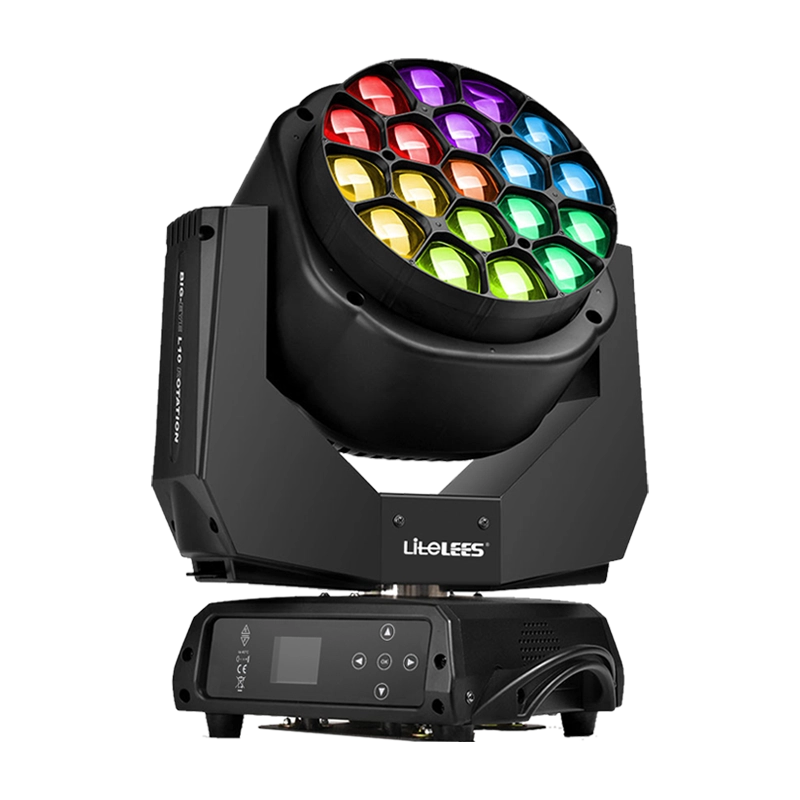

Stormy Shake Blinder IP
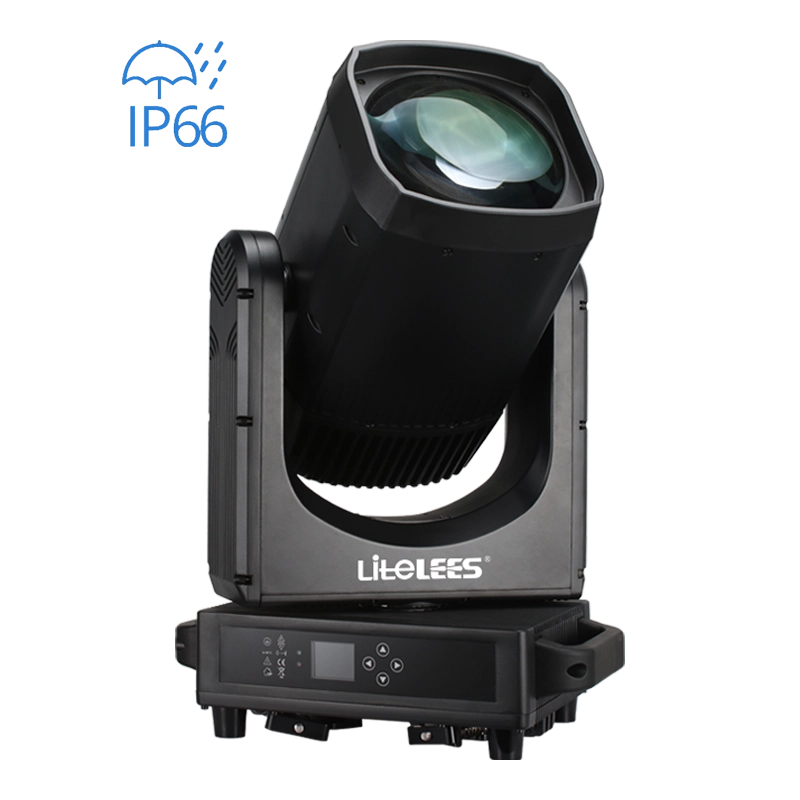
LiteLEES LUMIX BEAM 420 IP
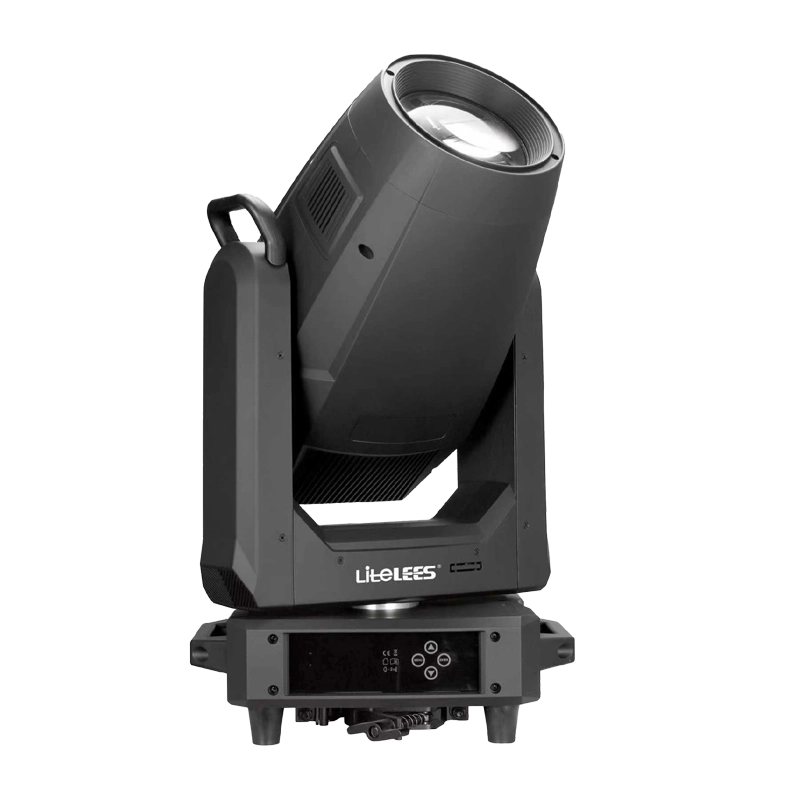
LP Profile 900
Want to get more up-to-date news?
If you have any comments or good suggestions, please leave us a message; later our professional staff will contact you as soon as possible.

We are professional stage lighting manufacturers offering OEM and ODM LED stage lights.
Contact
Email us
Call us
Address
No.6 Longnan Road, Huashan Town, Huadu District Guangzhou, Guangdong Province, China.
LiteLEES Professional
Less Lighting