
What maintenance do LED stage lighting spotlights require?
- What maintenance do LED stage lighting spotlights require?
- 1. What daily and pre‑show checks should I perform?
- 2. How often should I clean lenses, fans and heat sinks, and how should I do it?
- 3. How do I monitor LED lumen maintenance and know when LED modules need replacement?
- 4. What electrical and control system maintenance is required (drivers, power supplies, DMX)?
- 5. How should I manage thermal design and ventilation to extend fixture life?
- 6. What spare parts and consumables should a venue or rental house keep on hand?
- 7. What inspection, safety and documentation practices are recommended?
- Additional buying tips for professional buyers
- Why maintenance matters: a quick ROI perspective
- Brand summary — LiteLEES advantages
- References
What maintenance do LED stage lighting spotlights require?
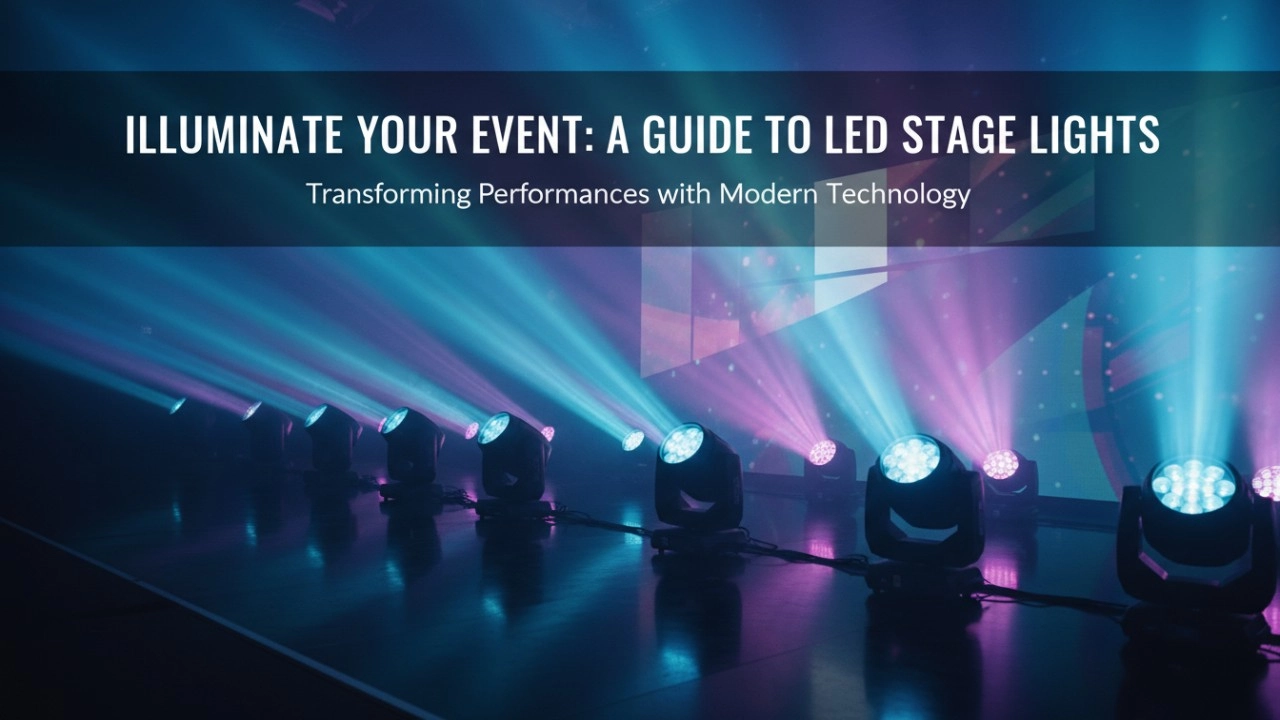
LED stage spotlights (including moving heads, ellipsoidals/profile spots, Fresnels and followspots) are lower‑maintenance than discharge or halogen fixtures, but they still need routine care to deliver consistent output and long service life. Below are 7 user questions most buyers and technicians search for, with practical, vendor‑agnostic answers you can put into a maintenance plan.
1. What daily and pre‑show checks should I perform?
- Power and function test: Power up fixtures and confirm they reach normal operating brightness and color within their expected warmup time.
- Control check: Verify DMX/RDM connectivity, correct addressing and that key functions (pan/tilt, dimmer, color wheels, gobos) respond to console commands.
- Visual inspection: Look for obvious damage, loose safety cables, frayed power/data cables or excessive dirt on lenses/vents.
- Thermal check: After a short run, ensure the fixture’s body and heat sinks are warm but not abnormally hot; unusual heat is an early sign of driver or cooling problems.
Do these quick checks before each performance to catch problems early and avoid show interruptions.
2. How often should I clean lenses, fans and heat sinks, and how should I do it?
- Frequency: Daily pre‑show wipe for dusty venues; monthly light cleaning in average environments; quarterly or semi‑annual deep clean for dusty or smoky venues. Rental houses and touring rigs should deep‑clean between rentals or tours.
- Procedure: Power off and unplug. Allow fixture to cool. Use low‑pressure canned air or a blower to remove loose dust from vents and heat sinks. Clean optics with a lint‑free microfiber and, if needed, 70% isopropyl alcohol applied to the cloth (never spray directly onto optics). Do not rub LED chips or phosphor surfaces.
- Fans: Remove dust build‑up with compressed air and a soft brush. If a fan is noisy or slow, replace it—cheap, accessible fans are often standard parts.
- Sealed fixtures: For IP‑rated or sealed units, follow manufacturer instructions; often only external surfaces should be cleaned to avoid breaking seals.
Proper cleaning preserves output and beam quality. Dirty optics and blocked heat paths reduce lumen output and accelerate component wear.
3. How do I monitor LED lumen maintenance and know when LED modules need replacement?
- Understand LM‑80/TM‑21: Manufacturers report LED lumen maintenance using IES LM‑80 test data and TM‑21 projections. Common published figures show useful life (L70) values of ~50,000 to 100,000 hours depending on LED bin and thermal design.
- Practical monitoring: Log measured lux/footcandles on‑site or use a calibrated meter during season startup and compare over time. A gradual drop in output is normal; reaching about 70% of initial lumen output is generally when LED modules are considered to have reached L70.
- Signs to act: Noticeable color shift, flicker, sudden loss of channels, or rapid lumen decline are reasons to contact the manufacturer or plan module replacement.
Plan replacement or refurbishment budgets around expected lumen‑maintenance timelines rather than relying only on runtime hours.
4. What electrical and control system maintenance is required (drivers, power supplies, DMX)?
- Drivers and power supplies: Inspect for bulging capacitors, discoloration or smell. Many failures originate in the driver; replace suspect units promptly with manufacturer‑approved modules.
- Connections: Check IEC and power connectors, solder joints and ground continuity. Maintain tidy cable runs to avoid stress on connectors.
- DMX/RDM and cabling: Test DMX lines with a protocol tester, verify termination (120 Ω) at the end of the run and prefer daisy‑chain wiring. Use RDM‑capable devices when available to remotely query fixture status and update addresses.
- Firmware: Keep firmware up to date but update during scheduled downtime. Back up fixture profiles/settings before upgrades.
Regular electrical checks reduce intermittent problems and protect sensitive electronics from power events.
5. How should I manage thermal design and ventilation to extend fixture life?
- Keep vents and heat sinks clear: Unobstructed airflow is essential. Inadequate cooling shortens LED and driver life and increases color shift.
- Ambient temperature: Fixtures perform best within manufacturer‑specified ambient ranges. High stage temperatures (e.g., theater fly towers or enclosed truss) require more frequent inspections.
- Rack and truss placement: Avoid stacking powered fixtures tightly; allow recommended spacing for convection. For enclosed housings, consider forced ventilation.
Thermal stress is the leading avoidable cause of premature failure in LED stage fixtures.
6. What spare parts and consumables should a venue or rental house keep on hand?
- Consumables: spare mains and DMX cables, powerCON/IEC connectors, fuse kits (if used), and common connector types.
- Field‑replaceable parts: replacement fans, driver modules (if user‑replaceable and available), lens elements, gobos, and gobo holders.
- Tools and cleaning: calibrated lux meter, canned air, lint‑free cloths, small vacuum, basic multimeter and an RDM/DMX tester.
- Inventory best practice: Keep at least 1 spare critical part per 10 fixtures for medium venues; rental houses should scale spares according to turnover and tour distances.
Maintaining a small, smart spare inventory dramatically reduces show‑stopper downtime.
7. What inspection, safety and documentation practices are recommended?
- Routine schedule: Daily pre‑show checks, monthly cleaning, quarterly electrical/optical inspections and annual full service (including firmware review and driver tests).
- Rigging and safety: Inspect safety cables, clamps and secondary attachments before each rig. Follow local regulations and industry best practices for load ratings and inspection intervals.
- Record keeping: Maintain a log per fixture that records operational hours, firmware versions, maintenance performed, parts replaced and failure notes. This history is invaluable for warranty claims and lifecycle planning.
- Training: Ensure technicians are trained on manufacturer maintenance procedures, ESD precautions and safe working at height practices.
Documentation reduces repeated failure modes and supports warranty claims and planned replacement cycles.
Additional buying tips for professional buyers
- Ask for LM‑80 and TM‑21 data and the fixture’s rated L70 hours from the manufacturer.
- Check whether drivers and fans are user‑serviceable or must be returned for factory service.
- Confirm firmware update policy, remote diagnostic options (RDM), and availability of spare modules in your region.
- Consider fixtures with modular design and standard connectors to simplify field repairs and spare parts stocking.
Why maintenance matters: a quick ROI perspective
LED fixtures typically offer dramatic reductions in lamp replacement and energy costs versus halogen/discharge fixtures. Typical LED useful life is often in the 50,000–100,000 hour range (L70 basis), compared with halogen/INC lamp lifetimes of hundreds to a few thousand hours. Savings come from reduced lamp replacement, lower power draw and less HVAC load on and off stage. But these savings are realized only when fixtures are cared for—neglected optics, blocked cooling and failed drivers negate LED advantages.
Brand summary — LiteLEES advantages
LiteLEES fixtures are designed with production environments in mind: thermal‑efficient heat sinks, modular components for field service, and compatibility with standard control protocols (DMX/RDM). For buyers, LiteLEES emphasizes availability of spare parts, clear maintenance documentation and customer support to simplify lifecycle service. Choosing fixtures with sound thermal designs, accessible drivers/fans and manufacturer support (like LiteLEES) reduces total cost of ownership and downtime for venues and rental fleets.
References
- U.S. Department of Energy — Solid‑State Lighting Basics (LED lifetime, lumen maintenance) — https://www.energy.gov/eere/ssl/led-basics — accessed 2024‑05‑10
- Illuminating Engineering Society (IES) — LM‑80 and TM‑21 standards (LED testing and lumen maintenance projection) — https://www.ies.org/standards/ — accessed 2024‑05‑12
- Entertainment Services and Technology Association (ESTA) — DMX512/TSP resources (DMX/RDM best practices) — https://tsp.esta.org/tsp/working_groups/DMX512/ — accessed 2024‑05‑15
- Electronic Theatre Controls (ETC) — Support & maintenance guidance for theatrical LED fixtures — https://www.etcconnect.com/Support/ — accessed 2024‑05‑14
- Chauvet Professional — Product support and cleaning recommendations for LED fixtures — https://www.chauvetprofessional.com/support/ — accessed 2024‑05‑13
![Moving Head Stage Lighting Guide: Mastering the Technical and Artistic Essence [2026 Edition] - LiteLEES](https://static.gooecloud.com/upload/img/GY160908357145/moving-head-stage-lighting-guide-mastering-the-technical-and-artistic-essence-2026-edition.png?x-oss-process=image/format,webp/quality,Q_100 "Moving-Head-Stage-Lighting-Guide:-Mastering-the-Technical-and-Artistic-Essence-[2026-Edition] - LiteLEES")
Products
Do your lights support DMX512 and other control protocols?
Yes. All LiteLEES stage lights are fully compatible with DMX512. Many models also support RDM, Art-Net, and wireless DMX (optional), ensuring seamless integration with modern lighting control systems.
How long is the warranty period for your products?
We offer a standard 1-year warranty on all products, with extended warranty options available upon request. During the warranty period, we provide free technical support and parts replacement for non-human damage.
Can I customize the functions or software of the lights?
Absolutely. As a manufacturer with independent R&D capabilities, we offer customization for both hardware and software (such as DMX channel layout, built-in programs, or UI language). Contact us with your project needs, and our team will provide tailored solutions.
Company
Can LiteLEES handle OEM/ODM orders?
Absolutely. With our strong R&D capabilities and advanced manufacturing, we can customize designs, features, and branding to meet your specific needs.
Where is LiteLEES located?
Our headquarters and manufacturing facility are located in Guangzhou, China, with products exported to over 70 countries worldwide.
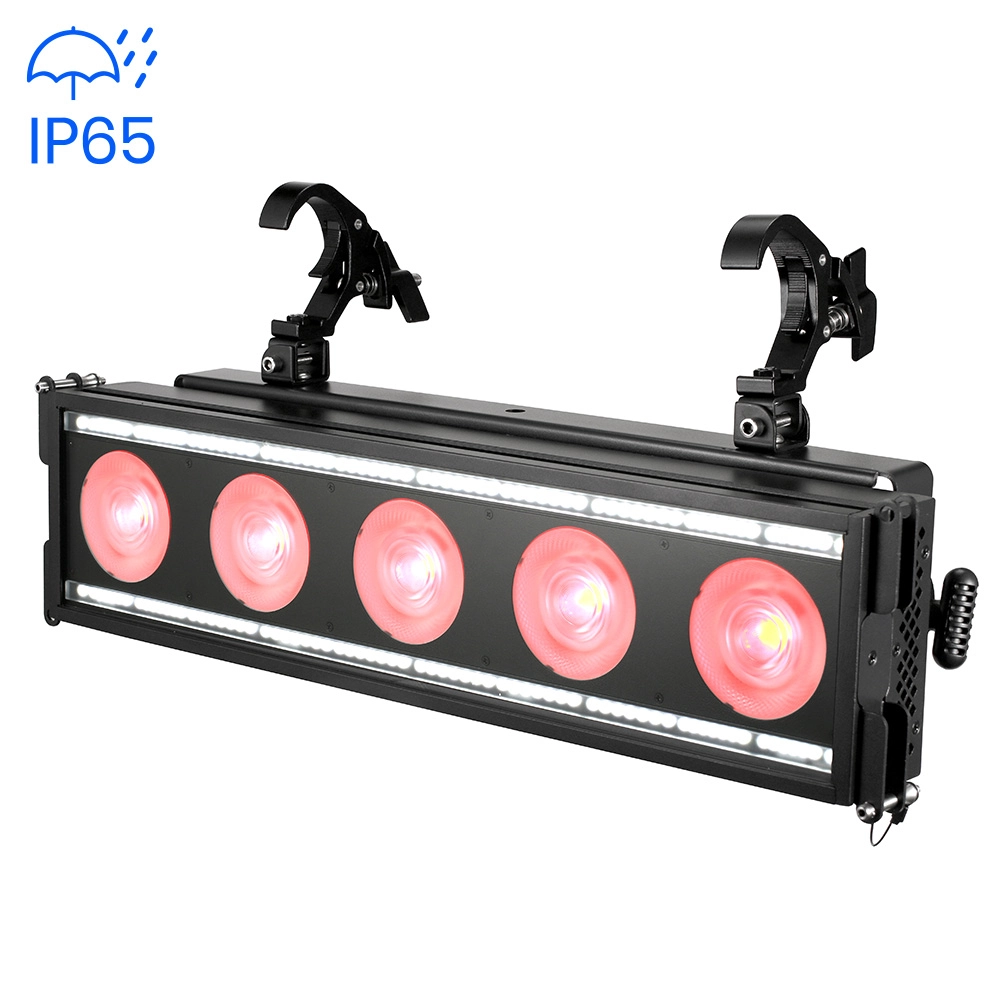
Stormy Flash 550 lP
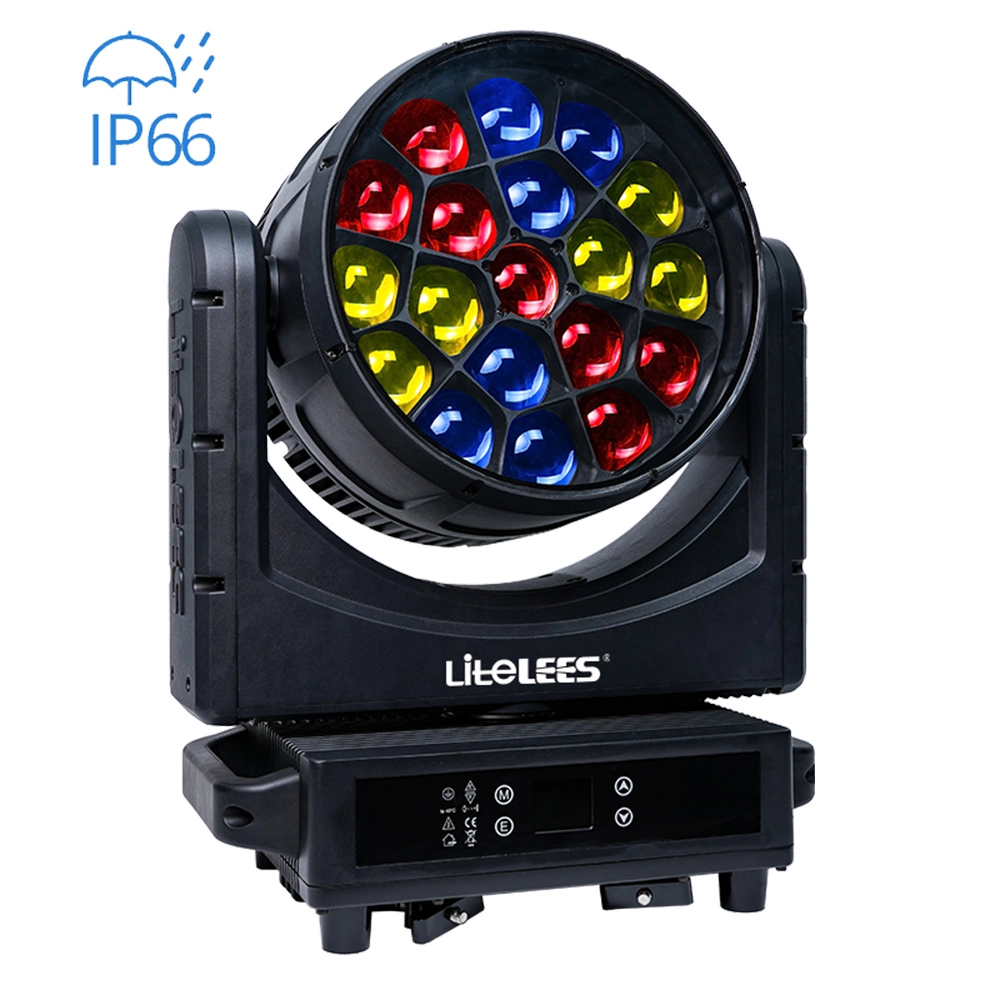
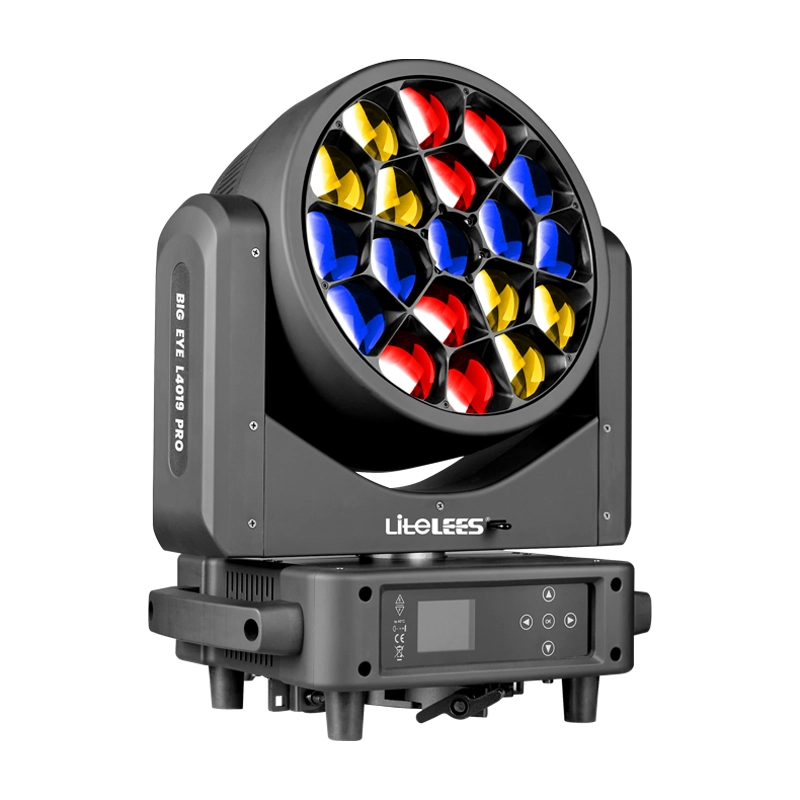
BIG EYE L4019 IP
Want to get more up-to-date news?
If you have any comments or good suggestions, please leave us a message; later our professional staff will contact you as soon as possible.

We are professional stage lighting manufacturers offering OEM and ODM LED stage lights.
Contact
Email us
Call us
Address
No.6 Longnan Road, Huashan Town, Huadu District Guangzhou, Guangdong Province, China.
LiteLEES Professional
Less Lighting