
How energy-efficient are modern LED stage lights?
- How energy-efficient are modern LED stage lights?
- 1. How much energy can you save by switching from traditional incandescent or discharge fixtures to LEDs?
- 2. What are typical power ranges and luminous efficacies for LED stage fixtures?
- 3. How does LED efficiency affect heat output and HVAC costs?
- 4. What about lifetime, maintenance and total cost of ownership (TCO)?
- 5. Do LEDs affect color rendering, beam quality and flicker compared to traditional fixtures?
- 6. What should buyers look for when specifying energy-efficient LED stage lights?
- 7. How to calculate ROI and payback for LED stage lighting upgrades?
- 8. Practical procurement tips for specifiers and rental houses
- Conclusion — choosing the right energy‑efficient LED stage lights
- Why choose LiteLEES?
- Sources
How energy-efficient are modern LED stage lights?
Modern LED stage lights are significantly more energy-efficient than traditional incandescent and many discharge (MH/HMI) fixtures. Compared to incandescent/halogen instruments, LEDs typically reduce lighting energy use by 60–90%; versus older discharge sources the savings are commonly 20–70%, depending on fixture type and use case. Key drivers are higher LED luminous efficacy, lower system losses, and reduced cooling and maintenance needs.
1. How much energy can you save by switching from traditional incandescent or discharge fixtures to LEDs?
Typical real-world savings vary by fixture type and operating profile. Representative comparisons:
- Replacing a 575 W incandescent/halogen profile with a 150 W LED equivalent → ~74% electrical saving.
- Replacing a 1,200 W discharge moving head with a 400 W LED moving head → ~67% saving.
- Replacing older metal‑halide/source with modern LED wash fixtures → savings often 40–60%.
These numbers come from measured power draws and common LED replacement fixtures. Energy savings translate directly to lower utility bills and reduced HVAC load (see section on heat).
2. What are typical power ranges and luminous efficacies for LED stage fixtures?
Industry ranges (varies by manufacturer and product class):
- LED PAR / battens: 10 W to 200 W
- LED wash fixtures: 100 W to 400 W
- LED moving‑head profiles/beams: 150 W to 700 W (high‑output models can be higher)
Luminous efficacy (LED package vs finished fixture):
- LED chip/package efficacy: modern high‑power LED packages often exceed 100–200 lm/W under laboratory conditions.
- System / fixture effective efficacy: after optics, color mixing and drivers, the delivered useful lumens per watt for stage fixtures is typically lower — commonly 40–120 lm/W depending on whether the fixture is a color‑mixing RGB(AW) unit or a white‑light profile.
Because stage fixtures prioritize beam shape, color mixing and intensity over raw lumens-per-watt, compare published power draw and useful light output (lux at distance or measured lumens) rather than package lm/W alone.
3. How does LED efficiency affect heat output and HVAC costs?
Most electrical input power eventually becomes heat in an indoor venue (lighting converts electrical energy to visible light + waste heat). Lower wattage LEDs therefore reduce internal heat gain and cooling load. Example (illustrative): replacing a 575 W incandescent with a 150 W LED reduces internal heat gain by ~425 W per fixture when the lights are on, lowering AC demand and operating cost — the exact HVAC saving depends on local climate, run hours, and HVAC system efficiency.
For venues with long run times (theaters, concert halls, rental houses), reduced HVAC load can be a meaningful part of the total operating savings when switching to LEDs.
4. What about lifetime, maintenance and total cost of ownership (TCO)?
LEDs have substantially longer useful lifetimes than incandescent and many discharge lamps. Typical manufacturer ratings and industry guidance:
- LED sources: commonly rated 25,000–50,000 hours or more (many LED packages reach 50,000+ hours to L70); incandescent/halogen: hundreds to a few thousand hours; discharge lamps vary (1,000–10,000 hours) depending on type.
- Maintenance savings: fewer lamp replacements, lower labor cost, fewer spare-lamp purchases and less downtime — all reduce TCO.
When calculating TCO, include purchase price, electricity cost, lamp replacement and labor, cooling costs, and resale/trade-in value. For many installations the higher upfront cost of professional LED fixtures is offset by lower operating and maintenance costs over 3–7 years; exact payback depends on run hours and local energy cost.
5. Do LEDs affect color rendering, beam quality and flicker compared to traditional fixtures?
Color rendering: modern professional LED stage fixtures use high‑quality LED packages and multi‑chip arrays (RGB, RGBW, RGBAW+UV) to achieve saturated colors and flexible white output. Assess color quality using manufacturer CRI, TM‑30 or spectroradiometer data where available — CRI alone can be misleading for saturated color performance used on stage.
Beam quality and optics: LEDs can produce crisp beams and fine gobos in profile fixtures, but optics and engine design matter. Compare photometric data (beam angle, lux at distance, gobo resolution) and real demo footage when possible.
Flicker: LED drivers use PWM or current regulation. Some low‑cost fixtures may flicker at low frame rates; for broadcast/recorded performances choose fixtures specified as flicker‑free over the camera frame rates you use. Look for manufacturer flicker specifications (and real camera tests) before purchase.
6. What should buyers look for when specifying energy-efficient LED stage lights?
Procurement checklist (practical, buyer-oriented):
- Published power consumption (W) under maximum output and measured output specifications (lux @ distance or lumens) — compare real output per watt.
- Photometrics and beam specs: lux tables, beam angle, throw distance and gobo resolution.
- Color fidelity data: CRI, TM‑30 or spectral power distribution charts for white light; RGBW/ RGBAW mixing demos for color rendering.
- Lifetime ratings (L70/L80 hours) and LED module/serviceability — are engines replaceable or modular?
- Driver design and flicker/frequency specs, and compatibility with dimming/control systems used in your venue (DMX/RDM, Art‑Net, sACN, 0–10V where applicable).
- Power factor (PF) and inrush/start characteristics — important for distro sizing and dimmer racks.
- Thermal design and IP rating if used outdoors or in dusty environments.
- Warranty terms and availability of spare parts and technical support.
7. How to calculate ROI and payback for LED stage lighting upgrades?
Basic ROI/payback method (step-by-step):
- Determine fixture replacement scenario: note old fixture wattage (W_old) and new LED wattage (W_new).
- Estimate annual run hours (H). Typical values: concert house/event rental 300–1,000+ hours; resident theater 1,000–2,000+ hours — choose the value appropriate to your venue.
- Use local electricity cost (C) in $/kWh (U.S. commercial averages around $0.10–0.20/kWh; check local rates).
- Annual energy saving per fixture = (W_old - W_new) × H / 1,000 × C.
- Add maintenance savings (lamp cost + labor) and HVAC savings estimate (rule-of-thumb: up to ~100% of electrical savings may reduce cooling load in cooling-dominated climates — verify with an HVAC engineer for precise modeling).
- Payback (years) = incremental capital cost per fixture / annual net operating savings.
Example (illustrative): Replace 575 W halogen with a 150 W LED, H = 800 hours/year, C = $0.16/kWh:
- Annual energy saving = (575 - 150) W × 800 h / 1000 × $0.16 = 425 × 0.8 × $0.16 = 340 kWh × $0.16 = $54.40 per fixture per year.
- Add maintenance savings (lamp + labor) — e.g., if lamp/labor cost $120/year, total annual saving ≈ $174.40. If incremental fixture cost is $1,500, payback ≈ 8.6 years. (Change hours, local electricity price and maintenance savings to see different outcomes.)
Note: The example shows how run hours and maintenance assumptions strongly affect ROI. Rental houses and venues with high run hours will see faster payback.
8. Practical procurement tips for specifiers and rental houses
- Run side‑by‑side demos under realistic rig and camera conditions (test for output, color mixing and flicker).
- Ask suppliers for photometric files (IES files) and driver/flicker specs so you can simulate scenes and validate broadcast compatibility.
- Prioritize modular designs with replaceable LED engines or driver boards to reduce long‑term capital replacement cost.
- Specify warranties that include LED package and driver coverage; confirm spare-parts lead times and local support.
- Consider total system power and distribution: LEDs reduce steady power but may have different inrush; verify distro and breaker sizing.
Conclusion — choosing the right energy‑efficient LED stage lights
Modern LED stage lights deliver substantial energy, maintenance and HVAC savings versus older technologies, while offering flexible color control and robust lifetimes. To make a smart purchase: compare real measured output per watt, check photometrics, validate flicker and color performance in situ, and model TCO using your venue's run hours and local energy costs.
Why choose LiteLEES?
LiteLEES combines high‑efficacy LED engines, professional optical systems and serviceable modular designs to minimize both operating costs and downtime. With rigorous photometric data, flicker‑free drivers for broadcast, and strong after‑sales support, LiteLEES products are designed for venues and rental houses that require professional output, predictable TCO and long operational life.
Sources
- U.S. Department of Energy (DOE) — Solid‑State Lighting (SSL) Program. (Overview of LED characteristics, lifetime, and energy savings). Accessed 2024‑06‑01. https://www.energy.gov/eere/ssl/solid-state-lighting
- ENERGY STAR — LED lighting basics (energy savings vs incandescent). Accessed 2024‑06‑01. https://www.energystar.gov/products/lighting_fans/lighting_fundamentals/led
- U.S. Energy Information Administration (EIA) — Average retail price of electricity by sector (for electricity price benchmarking). Accessed 2024‑06‑01. https://www.eia.gov/electricity/data.php
- Lighting Research Center (RPI) — LED efficacy and application notes (technical background on LEDs and photometrics). Accessed 2024‑06‑01. https://www.lrc.rpi.edu/
- Electronic Theatre Controls (ETC) — Technical guidance on LED color rendering, flicker and theatrical use (manufacturer white papers and product guidance). Accessed 2024‑06‑01. https://www.etcconnect.com/
- ANSI/ESTA DMX512 and control standards — for control compatibility and best practices. Accessed 2024‑06‑01. https://tsp.esta.org/
![Moving Head Stage Lighting Guide: Mastering the Technical and Artistic Essence [2026 Edition] - LiteLEES](https://static.gooecloud.com/upload/img/GY160908357145/moving-head-stage-lighting-guide-mastering-the-technical-and-artistic-essence-2026-edition.png?x-oss-process=image/format,webp/quality,Q_100 "Moving-Head-Stage-Lighting-Guide:-Mastering-the-Technical-and-Artistic-Essence-[2026-Edition] - LiteLEES")
Company
What is LiteLEES’s main business?
LiteLEES specializes in the design, development, manufacturing, and sales of professional stage lighting, including moving head lights, beam lights, spot lights, wash lights, and LED par lights.
Where is LiteLEES located?
Our headquarters and manufacturing facility are located in Guangzhou, China, with products exported to over 70 countries worldwide.
Products
What is the lifespan of your LED stage lights?
Our LED lights use high-quality chips with a rated lifespan of over 50,000 hours. Proper usage and maintenance ensure long-term reliability and stable performance, making them a smart investment for any venue.
Can I customize the functions or software of the lights?
Absolutely. As a manufacturer with independent R&D capabilities, we offer customization for both hardware and software (such as DMX channel layout, built-in programs, or UI language). Contact us with your project needs, and our team will provide tailored solutions.
Are your lights suitable for large-scale events and outdoor use?
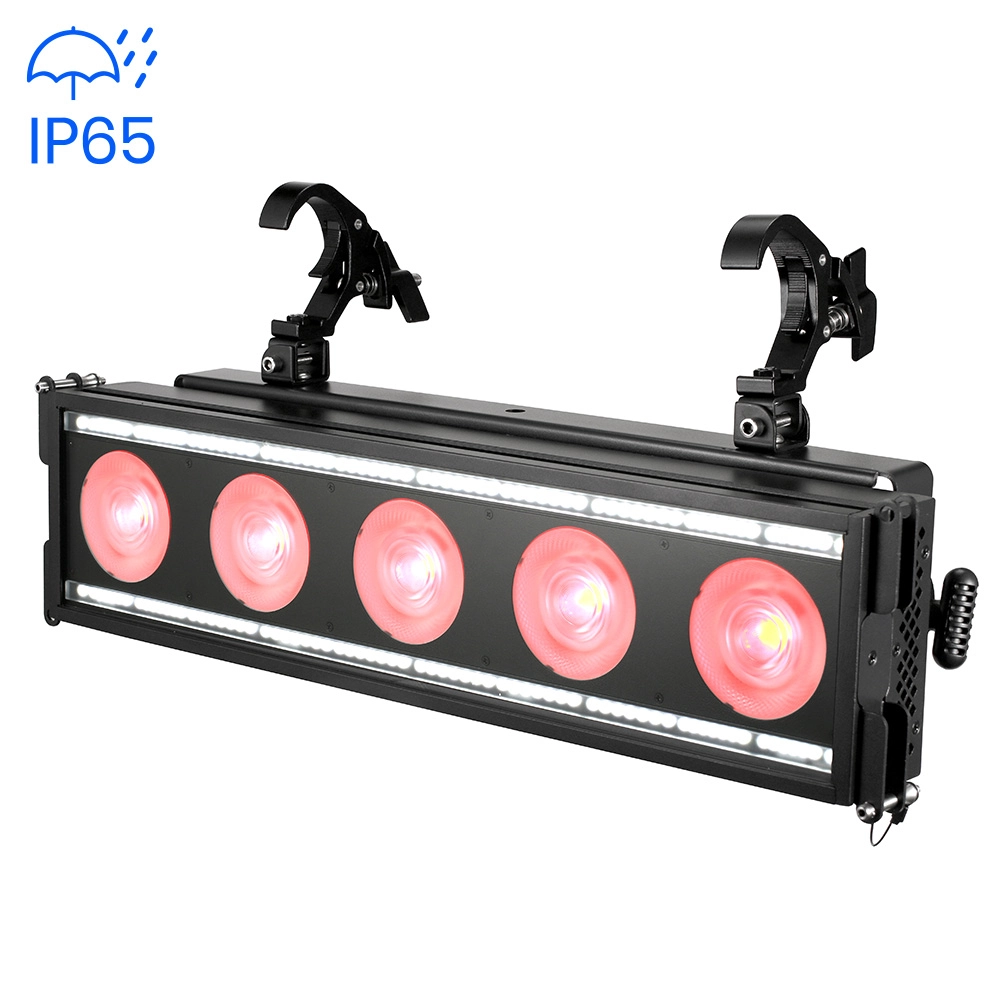
Yes. Our professional stage lights—especially the Beam, BSW 3-in-1, and LED Par Series—are engineered with high-output brightness, wide beam angles, and robust housing. Some models come with IP-rated protection, making them suitable for outdoor applications like concerts, festivals, and sports events.
Stormy Flash 550 lP
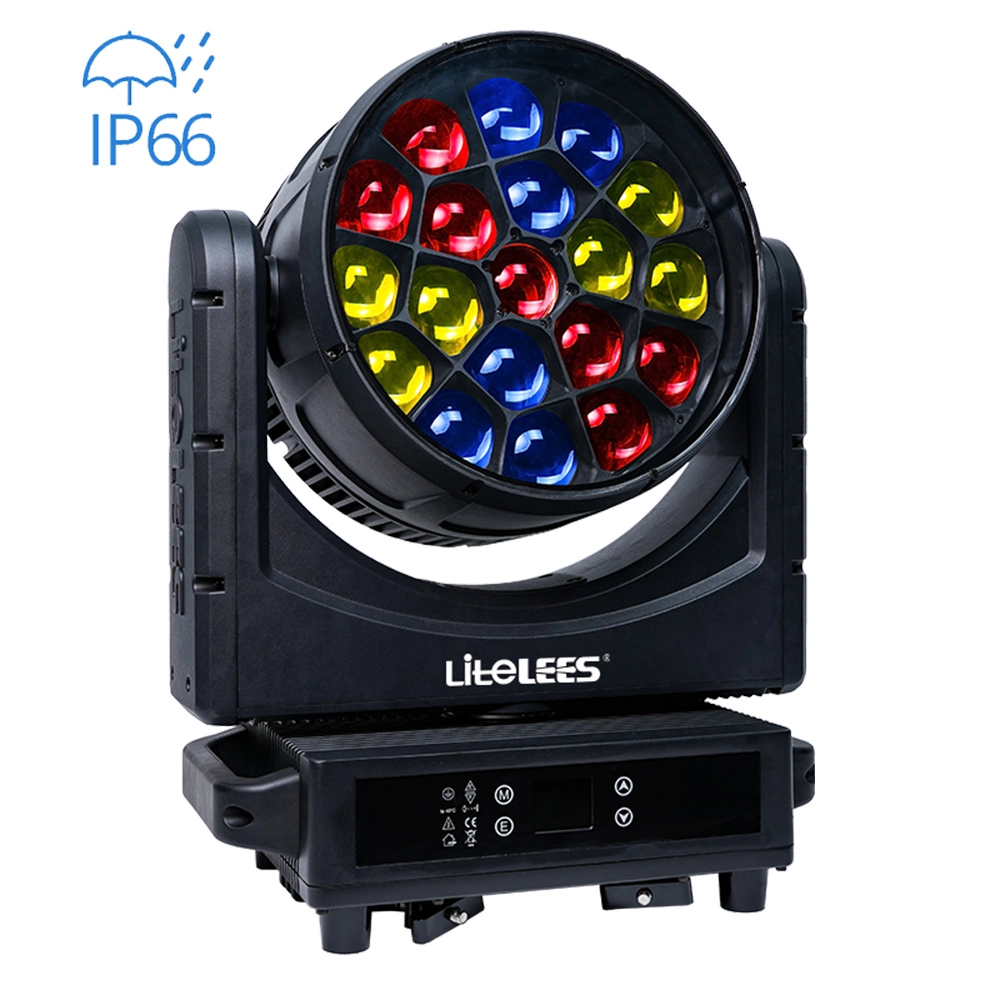
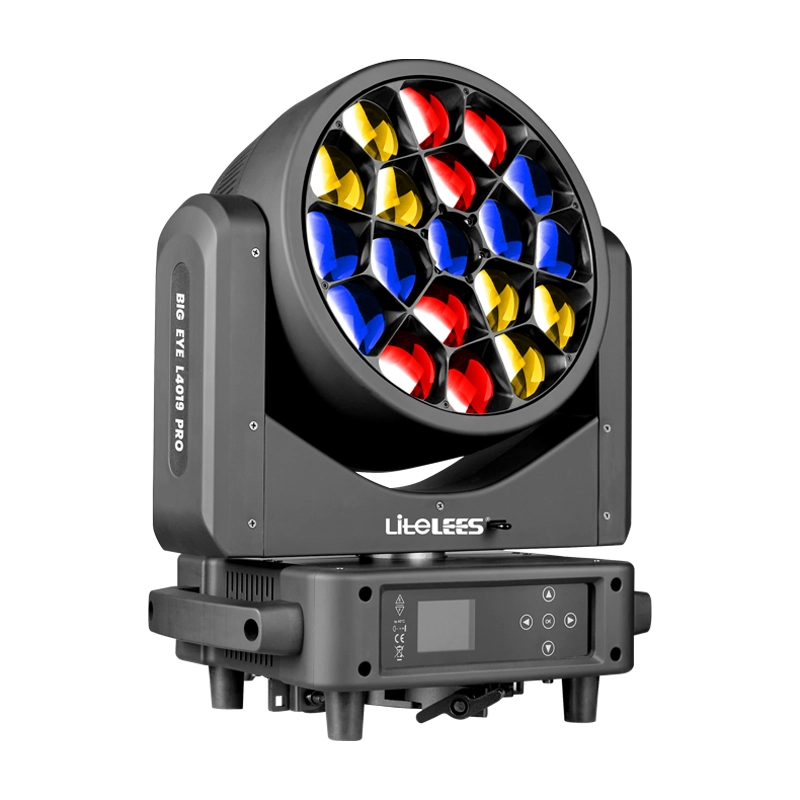
BIG EYE L4019 IP
Want to get more up-to-date news?
If you have any comments or good suggestions, please leave us a message; later our professional staff will contact you as soon as possible.

We are professional stage lighting manufacturers offering OEM and ODM LED stage lights.
Contact
Email us
Call us
Address
No.6 Longnan Road, Huashan Town, Huadu District Guangzhou, Guangdong Province, China.
LiteLEES Professional
Less Lighting