
What are energy savings of LED stage lighting vs conventional?
- How much energy and cooling will I really save replacing 1kW discharge moving heads with 400W LED moving heads in a 500-seat theater running 250 events/year?
- Can LED stage lights reproduce accurate skin tones for live broadcast, and how should I specify fixtures (TLCI/CRI, SPD) to avoid color problems?
- Will LED fixtures work with my existing DMX and dimmer rig? What do I need for flicker-free wireless DMX and RDM remote addressing?
- How do I size LED PARs and Fresnels (lux, beam angle, throw) for a small black-box theater to reach required illuminance on stage?
- What are realistic maintenance and 5-year total cost of ownership (TCO) differences between LED stage lights and conventional lamps for a touring company?
- Can I retrofit existing PAR cans with LED retrofit kits without sacrificing color mixing, beam quality, or DMX control?
How much energy and cooling will I really save replacing 1kW discharge moving heads with 400W LED moving heads in a 500-seat theater running 250 events/year?
Answer: Use measurable inputs and conservative assumptions. Take 20 moving heads running an average of 5 hours per event across 250 events/year. Per-fixture energy difference: 1,000 W (discharge) − 400 W (LED) = 600 W saved. Annual energy saved per fixture = 600 W × 5 h × 250 = 750 kWh. For 20 fixtures: 750 kWh × 20 = 15,000 kWh/year. At $0.12/kWh that equals ~$1,800/year in electricity.
Add lamp replacement savings: typical discharge lamp life 1,500–3,000 hours (use 2,000 h conservative); LED rated life 30,000–50,000 h. With 20 fixtures at 5 h × 250 = 1,250 h/year, each discharge lamp is replaced roughly every 1.6 years. If replacement bulbs cost $400 each (discharge bulbs for moving heads often $200–$800), lamp replacement cost annually ≈ (20 × $400) / 1.6 ≈ $5,000/year avoided.
Cooling impact: LED fixtures emit far less radiant heat. Electrical savings of 15,000 kWh translate to roughly 51,180,000 BTU/year avoided (1 kWh = 3,412 Btu). Because HVAC systems are intermittent and not 1:1 efficient, expect 20–40% reduction in lighting-related cooling load (case-dependent). For many theaters this reduces AC runtime and peak demand charges—further lowering utility bills and improving comfort on hot nights.
Bottom line (conservative): Electricity + bulb savings can exceed $6,000/year for this scenario, with improved stage comfort and reduced HVAC strain. Use actual local kWh rates, fixture counts, and duty cycles to refine the ROI. The U.S. Department of Energy and IES publish efficacy and cooling guidance that supports these magnitudes.
Can LED stage lights reproduce accurate skin tones for live broadcast, and how should I specify fixtures (TLCI/CRI, SPD) to avoid color problems?
Answer: For broadcast, spectral quality matters more than marketing CRI numbers alone. Use these specs and tests:
- Specify TLCI ≥ 90 for camera work. TLCI (Television Lighting Consistency Index) predicts camera color rendering better than CRI.
- Aim for CRI (Ra) ≥ 90 and R9 ≥ 80 for good reds—critical for natural skin tones.
- Demand spectral power distribution (SPD) charts from manufacturers. Avoid fixtures with narrow peaks and wide valleys; full-spectrum (smooth SPD) LEDs produce more natural skin tones and predictable color mixing.
- Choose fixtures with high-frequency drivers and flicker-free ratings for camera (driver refresh > 8–10 kHz recommended). Test on the actual camera and frame rates you will use, including slow-motion.
- Use tunable color temperature (2700K–6500K) or variable white tuning with presets (3200K for tungsten, 5600K for daylight) and include green/magenta correction controls if your camera chain needs it.
- Field test: request a short-term loan or demo fixtures on-camera. Measure TLCI with a color meter or run camera white-balance and skin-tone patches in your lighting positions.
In practice, modern high-CRI / high-TLCI LED profiles from established theatrical manufacturers will meet broadcast needs; cheaply made RGB-only fixtures may look acceptable live but fail on-camera due to spectral gaps and unstable white balance.
Will LED fixtures work with my existing DMX and dimmer rig? What do I need for flicker-free wireless DMX and RDM remote addressing?
Answer: Important compatibility rules for control systems:
- Never run powered LED fixtures through legacy mains dimmer racks (triac or SCR stage dimmers) unless the fixture is explicitly rated for dimmer-bypass or trailing-edge control. Most modern LED fixtures have internal drivers and are designed to be controlled via DMX, not line dimming.
- Use DMX512 (or Art-Net/sACN via an interface) to control color, intensity, and effects. For remote addressing and status, require RDM-enabled fixtures so you can set DMX addresses and check sensor data remotely.
- For wireless DMX choose a proven protocol (e.g., LumenRadio CRMX or equivalent) and always plan for RF robustness: spectrum scan, line-of-sight, antenna placement, and redundancy. Wireless DMX should use DMX “terminators” and opto-isolated splitters where possible.
- Flicker-control: low-cost drivers use slow PWM (<2–3 kHz) and cause camera-visible flicker. Specify fixtures with high PWM frequency (>8–20 kHz), and check manufacturer flicker-test reports for broadcast frame rates and high-speed cameras.
- Power considerations: check inrush current, power factor correction (PFC), and THD values, especially when powering many fixtures from a single distro. Use appropriately rated powerCON or true1 connectors and circuit distribution.
If you plan to integrate LED fixtures into an old control rack, plan a migration path: dedicated DMX patching, DMX splitters, and replacing old dimmer-based fixtures with DMX-enabled LEDs to avoid flicker and control conflicts.
How do I size LED PARs and Fresnels (lux, beam angle, throw) for a small black-box theater to reach required illuminance on stage?
Answer: Use photometric data rather than guesswork. Steps and a sample calculation:
1) Gather fixture lumen output and beam angle from the photometric sheet (e.g., 12,000 lm, 25° beam).2) Convert beam angle to solid angle (Ω) and luminous intensity (I in candela): Ω = 2π(1 − cos(θ/2)). With θ = 25°, θ/2 = 12.5° → cos = 0.9763 → Ω ≈ 0.1489 sr. I (cd) = lumens / Ω = 12,000 / 0.1489 ≈ 80,630 cd.3) Compute illuminance at distance D (meters): lux = I / D^2. At 10 m, lux ≈ 80,630 / 100 ≈ 806 lux.
Rule-of-thumb theatre targets: music/concert front washes 300–800 lux; spoken drama closer to 300–700 lux depending on staging and camera needs. Use the inverse-square rule for point-like sources and factor in beam spread and lens losses for real fixtures.
Practical tips:
- Ask manufacturers for beam profiles and lux-at-distance charts—these save time compared to manual math.
- For even stage wash use overlapping fixtures with wider beam angles (40°–60°) or dedicated wash fixtures with elliptical lenses and soft edge optics to avoid hotspots.
- For front-of-house and followspots, consider luminous intensity (cd) more than lumens alone; followspots prioritize throw and intensity over spread.
- Use a grid or render in lighting-design software (WYSIWYG, Capture) with the fixture photometric file to verify lux maps before purchase.
This photometric method (and software validation) prevents under- or over-specing and helps balance fixture counts, beam angles, and wattages to meet artistic and energy goals.
What are realistic maintenance and 5-year total cost of ownership (TCO) differences between LED stage lights and conventional lamps for a touring company?
Answer: Use a representative 5-year comparison with conservative numbers.
Assumptions (example touring rig): 10 profile moving heads, 1,250 h/year use each (250 shows × 5 h), grid travel and labor similar across options.
Conventional moving head (discharge lamp):
- Purchase price: $900 each → 10 × $900 = $9,000 initial
- Power: 1,000 W each → annual energy per fixture = 1,250 kWh → 10 fixtures = 12,500 kWh/year → at $0.12/kWh = $1,500/year
- Lamp life: 2,000 h → average 1 lamp per fixture every ~1.6 years. Lamp cost $400 + labor $80 = $480 replacement.
- Over 5 years: lamp replacements per fixture ≈ 3 (covering 6,250 h) → lamp cost per fixture ≈ $1,200; for 10 fixtures = $12,000
- 5-year energy cost ≈ $7,500
- Total 5-year TCO ≈ $9,000 + $12,000 + $7,500 = $28,500 (excludes occasional ballast replacement and higher cooling costs)
LED moving head:
- Purchase price: $1,250 each → 10 × $1,250 = $12,500 initial
- Power: 400 W each → annual energy per fixture = 500 kWh → 10 fixtures = 5,000 kWh/year → at $0.12/kWh = $600/year
- LED rated life: 30,000–50,000 h (no routine lamp replacements), some consumables (fans) may need service after many hours. Budget small maintenance reserve: $60/fixture/year.
- 5-year energy cost ≈ $3,000
- Maintenance reserve ≈ $3,000
- Total 5-year TCO ≈ $12,500 + $3,000 + $3,000 = $18,500
Net 5-year savings (example) ≈ $10,000, with payback usually within 2–4 years depending on local electricity costs, lamp pricing, and labor. Real results vary; include spare parts, warranty coverage, and resale value in your TCO model.
Key variables that swing TCO: local kWh price, lamp cost, fixture initial price, and labor/downtime costs. For touring operators, reduced lamp swaps and lower crate weight (power vs lamp spares) add logistical savings beyond dollars.
Always request MTBF, flare/fan service intervals, and warranty terms from vendors and factor in service contracts where appropriate.
Can I retrofit existing PAR cans with LED retrofit kits without sacrificing color mixing, beam quality, or DMX control?
Answer: Retrofit kits can be a fast, low-cost upgrade, but there are important caveats:
- Optics and beam quality: Original PAR housings were designed for incandescent filament sources. LED modules (SMD or COB) have different light distributions—you may see altered beam edge, hotspots, or reduced throw. For precise beam shaping, purpose-built LED fixtures with matched optics are superior.
- Thermal management: Retrofit modules must dissipate heat properly. Enclosing an LED in a can not designed for its thermal path can reduce LED lifetime and void warranties. Only use kits rated for enclosed fixtures by the manufacturer.
- Color mixing: Basic RGB retrofit modules mix colors within the module but often lack the spectral completeness for high-quality whites or accurate skin tones. Consider RGBW/RGBA or tunable white retrofit modules with good CRI/TLCI if color fidelity matters.
- Control: Cheap retrofits may provide basic DMX dimming but lack full pixel-addressing, pixel-mapping, or RDM. If your rig needs advanced control, investing in new LED wash lights or moving fixtures with full DMX features is better than retrofitting.
- Mechanical fit and safety: Ensure mechanical retention, locking, and proper mains connection. Verify IP rating if used outdoors and UL/CE listings for your market.
Recommendation: For clear budget-constrained upgrades (simple washes, house lights), high-quality retrofit kits from reputable suppliers can work well and reduce energy quickly. For theatrical front-lights, broadcast, or touring rigs where color fidelity, beam control, and robust DMX features are needed, invest in purpose-built LED fixtures to avoid compromised performance and hidden lifecycle costs.
Concluding summary of advantages of LED stage lighting over conventional fixtures: LEDs deliver 50–80% lower operational power, dramatically reduced lamp-replacement costs, far less radiant heat (reducing HVAC loads), longer rated life (30k–50k hours), instant color control and pixel-enabled effects, and improved reliability when selected from reputable manufacturers. For broadcast, specify TLCI/CRI and high-frequency drivers; for control, ensure DMX/RDM and proper power distribution. When sized properly with photometric data, LEDs offer superior total cost of ownership and operational flexibility for venues and touring companies.
For a tailored equipment list, photometric checks, or a firm quote for your venue or tour, contact us at www.litelees.com or litelees@litelees.com — we provide demo fixtures, photometric reports, and project-level ROI modeling.
Products
Are your lights suitable for large-scale events and outdoor use?
Yes. Our professional stage lights—especially the Beam, BSW 3-in-1, and LED Par Series—are engineered with high-output brightness, wide beam angles, and robust housing. Some models come with IP-rated protection, making them suitable for outdoor applications like concerts, festivals, and sports events.
Can I customize the functions or software of the lights?
Absolutely. As a manufacturer with independent R&D capabilities, we offer customization for both hardware and software (such as DMX channel layout, built-in programs, or UI language). Contact us with your project needs, and our team will provide tailored solutions.
What is the lifespan of your LED stage lights?
Our LED lights use high-quality chips with a rated lifespan of over 50,000 hours. Proper usage and maintenance ensure long-term reliability and stable performance, making them a smart investment for any venue.
Do your lights support DMX512 and other control protocols?
Yes. All LiteLEES stage lights are fully compatible with DMX512. Many models also support RDM, Art-Net, and wireless DMX (optional), ensuring seamless integration with modern lighting control systems.
Company
Do you have your own factory?
Yes. We own a sheet metal factory and a complete in-house production line—from PCB to final assembly—ensuring strict quality control and fast delivery.
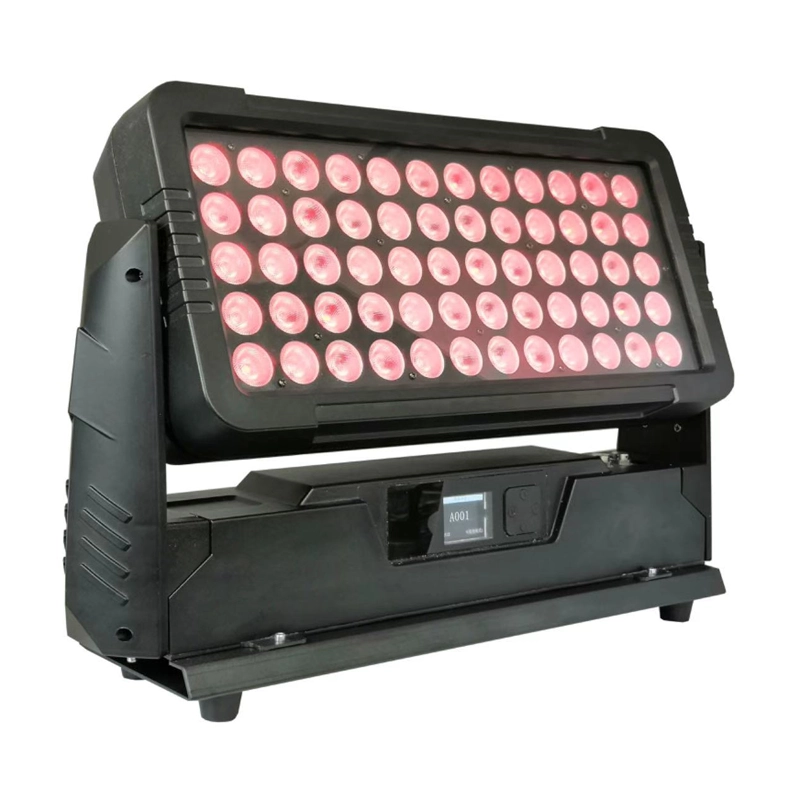
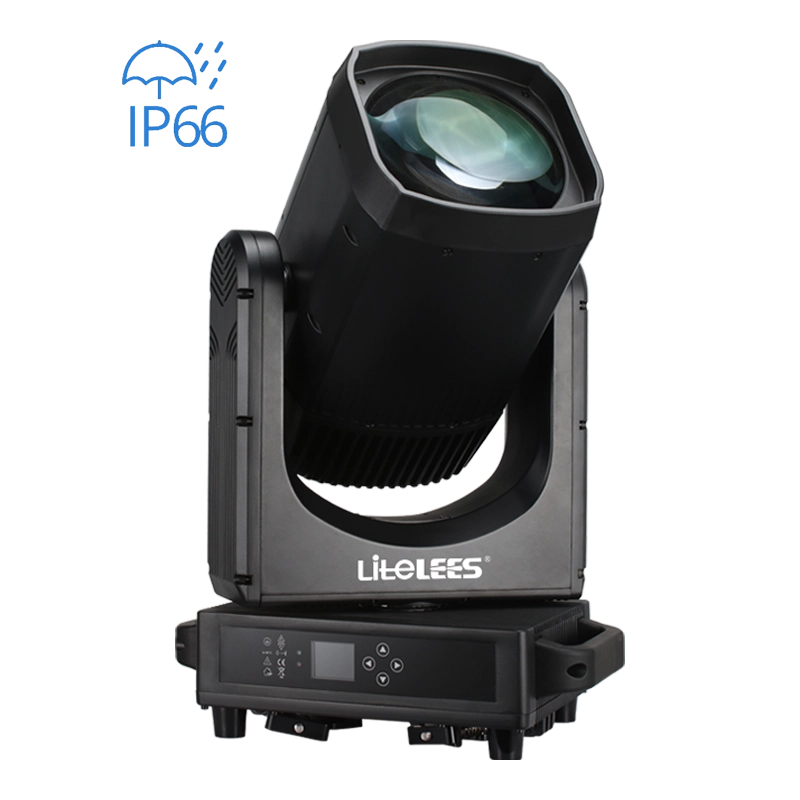
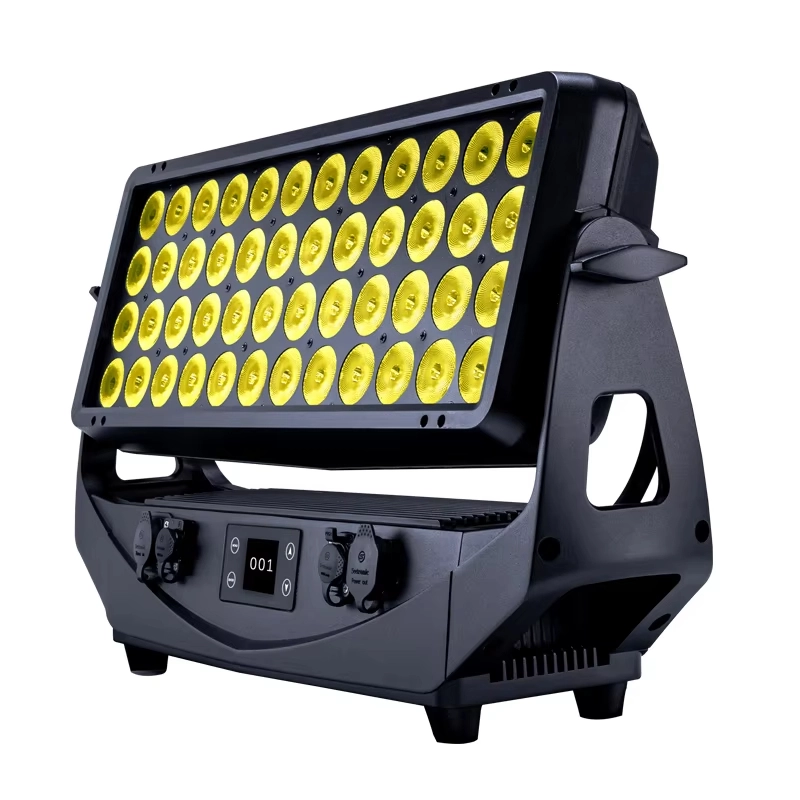
LiteLEES LUMIX BEAM 420 IP
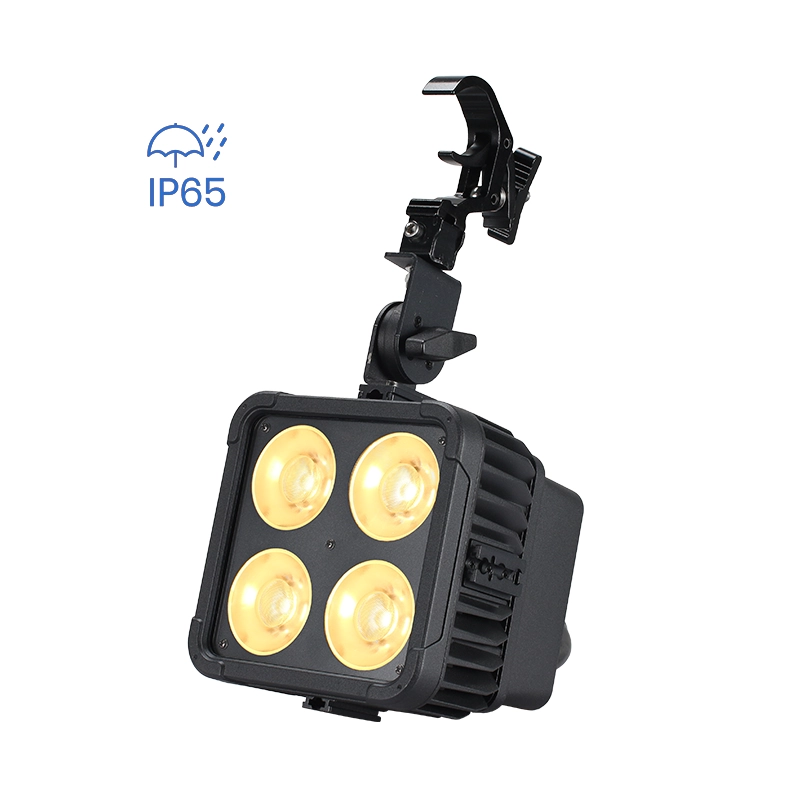
Magic Cube V8 IP
Want to get more up-to-date news?
If you have any comments or good suggestions, please leave us a message; later our professional staff will contact you as soon as possible.

We are professional stage lighting manufacturers offering OEM and ODM LED stage lights.
Contact
Email us
Call us
Address
No.6 Longnan Road, Huashan Town, Huadu District Guangzhou, Guangdong Province, China.
LiteLEES Professional
Less Lighting