
Which LED stage lights offer the best color accuracy?
- 1) How can I verify a moving-head wash fixture's claimed TLCI/CRI actually translates to accurate skin tones on-camera?
- 2) Which spectral data should I insist on from manufacturers to compare true color fidelity (not just CRI)?
- 3) How do PWM dimming and refresh rates of LED stage lights affect color accuracy and flicker on high-frame-rate cameras?
- 4) For touring shows, how do LED binning and MacAdam step ratings impact color consistency across multiple fixtures?
- 5) When do I need multi-emitter RGB+PCW/CW/WW engines versus simple RGB for stage wash color accuracy?
- 6) Which LED stage lights offer the best color accuracy for broadcast and live events in the mid-range budget?
1) How can I verify a moving-head wash fixture's claimed TLCI/CRI actually translates to accurate skin tones on-camera?
Start by understanding the metrics: CRI (Ra) is an older, limited indicator focused on daylight-balanced reference; TLCI is designed for television/camera systems and is preferable for broadcast and streaming. However, published CRI/TLCI numbers alone don’t guarantee real-world results because implementation (LED engine, phosphor mix, color calibration) and spectral power distribution (SPD) determine how colors, especially skin tones, render.
Practical verification steps:
- Request the SPD graph from the manufacturer or distributor. A smooth, full-spectrum SPD (not just narrow spikes) around 560–610 nm helps natural skin tones. Avoid engines with large spectral gaps in the red (600–700 nm).
- Ask for TM-30 Rf and Rg scores if available. TM-30 gives a more complete fidelity (Rf) and gamut (Rg) assessment than CRI alone and predicts saturation shifts.
- Ask for on-camera footage (ungraded) of standard color targets (X-Rite ColorChecker Classic or Passport) under the fixture at typical working distances and intensities and at the camera frame rates you plan to use (24/25/30/50/60 fps). Compare ungraded patches to reference images and check Delta-E values if provided.
- Insist on published TLCI measured with an integrating sphere and spectroradiometer compliant with IEC/CIE procedures. Third-party test reports (e.g., independent labs, broadcast rental houses) are more reliable than marketing blurbs.
- Test in person if possible: set the fixture to your most-used color temps (e.g., 3200K and 5600K), photograph talent with known skin tones, and judge for hue shifts, undersaturated reds, or flattened midtones.
What to accept: For broadcast and camera-dominant workflows, look for TLCI or TM-30 Rf values consistently above 90, and SPD plots showing adequate red content. For stage-only work, CRI 90+ can be acceptable but still check SPD.
2) Which spectral data should I insist on from manufacturers to compare true color fidelity (not just CRI)?
Don’t rely solely on CRI/Ra. Ask for:
- Spectral Power Distribution (SPD) graphs: the single most instructive document. Look for smoothness and adequate output across 400–700 nm, not just peaks at blue/green/red.
- TLCI (Television Lighting Consistency Index) and the test report method: preferable for camera work.
- TM-30 metrics (Rf and Rg): TM-30 gives fidelity (Rf) and gamut (Rg) across 99 color samples — it reveals hue shifts and saturation changes missed by CRI.
- Color rendering gamut or chromaticity stability: provide x,y coordinates and MacAdam ellipse data (e.g., 2-step, 3-step) for white-point consistency.
- Measured correlated color temperature (CCT) at different output levels and the correlated chromaticity shift with dimming (consistency of white point when dimmed).
- Lumen or lux outputs at standard distances and beam angles so you can compare required fixture counts to reach target lux without sacrificing color fidelity.
Why this matters: SPD + TM-30 + TLCI allow you to compare spectral completeness, color fidelity, and saturation behavior objectively. If a vendor can’t provide these, the spec sheet is incomplete for professional buying decisions.
3) How do PWM dimming and refresh rates of LED stage lights affect color accuracy and flicker on high-frame-rate cameras?
Issue: many LED engines dim using PWM (pulse-width modulation). Low PWM frequencies produce visible strobing or banding when recorded on cameras — this affects perceived color accuracy and image quality even if static color numbers look good.
What to demand and test:
- Ask for the dimming method and PWM frequency. Professional, camera-friendly fixtures either use high-frequency PWM (typically several kHz or higher) or linear current control / hybrid drivers that avoid low-frequency pulses. ‘Flicker-free’ claims should include tested frame-rate results.
- Test at your target camera frame rates and shutter angles: record the fixture at 24/25/30/50/60 fps and at high frame rates used by slo-mo (120/240 fps), and inspect for banding or color instability.
- Check dimming curves and color stability across dim levels: the white point (CCT and chromaticity) should stay within acceptable MacAdam steps as you dim. Some drivers shift color with intensity.
Guideline: For broadcast and high-speed capture, prefer fixtures explicitly tested and certified as flicker-free at your camera’s frame rates and shutter angles. If the supplier gives PWM frequency, a higher frequency reduces camera artifacts; still, empirical camera testing is the final arbiter.
4) For touring shows, how do LED binning and MacAdam step ratings impact color consistency across multiple fixtures?
Problem: multiple fixtures built from different LED bins or production runs can show visible color differences on stage, causing blotchy washes and unpredictable color mixing.
Key technical concepts:
- LED binning: manufacturers sort LEDs into bins by forward voltage, luminous flux, and chromaticity. Tight binning means less per-unit color variance.
- MacAdam steps: a measure of chromaticity tolerance. 2-step or 3-step MacAdam ellipses indicate very consistent color from fixture to fixture; 4–6-step is looser and may reveal differences under close viewing.
What to require for touring:
- Request binning and MacAdam step data. For multi-fixture touring rigs, insist on 2–3 MacAdam steps or hex binning tolerances equivalent to that tightness.
- Ask the manufacturer if fixtures for the same touring order will be color-matched at the factory (some companies ship a calibrated batch). If not, request a color calibration profile or LUT for your console or for fixtures.
- Look for fixtures with onboard calibration or user-accessible calibration modes that allow matching the white point precisely across fixtures.
Operational tip: During system acceptance, run a white balance and color-match procedure using a spectrometer or calibrated camera and ColorChecker to create fixture profiles. This can save hours tuning colors on a tour.
5) When do I need multi-emitter RGB+PCW/CW/WW engines versus simple RGB for stage wash color accuracy?
Short answer: Use multi-emitter engines when you need accurate whites, saturated pastels, and natural skin tones — especially on-camera. RGB-only engines mix red/green/blue but often lack full-spectrum red and warm white capability.
How the engines differ:
- RGB-only: often strong in saturated colors but weak in smooth whites and warm skin tones because the red channel may not cover the full red spectrum and green/blue mixes can look desaturated.
- RGBW/RGBA/RGBWW/PCW (phosphor-converted white)/multi-chip engines: add dedicated white (warm and/or cool) or phosphor-enhanced LEDs to fill spectral gaps, producing more accurate CCTs and smoother white rendering.
- Tunable white (dual- or tri-white arrays) and multi-primary engines (e.g., RGBAL/ RGBAW + lime or cyan) provide a broader gamut and better color rendering for subtle hues and pastels.
When to choose which:
- Theater and live music without camera needs: well-tuned RGBW or quality RGB can be sufficient.
- Broadcast, streaming, corporate presentations, and any scenario needing natural skin tones: prefer fixtures with dedicated warm and cool white emitters or high-quality phosphor-converted engines and verify with TLCI/TM-30 data.
- For color-matching fixtures from multiple lines, multi-emitter engines typically make matching easier and more reliable.
6) Which LED stage lights offer the best color accuracy for broadcast and live events in the mid-range budget?
Rather than relying on model hype, focus on product lines and vendor practices with proven color science. Brands and product lines widely used by professionals for color-critical work include established manufacturers who publish SPD and TM-30/TLCI data and support testing: broadcast-focused LED softlights (ARRI SkyPanel family; Litepanels Gemini/Sola series), theater/architectural LED lines (ETC ColorSource / Source Four LED), and high-end moving-head washes from manufacturers that prioritize color engines (Robe, Claypaky, Martin by Harman). These vendors are known for better color control, published measurement data, and professional support.
Buying checklist for mid-range purchases:
- Require published TLCI or TM-30 Rf/Rg and SPD graphs.
- Confirm flicker-free operation at your camera frame rates and shutter angles.
- Ensure fixtures provide a natural white range (e.g., 2700–6500K+) with minimal chromatic shift when dimming.
- Verify LED binning or color-matching guarantees for multiple units.
- Check practical support: spare parts availability, firmware updates, and third-party measurement reports.
If you want specific model recommendations tailored to your budget and use (concert touring, proscenium theater, broadcast studio), we can match product lines, show you spectrometer reports, and supply demo footage.
Conclusion
Choosing LED stage lighting for true color accuracy means moving beyond headline CRI numbers and requiring spectral data (SPD), camera-oriented indices (TLCI, TM-30), PWM and flicker testing, and strict binning/MacAdam tolerances for multi-fixture consistency. The right combination of multi-emitter LED engines, accurate driver design, and vendor-provided measurement reports produces reliable on-camera skin tones, consistent house whites, and predictable color mixing across tours and productions. Advantages of LED stage lights include lower power draw, reduced heat, long L70 lifespans (commonly 50,000+ hours in professional fixtures), instant color control, and smaller flight cases—while modern fixtures can meet or exceed the color fidelity of legacy lamp-based fixtures when selected and tested properly.
For a tailored quote based on your venue, camera specs, and budget, contact us for a quote. Visit www.litelees.com or email litelees@litelees.com.
Products
Are your lights suitable for large-scale events and outdoor use?
Yes. Our professional stage lights—especially the Beam, BSW 3-in-1, and LED Par Series—are engineered with high-output brightness, wide beam angles, and robust housing. Some models come with IP-rated protection, making them suitable for outdoor applications like concerts, festivals, and sports events.
How long is the warranty period for your products?
We offer a standard 1-year warranty on all products, with extended warranty options available upon request. During the warranty period, we provide free technical support and parts replacement for non-human damage.
Company
Can LiteLEES handle OEM/ODM orders?
Absolutely. With our strong R&D capabilities and advanced manufacturing, we can customize designs, features, and branding to meet your specific needs.
What is LiteLEES’s main business?
LiteLEES specializes in the design, development, manufacturing, and sales of professional stage lighting, including moving head lights, beam lights, spot lights, wash lights, and LED par lights.
What certifications do your products have?
All LiteLEES products are certified by CE, RoHS, FCC, and BIS. Our factory is ISO9001 quality management system certified.
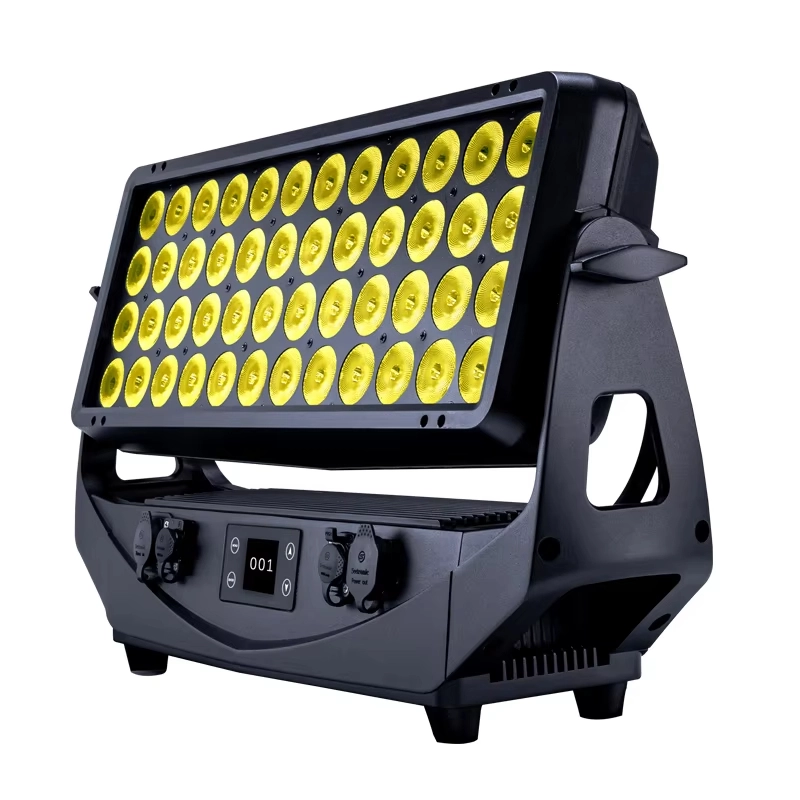
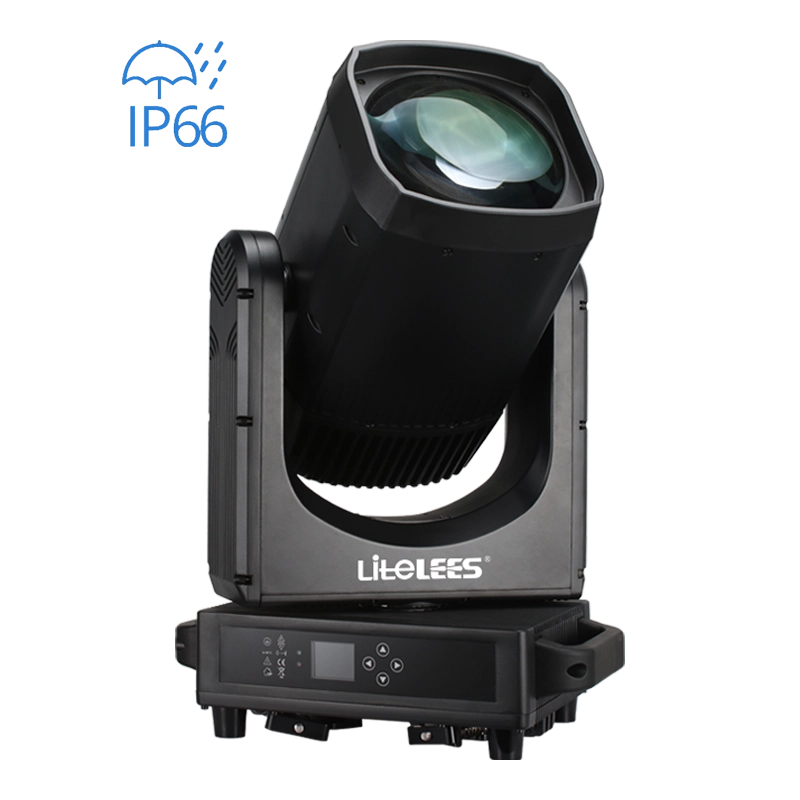
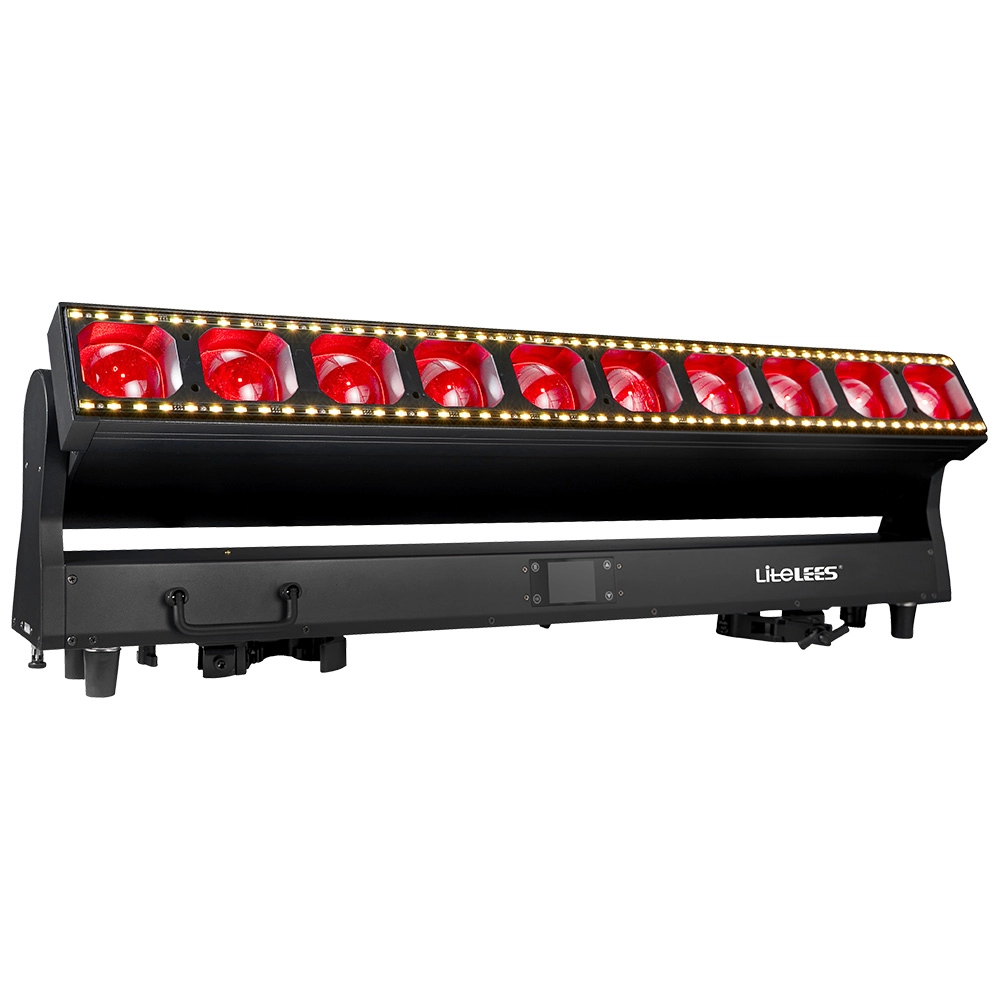
LiteLEES LUMIX BEAM 420 IP
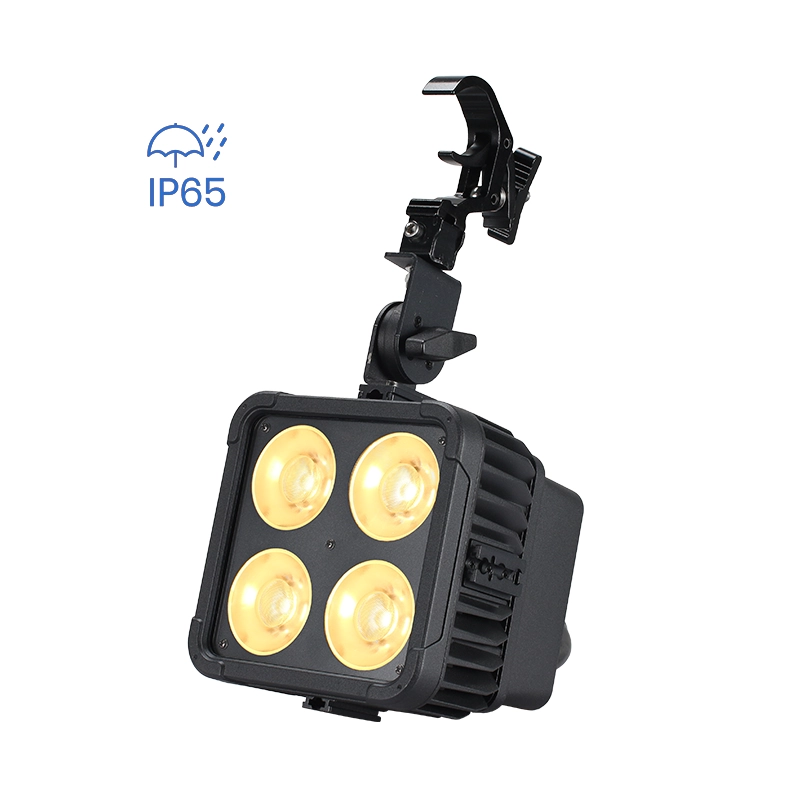
Magic Cube V8 IP
Want to get more up-to-date news?
If you have any comments or good suggestions, please leave us a message; later our professional staff will contact you as soon as possible.

We are professional stage lighting manufacturers offering OEM and ODM LED stage lights.
Contact
Email us
Call us
Address
No.6 Longnan Road, Huashan Town, Huadu District Guangzhou, Guangdong Province, China.
LiteLEES Professional
Less Lighting