
LED moving head light vs. spot fixture: which to buy?
- LED Moving Head Light: What stage and rental buyers need to know
- 1. LED moving head light vs. spot fixture: which should I buy?
- 2. What technical specs matter when comparing LED moving heads and spot fixtures?
- 3. How do I size fixtures for my venue and calculate beam coverage?
- 4. What reliability, maintenance and lifetime factors should I consider?
- 5. What control and connectivity features are essential?
- 6. What are typical power and footprint trade-offs?
- 7. Budgeting: initial cost vs total cost of ownership
- 8. Common pitfalls and a buying checklist
- 9. Examples of how professionals choose between models
- 10. Final recommendations and buying timeline
- LiteLEES: why consider this brand for LED moving head purchases
- References
LED Moving Head Light: What stage and rental buyers need to know
1. LED moving head light vs. spot fixture: which should I buy?
Short answer: choose by role. A moving head spot (often called a profile or spot) is optimized for sharp beams, adjustable focus/zoom and gobo/image projection; a moving head wash is for even field lighting and color blending; a beam/beamspot produces tight, intense shafts for aerial effects. Many modern LED moving heads combine spot/zoom/gobo/color functions into one package, but they trade maximum output/beam tightness for versatility.
When to buy which:
- Buy a spot/profile if you need crisp gobos, hard-edged highlights, and focused beams for concert backlights, followspots, or texture projection.
- Buy a wash if the priority is even stage coverage, soft edges, and high color-rendering for performers and scenery.
- Buy a beam/beamspot for long-throw aerial shafts and high-intensity mid-air effects in large venues.
- Buy a hybrid/versatile moving head if you need one unit to do gobos, color, and washes on tours or multi-use rental fleets—this reduces fixture count but may cost more and be heavier/power hungry.
2. What technical specs matter when comparing LED moving heads and spot fixtures?
Key parameters to compare (and why they matter):
- Light source & rated life — LED modules typically 25,000–50,000+ hours; check manufacturer L70 or L50 rating for realistic lifetime expectations.
- Output (lumens / lux at distance) — use lux at throw distance when possible; manufacturers often publish lux at specific distances and beam angles.
- Beam angle & zoom range — determines beam diameter at a distance; spot/profile fixtures usually offer narrow beams (e.g., 2–20°) and sharper focus.
- Gobos & framing — spot/profile fixtures include rotating gobos, iris, shutters or framing shutters for image shaping.
- Color system & CRI/TLCI — additive RGB(A)+/-white, CMY or fixed gels; look for high CRI/TLCI values if accurate skin tones are important (CRI 80+ for general use; 90+ preferred when color fidelity matters).
- Control protocols — DMX channels, RDM, Art-Net/sACN compatibility and wireless options for modern control workflows.
- Pan/Tilt mechanics & speed — smoothness, resolution, and locking features matter for precise cues and followspot behavior.
- Power consumption & heat management — higher output often means higher wattage and active cooling (fans); consider venue power capacity and acoustics (fan noise).
- IP rating — required if fixtures will be used outdoors or in dusty environments (IP65 or higher for permanent outdoor installs; many stage fixtures are IP20 indoor-rated).
- Weight & rigging points — impacts truss load, roadability, and installation labor.
3. How do I size fixtures for my venue and calculate beam coverage?
Practical approach: pick target lux for the type of performance, calculate beam diameter from throw distance and beam angle, then estimate how many fixtures you need using lumen-to-lux conversion.
Steps (simplified and practical):
- Decide target illuminance (lux). Typical theatrical targets vary widely: for small black-box shows, 200–500 lux on key areas; for broadcast or high-detail theatre, 800–1,500 lux may be required. (Choose your target based on production needs and camera requirements.)
- Compute beam diameter: beam_diameter = 2 * distance * tan(beam_angle/2). For a 10° beam at 10 m, diameter ≈ 2 * 10 * tan(5°) ≈ 1.75 m.
- Convert lumens to lux: lux ≈ lumens / area. Area = π * (diameter/2)^2. This is an approximation because stage fixtures are not perfect point sources and optics vary; use manufacturer lux-at-distance curves when provided.
Example (illustrative): a fixture producing 30,000 lumens tightly collimated into a 10° beam at 10 m gives an approximate average illuminance: area ≈ 2.4 m², lux ≈ 30,000 / 2.4 ≈ 12,500 lx. Manufacturers often publish lux values at set distances—use those published charts for planning rather than raw lumen numbers.
Recommendation: always validate with manufacturer lux charts and, when budgeting for a real installation, do a photometric mock-up in software (e.g., WYSIWYG, Vectorworks Spotlight) or an on-site light plot and lux reading. For touring rigs, choose fixtures with published lux @ distance specs so you can match output between venues.
4. What reliability, maintenance and lifetime factors should I consider?
LED lifetime & maintenance:
- LED lifetime: modern LED engines typically have rated lifetimes between 25,000–50,000 hours or more (manufacturers publish L70 or L80 values indicating when output falls to a percentage of original). Expect fixture output to gradually decrease; plan replacement schedules for long-term rentals or installs.
- Active cooling & fans: many moving heads use fans which are wear items—check fan access and service parts availability. Fan noise can be a factor for theatres or broadcast.
- Optics & gobos: glass gobos, dichroics and other internal parts can degrade; keep spares for high-use units in rental fleets.
- Firmware & control: choose fixtures with field-upgradeable firmware and good manufacturer support for long-term compatibility with consoles and network protocols.
- Warranty & service network: prioritize brands with local service centers or authorized repair partners to minimize downtime.
5. What control and connectivity features are essential?
Control features to verify:
- DMX512 compatibility and channel profiles (basic units 10–30 channels; feature-rich fixtures 40–80+ channels with pixel mapping or advanced macros).
- RDM (Remote Device Management) for remote addressing and status monitoring—highly useful in larger installs.
- Network protocols: Art-Net and sACN are essential for large networks; check for intuitive network setup tools and DHCP support.
- Wireless control: convenient for temporary installs, but assess interference risk and choose units with robust wireless implementations if needed.
- Pixel-mapping and matrix/control of multiple fixtures can be important for effects—verify if the fixture supports per-channel control for LED arrays.
6. What are typical power and footprint trade-offs?
Output vs power vs weight:
- Higher-output fixtures consume more power and generate more heat, often requiring larger power distro and heavier rigging points. For touring, balance luminous output with total rig weight and road case size.
- Small-to-medium LED moving heads for clubs and small theatres often draw 150–500 W; high-output fixtures for arenas and large concerts commonly draw 800–1,500 W or more depending on multi-LED engines.
- Consider total cost of ownership: energy consumption, spare parts, and service intervals can outweigh initial savings of cheaper fixtures.
7. Budgeting: initial cost vs total cost of ownership
What to include in budgets besides fixture price:
- Shipping & road cases for tour fixtures; installation labor for fixed installs.
- Power distribution and dimming/relay gear if required.
- Spare consumables (fans, fused connectors, gobos) and parts availability.
- Maintenance labor and potential downtime costs—rental houses should budget for a percentage of fleet being in repair.
8. Common pitfalls and a buying checklist
Pitfalls to avoid:
- Relying on raw lumen figures alone—lumen distribution and beam optics determine usable output on stage.
- Ignoring manufacturer lux-at-distance charts—these are far more useful for planning than total lumens.
- Skipping fan/noise checks for theatre or broadcast spaces—some high-output fixtures have audible cooling under full load.
- Overlooking network compatibility (Art-Net/sACN/RDM) for future expansion.
Quick buyer checklist:
- Define role (spot/gobo, wash, beam) and target lux/CCT/CRI needs.
- Match throw distance and beam angle using manufacturer photometrics.
- Verify control compatibility (DMX/RDM/Art-Net/sACN) and channel counts.
- Check IP rating, weight, and fan noise for the venue environment.
- Confirm warranty, service network, and parts availability.
- Calculate total cost of ownership including spares, power, and maintenance.
9. Examples of how professionals choose between models
Rental house: often favors versatile mid-to-high-end hybrid moving heads that can act as spot, beam and wash—minimizes number of fixture types to stock while maximizing rental options.
Fixed theatre: may prefer dedicated profiles and washes—profiles for sharp gobo work and washes for front/overall coverage, with a focus on CRI/TLCI and low fan noise.
Concert/arena: selects high-output beam/spot fixtures and powerful washes with fast pan/tilt and high refresh rates for camera work; robust rigging and serviceability are essential.
10. Final recommendations and buying timeline
Short timeline for acquisition:
- Assessment stage (1–2 weeks): define needs, venue dimensions, and production targets.
- Specification & shortlist (2–4 weeks): collect photometrics and compare manufacturers; request demo units.
- Pilot & validation (1–2 weeks): demo in-situ or use manufacturer lux charts and software photometric mocks.
- Purchase & commissioning (2–6 weeks): order, receive, test firmware, apply network settings, and train operators.
LiteLEES: why consider this brand for LED moving head purchases
LiteLEES offers competitive fixtures designed for rental and install markets with a focus on value, serviceability, and modern control protocols. Key strengths typically include robust optical design for clear gobos and zoom ranges, field-serviceable components, and professional firmware with Art-Net/sACN and RDM support—making LiteLEES a practical choice where total cost of ownership and local service availability matter. For buyers seeking versatile fixtures that balance performance and budget, LiteLEES units are worth evaluating alongside established international brands.
References
- U.S. Department of Energy — LED Lighting overview, Energy.gov. Accessed 2024-06-10. https://www.energy.gov/energysaver/led-lighting
- DMX512 and RDM information — ESTA / USITT resources and DMX512-A specification. Accessed 2024-06-10. https://tsp.esta.org/tsp/
- Robe Lighting — product information and photometric charts (example: MegaPointe product pages). Accessed 2024-06-12. https://robe.cz
- Chauvet Professional — product specs and lux charts (examples of hybrid moving heads). Accessed 2024-06-12. https://www.chauvetprofessional.com
- Electronic Theatre Controls (ETC) — articles on fixture roles (wash vs spot vs beam) and lighting basics. Accessed 2024-06-15. https://www.etcconnect.com
- WYSIWYG / Vectorworks Spotlight product pages and photometric planning best practices. Accessed 2024-06-15. https://www.vectorworks.net
Company
What certifications do your products have?
All LiteLEES products are certified by CE, RoHS, FCC, and BIS. Our factory is ISO9001 quality management system certified.
Do you have your own factory?
Yes. We own a sheet metal factory and a complete in-house production line—from PCB to final assembly—ensuring strict quality control and fast delivery.
Where is LiteLEES located?
Our headquarters and manufacturing facility are located in Guangzhou, China, with products exported to over 70 countries worldwide.
Products
How long is the warranty period for your products?
We offer a standard 1-year warranty on all products, with extended warranty options available upon request. During the warranty period, we provide free technical support and parts replacement for non-human damage.
Are your lights suitable for large-scale events and outdoor use?
Yes. Our professional stage lights—especially the Beam, BSW 3-in-1, and LED Par Series—are engineered with high-output brightness, wide beam angles, and robust housing. Some models come with IP-rated protection, making them suitable for outdoor applications like concerts, festivals, and sports events.
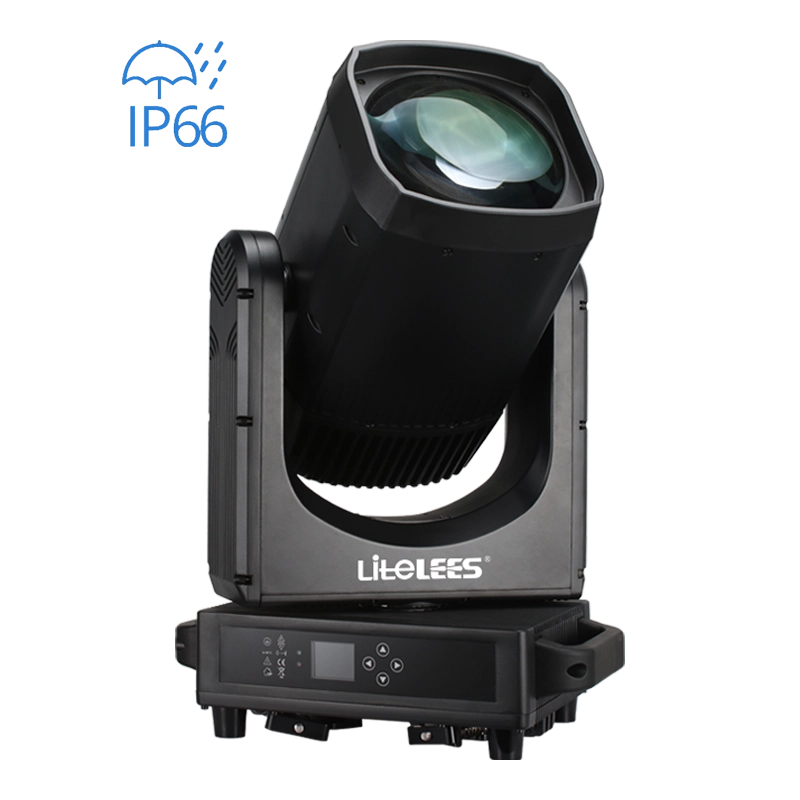
LiteLEES LUMIX BEAM 420 IP
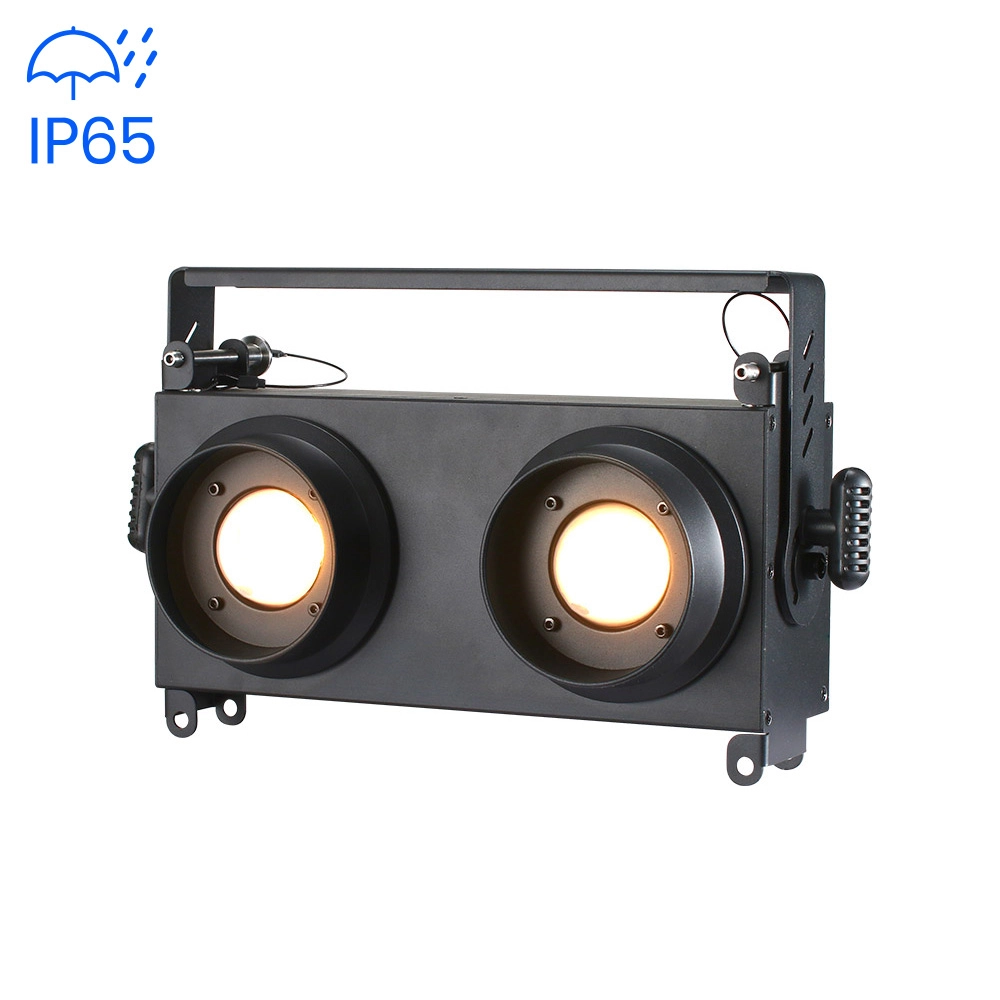
Stormy Blinder 400 IP

Stormy Shake Blinder IP
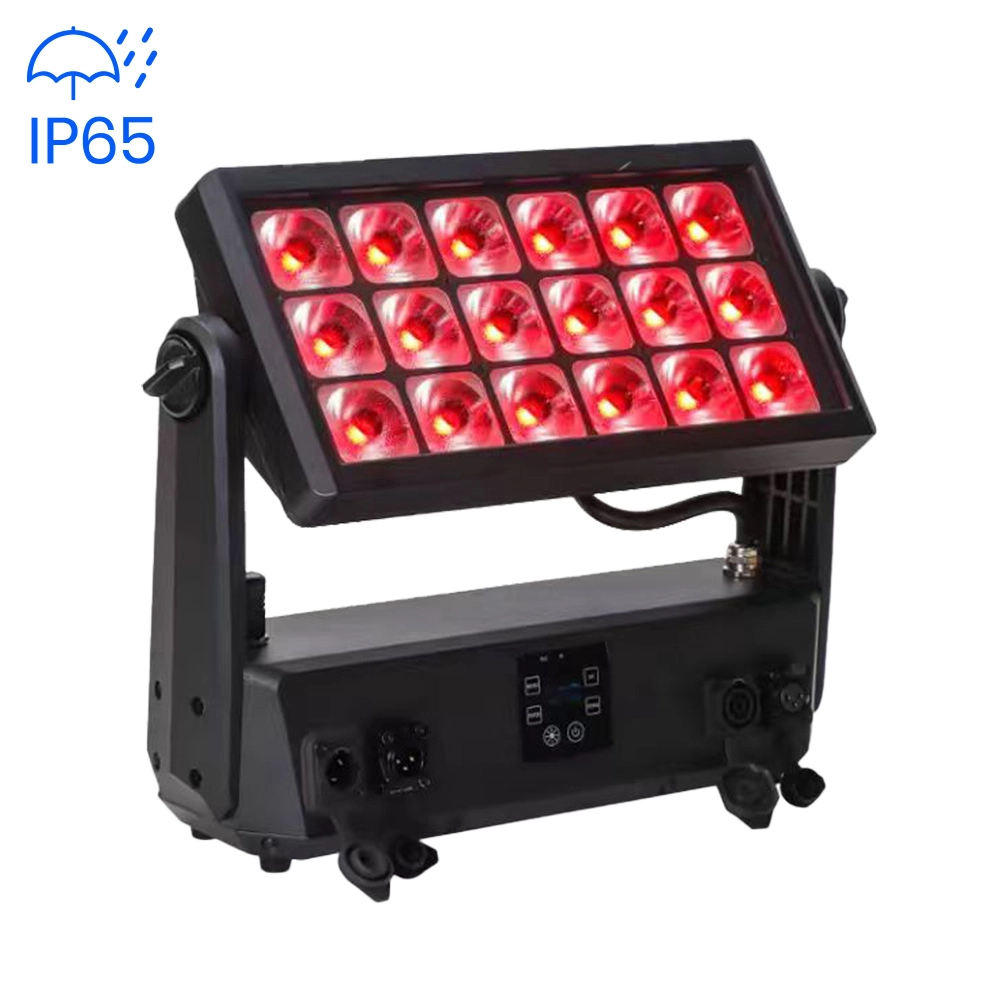
Stormy Battery Flood Light 1820 IP
Want to get more up-to-date news?
If you have any comments or good suggestions, please leave us a message; later our professional staff will contact you as soon as possible.

We are professional stage lighting manufacturers offering OEM and ODM LED stage lights.
Contact
Email us
Call us
Address
No.6 Longnan Road, Huashan Town, Huadu District Guangzhou, Guangdong Province, China.
LiteLEES Professional
Less Lighting