
LED beam light vs moving head: which to buy?
- 1) How do I choose a LED beam light for long-throw festival rigs when the vendor only lists wattage and beam angle?
- 2) Can I reliably use inexpensive LED beam fixtures (under $300) for touring shows without overheating, color shift or premature lumen depreciation?
- 3) How do I compare lux output between LED beam fixtures and moving heads when manufacturers report lumens instead of lux?
- 4) Will LED beam lights flicker on camera at high frame rates (120–240 fps), and what specs ensure flicker-free operation for broadcast slow motion?
- 5) For a medium-sized venue (200–800 people), which is better: a dedicated bank of 2° LED beam lights or multiple moving heads for FOH and effects?
- 6) What maintenance and firmware practices extend LED beam light lifespan and maintain consistent color/beam quality during tours?
- Concluding summary: advantages of LED beam lights and moving heads
LED Beam Light vs Moving Head: Which to Buy? 6 Deep Questions Beginners Miss
When choosing led beam light fixtures or moving heads for stage, concert, club, or broadcast use, spec sheets can be confusing—vendors list wattage and beam angle but omit lux charts, PWM rates, or real-world serviceability. Below are six specific, pain-point questions industry buyers rarely get fully answered. Each Q&A explains what to request from suppliers, how to interpret technical specs (beam angle, lux at distance, PWM/flicker-free, DMX channels, IP, optics), and practical purchase recommendations.
1) How do I choose a LED beam light for long-throw festival rigs when the vendor only lists wattage and beam angle?
Problem: Many listings give only wattage and a nominal beam angle (e.g., 3°) without lux-at-distance, beam profile, lens diameter, or optical efficiency—which are what determine visible beam intensity on a festival skyline.
What to demand from the vendor: lux or candela at reference distances (10 m, 20 m, 50 m), beam profile (FWHM - full width half maximum), lens type (glass vs plastic), front lens diameter, reflector design, LED type and binning, and published beam spread (1/e, FWHM). Also request photometric files (IES/LM-63) or a lux chart so you can compare apples-to-apples.
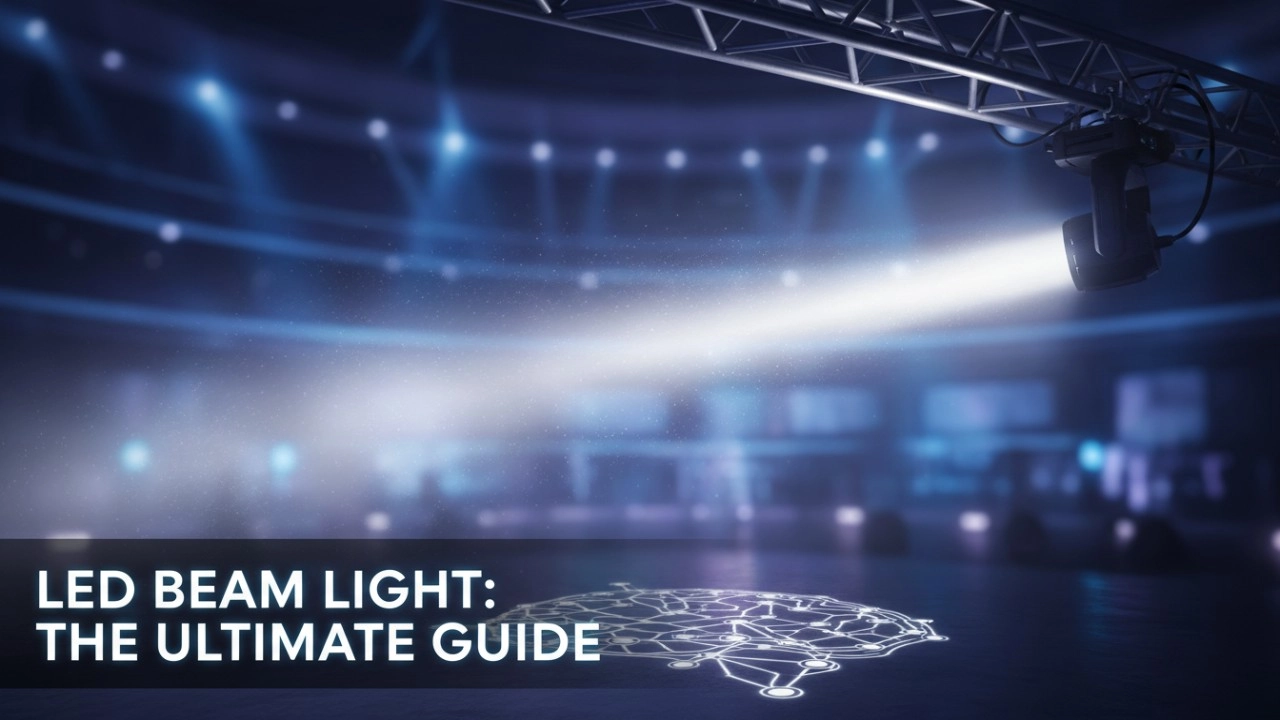
Practical thresholds and guidance: for long-throw aerial beams choose fixtures with narrow beam angles (<4°) and a well-engineered reflector/optic. Common professional LED beam engines span roughly 60–400W (vendor-dependent), but wattage alone is a poor predictor—optical efficiency and lens diameter matter more. Ask for lux at 20 m: a quality 200–300W beam fixture should show a concentrated central beam (FWHM) with a high candela value and a tight hotspot. Also check LED cooling (active fans vs heatsink), IP rating for outdoor festivals (IP65 preferable for exposed fixtures), and weight/rigging points for truss planning.
Red flags: no IES file, only lumen specs (not lux), vague ‘narrow beam’ language, or lack of thermal specs and IP rating.
2) Can I reliably use inexpensive LED beam fixtures (under $300) for touring shows without overheating, color shift or premature lumen depreciation?
Problem: Budget fixtures often save upfront cost but fail mid-tour due to poor thermal design, cheap LED binning, or unreliable drivers, leading to color shift and lumen drop.
Key failure modes to watch for: insufficient heat sinking and thermal interface, low-quality constant-current drivers that use low-frequency PWM, poor binning causing inconsistent color temperature between fixtures, and noisy or failing fans. Cheap optics (thin plastic lenses) can soften the beam and yellow over time.
What to evaluate before buying low-cost units: manufacturer datasheets for LED lifetime (L70 @ hours), driver type (constant-current vs multi-stage PWM), reported PWM frequency (higher is better), warranty terms, and availability of spare parts (fans, LED modules, power supplies). For touring, prefer fixtures with replaceable LED modules, user-replaceable cooling fans, and clear service documentation. If you must buy budget units, limit them to FOH or non-critical effect roles, not as primary long-throw beams or broadcast front lights.
3) How do I compare lux output between LED beam fixtures and moving heads when manufacturers report lumens instead of lux?
Problem: Lumens measure total light output; for a beam you care about lux (illuminance at a surface) or candela (intensity in a specific direction). A narrow 3° beam concentrates lumens into a small area and yields much higher lux than a wide wash with the same lumen rating.
Practical method: Ask for either candela or lux at specific distances (e.g., lux @ 10 m). If only lumens and beam angle are given you can estimate peak lux by treating the beam as a cone and calculating the illuminated spot area at distance D: spot diameter ≈ 2 * D * tan(beam_angle/2). Then lux ≈ lumens × optical_efficiency / area (lux = lumens / m² for that area). Optical efficiency accounts for losses in optics and is typically 60–85% for quality fixtures—ask the vendor for it.
Example (illustrative only): a 50,000-lumen source with a 3° beam at 10 m produces a spot diameter ≈ 10 * 2 * tan(1.5°) ≈ 0.52 m, area ≈ 0.21 m². If optical efficiency is 70%, estimated lux ≈ (50,000 × 0.7) / 0.21 ≈ 166,666 lux at the spot center. Because vendors rarely provide exact optical efficiency and beam shape, always request measured lux/candela charts or IES files—those are definitive.
Why it matters for buying: moving heads that mix color and provide wash may report high lumens but produce much lower lux at distance than a dedicated narrow-beam fixture of similar wattage. Use lux/candela charts to match fixtures to your stage depth and outdoor throw requirements.
4) Will LED beam lights flicker on camera at high frame rates (120–240 fps), and what specs ensure flicker-free operation for broadcast slow motion?
Problem: Many LED fixtures use PWM dimming at frequencies that interact with camera shutter speeds and frame rates, producing visible banding or pulsing in video at high frame rates.
Technical criteria to request: advertised “flicker-free” operation with specifics—supported frame rates/shutter angles (e.g., 50/60/120/240 fps at common shutter angles), PWM frequency specification (ideally >10 kHz for high-speed shooting), or better, a linear current control or DC-dimming mode. Ask the manufacturer to provide test footage at your intended camera frame rates and shutter angles, or provide an oscilloscope trace of the LED drive current. Certified compliance with broadcast flicker standards or a stated test protocol is a strong plus.
Practical suggestions: prefer fixtures that explicitly list high-speed or broadcast modes; verify a ‘flicker-free’ claim with real footage or a vendor-supplied oscilloscope waveform. Beware vendors that simply label ‘flicker-free’ without specifying PWM frequency or supported camera rates. For high-speed cinematography (120–240 fps), choose fixtures with very high PWM (>20 kHz) or linear drivers and ask for sample footage at your exact camera settings.
5) For a medium-sized venue (200–800 people), which is better: a dedicated bank of 2° LED beam lights or multiple moving heads for FOH and effects?
Problem: Beginners often pit beam lights vs moving heads as mutually exclusive choices, but the optimal rig depends on your program mix (live bands, DJs, theatrical lighting), ceiling height, and budget.
Decision factors:
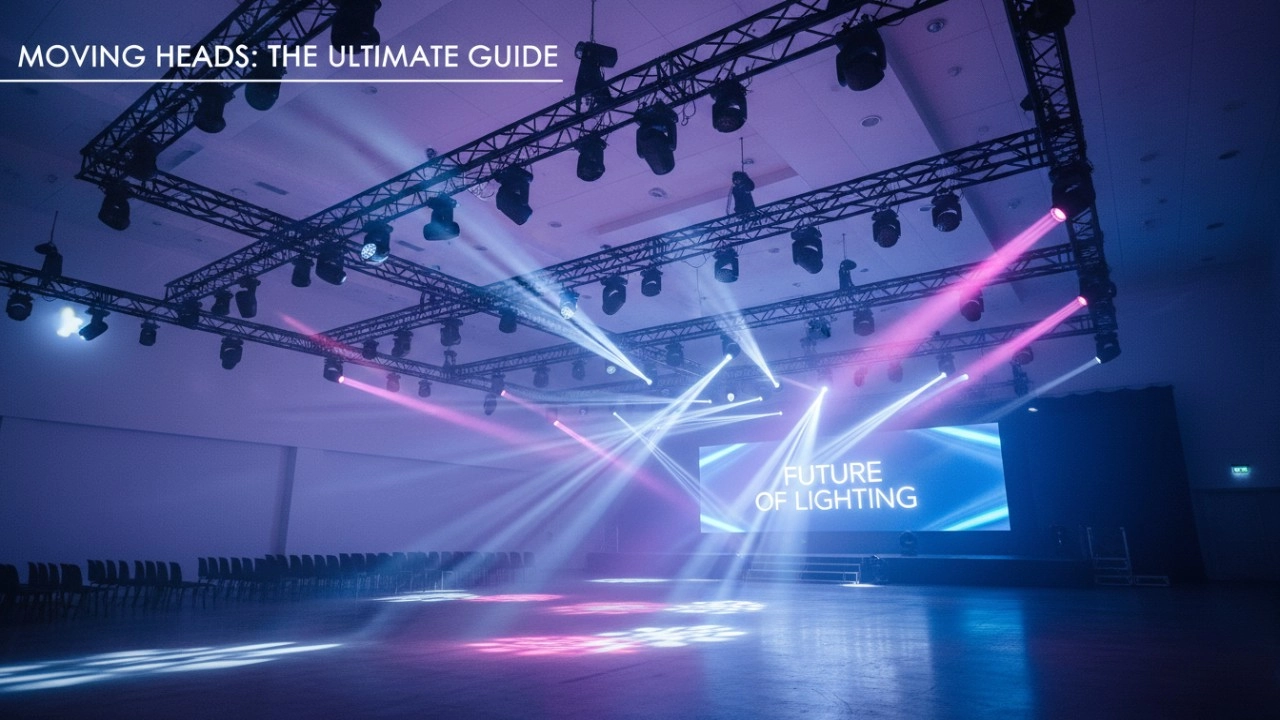
- Purpose: Use narrow 1.5°–4° led beam lights for strong aerial shafts, skyline effects, and long-throw impact. Use moving heads (spot/wash) for flexibility—gobo images, framing, color mixing, and versatile beam/wash angles.
- Ceiling & throw distance: High ceilings/long throws benefit from dedicated narrow-beam fixtures to preserve visible shafts. Compact rooms often favor moving heads with wider optics and zoom to cover stage and audience areas.
- Budget and crew: Moving heads add setup complexity for focus and DMX; beams are often simpler but require accurate rigging and safety points. Consider hybrid fixtures (beam + spot/zoom) if you need both effects but have limited budget.
- Daily/weekly: Visual inspection of front glass/lens; blow dust (use filtered low-pressure air) or clean with lens-safe cleaner; ensure vents are clear.
- Monthly: Check fan operation and replace failing fans promptly (have spares). Verify firmware is current (many fixtures improve color or fix DMX bugs via firmware).
- Quarterly or after 1,000 hours: Thermal re-application of interface compound if manufacturer recommends, inspect solder joints and LED modules for hotspots, and verify LED driver voltages and current stability.
- Database: Track fixture hours (many fixtures report total on-time), color calibration state, and any replaced components to spot patterns early.
Sample rigs (practical): For a 400-person club with 8–12 m ceiling, a mixed approach works best: 4–6 narrow-beam fixtures for aerial drama (back truss), plus 6–8 moving heads (front/side) for shots, washes, and gobo patterns. For outdoor medium festival stages, prioritize 6–10 long-throw beams for skyline impact and add 4–6 moving heads for stage washes.
6) What maintenance and firmware practices extend LED beam light lifespan and maintain consistent color/beam quality during tours?
Problem: Poor maintenance leads to noisy fans, decreased cooling, color shift, and dimming—especially under high duty-cycle touring conditions.
Maintenance checklist:
Firmware/DMX best practices: keep a tested version of firmware for your touring fixtures, and apply upgrades only after verifying changes on a test unit. Back up DMX presets and show files. For critical shows, use power conditioning (surge protection and UPS for control electronics) and maintain consistent power quality (correct voltage and earth grounding) to avoid driver failure and color shifts.
Standards and safety: for audience safety regarding high-intensity beams, check photobiological safety per IEC 62471 and ensure fixtures comply with local event regulations. For outdoor fixtures verify appropriate IP rating and cable gland integrity.
Concluding summary: advantages of LED beam lights and moving heads
LED beam lights excel at producing intense, narrow aerial shafts and long-throw skyline effects because of tight beam optics, small beam angles, and high candela values. They are ideal when you need visible beams across long distances or dramatic aerial looks. Moving heads offer flexibility—zoom/spot/wash modes, gobos, color mixing, and framing—making them the practical choice for ever-changing stage requirements and multi-use venues. For most professional installations and touring rigs, a hybrid approach (dedicated beams for aerial impact + moving heads for coverage and creative shaping) delivers the best balance.
Checklist for buying: ask vendors for lux/candela charts or IES files, PWM/flicker specs and broadcast modes, thermal and IP ratings, serviceability (replaceable fans/LED modules), DMX channel maps, and firmware update policies. Verify claims with video samples or oscilloscope traces for flicker-prone environments. Prioritize fixtures that publish real photometric data and have clear service documentation and spare-part availability.
If you need a custom spec sheet, photometric comparisons, or a quote for led beam light banks, moving heads, or hybrid rigs, contact us for a tailored proposal and supply options. Visit www.litelees.com or email litelees@litelees.com.
Company
What certifications do your products have?
All LiteLEES products are certified by CE, RoHS, FCC, and BIS. Our factory is ISO9001 quality management system certified.
Where is LiteLEES located?
Our headquarters and manufacturing facility are located in Guangzhou, China, with products exported to over 70 countries worldwide.
Products
Can I customize the functions or software of the lights?
Absolutely. As a manufacturer with independent R&D capabilities, we offer customization for both hardware and software (such as DMX channel layout, built-in programs, or UI language). Contact us with your project needs, and our team will provide tailored solutions.
How long is the warranty period for your products?
We offer a standard 1-year warranty on all products, with extended warranty options available upon request. During the warranty period, we provide free technical support and parts replacement for non-human damage.
What is the lifespan of your LED stage lights?
Our LED lights use high-quality chips with a rated lifespan of over 50,000 hours. Proper usage and maintenance ensure long-term reliability and stable performance, making them a smart investment for any venue.
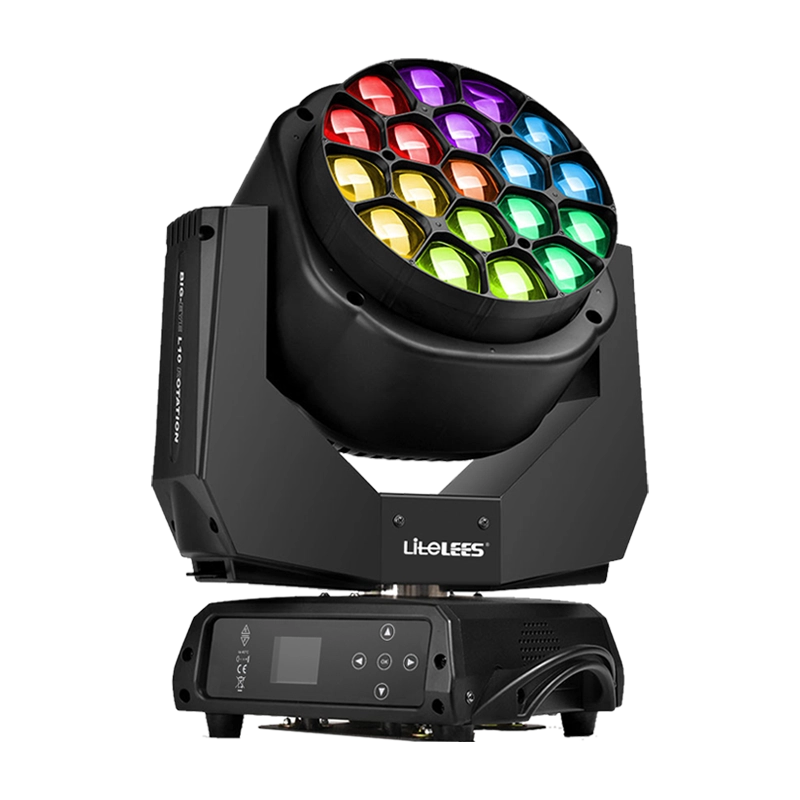
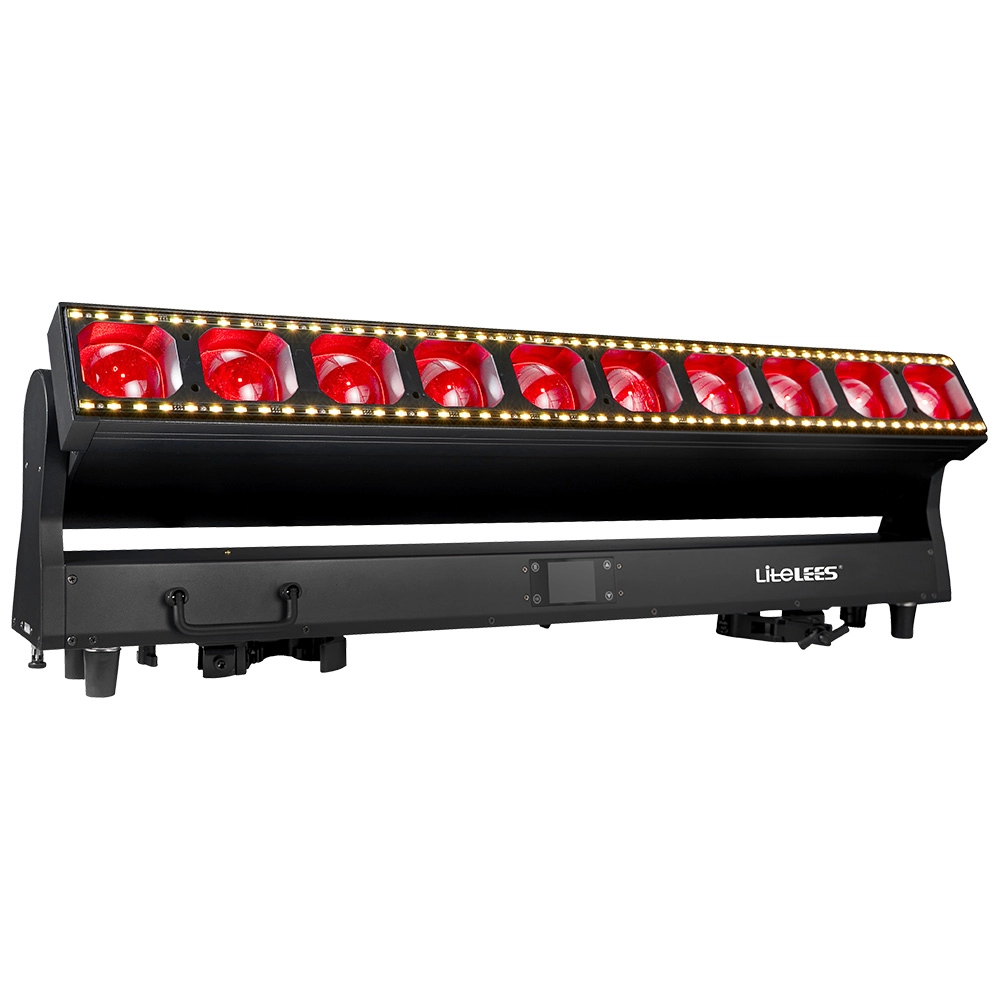
Magic Cube V8 IP
Want to get more up-to-date news?
If you have any comments or good suggestions, please leave us a message; later our professional staff will contact you as soon as possible.

We are professional stage lighting manufacturers offering OEM and ODM LED stage lights.
Contact
Email us
Call us
Address
No.6 Longnan Road, Huashan Town, Huadu District Guangzhou, Guangdong Province, China.
LiteLEES Professional
Less Lighting