
What specs should buyers compare in LED beam light models?
- 1) How do I compare beam intensity when manufacturers use lumens, candela, and lux inconsistently?
- 2) How can I verify claimed beam angle and spot size in real venues (not lab conditions)?
- 3) What thermal and lumen-maintenance specs should I demand to avoid rapid lumen depreciation and color shift?
- 4) Which control and camera-friendly specs (DMX channels, PWM refresh, Art-Net) really matter for filmed stage work?
- 5) How do I balance IP/ingress protection vs cost for semi-outdoor festival use?
- 6) What mechanical and operational specs (weight, noise, duty cycle) are frequently understated and increase hidden installation costs?
6 Critical Specs to Compare When Buying an LED Beam Light
This guide answers six specific, often-overlooked buyer questions about LED beam lights for stage and live events. It embeds practical tests, industry-standard reports (LM-79, LM-80, TM-21), and installation-focused tips so you can evaluate fixtures by data — not marketing copy. Contact us for a quote: www.litelees.com • litelees@litelees.com
1) How do I compare beam intensity when manufacturers use lumens, candela, and lux inconsistently?
Problem: Vendors list lumen output, on-axis candela, or lux at an unspecified distance. These are not interchangeable without context, and beginners get misled when choosing a narrow beam fixture for a long-throw stage.
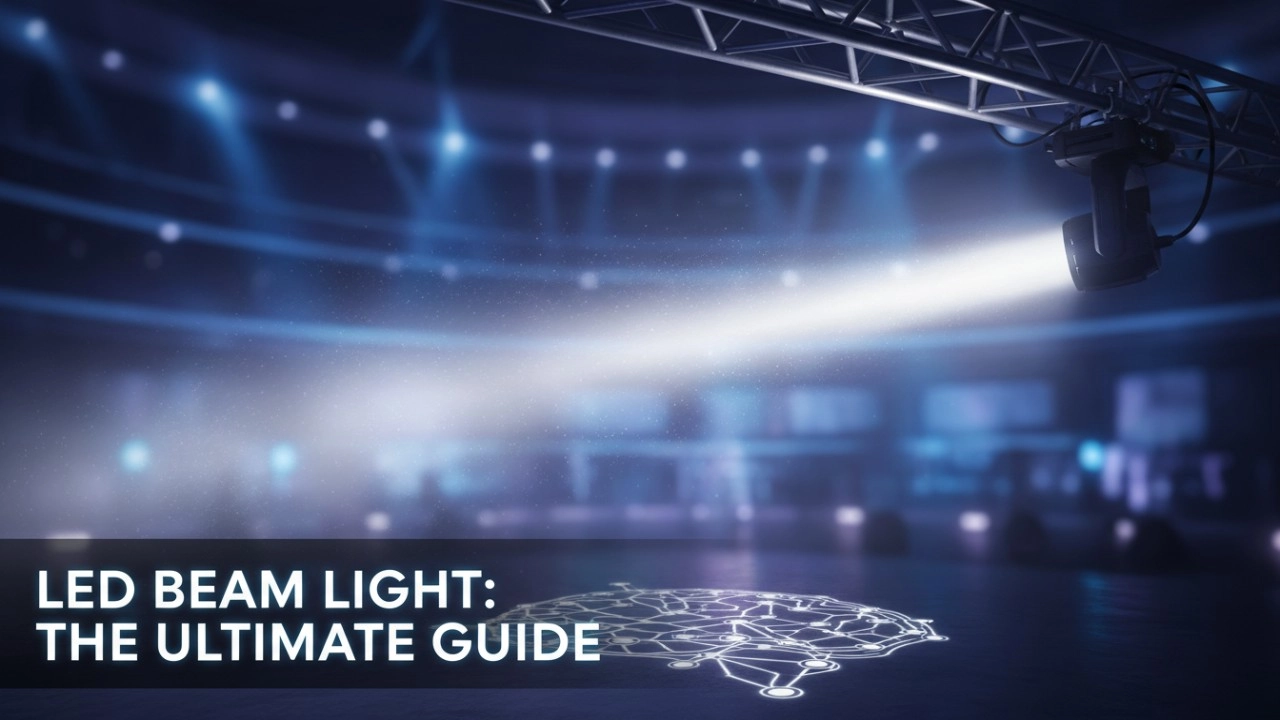
How to evaluate correctly:- Ask for on-axis candela (cd) and a photometric IES file or lux chart. Candela describes light intensity in a particular direction; lux describes illuminance at a surface and depends on distance. If you only have lumens, you need the beam's solid angle to convert.- Use the solid-angle conversion: solid angle Ω = 2π(1 - cos(θ/2)) where θ is the beam angle (in radians). Then approximate candela = lumens / Ω. Lux on-axis at distance d is lux = candela / d^2. This gives you a consistent way to compare fixtures for your throw distance.- Practical ask: require a lux-at-distance table (for 1m, 5m, 10m) or an IES file. If a vendor refuses, treat any lumen-only claim as incomplete.What to watch for:- Companies may publish total lumens for the LED engine (useful) but not optical throughput — losses in lenses/prisms reduce usable beam intensity. Reliable suppliers will provide LM-79/IES photometry showing on-axis lux and beam spread.
2) How can I verify claimed beam angle and spot size in real venues (not lab conditions)?
Problem: Beam angle often measured at 50% intensity (FWHM) in lab conditions (no haze, black surroundings). In a venue with haze or reflective surfaces the apparent beam and spill differ.
How to validate on-site:- Use the geometric spot-size formula for a start: spot diameter = 2 × d × tan(θ/2), where d is throw distance and θ is the quoted beam angle (FWHM). Example: a 3° beam at 10 m gives a spot ≈ 0.52 m across.- Confirm with an IES photometric chart: the FWHM isolux line on the chart shows where intensity drops to 50%. Multiply by venue distance to predict real spot diameter.- Account for haze/smoke: haze increases visible beam length and apparent thickness; it does not increase on-axis lux significantly but helps audience perceive the beam. If haze is part of your show design, ask the manufacturer for beam-glow photos taken with standard haze to check pattern and feathering.What to watch for:- Vendors sometimes quote peak beam angle (where intensity is highest) and omit spill-light angle. Request both FWHM and total spread at 10% intensity so you know how much spill to expect.
3) What thermal and lumen-maintenance specs should I demand to avoid rapid lumen depreciation and color shift?
Problem: Cheap fixtures may start bright but lose output (and shift color) rapidly because of poor thermal design or low-quality LEDs/drivers.
Key specs and standards to request:- LM-80 test data for the LED packages (lumens and color maintenance at specific junction temperatures). LM-80 is manufacturer-provided test data for LED chips. From LM-80 you can project lumen maintenance with TM-21 to determine L70 (hours until output drops to 70%).- LM-79 photometric report for the whole fixture (optics + engine), including IES files and measured lumen output and chromaticity.- Ask for TM-21 projections and documented L70 hours (industry median for quality LED engines is commonly 30,000–50,000 hours; High Quality designs can project higher depending on drive current and cooling).- Thermal details: allowable ambient temperature (Ta), heat-sink design, whether junction temperature (Tj) is monitored, and driver operating temperature ranges. Good fixtures specify maximum Tc point temperature and provide a Tc measurement point on the housing.Practical checks:- Ask for the rated ambient temperature and whether the driver has thermal foldback (reduces output to protect LEDs). If the unit’s rated for a 40°C ambient, it is more robust for touring and outdoor use than a 25°C-rated unit.- Prefer fixtures that specify L70 and supply LM-79/LM-80/IES files. Without these, you lack evidence of long-term performance.
4) Which control and camera-friendly specs (DMX channels, PWM refresh, Art-Net) really matter for filmed stage work?
Problem: Fixtures may have minimal DMX and a low PWM frequency resulting in visible flicker on camera, strobing at certain shutter speeds, or insufficient control resolution for pixel-mapped effects.
What to require:- Control protocols: DMX512/RDM as standard; for networked control request Art-Net and sACN support and mention whether the unit supports RDM for remote addressing and status. For pixel mapping, ensure fixture accepts Art-Net/sACN and exposes pixel channels.- PWM / refresh rate: For camera-safe operation, ask for PWM (LED driver) frequency or effective refresh frequency. For broadcast/filmed work, specify a minimum of 3,000 Hz; many professional fixtures target 4,000–20,000 Hz effective refresh to avoid flicker at high shutter speeds. If a vendor only lists flicker-free, ask for the numeric frequency and any conditions under which flicker avoidance is guaranteed.- DMX channel complexity: fewer channels are not always better. Ask for channel maps that include shutter/strobe, dimmer curve selection (linear, square-law), color temperature control (for white blending), and RGB/CMY color mixing channels. If you need pixel-level effects, ensure the unit supports per-LED or per-pixel DMX control and list how many pixels are addressable.What to watch for:- Some fixtures implement PWM at lower frequencies but use electronic shutter tricks; insist on a numeric PWM rating and ideally test with your camera settings.
5) How do I balance IP/ingress protection vs cost for semi-outdoor festival use?
Problem: Full IP65 fixtures cost significantly more. Buying IP20 fixtures for semi-outdoor use risks corrosion and failure; buying IP65 for every position can overspend if not necessary.
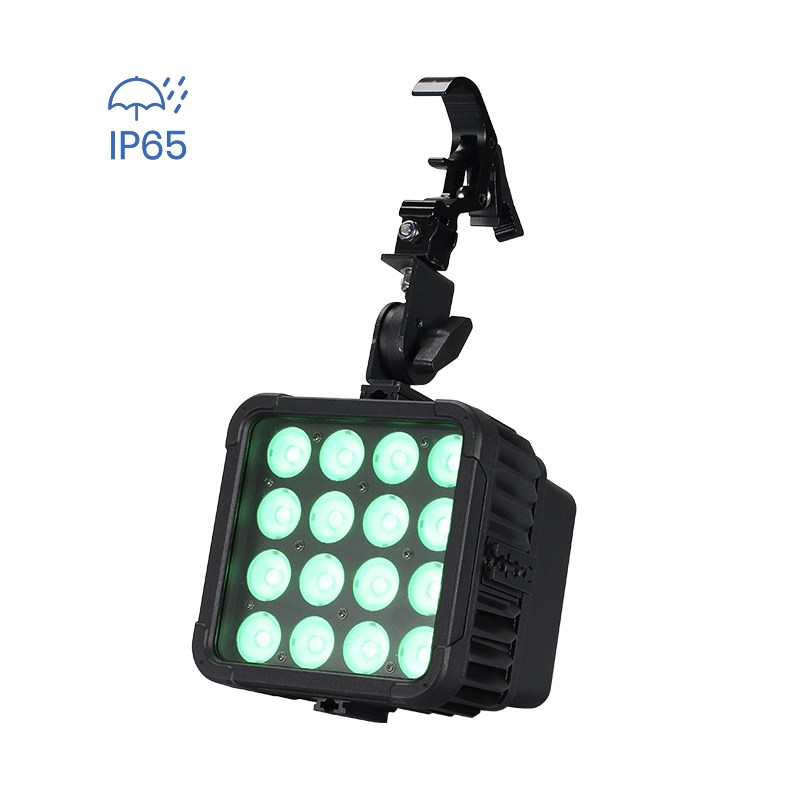
Selection strategy:- Understand ratings: IP20 = inside, no water protection; IP44 = splash protection from any direction; IP54 = dust-protected and splash-resistant; IP65 = dust-tight and protected from jets of water. For roofs with good overhead protection and short exposure to drizzle, IP44 or IP54 fixtures mounted under shelter can be cost-efficient. For true outdoor use with exposure to rain, IP65 (fully sealed optics and connectors) is required.- Check connectors and ventilation approach: sealed powerCON TRUE1 or IP-rated cable glands and sealed DMX ports are essential for outdoor units. Beware of models that say outdoor but only have a gasketed glass and non-waterproof connectors.- Consider thermal implications: fully sealed IP65 fixtures typically rely on conduction cooling or purpose-built sealed fans and will run warmer. Verify the rated ambient and thermal foldback behavior.Operational tips:- For mixed-use festivals, use IP65 fixtures for outer arrays and IP54/44 for sheltered truss positions. Factor in drainage, cable routing, and corrosion-resistant paints or stainless steel fittings for seaside locations.
6) What mechanical and operational specs (weight, noise, duty cycle) are frequently understated and increase hidden installation costs?
Problem: Buyers sometimes ignore fixture weight, rigging points, noise, and maintenance needs — leading to higher rigging costs, unexpected noisy operation in quiet shows, and longer downtime.
Specs to demand and why they matter:- Weight and center of mass: Confirm certified weight (kg/lbs) and the center-of-gravity or recommended weight distribution for cluster rigging. Rigging points must be rated for working load limit (WLL) and comply with local rigging codes.- Noise (dBA at 1 m): For theatre, broadcast, or recording, fan noise can be a deal-breaker. Ask vendors for dB(A) measured at 1 m at full power. If you need silent operation, prefer passive or low-RPM active cooling solutions and check thermal management claims.- Duty cycle and recommended operating hours: Some moving heads are rated for continuous 24/7 operation; others are designed for concert cycles. Verify rated duty cycles, and ask about preventive maintenance intervals (bearing lubrication, fan replacement).- Pan/tilt lifespan & maintenance: Request MTBF or expected number of movement cycles, and whether encoders are absolute or require homing on start. Absolute encoders reduce setup time and wear.- Serviceability: Modular replacement parts, local spares availability, and how easy it is to replace LEDs, drivers, or fans on-site. Tour-friendly designs have front-access panels and plug-and-play modules.- Inrush and power factors: High inrush current affects distro sizing and breaker selection. Ask for measured inrush (A) and power factor (PFC). Prefer fixtures with active PFC for stable mains behavior in large rigs.Operational checks:- If you intend to fly a cluster of fixtures, plan a safety factor (usually 7:1 or per local code) and verify the fixture's mounting bracket WLL and the truss ratings.
Concluding paragraph — Advantages of comparing these specs
Comparing beam intensity metrics (cd/lux), beam-angle vs spot-size, verified LM-79/LM-80/TM-21 data, camera-safe PWM/refresh rates, appropriate IP rating, and mechanical/service specs reduces performance risk, lowers lifecycle cost, and ensures the fixture will match your production needs. Buying by photometric data and thermal and control transparency (IES files, junction temperatures, PWM frequency, ART-NET/RDM support) gives you predictable output, easier integration, fewer field failures, and improved ROI for touring and venue fleets.
For spec sheets, LM-79/LM-80/IES reports, or a tailored quote, contact: www.litelees.com • litelees@litelees.com
Products
What is the lifespan of your LED stage lights?
Our LED lights use high-quality chips with a rated lifespan of over 50,000 hours. Proper usage and maintenance ensure long-term reliability and stable performance, making them a smart investment for any venue.
How long is the warranty period for your products?
We offer a standard 1-year warranty on all products, with extended warranty options available upon request. During the warranty period, we provide free technical support and parts replacement for non-human damage.
Company
What is LiteLEES’s main business?
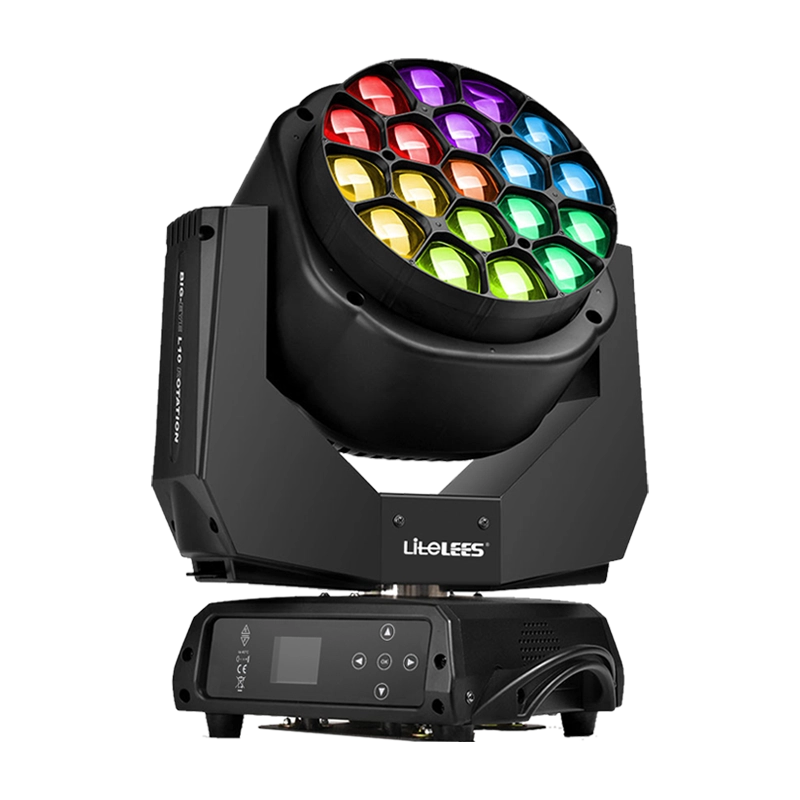
LiteLEES specializes in the design, development, manufacturing, and sales of professional stage lighting, including moving head lights, beam lights, spot lights, wash lights, and LED par lights.
Can LiteLEES handle OEM/ODM orders?
Absolutely. With our strong R&D capabilities and advanced manufacturing, we can customize designs, features, and branding to meet your specific needs.
What certifications do your products have?
All LiteLEES products are certified by CE, RoHS, FCC, and BIS. Our factory is ISO9001 quality management system certified.
Magic Cube V6 IP

Stormy Shake Blinder IP
Want to get more up-to-date news?
If you have any comments or good suggestions, please leave us a message; later our professional staff will contact you as soon as possible.

We are professional stage lighting manufacturers offering OEM and ODM LED stage lights.
Contact
Email us
Call us
Address
No.6 Longnan Road, Huashan Town, Huadu District Guangzhou, Guangdong Province, China.
LiteLEES Professional
Less Lighting