
What reliability tests should an LED beam light pass?
- 1) How can I verify a claimed L70 life for an LED beam light — what LM-80 / TM-21 documentation and extrapolation limits should the manufacturer provide?
- 2) What thermal and duty-cycle tests must an LED beam light pass to avoid color shift, thermal throttling and driver failure during multi-hour stage shows?
- 3) Which ingress, impact and corrosion tests should touring LED beam lights pass for outdoor use, and what minimum IP/IK/ISO ratings should I require?
- 4) How do I test flicker, PWM frequency and flicker index for LED beam lights to ensure broadcast-safe, camera-friendly output?
- 5) What electrical and EMC tests (surge, inrush, power factor, THD, EMC immunity) must an LED beam light pass to avoid tripping venue circuits or causing interference?
- 6) What mechanical durability tests (pan/tilt cycle counts, shutter/gobo life, connector robustness, lamp/optic adhesion) are realistic expectations for a touring moving-head LED beam light?
- Bonus checklist: Photometric and beam quality tests you should require
Buying LED beam lights or a moving-head fixture for touring, theater or broadcast raises many specific reliability questions that short product pages don’t answer. Below are six long-tail, buyer-focused questions with in-depth, standards-based answers (LM-80/TM-21, IP/IK, thermal tests, flicker, EMC, mechanical life and photometrics). Where relevant I reference industry standards (LM-80, TM-21, IEC and ISO standards) and practical pass/fail guidance so you can evaluate datasheets and test reports before purchase.
1) How can I verify a claimed L70 life for an LED beam light — what LM-80 / TM-21 documentation and extrapolation limits should the manufacturer provide?
Why this matters: LED lumen maintenance (L70, L80 etc.) is a primary indicator of long-term brightness retention for beam fixtures. Many vendors quote “50,000–100,000 hours” without backing documentation. For a reliable purchase you need LM-80 test data for the LED packages used and a TM-21 extrapolation performed correctly.
What to ask for and how to verify:
- LM-80 test report: Ask for the original LM-80 report for the specific LED package (not a generic brand brochure). The report should show measured lumen maintenance at interim times (e.g., 1,000 / 2,000 / 4,000 / 6,000 / 10,000 hours) at the driver current and at relevant case/junction temperatures.
- TM-21 projection: TM-21 is the approved method to extrapolate LM-80 data to a lifetime metric like L70. Verify the TM-21 calculation and its assumptions. Importantly, TM-21 allows extrapolation only up to a set multiplier of the test duration (maximum projection = 6× the LM-80 test duration for LED packages). So if LM-80 was run 6,000 hours, the max TM-21 projection is 36,000 hours.
- Board- or module-level data: If the fixture uses LED modules or arrays, request LM-80 data for the module (preferred) or a combined thermal/driver test at the fixture Tc point. Many failures happen from poor cooling, so module-level LM-80 alone is insufficient unless thermal design keeps junction temp within LM-80 conditions.
- Practical pass/fail: Prefer products with LM-80 reports at ≥6,000 hours and TM-21 L70 projections that exceed the expected service life for your use (e.g., >36,000 hours for heavy touring). If a vendor claims 50,000+ hours but has only 2,000-hour LM-80 data, that claim isn’t supported by TM-21 rules.
Tip: If you need broadcast-grade stability, require vendors to provide both LM-80/TM-21 and measured color stability over time (Δu'v' or ΔE) under thermal cycling.
2) What thermal and duty-cycle tests must an LED beam light pass to avoid color shift, thermal throttling and driver failure during multi-hour stage shows?
Why this matters: LED junction temperature (Tj) and the Tc measurement point determine lumen maintenance, color point stability and driver lifetime. Poor thermal design causes accelerated lumen depreciation, color shift and sudden dimming when thermal protection engages.
Key tests and metrics:
- Tc-point verification: The fixture should have a clearly defined Tc point per IEC 62384/IEC 60598 and provide temperature rise tests showing Tc at rated ambient (e.g., Ta = 25°C and at expected venue ambient such as 35°C).
- Thermal cycling: Test per IEC 60068-2-14 (thermal shock/cycling) to simulate on/off cycles and temperature swings. Check for solder joint fatigue, optic adhesion failures and color shift after cycles.
- Long-duration burn-in: A factory burn-in (continuous full-power run) of at least 72–100 hours is recommended (many manufacturers do 24–72h; 72–100h finds more infant-failures). For fixtures used in continuous multi-hour shows, ask for longer burn-in results or delivery test logs.
- Active duty-cycle validation: For fixtures used in pulsed effects, request tests showing stable luminous flux and no thermal derating for expected duty cycles (for example, 4 hours at full power followed by 30 minutes off, repeated 5×). This validates driver thermal protection won't interfere with show cues.
- Practical pass/fail: Look for Tc rise data, a manufacturer-stated maximum ambient (e.g., Ta_max = 45°C) with verified performance, and absence of thermal dimming below your expected operational ambient.
Tip: For precision color, ask for Δu'v' or CCT shift after a 2–4 hour warm-up at rated ambient; acceptable drift for high-end stage use is typically <0.005 Δu'v' or ΔE <2 (ask vendors to substantiate).
3) Which ingress, impact and corrosion tests should touring LED beam lights pass for outdoor use, and what minimum IP/IK/ISO ratings should I require?
Why this matters: Outdoor touring fixtures face rain, dust, salt spray and physical impacts. An indoor-rated fixture can fail quickly if used outdoors.
Standards and recommended minimums:
- Ingress protection (IP): Use IEC 60529 as the reference. For outdoor, weather-exposed use require at least IP65 (dust tight & protected against water jets). If the fixture may be submerged (rare for stage lights) you'd need higher. Many touring-grade beam heads specify IP65 with sealed optics and sealed control compartments.
- Impact protection (IK): Use IEC 62262 (IK code). For touring road use an IK08 or better is sensible for housing resistance to knocks and minor drops. For heavy rigging or outdoor festival use, IK09/IK10 may be needed on exposed parts.
- Corrosion resistance: Ask for salt-spray test results per ISO 9227 (or ASTM B117) if fixtures will be used in coastal venues. Look for powder-coated or marine-grade finishes and corrosion mitigation on fasteners and connectors.
- Connector choices: Touring-grade fixtures use locking power (PowerCON TRUE1 or equivalent), Neutrik XLR/etherCON/OS2 connectors and sealed cable glands. Avoid flimsy non-locking connectors for outdoor or touring applications.
- Practical pass/fail: Require IP rating declared and tested, IK rating for housings, and salt-spray data where relevant. If a vendor claims “water-resistant” but lists IP20 or no IP code, that’s a red flag.
4) How do I test flicker, PWM frequency and flicker index for LED beam lights to ensure broadcast-safe, camera-friendly output?
Why this matters: Flicker from PWM dimming causes strobing, camera banding and health concerns. Small vendor pages often say “flicker-free” without test numbers. For broadcast and camera use you need measurable evidence.
How to measure:
- Use a photodiode + oscilloscope or a calibrated flicker meter to capture output waveform and compute percent flicker and flicker index. A goniophotometer for beam distribution plus a high-speed photodetector on-axis gives usable data for a beam fixture.
- Measure PWM carrier frequency and modulation depth. For camera-safe operation, a high carrier frequency (>10 kHz) is preferred; many broadcast fixtures run >20 kHz to eliminate visible beating with camera frame rates.
- Evaluate percent flicker and flicker index: While there is no single universal threshold, practical guidance is: percent flicker <10% may be acceptable for live audiences; for camera/broadcast use aim for <3% or labeled “flicker-free.” Also check IEEE 1789 guidance on modulation limits for health concerns.
- Check dimming curve behavior: Measure at 0–100% control range and verify no excessive modulation or stepped changes at low levels. For smooth looks on camera, linear or calibrated logarithmic curves with no low-end strobing are required.
- Practical pass/fail: Ask vendors for oscilloscope trace screenshots of the light output at 0.5%, 5%, 25%, 50% and 100% intensity and for the PWM frequency used. If they cannot provide traces or cite IEEE 1789 compliance, treat “flicker-free” claims skeptically.
5) What electrical and EMC tests (surge, inrush, power factor, THD, EMC immunity) must an LED beam light pass to avoid tripping venue circuits or causing interference?
Why this matters: Venues and rental houses need fixtures that won’t trip RCDs/MCBs, cause audio/lighting interference, or fail under mains transients. Short product pages often omit EMC/immunity detail.
Standards and tests to request:
- EMC compliance: Require CE/RED compliance for EU markets and test reports for EN 55015 / CISPR 15 (radiated/emitted) and EN 61547 or IEC 61000-6-3/6-1 immunity tests. For North America, look for FCC/ICES documentation if applicable.
- Surge and transient immunity: Check IEC 61000-4-5 surge immunity test results and ESD / EFT (electrical fast transient) immunity per IEC 61000-4-4 / IEC 61000-4-2. Touring environments with variable power quality benefit from higher immunity levels.
- Power factor and THD: For large rigs, require drivers with active power factor correction (PFC) and PF >0.9 at rated load, and total harmonic distortion (THD) preferably <20% at full load. High THD can stress generators and distribution transformers.
- Inrush current & soft-start: Ask for measured inrush figures and whether the driver has soft-start / inrush limiting. Excessive inrush can trip upstream breakers when many fixtures are powered simultaneously.
- Practical pass/fail: Insist on EMC/EMI test reports and measured PF/THD and inrush numbers. If a fixture lacks surge immunity data, it’s higher risk for outdoor or long-run touring power systems.
6) What mechanical durability tests (pan/tilt cycle counts, shutter/gobo life, connector robustness, lamp/optic adhesion) are realistic expectations for a touring moving-head LED beam light?
Why this matters: Mechanical failures (worn gears, failed pan/tilt motors, broken gobos, loose optics) are common service events for moving heads used in touring or rental fleets. Short spec sheets rarely quantify lifecycle expectations.
What to request and inspect:
- Pan/tilt lifecycle: Ask for a measured cycle test (continuous movement cycles) and MTBF for motors/gearboxes. While published numbers vary by vendor, request lifecycle data and the test protocol (e.g., IEC 60068-2 series environmentals and cyclic operation tests). For rental-grade fixtures, expect manufacturer test programs that simulate months of touring usage.
- Gobo/shutter life: Photomechanical parts (gobo wheels, shutters, prisms) should have rated cycle counts and field-replaceable modules. Ask for mean cycles to failure and spare part availability details.
- Connector and cable robustness: Check spec for locking power connectors (PowerCON TRUE1/compatible), etherCON/ethernet, and ruggedized DMX/XLR locking connectors. Specify minimum mating cycles (XLR often rated ~1,200 cycles; check vendor data) and sealed glands for outdoor use.
- Vibration & drop tests: Verify that fixtures have been subjected to vibration and bump testing (IEC 60068-2-6 / IEC 60068-2-27) to simulate transport and rigging shocks.
- Practical pass/fail: Require a lifecycle statement for moving parts, a spare-parts policy and a demonstrated service network. If buying for rental/touring, prefer fixtures with modular, replaceable subassemblies (quick-swap fans, driver modules, gobos).
Tip: During evaluation, inspect serviceability — are lamps, fans, or optics accessible by removing a few screws? Does the vendor provide exploded drawings and spare-part lead times?
Bonus checklist: Photometric and beam quality tests you should require
Beyond reliability, you must verify beam performance using real photometric tests:
- Total lumen output: Integrating sphere measurements for claimed lumen numbers.
- Beam profile & beam angle: Goniophotometer data and lux at a given distance (e.g., central lux at 10 m) with full-width-half-maximum (FWHM) beam angle specification.
- Color rendering & CCT accuracy: Measured CRI (Ra) / TM-30 and CCT, plus measured CCT drift after thermal soak.
- Uniformity: Beam homogeneity tests and measured hotspot / falloff curves so you know how tight the beam is for effects and gobo projection.
Ask vendors for a photometric report (IES file and goniophotometer plots) so you can model rig plots and verify claims like lumen output, beam angle and center lux.
Concluding summary
Well-engineered LED beam lights (moving-head or fixed-beam stage luminaires) that are suitable for touring or broadcast will provide documented LM-80/TM-21 lumen maintenance, well-validated thermal management (Tc data and burn-in), IP/IK and corrosion ratings for the intended environment, measured flicker characteristics and PWM frequency information for camera-safe operation, EMC/immunity and surge data to avoid venue power issues, and mechanical lifecycle testing for moving parts and connectors. Together these tests—along with photometric verification (integrating sphere and goniophotometer reports)—give you the evidence to select a fixture that won’t underperform or fail mid-tour.
Advantages of quality LED beam lights include superior energy efficiency, longer operational life, precise beam control (tight beam angle and high center lux), lower heat load on stage, integrated DMX512/RDM control options, flexible color mixing and effects, reduced maintenance with modular replaceable subassemblies, and predictable photometric performance for lighting plots and broadcast. For touring or rental fleets, invest in fixtures with documented LM-80/TM-21 data, verified IP/IK ratings, EMC/surge immunity reports and mechanical lifecycle tests to minimize downtime and service costs.
For a customized quotation, test reports or to discuss a specific model's LM-80/TM-21, flicker and IP/IK documentation contact us for a quote at www.litelees.com or email litelees@litelees.com.
Products
What is the lifespan of your LED stage lights?
Our LED lights use high-quality chips with a rated lifespan of over 50,000 hours. Proper usage and maintenance ensure long-term reliability and stable performance, making them a smart investment for any venue.
Are your lights suitable for large-scale events and outdoor use?
Yes. Our professional stage lights—especially the Beam, BSW 3-in-1, and LED Par Series—are engineered with high-output brightness, wide beam angles, and robust housing. Some models come with IP-rated protection, making them suitable for outdoor applications like concerts, festivals, and sports events.
How long is the warranty period for your products?
We offer a standard 1-year warranty on all products, with extended warranty options available upon request. During the warranty period, we provide free technical support and parts replacement for non-human damage.
Company
Where is LiteLEES located?
Our headquarters and manufacturing facility are located in Guangzhou, China, with products exported to over 70 countries worldwide.
What is LiteLEES’s main business?
LiteLEES specializes in the design, development, manufacturing, and sales of professional stage lighting, including moving head lights, beam lights, spot lights, wash lights, and LED par lights.
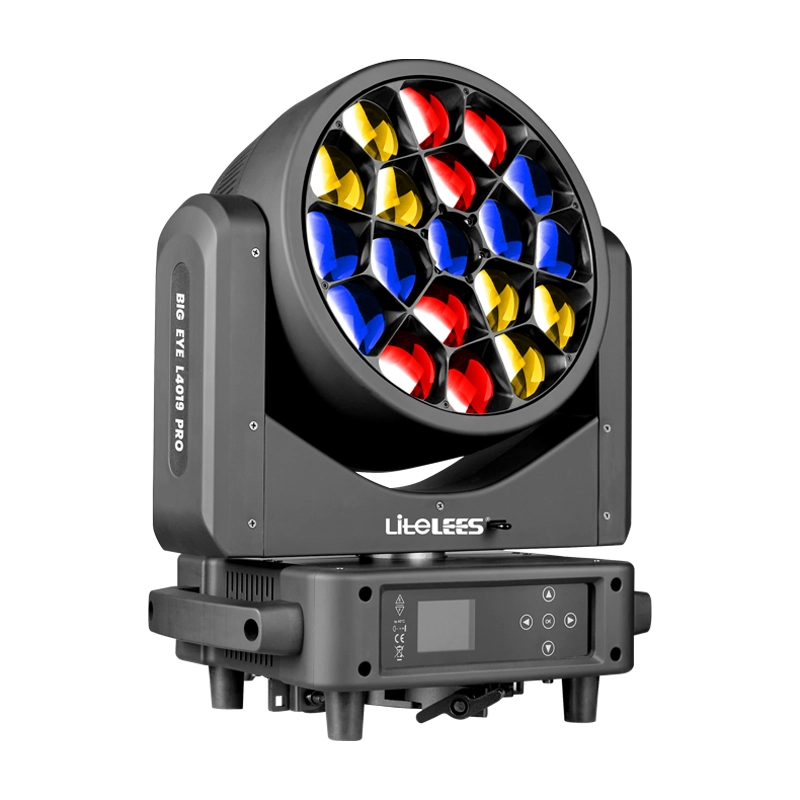
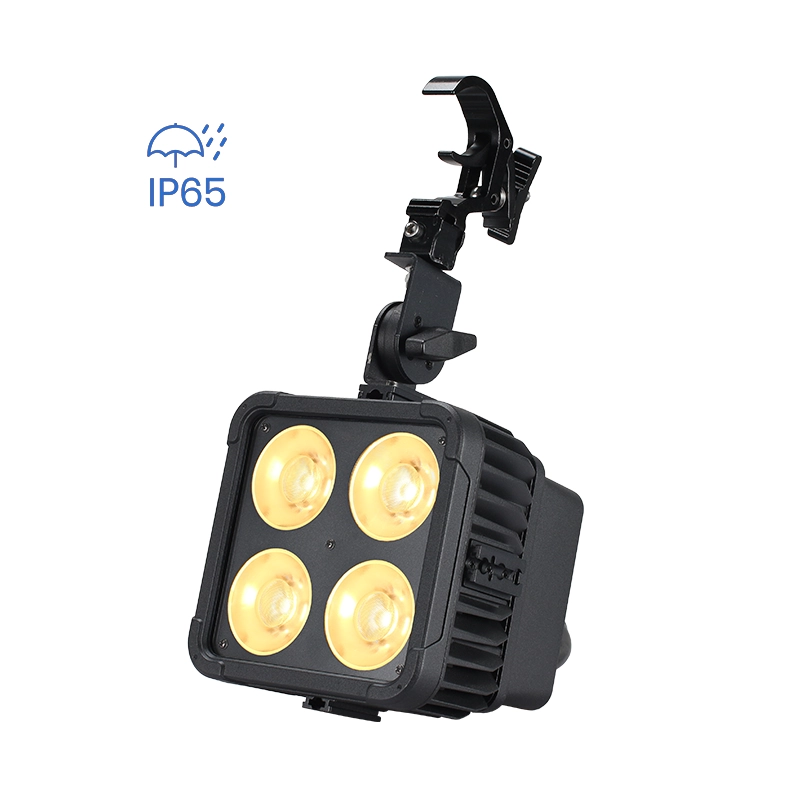
Magic Cube V8 IP
Want to get more up-to-date news?
If you have any comments or good suggestions, please leave us a message; later our professional staff will contact you as soon as possible.

We are professional stage lighting manufacturers offering OEM and ODM LED stage lights.
Contact
Email us
Call us
Address
No.6 Longnan Road, Huashan Town, Huadu District Guangzhou, Guangdong Province, China.
LiteLEES Professional
Less Lighting