
Can indoor LED lighting meet theater safety and certification standards?
- Can Indoor LED Lighting Meet Theater Safety and Certification Standards?
- 1. What certifications and standards should I require when buying indoor LED rope lights or stage lights?
- 2. Are LED rope lights appropriate for indoor theater/stage installations?
- 3. How do I verify fire and smoke safety for LED fixtures near curtains and scenery?
- 4. What photobiological and glare risks should theater buyers consider?
- 5. What color quality and performance specs matter for theatrical lighting?
- 6. How do dimming and control systems affect compliance and performance?
- 7. What should I check about lifespan, maintenance, and warranty?
- 8. Procurement checklist: what documents and tests to get from the manufacturer
- 9. Installation best practices to ensure compliance on site
- Final thoughts and quick summary
- Why choose LiteLEES for theatrical and indoor rope lighting?
- References and sources (accessed 2026-01-13)
Can Indoor LED Lighting Meet Theater Safety and Certification Standards?
The short answer: Yes — properly specified and certified indoor LED fixtures, including rope/strip lights and stage luminaires, can meet theater safety and certification requirements. Achieving compliance requires attention to the proper standards (electrical safety, photobiological, fire and egress, and performance testing), verified documentation from manufacturers, and correct installation by qualified professionals.
1. What certifications and standards should I require when buying indoor LED rope lights or stage lights?
For theater and stage use, prioritize these certifications and test reports:
- Electrical safety: UL/CSA listings in North America or CE/ENEC in Europe. Relevant UL standards commonly applied to luminaires and LED systems include UL 1598 (luminaires), UL 2108 (low‑voltage lighting systems), and UL 8750 (LED equipment). Request the specific UL/CSA/CE certificate number.
- Photometric and electrical performance: IES/ANSI LM‑79 (photometry) and LM‑80 (LED lumen maintenance) test reports. LM‑79 shows lumen output and chromaticity; LM‑80 gives lumen‑maintenance data that supports L70 lifetime claims.
- Photobiological safety: IEC 62471 (photobiological safety of lamps and lamp systems) — especially important for high‑intensity stage fixtures and audience/gazer safety regarding blue‑light hazard and retinal exposure.
- Building, fire and life safety codes: NFPA 101 (Life Safety Code) and the IBC (International Building Code) or local equivalents for egress illumination, emergency lighting duration, and fire safety. Curtains, drapes, and soft goods must meet NFPA 701 (flame propagation) or local textile/flame‑retardant rules.
- RoHS/WEEE and environmental compliance for markets where required.
2. Are LED rope lights appropriate for indoor theater/stage installations?
LED rope lights are excellent for accent, cove, step, and wash lighting thanks to their flexibility and low profile. For theatrical applications, confirm:
- Safety ratings — indoor rope lights typically carry IP20 (dry locations). For backstage, fly towers, or venues with condensation, use products with higher IP (IP54/IP65) as needed.
- Thermal management — even low‑voltage rope lights generate heat; ensure installation doesn’t trap heat against combustible materials or behind drapery.
- Mounting and fire code — do not run or secure rope lights where they contact flame‑retardant treatment warranties for textiles (verify with the venue’s fire marshal).
- Controlability — for cues and dimming, ensure compatibility with the venue control system (DMX, 0‑10V, or dedicated drivers). Edge/continuous rope lights often require dedicated constant current drivers or DMX‑capable LED drivers.
3. How do I verify fire and smoke safety for LED fixtures near curtains and scenery?
Key checks:
- Ensure soft goods and scenery are certified to the local curtain/flame standard (e.g., NFPA 701 in the U.S. or EN 13501 classification in Europe).
- Maintain required clearances between fixtures and flammable materials per the luminaire datasheet and local code. Manufacturers typically provide minimum distances from fabrics and combustibles.
- Use fixtures and mounts that prevent accidental contact and that are rated for the environment (e.g., sealed housings, low surface temperature where audience or cast contact is possible).
4. What photobiological and glare risks should theater buyers consider?
Stage fixtures can concentrate light and may pose blue‑light or retinal exposure hazards if actors or audience look directly at high‑intensity sources. Mitigation steps:
- Request IEC 62471 classification or photobiological safety data from the supplier for fixtures intended to be viewable by performers/audience.
- Choose optics, baffles, and diffusers to control glare. Use barn doors, shutters, and lensing to avoid direct line‑of‑sight exposure to LEDs when possible.
- For work lights and backstage illumination, select fixtures with lower correlated color temperature (CCT) where appropriate to reduce perceived glare while maintaining accurate color rendering where required.
5. What color quality and performance specs matter for theatrical lighting?
Critical specs to check:
- CRI (Color Rendering Index) or TM‑30 scores — for many theatrical applications, CRI ≥ 90 or high TM‑30 fidelity is desirable to render skin tones and costumes accurately.
- CCT (Correlated Color Temperature) — select fixtures with the required CCT range (tunable white or RGB/RGBW solutions for creative color mixing). Many stage fixtures support 2700K–6500K or full color control via LEDs.
- Lumen output and beam angle — verify lumens or lux at distance in the LM‑79 report and ensure beam angles and optics meet the design (spot, wash, flood requirements).
- Consistency — ask for factory binning and color tolerance (Δuv or MacAdam steps) so multiple fixtures match on stage.
6. How do dimming and control systems affect compliance and performance?
Theater control systems commonly use DMX512 (±RDM), Art‑Net/sACN, or analog (0‑10V) control. Buying tips:
- Confirm the fixture supports the expected control protocol and provides smooth dimming across the desired range. Some LED fixtures require specific drivers to achieve flicker‑free dimming at high frame‑rate capture (important for filming/recording).
- For DMX systems, ensure proper input isolation, surge protection, and termination to comply with electrical safety and to avoid control errors.
- If using LED rope lights with long runs, provide local power injection points and correct gauge wiring to prevent voltage drop and color/brightness shifts.
7. What should I check about lifespan, maintenance, and warranty?
Ask suppliers for LM‑80 test data and an L70 prediction (hours to 70% of initial light output) based on accepted TM‑21 projection methods. Typical commercial LED products often quote lifetimes in the 25,000–50,000 hour range depending on thermal conditions — but validated LM‑80/ TM‑21 data is the reliable basis for claims.
Also verify:
- Warranty terms covering lumen maintenance, color shift, and driver failure.
- Availability of spare parts (modules, drivers, DMX boards) and local service/support.
- Recommended maintenance intervals and whether fixtures require cleaning or re‑lamping (for replaceable modules).
8. Procurement checklist: what documents and tests to get from the manufacturer
Before purchase, obtain and verify these items:
- Certified product datasheet and installation instructions with minimum clearances and mounting details.
- Copy of the applicable safety certificate(s) (UL/CSA/CE/ENEC) with certificate numbers and the issuing body.
- LM‑79 photometric report and LM‑80 lumen maintenance test reports (or equivalent) supporting lifetime claims.
- IEC 62471 photobiological classification (if fixtures may be viewed directly).
- Control protocol documentation (DMX/0‑10V/TCP) and recommended driver/transformer specs.
- Warranty terms, spare parts availability, and recommended installation/inspection checklist.
- Evidence of materials compliance where required (RoHS, REACH, etc.).
9. Installation best practices to ensure compliance on site
Simple but critical steps during installation:
- Have licensed electricians perform power and control wiring in accordance with the NEC/ local electrical codes and the luminaire manufacturer’s instructions.
- Coordinate with the venue’s fire marshal for curtain/scenic clearances and confirm the fire‑safety classification of nearby soft goods.
- Use proper cable management, strain reliefs, and connectors rated for stage use; avoid improvising with unlisted connectors.
- Run commissioning tests: photometric verification, color matching check across fixtures, control channel verification, and emergency/egress light testing if lights are tied into emergency circuits.
Final thoughts and quick summary
Indoor LED rope lights and stage fixtures can fully meet theater safety and certification standards — provided you insist on proper listings/certificates (UL/CE), verified photometric/LM‑80/LM‑79 test data, IEC 62471 photobiological information where applicable, and correct installation consistent with fire and building codes. The procurement and installation discipline described above reduces risk, improves on‑stage color fidelity, and extends equipment life.
Why choose LiteLEES for theatrical and indoor rope lighting?
LiteLEES combines market‑grade components and compliance documentation with production‑oriented features. Key advantages:
- Products built to recognized safety standards and supplied with test reports (photometric LM‑79, LM‑80 data upon request).
- High CRI options and tight binning for consistent color across multiple fixtures — important for costume and skin tone rendering.
- Control options compatible with DMX, 0‑10V and common driver ecosystems for smooth, flicker‑free dimming and cue integration.
- Service support for project specification, installation guidance, and spare parts — reducing downtime during productions.
References and sources (accessed 2026-01-13)
- NFPA 101 (Life Safety Code) — NFPA, code summary and requirements. https://www.nfpa.org/codes-and-standards/all-codes-and-standards/list-of-codes-and-standards/detail?code=101 (accessed 2026-01-13)
- UL Standards and Lighting Guidance — Underwriters Laboratories (UL) overview of standards for luminaires and LED systems (UL 1598, UL 2108, UL 8750). https://www.ul.com/ (search: lighting standards) (accessed 2026-01-13)
- IES LM‑79 / LM‑80 guidance and DOE SSL resources — U.S. Department of Energy, Solid‑State Lighting Program. https://www.energy.gov/eere/ssl/standards-and-test-procedures-lighting (accessed 2026-01-13)
- IEC 62471 photobiological safety of lamps and lamp systems — International Electrotechnical Commission. https://www.iec.ch/ (search: IEC 62471) (accessed 2026-01-13)
- NFPA 701 and textile flame‑resistance guidance for curtains/drapery in assembly occupancies — NFPA standards page. https://www.nfpa.org/ (accessed 2026-01-13)
- International Building Code (IBC) and local code references for egress and emergency lighting — ICC. https://codes.iccsafe.org/ (accessed 2026-01-13)
For project‑specific compliance, request copies of certificates and LM‑79/LM‑80 reports from suppliers and confirm local code interpretations with the authority having jurisdiction (AHJ). LiteLEES can assist with documentation and specification support for theatrical projects.
Products
What is the lifespan of your LED stage lights?
Our LED lights use high-quality chips with a rated lifespan of over 50,000 hours. Proper usage and maintenance ensure long-term reliability and stable performance, making them a smart investment for any venue.
How long is the warranty period for your products?
We offer a standard 1-year warranty on all products, with extended warranty options available upon request. During the warranty period, we provide free technical support and parts replacement for non-human damage.
Company
Where is LiteLEES located?
Our headquarters and manufacturing facility are located in Guangzhou, China, with products exported to over 70 countries worldwide.
What certifications do your products have?
All LiteLEES products are certified by CE, RoHS, FCC, and BIS. Our factory is ISO9001 quality management system certified.
Can LiteLEES handle OEM/ODM orders?
Absolutely. With our strong R&D capabilities and advanced manufacturing, we can customize designs, features, and branding to meet your specific needs.
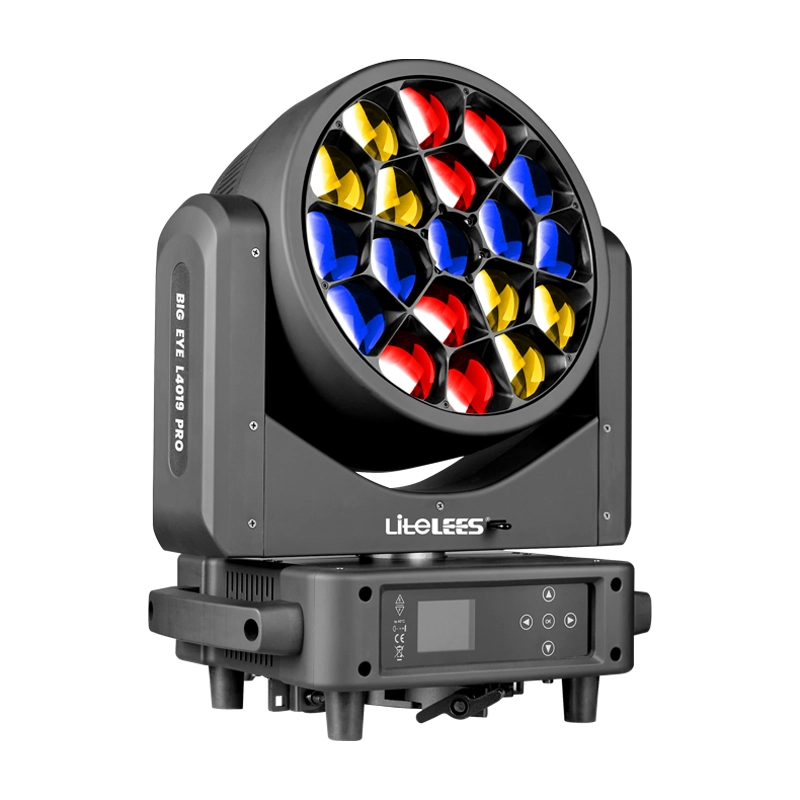
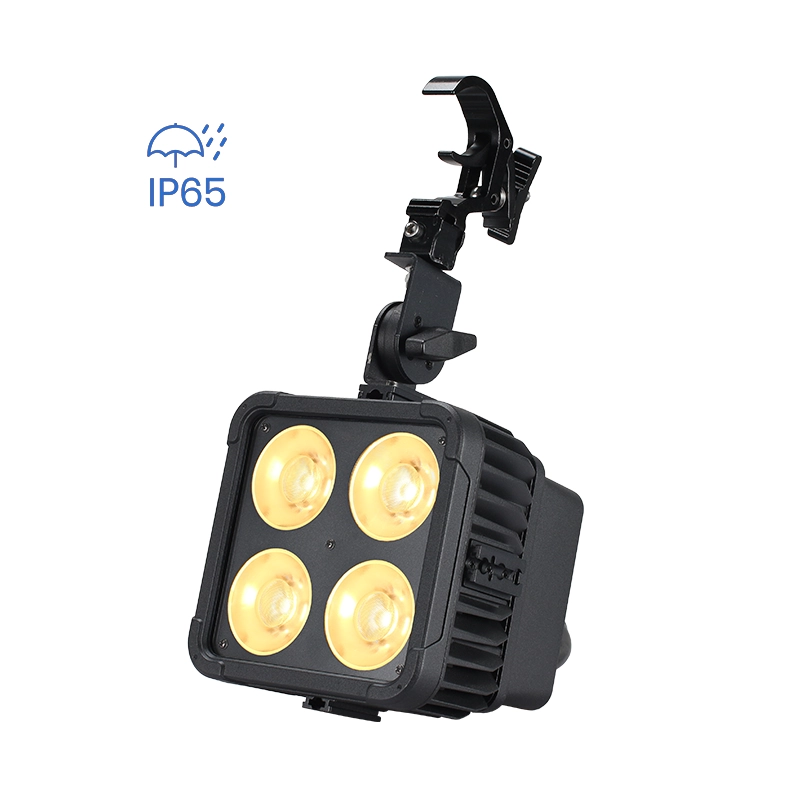
Magic Cube V8 IP
Want to get more up-to-date news?
If you have any comments or good suggestions, please leave us a message; later our professional staff will contact you as soon as possible.

We are professional stage lighting manufacturers offering OEM and ODM LED stage lights.
Contact
Email us
Call us
Address
No.6 Longnan Road, Huashan Town, Huadu District Guangzhou, Guangdong Province, China.
LiteLEES Professional
Less Lighting