
How to evaluate lifespan and durability of RGB LED lights?
- 1) How can I verify a vendor’s LM-80 and TM-21 data instead of trusting “50,000 hours” marketing claims for RGB LED lights?
- 2) How do I test thermal management and junction temperature on RGB LED stage lights during real shows to avoid accelerated lumen depreciation?
- 3) What driver and dimming specs (PWM frequency, current ripple, surge protection) should I require to ensure flicker-free broadcast performance and long driver life?
- 4) How can I evaluate physical ruggedness—IP/IK ratings, connectors, PCB coating and mechanical mounting—so fixtures survive touring and outdoor use?
- 5) How do color shift, SDCM and calibration affect long-term consistency of RGB LED lights across multiple fixtures and years?
- 6) How do I assess real-world MTBF, warranty terms and serviceability to calculate total cost of ownership (TCO) for RGB LED lights?
When purchasing RGB LED lights for live events, touring, rental houses or fixed installations, marketing claims like “50,000 hours” or “flicker-free” aren’t enough. This guide gives specific, testable questions and step-by-step checks you can use to verify lifespan, durability and long-term performance for LED stage lights, using industry standards such as LM-80 and TM-21, IP/IK ratings, and real-world measurement methods.
1) How can I verify a vendor’s LM-80 and TM-21 data instead of trusting “50,000 hours” marketing claims for RGB LED lights?
Why it matters: Lumen maintenance (how bright the LEDs remain over time) is the most reliable indicator of actual LED life. LM-80 and TM-21 are the industry-standard tests that quantify lumen depreciation and allow projection of useful life (commonly expressed as L70, L80 etc.). Many vendors quote a lifetime number without backing or extrapolate beyond the limits of the test.
What to request and how to validate:
- Ask for the LM-80 test report for the specific LED package used in the fixture (not a generic supplier brochure). LM-80 is performed on LED packages, modules, or arrays and provides temperature-specific lumen maintenance data over test durations (commonly 6,000–10,000 hours).
- Ask for the TM-21 projection that shows how the manufacturer extrapolated LM-80 data to produce an L70/L80 figure. Verify the TM-21 projection follows IES TM-21 guidance (extrapolation limits depend on test duration and must not exceed recommended multipliers).
- Check the thermal point (Tc) used in LM-80. LM-80 results vary widely with temperature: lower Tc produces better lumen maintenance. The report should include the Tc point(s) and the test temperature(s).
- Prefer fixtures whose TM-21 projection is supported by long LM-80 tests (10,000 hrs is stronger than 3,000 hrs) and where the projection period is conservative. If the TM-21 projection pushes far beyond the tested hours without clear conservative assumptions, treat the lifetime claim skeptically.
- Independent verification: if possible ask for third-party test lab certification (IES approved labs) rather than in-house testing.
Practical thresholds: many pro LED stage lights aim for L70 ≥ 50,000 hours in real-use thermal environments; High Quality designs achieve L70 at 70k–100k hours. Use the LM-80/TM-21 documentation and the stated Tc to compare apples-to-apples across fixtures.
2) How do I test thermal management and junction temperature on RGB LED stage lights during real shows to avoid accelerated lumen depreciation?
Why it matters: Heat is the single biggest enemy of LED lifetime and color stability. Junction temperature (Tj) drives lumen depreciation and color shift. A fixture that runs “cool” will maintain brightness and color longer.
Practical field tests and checks:
- Check the specification sheet for thermal design details: listed Tc test point, heatsink material (extruded aluminum is preferred), whether cooling is passive (fanless) or active (fans). Fanless (passive) designs avoid fan failures but need larger heatsinks.
- Thermocouple/Tc measurement: place a K-type thermocouple at the fixture’s Tc point (manufacturer should indicate where). Run the fixture at typical working intensity for 2–4 hours and record steady-state Tc. Compare with LM-80/TM-21 test temperatures; if the fixture’s Tc in your environment is higher than the LM-80 test Tc, expect faster lumen depreciation than the published projection.
- Use an IR thermometer to monitor housing temperature but rely on the Tc specification for accurate comparisons—surface temps can mislead.
- Heat-run test: operate the fixture at full white or full RGB white-equivalent for 8–24 hours in the installation temperature expected in service. Watch for thermal throttling (automatic dimming), color drift, or fan speed ramping—these indicate marginal thermal design.
- Thermal imaging: a thermal camera can reveal hot spots at solder joints or LED arrays—hot solder points often precede failure in touring conditions.
Rule of thumb: every 10°C increase in junction temperature significantly increases degradation/failure risk (semiconductor devices typically follow Arrhenius behavior). Insist on conservative thermal design margins if fixtures will be used in hot rigs or enclosed trussing.
3) What driver and dimming specs (PWM frequency, current ripple, surge protection) should I require to ensure flicker-free broadcast performance and long driver life?
Why it matters: The LED driver controls current to the diodes. Cheap drivers can introduce current ripple, low PWM frequencies (visible flicker or camera banding), poor surge protection, and early failures. For stage and broadcast use you need drivers with specific performance characteristics.
Minimum driver specifications to demand:
- PWM frequency: for camera-safe operation, require PWM frequencies ≥ 20 kHz (some broadcasters require 20–30 kHz or higher). Lower PWM (e.g., <1 kHz) will almost certainly flicker with cameras and strobes.
- Flicker metrics: request measured percent flicker and/or flicker index at normal dimming levels and at 16-bit or 8-bit dimming modes. Look for percent flicker <1% across the dimming range for broadcast work. Vendors sometimes provide a flicker spectrum or oscilloscope trace—ask for it.
- Current ripple and total harmonic distortion (THD): low-current ripple and THD reduce stress on LEDs. Ask for the RMS current ripple spec and driver ripple waveform samples.
- Driver brand & model: prefer established driver manufacturers (Mean Well, Inventronics, Philips Xitanium, etc.). Ask for datasheets and MTBF for the driver itself.
- Protection features: inrush current limiting, surge protection (MOV/TVS), over-voltage/over-temperature and short-circuit protection. These extend service life in touring/rigging environments with imperfect power.
- Control protocols and lockstep dimming: DMX512/RDM, Art-Net, sACN support and robust dimming tables (linearization for human-perceived brightness). For multicast networked rigs, ensure robust Art-Net or sACN implementation and firmware update paths.
Field verification steps:
- Use an oscilloscope to capture the LED drive waveform at different dimming points. Confirm PWM frequency and measure ripple and flicker percent.
- Test with a broadcast camera and the specific frame rates you will use (including high-speed/slow-motion settings). Some LED fixtures behave differently at 120/240 fps versus 24/30 fps.
4) How can I evaluate physical ruggedness—IP/IK ratings, connectors, PCB coating and mechanical mounting—so fixtures survive touring and outdoor use?
Why it matters: Mechanical and environmental failures (water ingress, impact, corrosion) are common causes of downtime in rental houses and tours. Specifications can be overstated—field inspection and verification matter.
Checklist to evaluate durability:
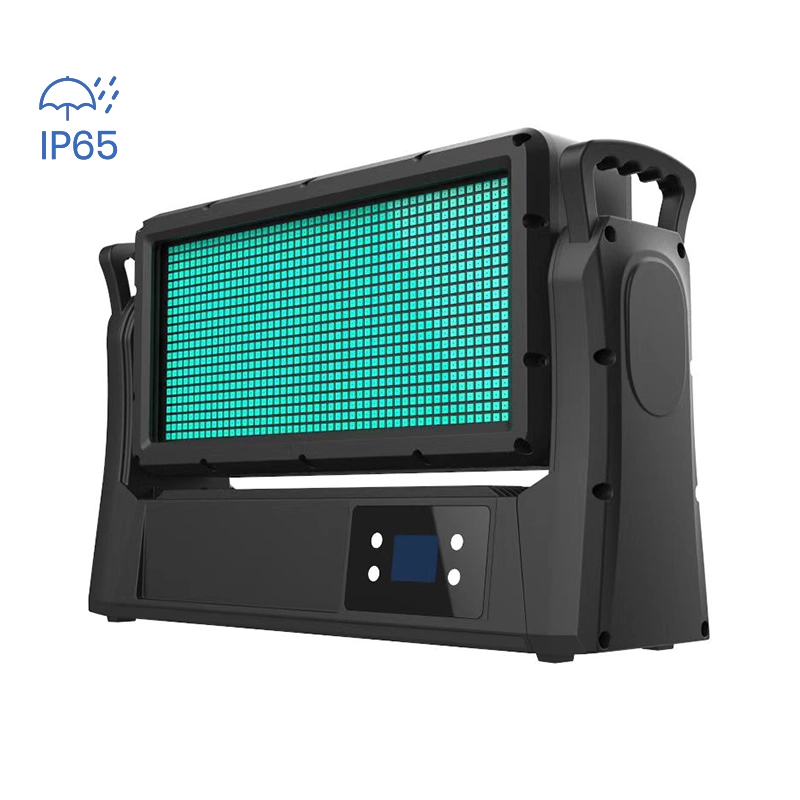
- IP rating: Matches expected environment. IP20 for indoor only; IP54 for dust/splash protection; IP65/IP66 for outdoor fixtures exposed to rain (IP67 for temporary immersion). For permanent outdoor installs choose IP66+.
- IK impact rating: An IK08–IK10 rating indicates higher impact resistance for touring fixtures that get handled frequently.
- Connector quality: Look for metal locking powerCON/in/out (or compatible Neutrik locking connectors), sealed DMX ports (XLR with rubber seals or Neutrik etherCON for networked fixtures). Plastic connectors are more failure-prone in touring use.
- PCB and conformal coating: Outdoor fixtures or fixtures used in smoky/pyrotechnic environments should have conformal-coated PCBs to limit corrosion and moisture damage to solder joints and components.
- Rigging points and hardware: Check for stamped steel mounting brackets, safety-cable anchors that meet local rigging codes, and replaceable hardware. Improvised brackets and glued-on hardware are red flags.
- Ingress into LED compartments: verify gaskets and pressure-equalization vents. Look for a labeled IP test certificate where possible.
Practical tests:
- Perform a drop/handling test within reason—operate the fixture and inspect for mechanical play in the housing or optics after handling.
- For outdoor units, verify seals by running a hose test (if vendor allows) or inspect seals and gasket materials for UV resistance and correct compression.
5) How do color shift, SDCM and calibration affect long-term consistency of RGB LED lights across multiple fixtures and years?
Why it matters: RGB LED fixtures can drift in color over time as LEDs age at different rates and thermal profiles differ across the fixture. Inconsistent color between fixtures degrades visual quality and complicates show programming.
What to check and how to control color drift:
- SDCM & binning: ask for LED binning and SDCM (MacAdam) tolerance for the LEDs used. For multi-fixture consistency, 3 SDCM is typical for good-quality stage lights; ≤3 SDCM reduces visible mismatch. Lower SDCM is better but costlier.
- Chromaticity stability: request manufacturer data for color shift (Δu'v' or ΔE) over time and temperature. Fixtures used in the harsh thermal environments of trussing often show the largest shifts.
- Color calibration and firmware: fixtures with internal calibration routines (per-LED calibration, temperature-compensated color correction) maintain tighter color consistency. Ask whether the fixture uses sensor feedback or relies purely on factory calibration.
- Color rendering metrics: while RGB-only fixtures create saturated color, if you need good whites and pastel mixes verify white balance accuracy and CCT stability. For critical color work prefer RGBW/RGB+COB or fixtures designed for full-spectrum rendering or that provide TM-30/CRI data for whites.
- Maintenance plan: plan periodic re-calibration using a handheld spectrometer or colorimeter and keep spare modules for matched replacement. Document baseline chromaticity values at installation.
Field validation: measure chromaticity with a calibrated spectrometer after a 4–8 hour run-in and again after months of service. If Δu'v' or ΔE exceeds your tolerance (e.g., ΔE>2 for high-fidelity installs), require the vendor provide a calibration or module swap policy.
6) How do I assess real-world MTBF, warranty terms and serviceability to calculate total cost of ownership (TCO) for RGB LED lights?
Why it matters: Quoted MTBF numbers are often theoretical. Total cost of ownership depends on downtime, spares, repairability and warranty support—not just the headline lifetime hours.
How to evaluate MTBF, warranty and TCO:
- MTBF vs Lumen Maintenance: MTBF often refers to electronic component failure rates and can be misleading for LEDs—rely on LM-80/TM-21 and L70/L80 for lumen life and on driver MTBF for electronic reliability.
- Warranty scope and exclusions: read warranty terms carefully—do they cover LEDs, drivers, power supplies, optics, and labor? Typical warranties range 2–5 years; longer factory warranties are an indicator of confidence in design.
- Availability of spare parts & modularity: Favor fixtures with modular LED boards and hot-swappable drivers. This reduces repair time and costs in rental houses and tours.
- Authorized service network and RMA turnaround: a global tour requires global support. Ask for RMA lead times, local service partners, and spares stocking policy.
- Field failure data and references: request references from other rental houses or venues of similar scale. Real-world failure rates over 12–36 months are more meaningful than manufacturer MTBF claims.
- Calculate TCO: include purchase price, expected operating hours, replacement part costs, average downtime cost per failure, and warranty coverage in a 3–5 year projection. For rental/touring businesses, include the cost of spare fixtures to maintain inventory uptime.
Practical negotiation tips: require a spare-parts kit with initial purchase (drivers, LED modules, connectors), negotiate extended warranty options, and ask for service-level agreements (SLAs) for replacement or repair times.
Closing paragraph — advantages of rigorous lifespan and durability evaluation
Rigorous evaluation of RGB LED lights—using LM-80/TM-21 verification, Tc/thermal testing, driver waveform and PWM checks, IP/IK inspection, chromaticity monitoring and realistic TCO modelling—reduces downtime, improves color consistency, lowers long-term costs and prevents expensive surprises during shows. For rental companies, touring productions and permanent installs, these objective checks turn marketing claims into verifiable performance and make procurement decisions predictable and defensible.
For a quotation tailored to your rigging, performance and budget needs, contact us for a quote at www.litelees.com or email litelees@litelees.com.
Products
How long is the warranty period for your products?
We offer a standard 1-year warranty on all products, with extended warranty options available upon request. During the warranty period, we provide free technical support and parts replacement for non-human damage.
What is the lifespan of your LED stage lights?
Our LED lights use high-quality chips with a rated lifespan of over 50,000 hours. Proper usage and maintenance ensure long-term reliability and stable performance, making them a smart investment for any venue.
Can I customize the functions or software of the lights?
Absolutely. As a manufacturer with independent R&D capabilities, we offer customization for both hardware and software (such as DMX channel layout, built-in programs, or UI language). Contact us with your project needs, and our team will provide tailored solutions.
Company
What certifications do your products have?
All LiteLEES products are certified by CE, RoHS, FCC, and BIS. Our factory is ISO9001 quality management system certified.
Where is LiteLEES located?
Our headquarters and manufacturing facility are located in Guangzhou, China, with products exported to over 70 countries worldwide.
Stormy Supreme 600 IP
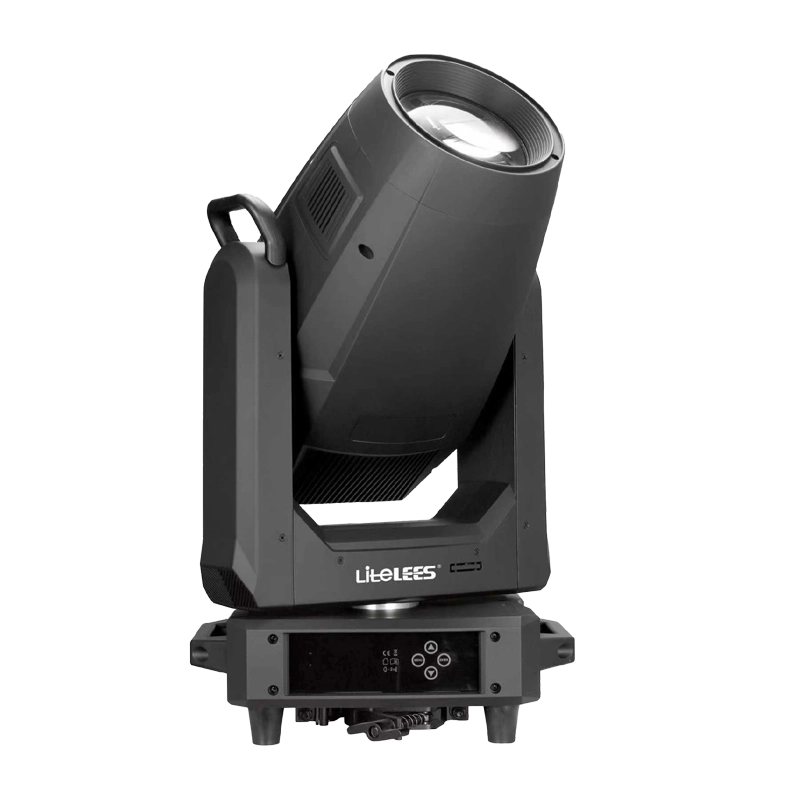
LP Profile 900
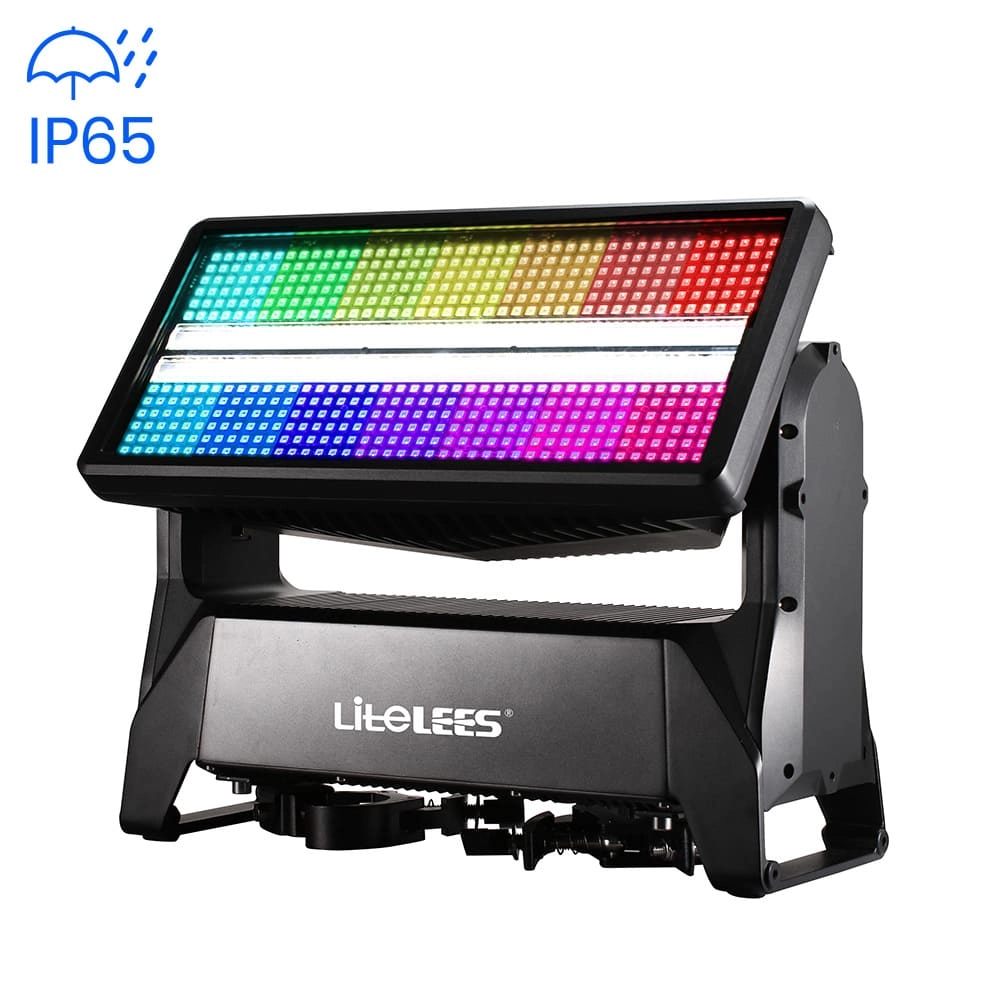
Stormy STRIKE M IP
Want to get more up-to-date news?
If you have any comments or good suggestions, please leave us a message; later our professional staff will contact you as soon as possible.

We are professional stage lighting manufacturers offering OEM and ODM LED stage lights.
Contact
Email us
Call us
Address
No.6 Longnan Road, Huashan Town, Huadu District Guangzhou, Guangdong Province, China.
LiteLEES Professional
Less Lighting