
How to evaluate moving head light beam and color quality?
- How to evaluate moving head light beam and color quality?
- 1. What beam metrics matter and how do I measure them?
- 2. What color metrics should I check for accurate reproduction?
- 3. How important is PWM frequency and flicker performance for video work?
- 4. What are realistic numeric thresholds I should expect when comparing fixtures?
- 5. How do optics and mechanical design affect beam and color performance?
- 6. What tests should I run during a demo or factory acceptance test (FAT)?
- 7. How do control, reliability and serviceability factor into the decision?
- 8. Quick tool kit: what instruments should a buyer have or ask a vendor to provide?
- Practical buying checklist (condensed)
- LiteLEES advantages — practical summary for buyers
- References and data sources
How to evaluate moving head light beam and color quality?
Buying professional moving-heads (spot/beam/wash) requires more than trusting lumen claims. Buyers must evaluate beam optics, photometric output and color fidelity to ensure reliable performance for live events, touring, theatre or broadcast. Below are the most common buyer questions and practical answers — how to measure, what numbers to expect, and what thresholds to use when comparing fixtures.
1. What beam metrics matter and how do I measure them?
Key beam metrics:
- Beam angle / zoom range — determines beam spread and throw.
- Center-beam illuminance (lux) at a set distance — real-world brightness.
- Candela (cd) — useful for comparing intensity independently of distance (candela = lux × distance²).
- Beam uniformity (center-to-edge ratio) — for wash fixtures aim for ≤2:1; for spots/beams a higher ratio may be acceptable.
- Hotspot and edge fall-off — how quickly intensity drops toward the beam edge; sharp-edged beams have steep fall-off, washes are smoother.
- Gobo sharpness and projection quality — optics and focus control determine detail.
- Use a calibrated lux meter at fixed distances (commonly 3 m, 5 m and 10 m). Record center lux and measure beam diameter at the 50% intensity point to calculate beam angle.
- Convert lux to candela for normalized comparison: candela = lux × (distance in meters)².
- Visually inspect beam edge and gobo projection on a neutral white screen or wall at working throw distances.
- CRI (Ra) — basic index of color fidelity; values ≥90 recommended for accurate color critical work, but CRI can miss saturation errors.
- TLCI — designed for television/broadcast; TLCI ≥90 is a common target for broadcast to minimize camera color corrections.
- TM-30 (Rf and Rg) — newer, more detailed method: Rf (fidelity) near 100 = accurate color; Rg (gamut) shows saturation shift. TM-30 gives spectral and color-vector information.
- Spectral Power Distribution (SPD) — the full spectral plot; continuous spectra with balanced reds, greens and blues usually render skin tones and gels better than narrow spike-heavy LEDs.
- Color temperature control and stability (CCT) — fixture should hit setpoints (e.g., 3200K, 5600K) with small delta ±100 K or better, or have accurate Kelvin readout/calibration.
- For film/broadcast, look for fixtures specified as flicker-free at common frame rates (24/25/30/50/60 fps) or with high PWM frequency. Higher PWM (several kHz up to tens of kHz) reduces risk of camera artifacts.
- Rolling-shutter cameras are especially sensitive; always test the fixture with the cameras you plan to use.
- CRI/TLCI: Aim for CRI ≥90 for theatre/architectural and TLCI ≥90 for broadcast. For pure concert wash where color saturation matters more, a slightly lower CRI may be acceptable if TM-30 shows good saturation handling.
- TM-30: Rf ≥ 90 is desirable; Rg close to 100 indicates natural gamut scaling. Compare full TM-30 reports when available.
- Lux/Candela: Compare manufacturer lux tables at common distances (3–10 m) and convert to candela for normalized comparison. Use the same beam-angle setting for fair comparison.
- Beam uniformity: For wash fixtures aim for <2:1 center-to-edge at normal working distance; for spot/beam heads, evaluate edge sharpness and gobo contrast instead.
- PWM: Look for declared flicker-free ratings and PWM frequencies >4 kHz for most camera work; higher (10–25 kHz) is better.
- LED lifetime: Expect 25,000–50,000 hours to lumen maintenance thresholds (L70) for modern LEDs; check manufacturer L70/L80 data.
- Lens quality and element count — better optics reduce chromatic aberration and improve gobo detail.
- Beam homogenizers and integrator rods — smoother color mixing across the beam and fewer color shifts when zooming.
- Aspheric elements and coatings — increase transmission, improve contrast and protect against stray reflections.
- Thermal management — stable LED junction temperature maintains consistent color (color shift can occur as LEDs heat up). Good heat-sinking and fan control reduce color drift and extend LED life.
- Mechanical repeatability — pan/tilt precision and encoder feedback matter for programmed shows and pixel-mapping effects.
- Photometric check: measure center lux at 3, 5 and 10 m; record beam diameter and compute beam angle and candela.
- Color checks: run white point at standard CCTs (3200K/5600K), measure CCT and delta-C; run saturated colors (red/green/blue/magenta) and compare to SPD or spectrometer readings.
- TM-30/TLCI/CRI report: request or measure a spectrometer report for at least one white and one saturated color state.
- Flicker test: film the fixture at multiple shutter speeds and frame rates; look for banding or flicker; request the PWM/flicker spec from the vendor.
- Gobo and focus: project gobos at planned working throws and inspect resolution and edge quality.
- Thermal and runtime: run fixture at full and 50% power for extended periods to check color stability and fan/noise behavior (record dBA if noise-sensitive applications).
- Control integration: test DMX/RDM and network protocols (Art-Net/sACN) for addressing and latency requirements.
- Control protocols supported: DMX512/RDM, Art-Net, sACN and timecode compatibility for touring racks and consoles.
- Serviceability: modular replaceable parts (LED module, driver, fans) reduce downtime and long-term cost.
- Build and ingress protection: IP rating for outdoor use (IP20 is indoor; IP65+ needed for protected outdoor applications).
- Noise and cooling strategy: low-noise modes for theatre and broadcast; variable fan control can be essential.
- Warranty and global support: clear RMA policy and local spares/supported regions matter for rental fleets and tours.
- Calibrated lux meter (basic photometric checks).
- Handheld spectrometer or spectroradiometer for SPD and TM-30/TLCI/CRI analysis (or request vendor reports).
- DSLR or broadcast camera for flicker testing (test at target frame rates and shutter speeds).
- Small white projection screen and meter tape for beam edge/angle checks.
- Get lux tables and convert to candela for fair comparison.
- Request TM-30 and/or TLCI reports; aim for Rf/TLCI near or above 90 for color-critical work.
- Confirm flicker-free specs and PWM frequency; test with your cameras.
- Check optics (gobo resolution, zoom range) in a live demo at expected throw distances.
- Ask about serviceability, warranty, spare parts and regional support.
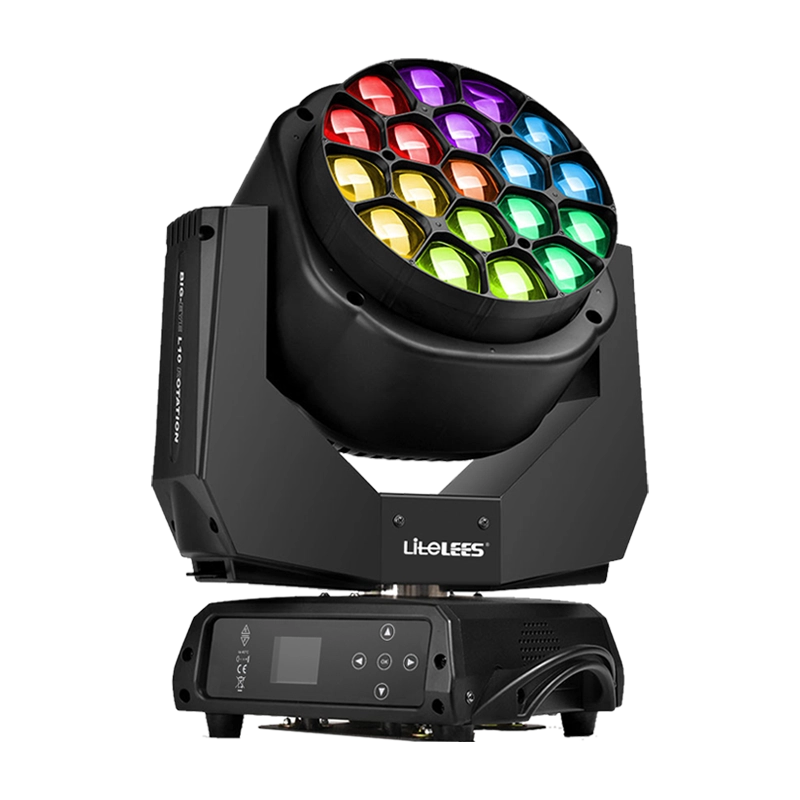
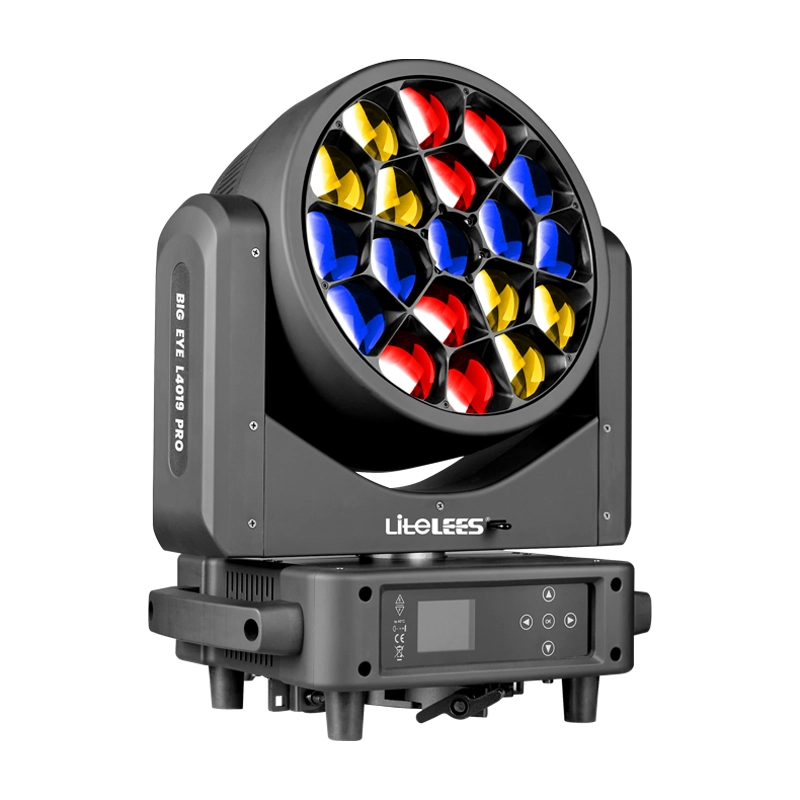
- Product focus: LiteLEES offers a range of professional LED moving-heads designed for touring, theatre and rental markets with attention to optics and color control.
- Tested photometrics: fixtures are supplied with detailed photometric and spectral data on request to support technical evaluations and FATs.
- Service-minded: modular design and accessible parts facilitate maintenance and reduce downtime for fleets.
- Control compatibility: standard DMX/RDM and network protocols for integration into modern control systems.
- Global support and documentation: specification sheets, TM-30/TLCI summaries and flicker details are available to help match fixtures to camera and show requirements.
- U.S. Department of Energy — LED Lighting Basics (lifetime guidance). Accessed 2026-01-15: https://www.energy.gov/energysaver/led-lighting
- IES — TM-30 documentation and guidance (TM-30-15 overview). Accessed 2026-01-15: https://www.ies.org/
- European Broadcasting Union (EBU) — TLCI technical notes and specifications (broadcast color measurement guidance). Accessed 2026-01-15: https://tech.ebu.ch/
- ESTA / TSP — DMX512 protocol and standards information. Accessed 2026-01-15: https://tsp.esta.org/tsp/standards/DMX512-A.
- ARRI Lighting Knowledge — LED flicker and camera compatibility guidance. Accessed 2026-01-15: https://www.arri.com/en/lighting
- Signify (Philips) — whitepapers on light quality, CRI and TM-30 basics. Accessed 2026-01-15: https://www.signify.com/
How to measure practically:
2. What color metrics should I check for accurate reproduction?
Important color metrics and what they mean:
Measurement tools: spectrometer (for SPD, TM-30 components and TLCI/CRI calculations) and colorimeters. For high-stakes broadcast or film use a spectroradiometer is recommended.
3. How important is PWM frequency and flicker performance for video work?
LEDs are often dimmed using PWM. If PWM frequency is low, cameras can capture banding or flicker at common frame rates. Practical guidance:
4. What are realistic numeric thresholds I should expect when comparing fixtures?
Guideline thresholds (typical professional expectations):
5. How do optics and mechanical design affect beam and color performance?
Optical and mechanical factors:
6. What tests should I run during a demo or factory acceptance test (FAT)?
Suggested practical test checklist:
7. How do control, reliability and serviceability factor into the decision?
Beyond optics and color, consider these procurement factors:
8. Quick tool kit: what instruments should a buyer have or ask a vendor to provide?
If you cannot access instruments, request full photometric and spectral reports from the manufacturer including lux tables at specified distances, TM-30/TLCI/CRI reports and PWM/flicker specifications.
Practical buying checklist (condensed)
Why these checks matter: beam optics determine audience sightlines and visual impact; color fidelity affects skin tones, camera output and designer intent; PWM/flicker and thermal stability determine whether fixtures will integrate into broadcast and rental workflows reliably.
LiteLEES advantages — practical summary for buyers
References and data sources
For any purchase, request full photometric and spectral reports from the vendor and perform a short in-situ test with your actual camera, throw distances and control system. That practical check will reveal the beam and color performance that matters on the job.
Company
Where is LiteLEES located?
Our headquarters and manufacturing facility are located in Guangzhou, China, with products exported to over 70 countries worldwide.
What is LiteLEES’s main business?
LiteLEES specializes in the design, development, manufacturing, and sales of professional stage lighting, including moving head lights, beam lights, spot lights, wash lights, and LED par lights.
What certifications do your products have?
All LiteLEES products are certified by CE, RoHS, FCC, and BIS. Our factory is ISO9001 quality management system certified.
Products
How long is the warranty period for your products?
We offer a standard 1-year warranty on all products, with extended warranty options available upon request. During the warranty period, we provide free technical support and parts replacement for non-human damage.
Can I customize the functions or software of the lights?
Absolutely. As a manufacturer with independent R&D capabilities, we offer customization for both hardware and software (such as DMX channel layout, built-in programs, or UI language). Contact us with your project needs, and our team will provide tailored solutions.
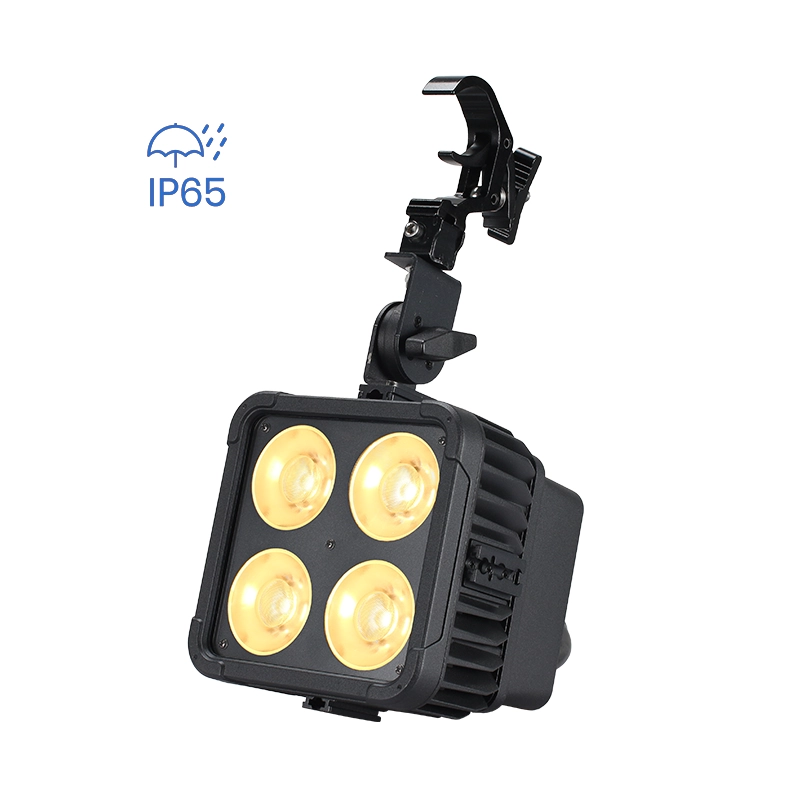
Magic Cube V8 IP
Want to get more up-to-date news?
If you have any comments or good suggestions, please leave us a message; later our professional staff will contact you as soon as possible.

We are professional stage lighting manufacturers offering OEM and ODM LED stage lights.
Contact
Email us
Call us
Address
No.6 Longnan Road, Huashan Town, Huadu District Guangzhou, Guangdong Province, China.
LiteLEES Professional
Less Lighting