
How to compare beam angle and lumen output in moving heads?
- How to compare beam angle and lumen output in moving heads?
- 1) What is the correct way to compare lumen output and beam angle?
- 2) How do I calculate lux from lumens and beam angle? (Worked example)
- 3) What other photometric metrics should I use besides lumens and beam angle?
- 4) How do effects (gobos, prisms, frost, color mixing, zoom) change the usable lumen output?
- 5) What are sample lumen/beam ranges by fixture type and how do I match them to venue/application?
- 6) What documentation and tests should I request from suppliers when procuring moving heads?
- 7) Common specification pitfalls and how to avoid them
- 8) Practical procurement checklist for an LED moving head
- Short worked example for procurement decision
- Final notes and best practices
- LiteLEES advantages (supplier summary)
How to compare beam angle and lumen output in moving heads?
When selecting moving head stage lights, “lumens” (total light flux) and “beam angle” (spread of the optical output) are both essential—but they answer different questions. Lumens tell you how much light the fixture emits overall. Beam angle (usually the full width at half maximum — FWHM, measured at the 50% intensity points) determines how that light is distributed in space. To predict on-stage illumination you must combine both specs with the throw distance and the optics (zoom, lenses, gobos, frost, etc.).
1) What is the correct way to compare lumen output and beam angle?
Compare them by calculating illuminance (lux) at your working distance rather than comparing lumens alone. Lux = lumens / illuminated area. For a circular beam the area A = π * (r^2), where r = distance * tan(beamAngle/2). This yields a realistic estimate of brightness on the stage or screen.
Key definitions to check on datasheets:
- Beam angle: usually FWHM (50% intensity), sometimes reported as field angle (10% level). Clarify which one the manufacturer uses.
- Total lumens: luminous flux of the fixture; may be given as raw LED package lumens or measured fixture output (the latter is what you want).
- IES or photometric files: give lux vs. distance curves — best for precise planning.
2) How do I calculate lux from lumens and beam angle? (Worked example)
Use this workflow and formulas for a practical comparison:
Formulas:
- beam radius r = distance * tan(beam_angle / 2)
- spot area A = π * r^2
- approximate average lux = lumens / A
Example at 10 m throw:
- Fixture A: 10,000 lm, 10° beam. tan(5°) ≈ 0.08749 → r ≈ 0.8749 m → A ≈ 2.405 m² → Lux ≈ 10,000 / 2.405 ≈ 4,160 lx.
- Fixture B: 12,000 lm, 20° beam. tan(10°) ≈ 0.17633 → r ≈ 1.763 m → A ≈ 9.76 m² → Lux ≈ 12,000 / 9.76 ≈ 1,230 lx.
Conclusion: even though Fixture B has more lumens, the wider beam reduces lux at the target—so choose based on the application (tight beam effects vs even wash).
3) What other photometric metrics should I use besides lumens and beam angle?
- Candela (cd) / luminous intensity: useful for pointing brightness (cd = lumens / steradian). It increases dramatically for narrow beams.
- IES photometric files and lux charts: supply lux at distances and off-axis distribution—essential for accurate rigging and focusing calculations.
- Lumen maintenance (L70) and LED driver specs: tells you how output drops over time—common L70 lifetimes for professional LED sources are typically in the 30,000–50,000 hour range (verify on each product).
- FWHM vs field angle: ensure whether the listed “beam angle” is FWHM (50%) or a wider field spec (10%).
- Color modes & mixing: RGBW/RGBALC etc., color filters and prisms reduce effective lumen output—check photometric tests with colors engaged if you need colored brightness estimates.
4) How do effects (gobos, prisms, frost, color mixing, zoom) change the usable lumen output?
Optical effects and color mixing reduce the usable on-stage light in different ways:
- Gobos/prisms: create beam shaping/splitting—energy is redistributed; peak center lux may drop versus an unobstructed beam.
- Frost/diffusers: intentionally increase beam angle and smooth edges at the cost of center lux.
- Zoom: adjustable optics allow you to trade beam angle for intensity; many fixtures list lumens at the narrowest and widest zoom positions—check both.
- Color mixing (RGB/RGBW): mixing into saturated colors lowers measured lumens versus white output (additive color mixing re-distributes spectral energy). Some manufacturers provide colored photometric data—request it if color-critical.
Always ask vendors for photometric curves or IES files with common effects engaged if your design relies on those effects.
5) What are sample lumen/beam ranges by fixture type and how do I match them to venue/application?
Typical professional guidance (ranges are approximate — verify product datasheets):
- Beam fixtures (narrow, <5–7°): high candela, used for long-throw shafts and aerial effects. Suitable for arenas and long throws.
- Spot/profile fixtures (7°–25°): used for shaping, gobos, and isolating performers; moderate to high lumen outputs.
- Wash fixtures (20°–60°+): broader, even coverage for stage area lighting—total lumens can be high, but lux per m² is lower for a given throw distance.
Match by calculating required lux at the performer surface or backdrop: corporate stages might need 800–2000 lx on talent for TV work (depending on camera needs), theaters rely on mix of key/hard/soft light and typically lower raw lux values but controlled contrast, while concert beams favor high candela narrow beams for aerial impact.
6) What documentation and tests should I request from suppliers when procuring moving heads?
- LM-79 / IES photometric reports for the fixture (measured output at specified distances and angles).
- IES files (standard .ies or photometric curves) for rigging and previsualization in lighting CAD tools.
- Lumen maintenance (L70) projection and measured lumen depreciation curves over time.
- Power consumption, power factor, and inrush current specs for rigging and supply planning.
- Flicker/frequency specification and camera-safe modes (e.g., high PWM frequency or special TV modes) if filming is expected.
- IP rating, cooling specs, weight, pan/tilt resolution, DMX/RDM support, warranty terms and service network.
Insist on lab-tested photometry (LM-79-style testing) or vendor-supplied IES files measured on the complete fixture rather than just LED package numbers.
7) Common specification pitfalls and how to avoid them
- Comparing LED package lumens vs measured fixture lumens: choose measured fixture output (after optics) for real comparisons.
- Unclear beam-angle definitions: ask whether beam angle is FWHM (50%) or field angle (10%).
- Overlooking color and effect states: lumens drop significantly with saturated colors and when frost/prisms are used—get photometry in modes you will use.
- Not checking lumen maintenance: two fixtures with same initial lumens may differ in output after 10k hours due to LED binning and cooling design.
- Ignoring candela and beam intensity for long throws: lumens alone won’t predict how dramatic a narrow aerial beam will look at 30+ m.
8) Practical procurement checklist for an LED moving head
- Define target lux or visual effect at the actual throw distances.
- Request IES files and LM-79 or equivalent photometric tests for the fixture and for common color/effect states you will use.
- Calculate expected lux using the beam-angle formula, or use the vendor’s lux charts to confirm.
- Verify LED type, L70 life, cooling and expected lumen maintenance over time.
- Check mechanical details (weight, rigging points), electrical (power, inrush), control (DMX/RDM, pixel mapping), and camera safety (flicker-free modes).
- Confirm warranty, repair turnaround, and spare parts availability.
Short worked example for procurement decision
Scenario: you need a follow-spot effect at 20 m to create a 1 m radius spot with strong center brightness. Solve for beam angle & luminous flux needed:
Desired spot radius r = 1.0 m at distance d = 20 m → tan(θ/2) = r/d = 1/20 = 0.05 → θ/2 ≈ atan(0.05) ≈ 2.862° → beam angle θ ≈ 5.72° (approx 6°). If you need 2000 lux average across that spot: area A = π * (1.0)^2 ≈ 3.142 m² → required lumens ≈ lux * A ≈ 2000 * 3.142 ≈ 6,283 lm (fixture output at that zoom). If you want higher center intensity, increase lumens or reduce beam angle.
Final notes and best practices
- Always plan lighting by lux at target distances and by using IES files in visualization tools (WYSIWYG, Capture, etc.).
- Ask for measured photometry for the specific model and firmware/LED bin you will receive—minor LED bin differences and driver firmware can change output and color balance.
- For long-term procurement, factor in lumen depreciation (L70), serviceability, and local support—cheaper fixtures with poor maintenance may cost more over life cycle.
LiteLEES advantages (supplier summary)
LiteLEES is positioned as a supplier of LED moving-head stage lights focused on practical professional needs. Key strengths typically requested and offered by reputable manufacturers like LiteLEES include:
- Complete photometric documentation (IES files and measured lux charts) and LM-79 style testing on finished fixtures to support accurate planning;
- Product families including beam, spot and wash moving heads with motorized zoom and high-quality optical engines for reliable beam shaping;
- Reasonable warranty, spare parts availability, and technical support to minimize downtime on tours and installations;
- Compliance with common certifications (CE/RoHS) and factory production control enabling consistent lumen and color performance across batches.
(Always verify specific model claims and ask LiteLEES for up-to-date photometric files, warranty terms, and service network details before purchase.)
References & data sources (photometry standards, industry guidance and manufacturer technical notes):
- Illuminating Engineering Society (IES) — LM-79 and photometric testing guidance. Source: IES Standards pages. Accessed 2025-01-10.
- International Commission on Illumination (CIE) — definitions of photometric terms (beam angle, luminous flux). CIE publications. Accessed 2025-01-10.
- General photometry and beam angle formulas — standard lighting engineering references and lighting design textbooks (used for lux/area/beam calculations). Accessed 2024-12-15.
- Manufacturer technical notes and product photometric files (examples from leading moving-head manufacturers) — used to identify typical lumen and beam ranges and common reporting practices. Accessed 2024-12-15.
Note: For any procurement decision, request specific IES photometric files and LM-79-style measured reports from the vendor for the exact model and firmware/LED bin you will receive. The worked examples above use standard trigonometric and photometric formulas and conservative industry ranges — always confirm with manufacturer data for precise planning.
Products
Do your lights support DMX512 and other control protocols?
Yes. All LiteLEES stage lights are fully compatible with DMX512. Many models also support RDM, Art-Net, and wireless DMX (optional), ensuring seamless integration with modern lighting control systems.
What is the lifespan of your LED stage lights?
Our LED lights use high-quality chips with a rated lifespan of over 50,000 hours. Proper usage and maintenance ensure long-term reliability and stable performance, making them a smart investment for any venue.
Can I customize the functions or software of the lights?
Absolutely. As a manufacturer with independent R&D capabilities, we offer customization for both hardware and software (such as DMX channel layout, built-in programs, or UI language). Contact us with your project needs, and our team will provide tailored solutions.
Are your lights suitable for large-scale events and outdoor use?
Yes. Our professional stage lights—especially the Beam, BSW 3-in-1, and LED Par Series—are engineered with high-output brightness, wide beam angles, and robust housing. Some models come with IP-rated protection, making them suitable for outdoor applications like concerts, festivals, and sports events.
Company
Do you have your own factory?
Yes. We own a sheet metal factory and a complete in-house production line—from PCB to final assembly—ensuring strict quality control and fast delivery.
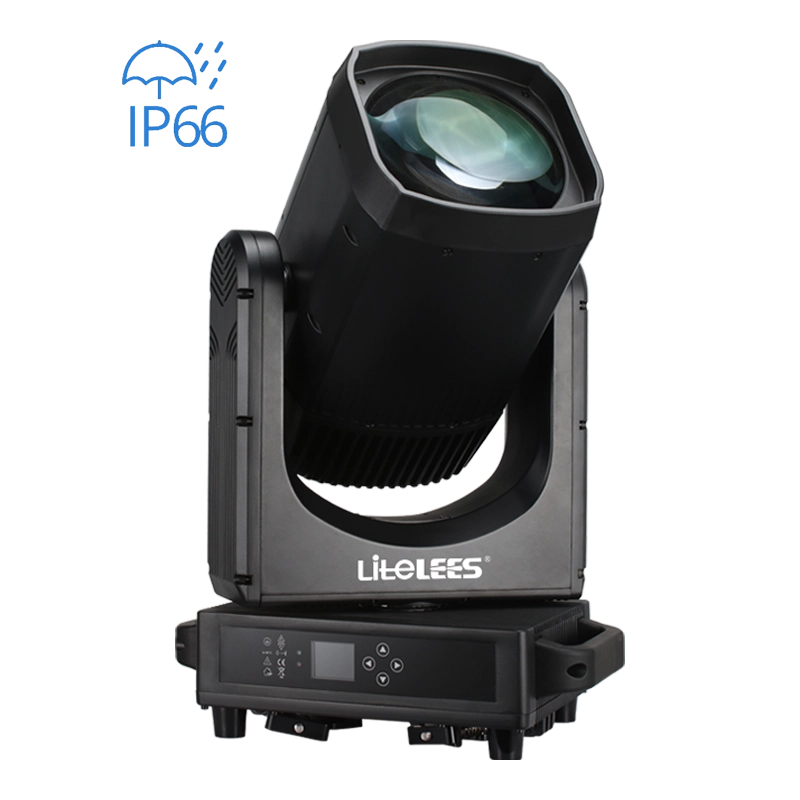
LiteLEES LUMIX BEAM 420 IP

Stormy Shake Blinder IP
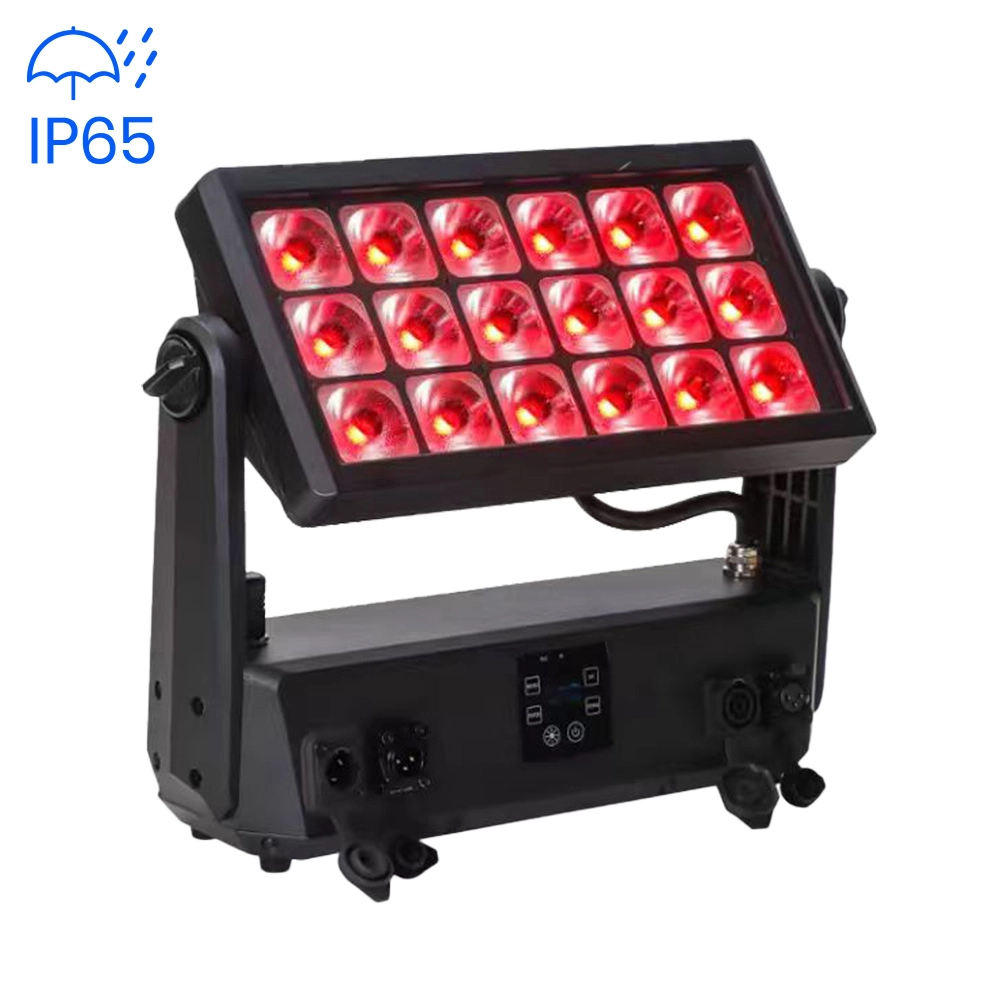
Stormy Battery Flood Light 1820 IP
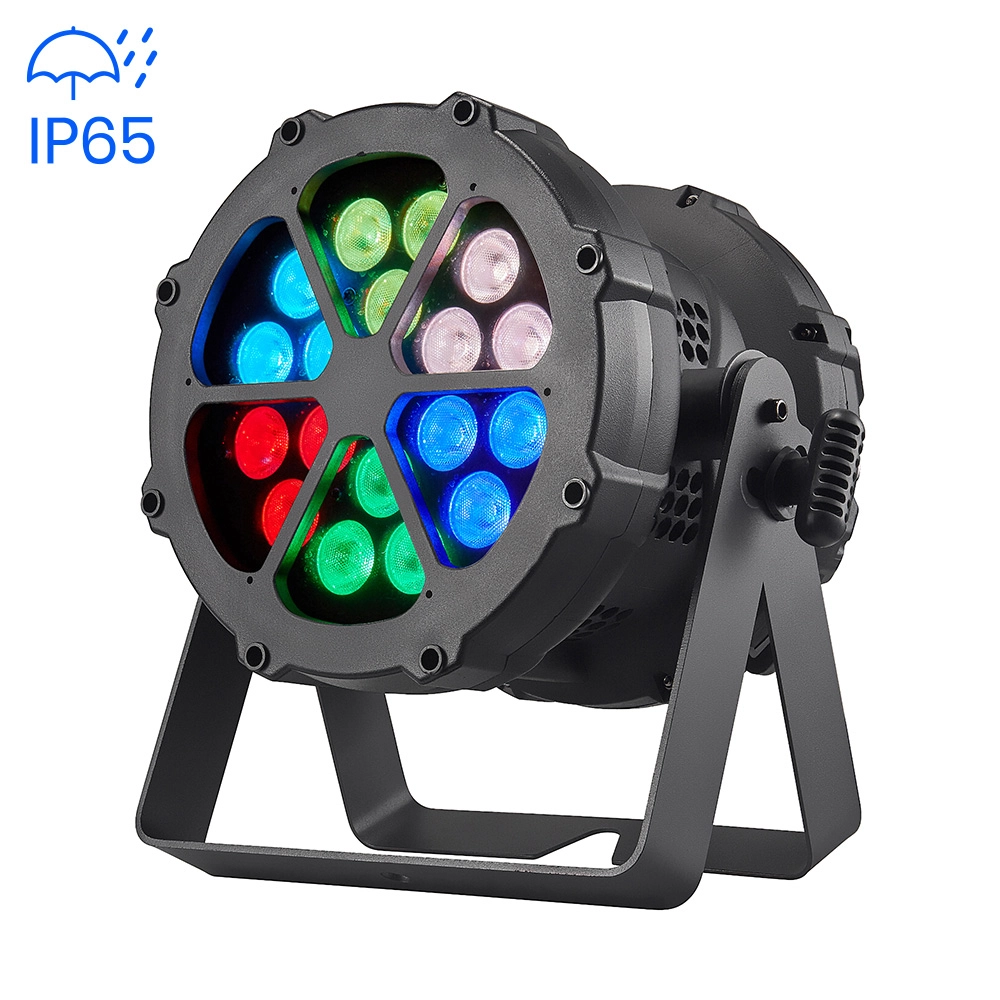
Stormy par 1812 IP
Want to get more up-to-date news?
If you have any comments or good suggestions, please leave us a message; later our professional staff will contact you as soon as possible.

We are professional stage lighting manufacturers offering OEM and ODM LED stage lights.
Contact
Email us
Call us
Address
No.6 Longnan Road, Huashan Town, Huadu District Guangzhou, Guangdong Province, China.
LiteLEES Professional
Less Lighting