
How to choose the best LED stage lighting for concerts?
- 1) How many lumens/lux do I need from LED wash fixtures to evenly light a 1,000‑seat concert stage (12 m deep, 10 m wide) at a 15 m throw?
- 2) For a touring concert rig, should I prioritize LED moving-beam heads or LED wash/spots for front and key lighting to balance punch, color mixing, and pixel effects?
- 3) How do I size DMX/sACN/Art‑Net universes and map 300 addressable LED pixels reliably on tour?
- 4) Which PWM/flicker specs should I insist on so the LEDs are camera-safe for broadcast and high-frame-rate slow‑motion?
- 5) How do I calculate power distribution, inrush and breaker sizing for 40 LED moving heads (avg 450W) plus 20 LED battens (60W) on tour?
- 6) How can I verify manufacturer lumen/lux claims and avoid buying based on inflated specs — what reports and tests should I demand?
1) How many lumens/lux do I need from LED wash fixtures to evenly light a 1,000‑seat concert stage (12 m deep, 10 m wide) at a 15 m throw?
Answer:Start with a target illuminance (lux) for the application: for house and audience-facing concert stages aim for 800–1,500 lux center stage for live broadcast-capable events; 400–800 lux is common for non-broadcast club shows. Use a practical area-based calculation rather than trusting raw lumens alone.
Step-by-step example (practical method engineers use):
- Stage usable area: 12 m (depth) × 10 m (width) = 120 m².
- Target average illuminance: choose 1,000 lux for mid-size concert/broadcast readiness.
- Required total luminous flux arriving on the plane = lux × area = 1,000 lx × 120 m² = 120,000 lumens (this is light ON the stage, not the sum of fixture output).
Account for system losses and beam distribution:
- Fixture/system transmission (optics, gobos, distance losses, angle mis-match): assume 60–75% effective — use conservative 65% for touring rigs. So required emitted lumens = 120,000 / 0.65 ≈ 184,600 lumens.
- Choose fixtures by rated lumen output and beam angle. For example, if you use LED wash fixtures rated at 18,000 delivered lumens (measured per LM‑79), you'll need ~10 of them (184,600 / 18,000 ≈ 10.25).
Throw & beam-angle check:
- At 15 m throw, a fixture with a 25° beam will produce a spot roughly 6.7 m diameter (diameter ≈ 2 × tan(beam/2) × distance). That covers a large portion of the stage; use multiple overlapping wash fixtures to maintain evenness.
Practical checks and recommendations:
- Always ask for LM‑79 photometric reports and beam intensity curves (candela distribution) from the manufacturer for the CCT you’ll use (e.g., 3200K or 5600K).
- Use a photometric software or a simple lux meter test rig on-site to validate evenness (aim for <20% variation across the performance area).
- If your production requires high camera fidelity, pick fixtures with high TLCI/CRI (≥90) and request on-axis lux values from the LM‑79.
Why this is better than 'lumens per fixture' marketing:
- Manufacturers quote lumens under ideal conditions; stage lux depends on optics, throw distance, beam angle, and losses. Work from desired lux and back-calculate fixture counts and beam angles for predictable results.
2) For a touring concert rig, should I prioritize LED moving-beam heads or LED wash/spots for front and key lighting to balance punch, color mixing, and pixel effects?
Answer:There is no one-size-fits-all — the optimal mix depends on artistic needs, camera/broadcast requirements, rig weight, and power limits. Use this decision matrix:
- Front/key lighting (musicians' faces): prioritize high TLCI/CRI (≥90), soft edges and consistent color temperature. LED Fresnels, softwash LED fixtures or narrow-beam wash heads with good optical diffusion perform best. Avoid hard-beam moving heads as primary face light — they’re too contrasty and cause hot spots on camera.
- Back/trim and atmospheric effects: narrow-beam moving heads (4°–8°) provide theatrical shafts and audience beams. Use these for aerial effects and long-throw architectural punches.
- Mid/eye candy and pixel mapping: pixel-capable wash bars, battens and matrix moving heads let you do chasing pixel effects and video-like looks. Ensure your fixtures support per-pixel control and mapping protocols.
Technical considerations:
- Color fidelity: use fixtures with accurate RGB(A)W or multi-chip engines and well-tuned color calibration (manufacturers should provide TLCI/TCCCharts). For broadcast, prefer fixtures that supply specific CCT presets (e.g., 3200K, 5600K) and ±green calibration control.
- Zoom and beam shaping: moving heads with a wide zoom range (e.g., 4°–50°) reduce the number of fixture types needed on tour and give flexibility for different venues.
- Weight & power: LED moving heads are lighter and draw less steady power than HES lamps but often have higher inrush currents. Factor rigging points and distro into touring specs.
Best practice for touring rigs:
- Use a layered approach: soft front key (washes), punch beams for back/side, and pixel/motion fixtures for graphics. This balances punch, color fidelity and versatility.
- Standardize on 1–2 fixture families to simplify spares and DMX/pixel mapping.
3) How do I size DMX/sACN/Art‑Net universes and map 300 addressable LED pixels reliably on tour?
Answer:Start with channel math and then design a resilient network.
Channel math:
- DMX512 universe = 512 channels.
- If each pixel is RGB (3 channels/pixel): 300 pixels × 3 = 900 channels → fits into 2 DMX universes (900/512 => universe 1: 512, universe 2: 388 used).
- If pixels are RGBW (4 channels/pixel): 300 × 4 = 1,200 channels → requires 3 DMX universes (1,200/512 ≈ 2.34 → allocate 3 universes).
Practical recommendations:
- Use Art‑Net or sACN (preferred for large pixel counts) with a managed gigabit switch and IGMP snooping to avoid broadcast storms.
- Map per‑fixture/pixel to a consistent addressing scheme and keep a documented addressing sheet for each show file.
- Use RDM (ANSI E1.20) capable fixtures/nodes for remote addressing where possible — this saves time on tour.
Network resilience:
- Split pixel zones across multiple universes and physical nodes to reduce single‑point failures.
- Use unicast sACN for high channel counts to reduce network overhead where supported by your console and nodes.
- Avoid daisy‑chaining too many Ethernet nodes; prefer a tree topology with redundant uplinks for mission‑critical tours.
Control hardware tips:
- Choose pixel controllers that support the LED type (WS2812/APA102 vs DMX pixel nodes) and can output the required refresh rate.
- For media‑style pixel mapping, consider using a video-to-pixel processor (e.g., Novastar or Hippotizer) that accepts SMPTE/NDI/SDI and outputs pixel mapping over Art‑Net/sACN.
4) Which PWM/flicker specs should I insist on so the LEDs are camera-safe for broadcast and high-frame-rate slow‑motion?
Answer:Flicker and PWM/refresh rate are common blind spots. For live broadcast and especially high‑frame‑rate slow‑motion, specify both PWM frequency and LED refresh behaviour.
Key technical points:
- PWM frequency vs camera frame rate: PWM at low frequencies (<2 kHz) can produce visible banding with rolling‑shutter cameras and flicker at ordinary frame rates. Higher PWM reduces the interaction.
- Industry guidance: For standard broadcast (up to 60 fps), fixtures with PWM/frequency ≥4 kHz typically avoid visible banding. For high‑frame‑rate slow‑motion (240 fps and above) ask for PWM/LED refresh frequencies in the tens of kHz (≥20 kHz) or asynchronous drive methods.
- Flicker metrics: ask manufacturers for flicker modulation percentage and flicker index measurements per IEC 61000‑4‑15 and for LM‑79 flicker test data if available.
What to request from suppliers:
- Measured PWM (or refresh) frequency and the dimming curve implementation (linear/ logarithmic and whether PWM is used across the full range or only under certain dimming levels).
- Video proof: request test footage of the fixture filmed at your target camera frame rates (e.g., 30/60/120/240/1000 fps) using rolling shutter cameras similar to yours.
- Alternative tech: look for fixtures using high‑frequency constant current drivers, frame‑buffered LED drivers or “flicker‑free” ratings published specifically for broadcast and slow‑motion.
Field test:
- Always test fixtures with the specific camera and shutter settings you plan to use. On a real shoot, differences in shutter angle, exposure and ISO will change whether flicker appears.
5) How do I calculate power distribution, inrush and breaker sizing for 40 LED moving heads (avg 450W) plus 20 LED battens (60W) on tour?
Answer:Calculate steady power, then plan for inrush and circuit distribution. Use conservative safety margins and follow local electrical codes.
Example calculation (steady power):
- Moving heads: 40 × 450 W = 18,000 W.
- Battens: 20 × 60 W = 1,200 W.
- Total steady power = 19,200 W.
Single‑phase 230 V (e.g., much of Europe):
- Steady current ≈ 19,200 W / 230 V ≈ 83.5 A.
Three‑phase 400 V (typical touring distro):
- Use I = P / (√3 × V_line × PF). Assume PF (power factor) ≈ 0.95 for modern LED fixtures.
- I ≈ 19,200 / (1.732 × 400 × 0.95) ≈ 29.2 A per phase.
Breaker and continuous load guidance:
- Many electrical codes require sizing breakers for continuous loads at 125% of steady current. For the 3‑phase example, design feeds that can safely carry 29.2 A × 1.25 ≈ 36.5 A → select 40 A or 63 A breakers depending on distribution strategy.
- Rather than one large breaker, split load across multiple road circuits (e.g., two 32 A 3‑phase circuits or one 63 A 3‑phase supply with sub-distro) for redundancy and simplified patching.
Inrush current:
- LED fixtures have switching supplies and can show inrush currents several times steady current at turn-on. Inrush multipliers between 4× and 10× steady current are common. Don’t assume steady-state current protects against inrush trips.
- Manage inrush by soft-start circuits, inrush limiters, or staggered powering (power channels sequentially via remote‑power relays) rather than energizing everything at once.
Practical touring tips:
- Specify powerCON TRUE1 or stage lock power connectors and color-code distro for quick reconnects.
- Always include margin for dimmers, onboard electronics and house lighting; provision a generator with >20% spare capacity if running off-generator.
- Have a professional touring electrician calculate exact breaker and cable sizes and comply with local NEC/IEC rules.
6) How can I verify manufacturer lumen/lux claims and avoid buying based on inflated specs — what reports and tests should I demand?
Answer:Ask for standardized, third‑party test data and perform on-site verification.
Documents and standards to request:
- LM‑79 photometric report: provides measured luminous flux (lumens), spectral power distribution, efficacy (lm/W) and photometric distribution for the fixture at a specified CCT and drive condition.
- LM‑80 data plus TM‑21 projection: gives LED junction maintenance (L70/L80) — LM‑80 measures lumen maintenance of LEDs; TM‑21 projects lumen depreciation (e.g., L70 at 50,000 hours).
- Flicker and EMC test reports: request flicker index/modulation per IEC 61000‑4‑15 and EMC compliance (CE/FCC/ETL) if relevant.
On-site validation:
- Run a small demo rig and measure on-axis lux at the planned throw distances and beam angles with a calibrated lux meter. Compare to the LM‑79 predicted lux (convert candela to lux using distance and beam geometry when necessary).
- Ask manufacturers for photometric plots (Polar intensity and candela tables) to calculate expected lux at your specific distances.
Interpret numbers correctly:
- ‘Total lumens’ is an emitter spec; delivered lux at stage depends on beam angle, lens efficiency and distance.
- Lumen efficacy (lm/W) in LM‑79 is a good comparative metric — higher lm/W generally means more efficient fixtures, but optics and color fidelity (TLCI/CRI) still matter.
Procurement checklist (must-have before purchase):
- LM‑79 and LM‑80 reports for your target CCT(s).
- Flicker test data and broadcast/slo‑mo video proofs.
- DMX/Art‑Net/sACN capability and clear channel maps.
- Power specs including steady current, power factor, and typical inrush multiplier.
- Serviceability: spare parts list, modular LED modules, and local repair network or factory support.
Final note on trust and E‑E‑A‑T:
- Prefer vendors who provide third‑party LM‑79/LM‑80 data and give on‑demand test footage for your camera setup. These documents are industry standards for validating LED performance and longevity.
Concluding paragraph summarizing the advantages of LED stage lighting and choosing correctly:Choosing the right LED stage lighting — matching lux targets, beam angles, pixel and DMX architecture, flicker specs, and correct power planning — delivers lower operational costs, faster rigging, richer creative control (pixel mapping, moving beams), superior color fidelity for live and broadcast, and longer service life (documented by LM‑80/TM‑21). Prioritize fixtures with published LM‑79/LM‑80 reports, flicker data for your camera frame rates, robust network support (sACN/Art‑Net/RDM) and clear power/inrush information to avoid surprises on tour. For a tailored quote and live-demo evaluation of LED moving heads, washes, battens and pixel products, contact us at www.litelees.com or litelees@litelees.com — we’ll size a rig and provide LM‑79/LM‑80 documentation for your review.
Products
What is the lifespan of your LED stage lights?
Our LED lights use high-quality chips with a rated lifespan of over 50,000 hours. Proper usage and maintenance ensure long-term reliability and stable performance, making them a smart investment for any venue.
Do your lights support DMX512 and other control protocols?
Yes. All LiteLEES stage lights are fully compatible with DMX512. Many models also support RDM, Art-Net, and wireless DMX (optional), ensuring seamless integration with modern lighting control systems.
How long is the warranty period for your products?
We offer a standard 1-year warranty on all products, with extended warranty options available upon request. During the warranty period, we provide free technical support and parts replacement for non-human damage.
Company
Can LiteLEES handle OEM/ODM orders?
Absolutely. With our strong R&D capabilities and advanced manufacturing, we can customize designs, features, and branding to meet your specific needs.
Do you have your own factory?
Yes. We own a sheet metal factory and a complete in-house production line—from PCB to final assembly—ensuring strict quality control and fast delivery.
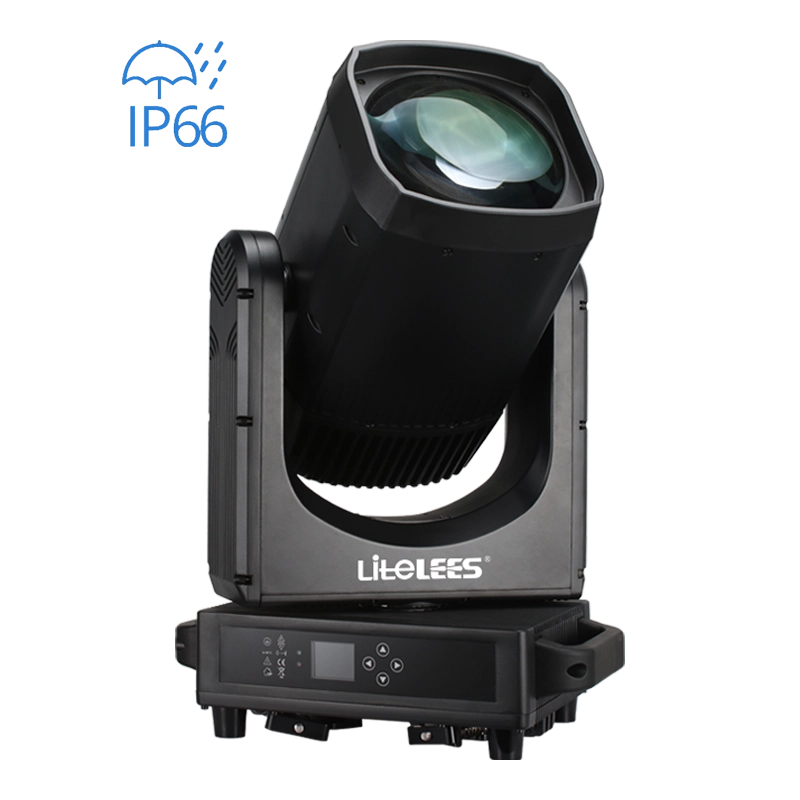
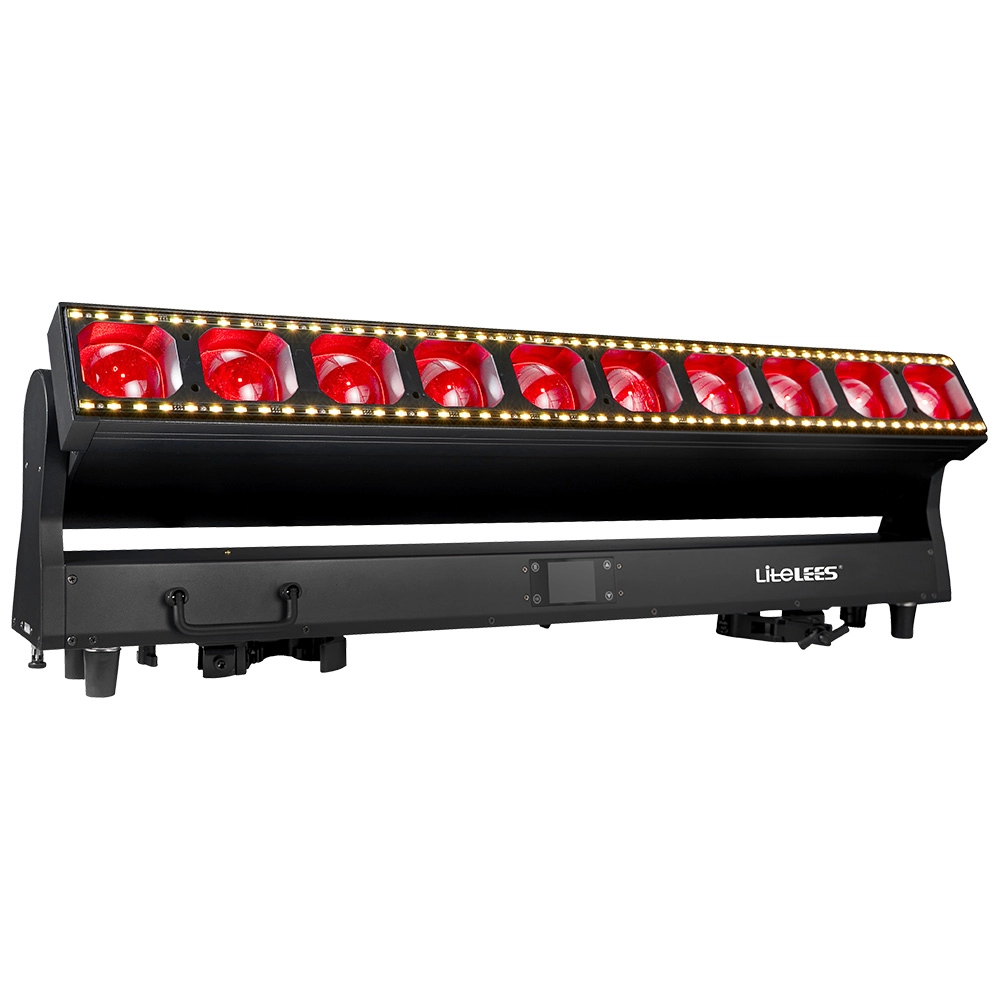
LiteLEES LUMIX BEAM 420 IP
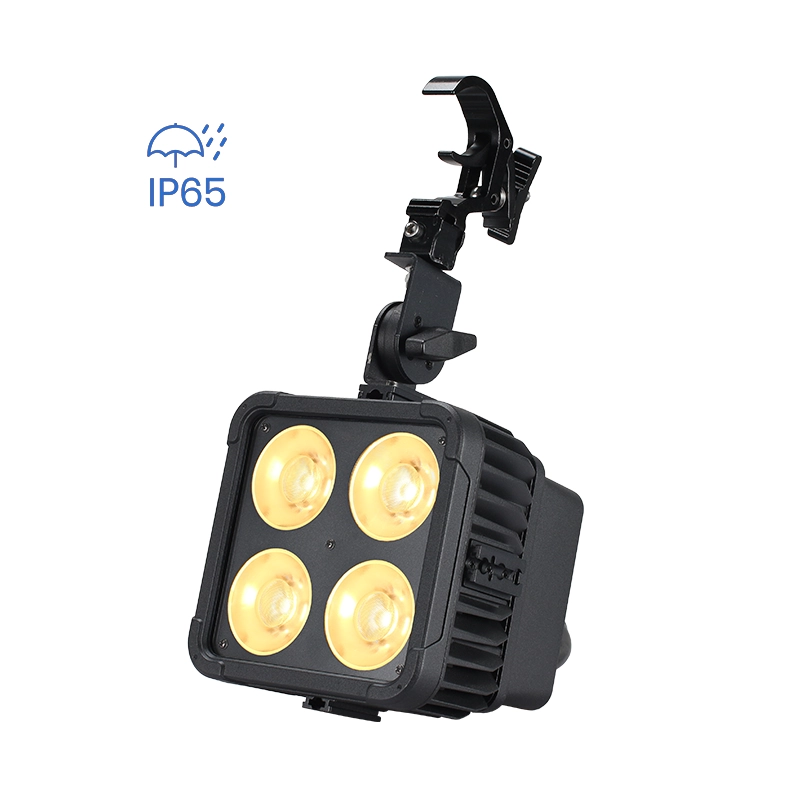
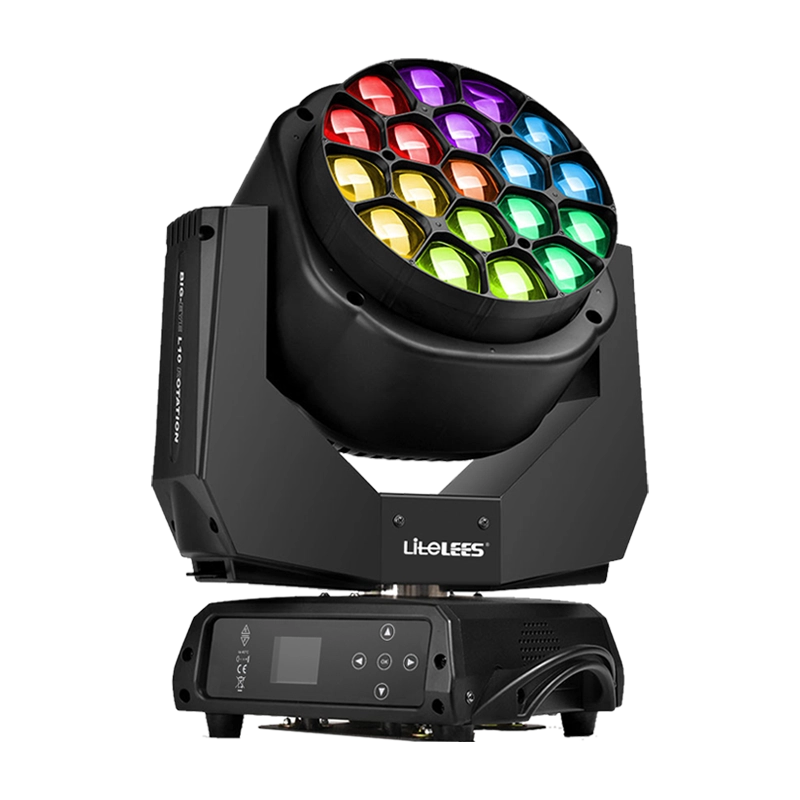
Magic Cube V8 IP
Want to get more up-to-date news?
If you have any comments or good suggestions, please leave us a message; later our professional staff will contact you as soon as possible.

We are professional stage lighting manufacturers offering OEM and ODM LED stage lights.
Contact
Email us
Call us
Address
No.6 Longnan Road, Huashan Town, Huadu District Guangzhou, Guangdong Province, China.
LiteLEES Professional
Less Lighting