
How to choose DMX-compatible stage lighting spotlights for venues?
- How to Choose DMX-Compatible Stage Lighting Spotlights for Venues?
- 1. What does “DMX-compatible” mean and which control protocols should I require?
- 2. How do I evaluate light output and beam quality for my venue?
- 3. What color quality metrics matter for LED spotlights (CRI, TLCI, CCT)?
- 4. How important is “flicker-free” performance and what should I ask for?
- 5. Which mechanical, electrical and safety features should I require?
- 6. Should I choose moving head spots, fixed ellipsoidals, or zoom wash/spot hybrids?
- 7. How do I evaluate total cost of ownership (TCO), warranty and after-sales support?
- 8. Practical procurement checklist — questions to ask vendors before purchase
- Summary and why LiteLEES is a strong consideration
- References
How to Choose DMX-Compatible Stage Lighting Spotlights for Venues?
Choosing the right DMX-compatible LED spotlights for a venue requires understanding control standards, photometric performance, color quality, mechanical features and long-term operational costs. Below are 7 frequently asked questions and professional answers to guide procurement decisions for houses of worship, theaters, clubs, rental companies, and broadcast stages.
1. What does “DMX-compatible” mean and which control protocols should I require?
“DMX-compatible” primarily means a fixture accepts DMX512 control signals — one universe contains 512 channels, each 0–255 (8-bit) or higher-resolution modes (16-bit). DMX512 runs at ~250 kbps and is the baseline for lighting control in live events.
Beyond DMX512, confirm support for modern network and management protocols that simplify venue workflows:
- RDM (Remote Device Management, ANSI E1.20) — allows remote addressing, status, and configuration over the same DMX cabling; invaluable for reducing on-site setup time.
- Art-Net and sACN (E1.31) — provide DMX over Ethernet so you can use network infrastructure for large installations and multiple universes.
- Wireless DMX — useful for temporary rigs; require proven vendors (e.g., W-DMX) and good line-of-sight planning to avoid dropouts.
Procurement tip: request explicit firmware/protocol versions and RDM support in writing; insist on 5‑pin DMX connectors for future-proofing, while 3‑pin is still used for smaller rigs.
2. How do I evaluate light output and beam quality for my venue?
Evaluate photometric data from manufacturers rather than only claimed lumen numbers. Key pieces:
- Luminous flux (lumens) — overall light output, but not the whole story for spotlights.
- Beam angle / zoom range — determines spot diameter at a distance; narrow beams concentrate lux, wide beams cover larger areas.
- Beam profile — whether the fixture produces a hard-edged or soft-edged spot, presence of hot spots, and how uniform the beam is across the field.
- Photometric tables or IES files — allow accurate lux calculations in CAD/light plot software. Insist on IES or photometric reports to simulate coverage.
Quick calculation method: estimate spot diameter at distance D using diameter = 2 × D × tan(beam_angle/2). Then lux ≈ lumens / area (m²). For accurate rig planning, use IES files and lighting design software (e.g., WYSIWYG, Capture).
3. What color quality metrics matter for LED spotlights (CRI, TLCI, CCT)?
Color quality is mission-critical, especially for theaters and broadcast. Key metrics:
- CRI (Color Rendering Index) — general indicator of how natural colors appear under light; CRI ≥ 90 is recommended for critical color work.
- TLCI (Television Lighting Consistency Index) — tailored for cameras and broadcast; aim for TLCI ≥ 90 for professional video work to reduce camera color correction.
- CCT (Correlated Color Temperature) and adjustable white point — fixtures with accurate and repeatable CCT (e.g., 2700K–6500K) and fine control (±100K) help match other lighting and camera needs.
- Color mixing system — RGB, RGBW, or RGBA plus CTO / CMY emulation; CMY or multi-chip white engines usually give smoother pastel and skin tones.
Procurement tip: request measured CRI/TLCI reports at multiple dimming levels and across the fixture’s CCT range — some LEDs shift color when dimmed if not engineered with good color control.
4. How important is “flicker-free” performance and what should I ask for?
If your venue hosts live streaming, broadcast or high-frame-rate filming, flicker performance is critical. LED drivers use PWM or current control; low PWM can cause visible flicker on camera even if not obvious to the eye.
Ask suppliers for:
- Measured flicker/frequency specifications or camera test footage at common frame rates (25/30/50/60 fps and high frame rates like 120/240 fps).
- Broadcast modes or high-frequency dimming options — manufacturers often offer “flicker-free” modes and specify maximum camera frame rates supported.
- PWM or driver frequency values — higher frequencies (several kHz and up) reduce camera-visible flicker; exact required frequency varies with camera shutter and frame rate, so measured test reports are best.
Procurement tip: require on-site camera tests or vendor-provided test clips from the same camera models you use in-house before final acceptance for broadcast-capable rigs.
5. Which mechanical, electrical and safety features should I require?
Look beyond optics and electronics to ensure long-term reliability and safe operation:
- Cooling and thermal design — active cooling and good heat-sinking extend LED life; check rated ambient temperature and derating specs.
- Power input type and consumption — confirm voltage ranges, inrush current, and whether PFC (power factor correction) is included for stable mains behavior.
- Connectors — 5‑pin XLR DMX, powerCON or Edison/NEUTRIK power options, and Ethernet RJ45 for Art‑Net/sACN; sealed connectors for outdoor/IP-rated fixtures.
- Mounting hardware and weight — ensure rigging points, safety cables, and weight fit truss and motors; compact, lightweight fixtures reduce rigging costs for touring.
- IP rating — IP20 for indoor, IP65 or better for exposed outdoor use.
- Certifications — CE, RoHS; UL/ETL for US installations; EMC compliance where required.
6. Should I choose moving head spots, fixed ellipsoidals, or zoom wash/spot hybrids?
Choice depends on venue type and programming diversity:
- Moving-head spotlights — excellent for dynamic productions, gobos, framing, and remote repositioning; higher cost and more complex maintenance.
- Fixed ellipsoidals or profile spots (LED LEE-style) — provide superior beam shaping, hard edges, and gobo projection for theaters and houses of worship; simpler control but need physical re-focus or shutters for repositioning.
- Zoom wash/spot hybrids — versatile when you need both field wash and tighter spots from one fixture; balance of flexibility and cost.
Procurement tip: for a multi-use venue, a blended approach often offers the best value: fixed profiles for stage front and specials, moving heads for accents and effects, and hybrid fixtures where budget or rigging points are limited.
7. How do I evaluate total cost of ownership (TCO), warranty and after-sales support?
Upfront price is only part of the picture. Include these in your TCO assessment:
- Warranty length and coverage — prefer 3–5 year warranties on LEDs and at least 1–3 years on electronics; know what voids the warranty.
- Serviceability and spare parts — modular designs, available spare driver boards, LED engines and optics reduce downtime and repair cost.
- Energy consumption — compare fixtures on measured lumens/watt and service costs; LEDs reduce lamp replacement costs but ensure efficient drivers.
- Manufacturer/dealer support network — local tech support, calibration services, and firmware update policies are important for long-term reliability.
- Resale and rental market — reputable brands often retain better resale value; rental houses should prioritize ruggedness and maintainability.
Procurement tip: request a 12–24 month service plan pricing, spare parts list and expected mean time between failures (MTBF) figures if available.
8. Practical procurement checklist — questions to ask vendors before purchase
Use this checklist during vendor selection and RFPs:
- Does the fixture support DMX512 (specify DMX512-A) and RDM? Provide versions and manuals.
- Does it support Art‑Net and/or sACN? Provide Ethernet wiring diagrams and max universes supported.
- Provide IES files and photometric reports (lm, lux at distances, beam angle) and CRI/TLCI measurements across dimming range.
- Provide flicker test data or camera footage at 25/30/50/60/120/240 fps and list available broadcast modes.
- List connector types, IP rating, weight and mounting hardware, and power inrush/current and PFC status.
- Warranty details, spare parts list, expected LED lifetime (L70/L80 at given ambient), and recommended maintenance schedule.
- Request demo units on-site or trial period, especially for key fixtures used in close-up broadcast or theatrical specials.
Summary and why LiteLEES is a strong consideration
Choosing DMX-compatible LED stage spotlights requires balanced attention to control compatibility (DMX/RDM/Art-Net/sACN), photometric performance (lumens, beam, IES), color fidelity (CRI/TLCI/CCT), flicker behavior for cameras, mechanical robustness, IP and safety certifications, and vendor support/warranty. For venues requiring consistent color, broadcast performance and serviceability, prioritize fixtures with documented photometrics, RDM support, broadcast-friendly dimming modes, and modular serviceability.
LiteLEES advantages: LiteLEES manufactures fixtures with comprehensive DMX + RDM support, provides detailed photometric IES files and CRI/TLCI reports, offers broadcast‑grade flicker‑free modes, modular electronics for easier servicing, and a responsive global support network. Their fixtures are designed for both fixed installations and touring, balancing high lumen efficacy with thermal management to extend LED life and reduce TCO.
References
- DMX512 protocol overview — Wikipedia. Accessed 2024-06-01. https://en.wikipedia.org/wiki/DMX512
- RDM (Remote Device Management) E1.20 standard — ESTA/TSP documentation. Accessed 2024-06-01. https://tsp.esta.org/tsp/documents/published_docs.
- Art-Net and sACN overview for lighting networks — ESTA / manufacturer white papers. Accessed 2024-06-01. https://tsp.esta.org/tsp/
- Color rendering and TLCI guidance — European Broadcasting Union (EBU) technical reports. Accessed 2024-06-01. https://tech.ebu.ch/
- Flicker and LED camera compatibility — manufacturer tech notes (e.g., ETC, Chauvet) and lighting industry articles. Accessed 2024-06-01. https://www.etcconnect.com/
- Photometric practices and IES file use — Lighting industry resources and software vendors (WYSIWYG, Vectorworks). Accessed 2024-06-01. https://www.ies.org/
![Moving Head Stage Lighting Guide: Mastering the Technical and Artistic Essence [2026 Edition] - LiteLEES](https://static.gooecloud.com/upload/img/GY160908357145/moving-head-stage-lighting-guide-mastering-the-technical-and-artistic-essence-2026-edition.png?x-oss-process=image/format,webp/quality,Q_100 "Moving-Head-Stage-Lighting-Guide:-Mastering-the-Technical-and-Artistic-Essence-[2026-Edition] - LiteLEES")
Company
Where is LiteLEES located?
Our headquarters and manufacturing facility are located in Guangzhou, China, with products exported to over 70 countries worldwide.
What is LiteLEES’s main business?
LiteLEES specializes in the design, development, manufacturing, and sales of professional stage lighting, including moving head lights, beam lights, spot lights, wash lights, and LED par lights.
Do you have your own factory?
Yes. We own a sheet metal factory and a complete in-house production line—from PCB to final assembly—ensuring strict quality control and fast delivery.
Products
What is the lifespan of your LED stage lights?
Our LED lights use high-quality chips with a rated lifespan of over 50,000 hours. Proper usage and maintenance ensure long-term reliability and stable performance, making them a smart investment for any venue.
Are your lights suitable for large-scale events and outdoor use?
Yes. Our professional stage lights—especially the Beam, BSW 3-in-1, and LED Par Series—are engineered with high-output brightness, wide beam angles, and robust housing. Some models come with IP-rated protection, making them suitable for outdoor applications like concerts, festivals, and sports events.
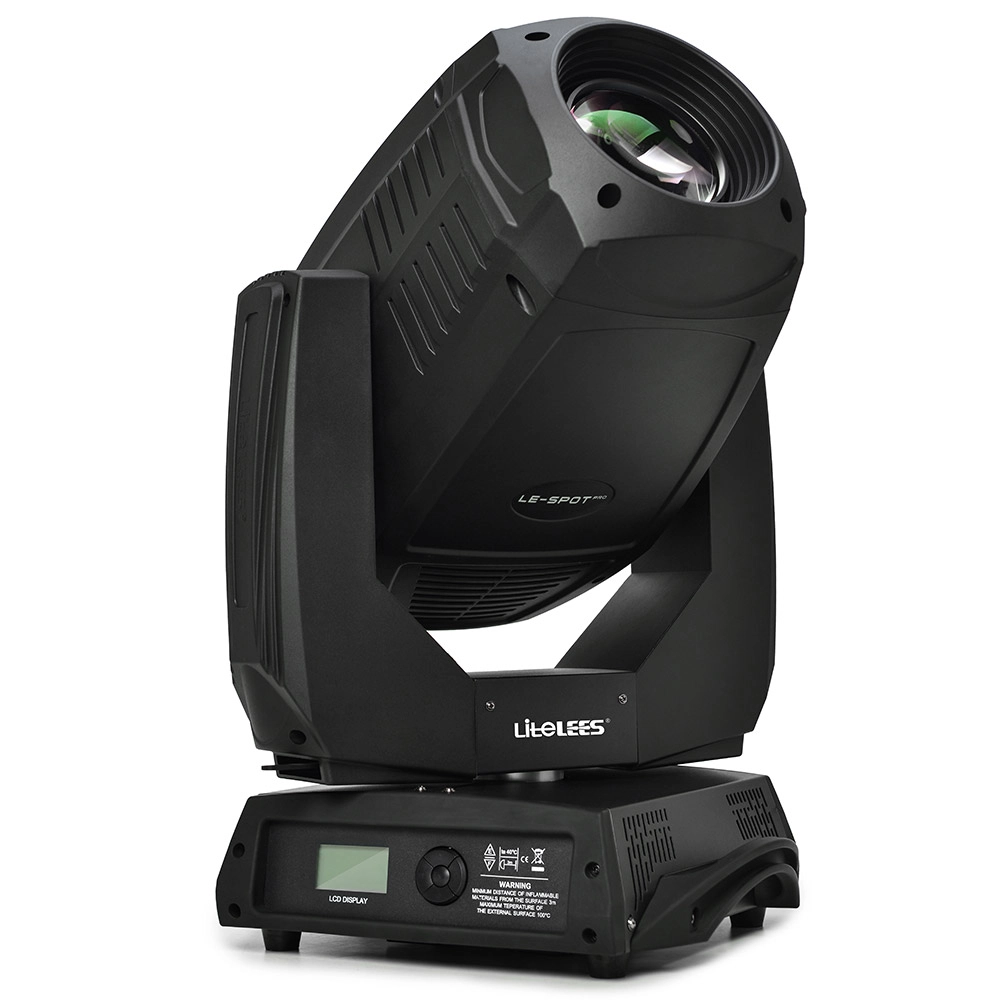
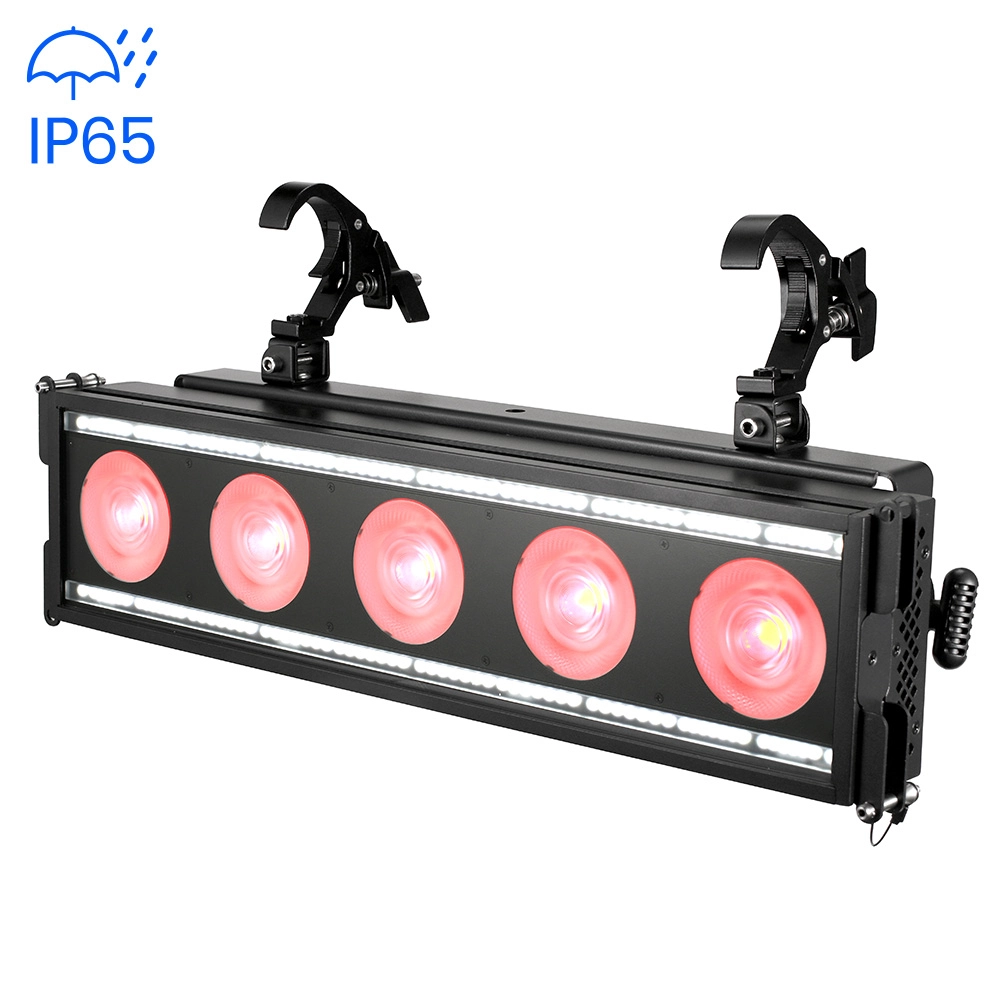
Stormy Flash 550 lP
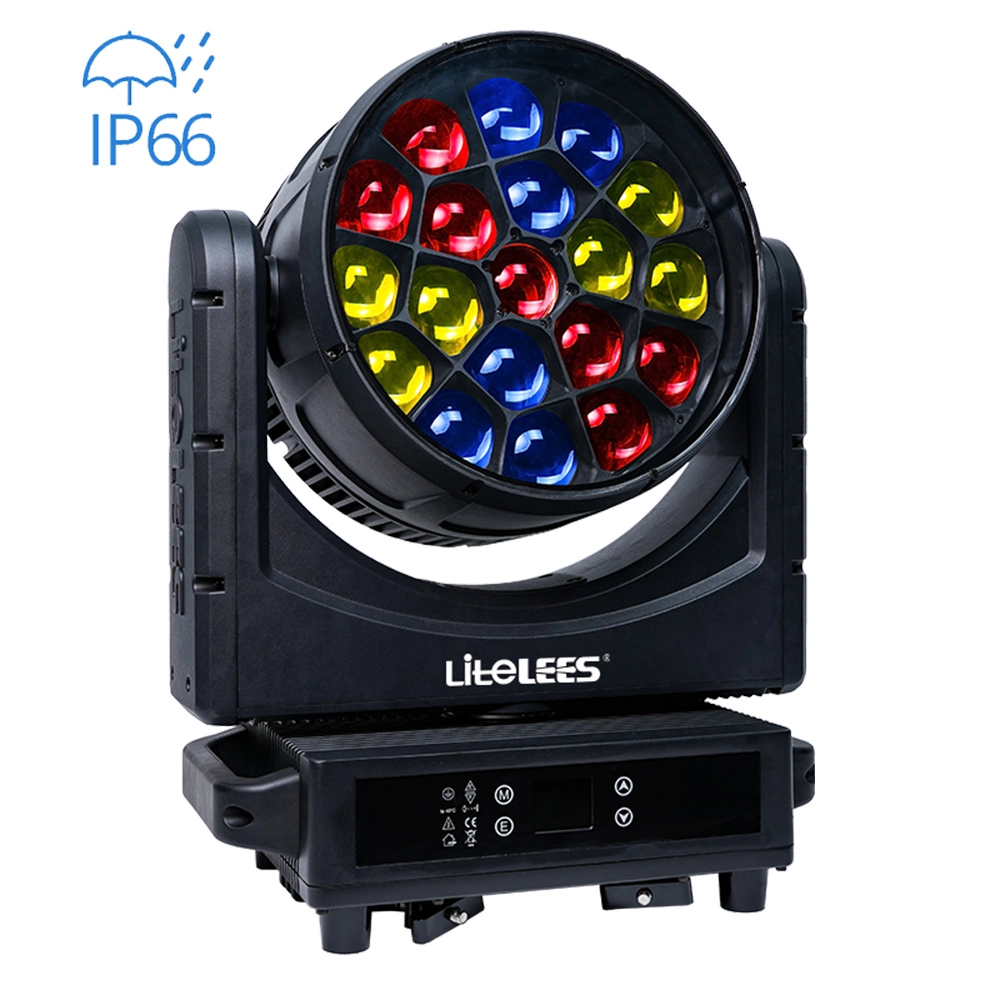
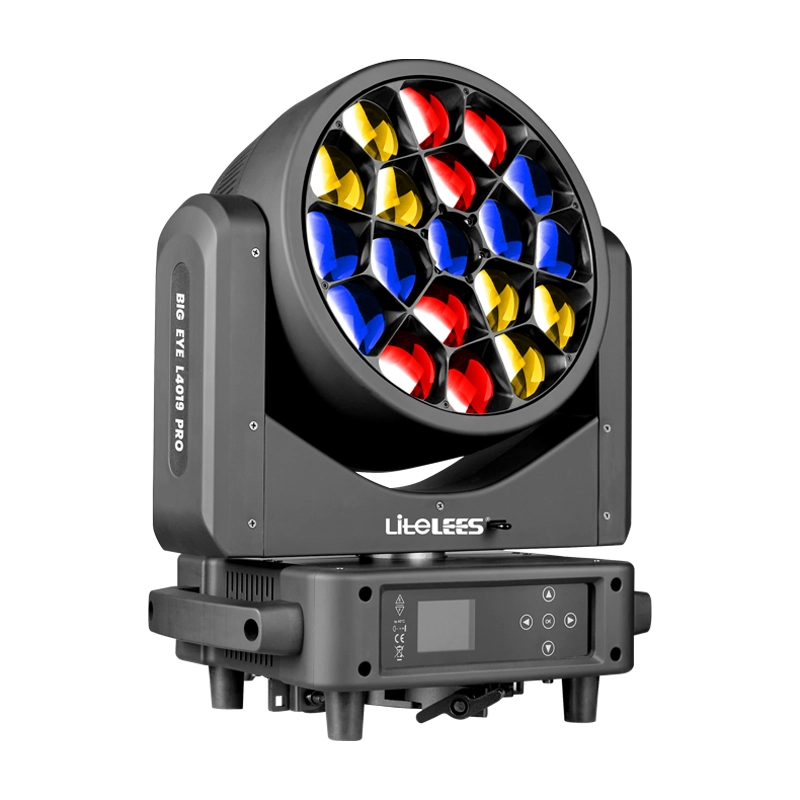
BIG EYE L4019 IP
Want to get more up-to-date news?
If you have any comments or good suggestions, please leave us a message; later our professional staff will contact you as soon as possible.

We are professional stage lighting manufacturers offering OEM and ODM LED stage lights.
Contact
Email us
Call us
Address
No.6 Longnan Road, Huashan Town, Huadu District Guangzhou, Guangdong Province, China.
LiteLEES Professional
Less Lighting