
How to choose the best stage hybrid light for your venue?
- 1) How do I calculate how many stage hybrid lights I need (and what lumen/beam specs) for my specific venue size and sightlines?
- 2) My venue hosts drama, concerts, and corporate events. Which hybrid features matter most (beam/wash/spot) and how do I prioritize spec trade-offs?
- 3) How can I evaluate cooling, noise, and duty-cycle limits so hybrid lights don’t derate or fail during long festivals?
- 4) What are the essential control and network compatibility checks (DMX, RDM, Art-Net, sACN, pixel mapping) I should perform before buying hybrid fixtures?
- 5) How should I evaluate total cost of ownership (TCO) and return on investment (ROI) when choosing hybrid lights vs separate beam, wash and spot fixtures?
- 6) What maintenance, spare-parts and firmware support should I require from manufacturers to ensure long-term reliability of hybrid fixtures?
- Concluding summary: Advantages of stage hybrid lights for venues
1) How do I calculate how many stage hybrid lights I need (and what lumen/beam specs) for my specific venue size and sightlines?
Start with a lux-target and the stage area. For most live-audio/visual venues the working targets are:
- Small black-box or rehearsal room: 300–500 lux average on acting area
- Community theatre / small pro venue: 500–800 lux
- TV or broadcast-grade stage lighting: 1000 lux or higher
Calculation steps (practical):
- Measure usable stage area in square meters (length × width). Example: 10 m × 8 m = 80 m².
- Choose target average lux (use venue type above). Example: 500 lux for a small pro venue.
- Required total luminous flux (lumens) = target lux × area. Example: 500 × 80 = 40,000 lumens.
- Choose a realistic fixture-output value: use manufacturer-rated lumens or field-measured output at your intended zoom/beam angle and account for utilization (losses to beam/spill/fresnel). Use a utilization factor of 0.7–0.85 for good optics, lower for heavy gobos or frost.
- Fixtures required = total lumens / (fixture lumen × utilization factor). Example: if a hybrid moving-head gives 10,000 lumens at a 15° zoom and UF=0.8 → fixtures = 40,000 / (10,000 × 0.8) = 5 fixtures.
Important venue-specific factors:
- Throw distance and beam angle: long throws need narrow beams (3–6°) to maintain lux; wide washes need 20–40° zooms.
- Sightlines and overlapping coverage: ensure even coverage across wings and upstage/downstage.
- Audience comfort and glare: avoid high-angle front beams that shine directly into audience eyes.
Pro tip: model the rig in lighting-design software (WYSIWYG, Capture) with the exact fixture photometric IES files. That gives accurate lux maps and tells you how many hybrids and which zoom ranges are truly needed.
2) My venue hosts drama, concerts, and corporate events. Which hybrid features matter most (beam/wash/spot) and how do I prioritize spec trade-offs?
Hybrid moving-heads combine beam, spot (gobo/focus), and wash functionality. Prioritization depends on event mix:
- Drama / theatre priority: color fidelity, smooth dimming, even front- and top-light. Must-haves: CRI/TLCI ≥ 90, good flat field (wash mode), adjustable CCT, soft-edge frost, quiet fan noise (<45 dB at 1 m ideally), high color-temperature accuracy for skin tones.
- Concerts / rock priority: high center-beam lumen output, narrow beam options, fast strobe, prisms, and rugged housing. Must-haves: high lumen output (fixtures rated 20k+ lumens for festival sized rigs), tight beam (1.5–6°), durable rigging points, active cooling optimized for high duty cycles.
- Corporate / presentation priority: reliable white balance, sharp gobos/logo projection, quiet operation, and simple DMX/Art-Net integration. Must-haves: high-resolution gobo wheels, motorized zoom with good focus, RDM for remote addressing.
How to prioritize:
- Estimate event percentage mix (e.g., 40% theatre, 40% concerts, 20% corporate).
- Weight features accordingly and choose hybrids that meet the highest-priority specs (e.g., CRI/TLCI for theatre and lumen/beam for concerts).
- Prefer models with flexible optics: wide zoom ranges (e.g., ~4°–50°) and interchangeable frost/beam modifiers.
- Verify mechanical reliability and serviceability—a hybrid is only valuable if it can survive mixed intense use.
Budget allocation tip: for multi-use venues, buy fewer higher-quality hybrid fixtures with better optics and service contracts rather than many cheap units that underperform for certain event types.
3) How can I evaluate cooling, noise, and duty-cycle limits so hybrid lights don’t derate or fail during long festivals?
Key metrics and what to ask the manufacturer or test technician:
- Thermal management design: active vs passive cooling, heat-pipe or convection paths, and whether the LED engine has replaceable modules.
- Duty cycle rating: continuous use hours per day and recommendation for cool-down periods.
- Noise (dBA): measure at 1 m in “steady” mode and in “high-output” mode. For theatre you want <45 dBA during quiet scenes; for concert FOH racks <70 dBA may be acceptable.
- Lumen maintenance (L70/L80): typical professional LED engines have L70 at 50,000 hours or more—ask for the test standard (LM-80 + TM-21 extrapolation).
- Derating behavior: confirm if the fixture reduces LED drive (derates) at high ambient temps and whether it has a safe high-temp shutdown.
Testing recommendations:
- If possible, run a burn-in at venue ambient temps with a full program sequence (strobe, max white, full-color). Measure lumen output over 8–24 hours to detect derate curves.
- Record dBA at 1 m at different intensities.
- Check firmware options for thermal control (user-configurable thresholds) and fan-speed profiles.
Operational mitigation:
- Ensure adequate ventilation in truss positions and avoid clustering too many heat-generating fixtures in confined enclosures.
- Use firmware that prioritizes thermal stability rather than pure max output for long events.
4) What are the essential control and network compatibility checks (DMX, RDM, Art-Net, sACN, pixel mapping) I should perform before buying hybrid fixtures?
Checklist of control capabilities to verify:
- Protocols: DMX512 (USITT), RDM for remote addressing/firmware updates, Art-Net and sACN (E1.31) for Ethernet-based control.
- Pixel mapping and individual LED control: does the fixture expose pixel channels for its LED engine or only macro color/white controls? Important for creative media-mapped looks.
- Channel modes: 8-bit vs 16-bit pan/tilt resolution—16-bit is recommended for smooth moves. Check channel counts in each mode.
- Universe requirements: estimate channels per fixture × quantity; ensure your console/network has enough universes. Example: 24 channels × 50 fixtures = 1200 channels ≈ 2 DMX universes (512 channels each) with overhead for RDM.
- IP and wiring: for outdoor or remote rigs verify EtherCON, Neutrik powerCON, and IP ratings (IP20 indoor; IP65 or higher for outdoor-rated hybrids).
- Firmware and remote management: confirm how staging staff perform firmware updates—via RDM, USB, or over Ethernet.
Practical tests before purchase:
- Request a demo rig and run it from your actual consoles, Art-Net/sACN nodes, and timecode triggers used in your venue.
- Test how the fixture responds to blackout commands, cue jumps, and emergency stop scenarios.
- Confirm RDM compatibility: remote addressing, status feedback of lamp hours, temp readings, and error logs.
5) How should I evaluate total cost of ownership (TCO) and return on investment (ROI) when choosing hybrid lights vs separate beam, wash and spot fixtures?
TCO factors to include:
- Purchase cost per fixture and any required accessories (clamps, power cables, flight cases).
- Power consumption (W) × expected runtime per year × electricity cost.
- Maintenance: expected spare parts (LED modules, power supplies, fans), average MTBF, and labor costs for repairs.
- Replacement cycle: LED engines typically last many years, but moving mechanics and gobos wear—factor 5–8 year lifecycle for mechanical parts.
- Flexibility savings: hybrids can reduce the number of fixtures you need to own, lowering rigging and transportation costs.
Quick ROI example:
- Scenario A: Buy 30 hybrids at $4,000 = $120,000. Cover multiple show types; fewer fixtures needed.
- Scenario B: Buy 10 beams ($2,500), 10 washes ($2,000), 10 spots ($3,000) = $75,000 but requires more storage, more rigging complexity, and less flexibility.
Calculate ROI by estimating added bookings or higher rental rates enabled by the hybrid capability, plus operational savings in labor and truck space. For instance, if hybrids allow one extra rental weekend per month at $1,200, incremental annual revenue is $14,400—compare that to financing and depreciation.
Decision checklist:
- If your venue needs multi-purpose flexibility and reduced load-in/out costs, hybrids usually give faster ROI.
- If you need absolute best-in-class beam or wash performance for a single use-case (e.g., long-throw arena beams), dedicated fixtures may outperform hybrids at a lower cost per-effect.
6) What maintenance, spare-parts and firmware support should I require from manufacturers to ensure long-term reliability of hybrid fixtures?
Ask manufacturers/suppliers for a documented service package that includes:
- Availability and lead time for spare modules (LED engine modules, power supplies, driver boards, moving parts like pan/tilt motors, gobos, and lenses).
- Local or regional service center locations and on-site repair options.
- Firmware update policy and accessible update tools (RDM, USB, or Ethernet). Ensure updates don’t void warranty if installed on-site.
- Warranty details: hours covered, what constitutes wear-and-tear exclusions, and options for extended warranty or service contracts.
- Consumables list: recommended fan replacement intervals, gobo wheel life, and recommended cleaning schedule for optics.
Operationally:
- Keep a basic spare-kit: 1–2 spare small parts per 10 fixtures (fuses, fans, gobos, connector assemblies). A single spare LED engine or power supply for every 20–30 fixtures is prudent for large houses.
- Firmware management: maintain a version-controlled repository of fixture firmware, test updates on a single unit before bulk update, and document rollback procedures.
Legal and procurement tips:
- Ask for an SLA that includes turnaround time for warranty repairs and options for loaner units during long repairs (important for rentals and continuous-season venues).
Concluding summary: Advantages of stage hybrid lights for venues
Stage hybrid lights deliver significant advantages: consolidated beam/wash/spot functionality reduces rigging complexity and trucking volume; modern LED engines offer high lumen efficiency with improved CRI/TLCI for good color fidelity; wide zoom ranges and pixel-mapping capabilities increase design flexibility; network-friendly control (DMX/RDM/Art-Net/sACN) simplifies integration; and a well-specified hybrid can lower total cost of ownership through reduced fixture counts and faster changeovers. For multi-use venues, investing in higher-quality hybrids with good thermal design, service support, and firmware maintenance yields the best balance of performance, longevity, and operational reliability.
For a tailored quote and to test which stage hybrid light suits your venue best, contact us at www.litelees.com or email litelees@litelees.com. We can provide photometric simulations, ROI estimates, and onsite demos.
Products
Are your lights suitable for large-scale events and outdoor use?
Yes. Our professional stage lights—especially the Beam, BSW 3-in-1, and LED Par Series—are engineered with high-output brightness, wide beam angles, and robust housing. Some models come with IP-rated protection, making them suitable for outdoor applications like concerts, festivals, and sports events.
Can I customize the functions or software of the lights?
Absolutely. As a manufacturer with independent R&D capabilities, we offer customization for both hardware and software (such as DMX channel layout, built-in programs, or UI language). Contact us with your project needs, and our team will provide tailored solutions.
What is the lifespan of your LED stage lights?
Our LED lights use high-quality chips with a rated lifespan of over 50,000 hours. Proper usage and maintenance ensure long-term reliability and stable performance, making them a smart investment for any venue.
Company
What certifications do your products have?
All LiteLEES products are certified by CE, RoHS, FCC, and BIS. Our factory is ISO9001 quality management system certified.
Do you have your own factory?
Yes. We own a sheet metal factory and a complete in-house production line—from PCB to final assembly—ensuring strict quality control and fast delivery.
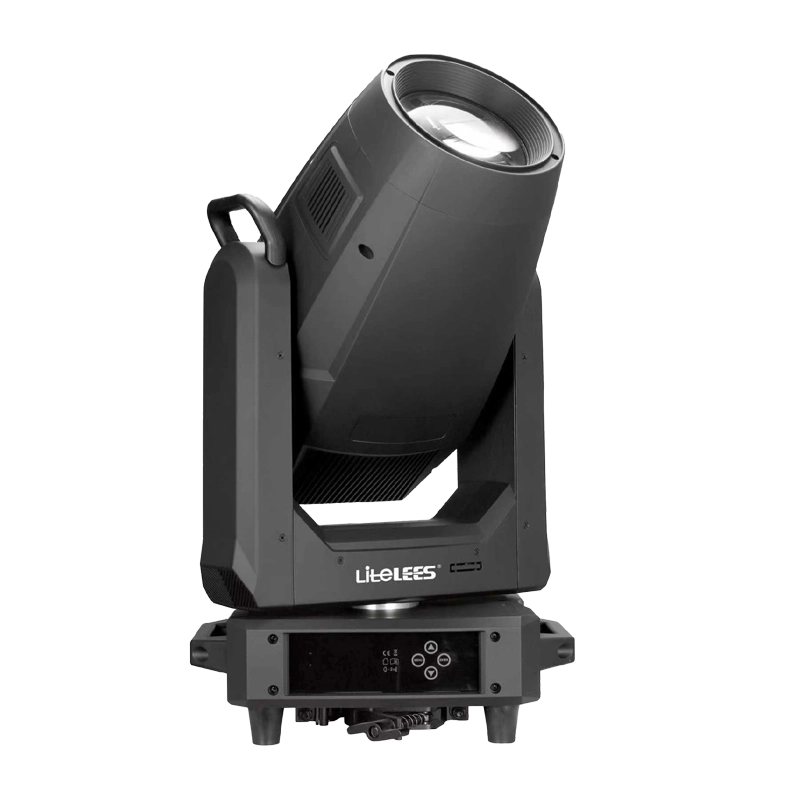
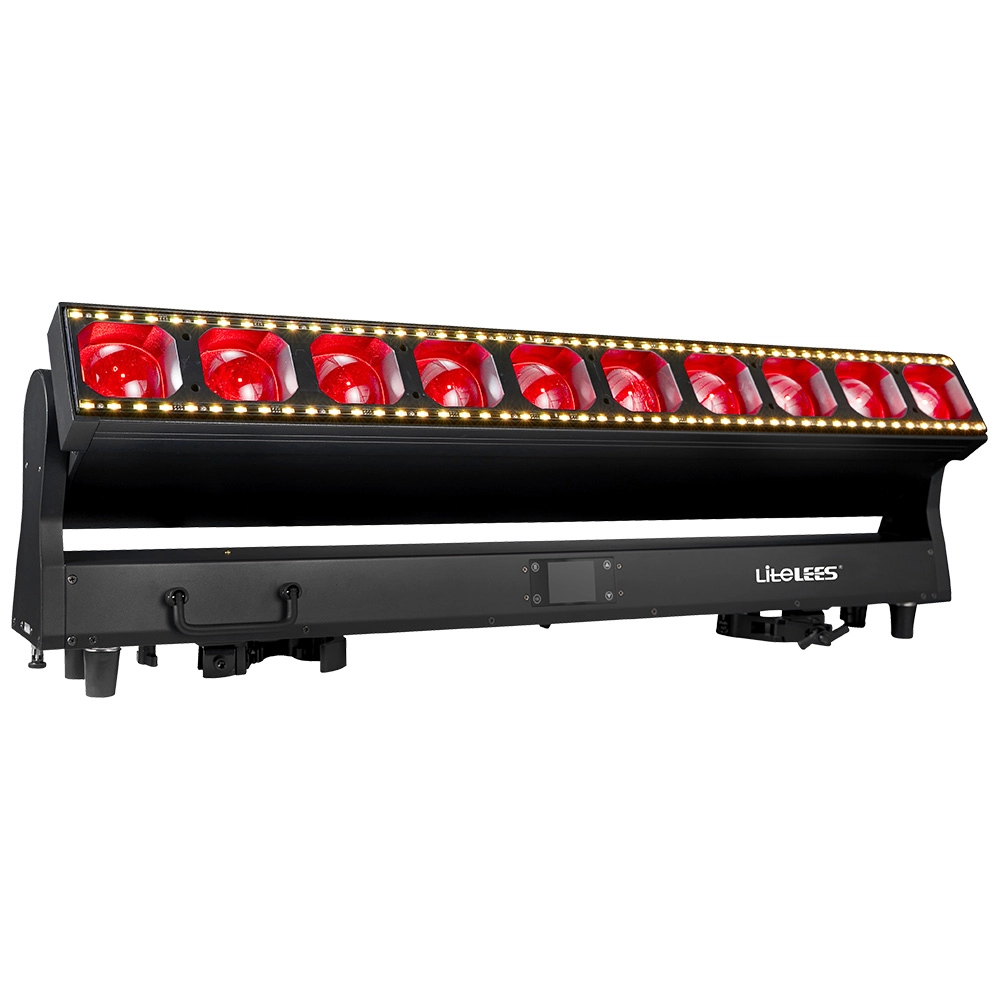
LP Profile 900
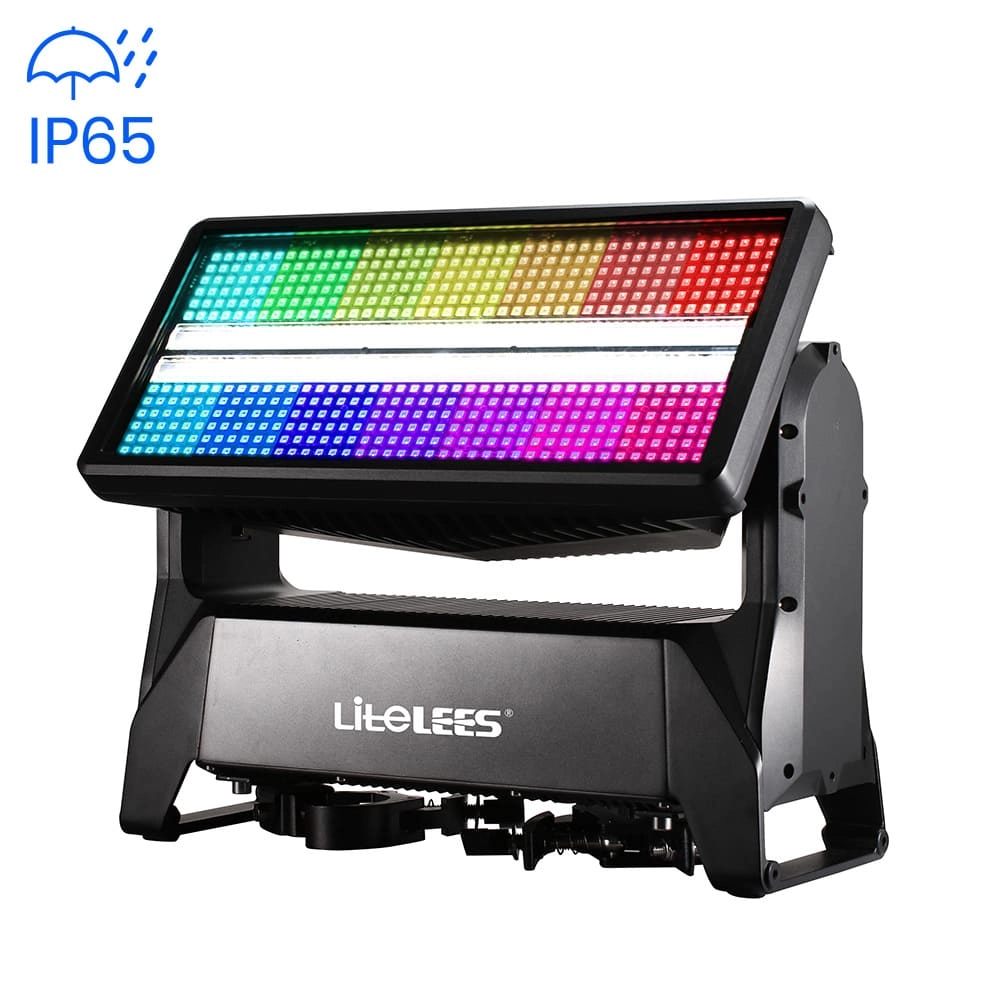
Stormy STRIKE M IP
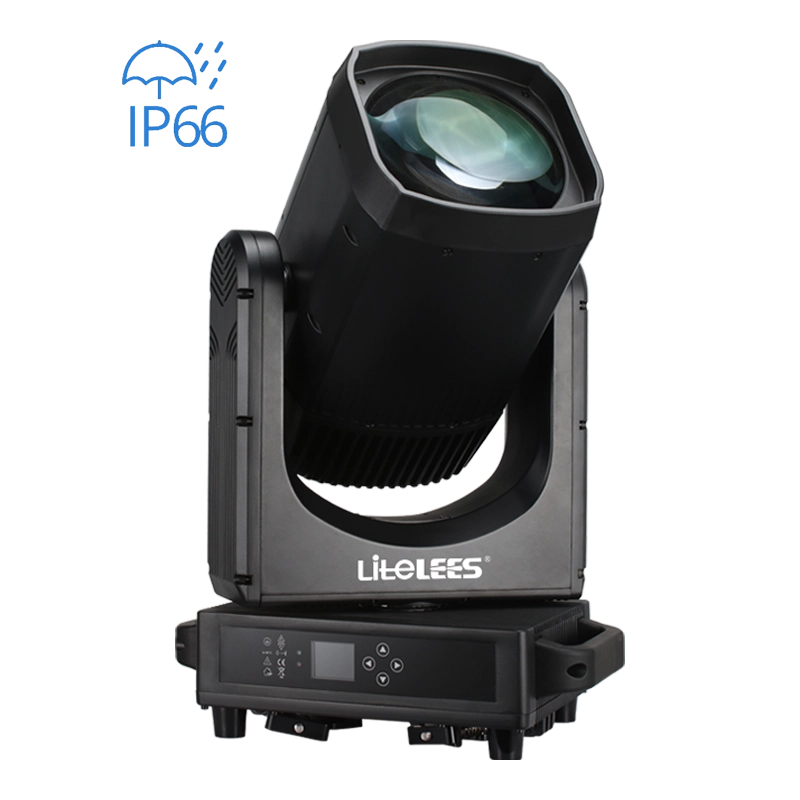
LiteLEES LUMIX BEAM 420 IP
Want to get more up-to-date news?
If you have any comments or good suggestions, please leave us a message; later our professional staff will contact you as soon as possible.

We are professional stage lighting manufacturers offering OEM and ODM LED stage lights.
Contact
Email us
Call us
Address
No.6 Longnan Road, Huashan Town, Huadu District Guangzhou, Guangdong Province, China.
LiteLEES Professional
Less Lighting