
How to calculate how many moving head lights you need?
- How to calculate how many moving head lights you need?
- 1. What illuminance (lux) should I target for my venue?
- 2. What basic formula do I use to size fixtures?
- 3. How do beam angle and throw distance affect coverage?
- 4. Example calculations (practical scenarios)
- 5. How much overlap should I plan for even washes and color blending?
- 6. What about color, CRI/TLCI and spectral quality?
- 7. Power, DMX/ArtNet/sACN, and addressing — what should I plan?
- 8. Rigging, weight, and safety considerations
- 9. How many spare fixtures should I buy or rent?
- 10. Buying tips — choosing the right moving head type
- 11. Quick checklist to finalize your qty and spec
- 12. Common mistakes to avoid
- LiteLEES brand summary — why consider LiteLEES for moving head purchases
- References
How to calculate how many moving head lights you need?
This guide answers the most searched questions lighting buyers and technicians ask when specifying moving head stage lights. It focuses on LED moving-head fixtures (spots, washes and beams), practical calculation methods, and professional procurement considerations so you can buy the right number and type of fixtures the first time.
1. What illuminance (lux) should I target for my venue?
Different applications require different average illuminance (lux) on stage. Use these common industry target ranges as a starting point and adjust for artistic intent and camera/broadcast needs:
- Small club / live band (intimate, non-broadcast): 150–400 lux
- Theatre / drama (actor-focused, modelling): 300–750 lux
- Large concert / arena (dynamic look, accent lighting): 300–1,000 lux on performance areas, but peak beam accents can be much higher
- TV / live broadcast (camera-critical): 1,000–2,000+ lux depending on camera setup and HDR workflow
These ranges reflect common practice used by lighting designers and recommended illuminance bands from industry organizations. Always check camera and director requirements for broadcast work — they typically demand higher, more even lux and stricter color-rendering (CRI/TLCI) standards.
2. What basic formula do I use to size fixtures?
There are two practical approaches: the lumen/lux area method and the manufacturer-lux method.
- Lumen/Lux/Area method
Required lumens = target lux × stage area (m²). Then factor in system efficiency (beam distribution, losses). Number of fixtures = Required lumens ÷ usable lumen output per fixture.
Usable lumen output is lower than published maximum lumens because of beam shaping and color/filtering — use a conservative efficiency (35–70%) depending on fixture type and optics.
- Manufacturer lux-at-distance method (recommended)
Most moving head datasheets provide lux (or candela) at specific distances and beam angles. This is the most reliable way to calculate how many fixtures you need:
- Decide target lux (L_target) for the performance area.
- Obtain fixture lux at the appropriate throw distance from the manufacturer (L_fixture_at_d).
- Rough count per overlap location = L_target ÷ L_fixture_at_d (scale up if you need even coverage or multiple overlapping beams).
Because fixtures overlap spatially, round up and add safety margin and spares.
3. How do beam angle and throw distance affect coverage?
Use geometry to figure beam diameter at the stage and how many fixtures fit across the stage width:
- Beam diameter = 2 × distance × tan(beam_angle / 2)
- Beam area (approx.) = π × (beam_diameter / 2)^2
Example workflow:
- Pick a rigging point distance (e.g., truss to stage surface = 8 m).
- With a 10° beam: diameter ≈ 2 × 8 × tan(5°) ≈ 1.4 m (narrow beam).
- With a 40° wash: diameter ≈ 2 × 8 × tan(20°) ≈ 5.8 m.
To evenly cover a stage width, calculate how many beam diameters fit across the playing area and add overlap (typically 10–30% overlap for even wash). Then multiply by the number of rows (front/center/back) required for depth.
4. Example calculations (practical scenarios)
Instead of using fixed lumens that vary between products, use manufacturer lux-at-distance or run the following two short examples illustrating the workflow.
Example A — Small theatre stage (6 m × 8 m = 48 m²), target 400 lux average
- Required lumens = 400 lux × 48 m² = 19,200 lumens on-stage required (total delivered)
- Assume a chosen moving-head wash lists usable luminous output after optics of 6,000 effective lumens (check datasheet). Efficiency factor already in this usable figure.
- Number of fixtures = 19,200 ÷ 6,000 ≈ 3.2 → round up to 4 fixtures for average; add 1–2 for front modeling or color-keying → buy 5–6 fixtures
Example B — Corporate broadcast set (10 m × 6 m = 60 m²), target 1,200 lux
- Required lumens = 1,200 × 60 = 72,000 lumens
- Pick fixtures with published lux at 5 m: each fixture produces 6,000 lux at 5 m in a tight beam (spec sheet figure). You must translate that to usable illuminance on your set area or use the manufacturer’s photometric chart to compute lumens delivered to area. Alternatively, pick washed fixtures with high lumen output (e.g., 12,000 usable lumens each).
- Number of fixtures = 72,000 ÷ 12,000 = 6 fixtures to reach average — but for even coverage and redundancy you’d likely spec 8–10 fixtures and separate key/top/back rows
Key point: Always base calculations on manufacturer photometrics (lux at distance & beam-angle) rather than only on advertised lumens.
5. How much overlap should I plan for even washes and color blending?
Overlap depends on beam edge quality and fixture optics:
- Soft wash fixtures: 20–40% overlap for seamless blending
- Sharper beam fixtures (profiles): 10–20% overlap — used for accents and front key
- For broadcast and camera-critical work, aim for 30% overlap and measure with a lux meter to ensure evenness.
Use a light plot to mark beam centers and simulate overlap. Many lighting design tools (Wysiwyg, Capture) can calculate lux distributions and help optimize counts before purchase.
6. What about color, CRI/TLCI and spectral quality?
For LED moving heads, check:
- CRI (Color Rendering Index) — ideally 90+ for theatrical work; for broadcast TLCI (Television Lighting Consistency Index) 90+ is preferred
- Color mixing system (CMY vs RGBW) — CMY generally gives more white/nuanced results; modern RGBAL/LC variants improve skin tones and pastel colors
- White point control and color calibration — helpful for multi-camera sets
Good spectral fidelity reduces fixture counts by giving better perceived brightness and color with lower power.
7. Power, DMX/ArtNet/sACN, and addressing — what should I plan?
Operational planning affects how many fixtures you can run and how they’re spread across circuits:
- Power: Check each fixture’s max amperage at rated voltage. Multi-fixture circuits should not exceed 80% of breaker capacity. Use inrush mitigation where needed.
- Data: For large rigs prefer Art-Net/sACN over long DMX chains. Keep DMX runs short or use network distribution hubs with redundancy.
- Addressing: Reserve channels per fixture (spot vs wash vs profile differ widely). A 20–50 channel per unit range is common in modern fixtures depending on feature set.
Factor power drops (voltage) and data latency when spacing fixtures across large venues.
8. Rigging, weight, and safety considerations
Each moving head has weight, truss hookup points, and power/data breakout locations. Always:
- Verify truss load limits and include safeties and secondary attachments for overhead units
- Include flight cases and rigging hardware in your budget
- Plan for maintenance access and spare bulbs/modules if not LED
9. How many spare fixtures should I buy or rent?
Common practice: keep at least 5–10% spare fixtures for small/medium installs and 10–20% for large/fixed installs. Critical events and tours commonly carry 2–5 spares on the truck to swap quickly in case of failure.
10. Buying tips — choosing the right moving head type
Match fixture type to purpose:
- Spot/Profile: best for sharp gobos, beam shaping, and camera-focused modelling
- Wash: best for even coverage and color blending across width/depth
- Beam/Effect: best for aerial beams and high-contrast effects in concerts; usually narrow-angle with high candela
Also consider service network, warranty, and spare parts availability. For multi-venue use prefer modular fixtures with widely available parts and a strong dealer network.
11. Quick checklist to finalize your qty and spec
- Measure stage area and heights.
- Select target lux by use-case (theatre, club, broadcast).
- Choose fixture models and collect manufacturer lux-at-distance & beam-angle charts.
- Calculate coverage by beam diameter and compute number across width and depth with overlap.
- Convert required lumens/lux to fixture counts using manufacturer data.
- Factor in power, data, rigging, maintenance, and spares (add 10–20%).
- Simulate in a lighting CAD tool or test on-site with rented fixtures if possible.
12. Common mistakes to avoid
- Relying only on advertised total lumens without checking lens/beam efficiency or lux at distance.
- Underestimating overlap needed for smooth washes (particularly on camera).
- Ignoring CRI/TLCI; good spectral quality is as important as raw output for perceived brightness.
- Overloading circuits or under-provisioning spares for tours and events.
LiteLEES brand summary — why consider LiteLEES for moving head purchases
LiteLEES focuses on professional LED moving-head fixtures designed for rental houses and fixed installs. Strengths you can expect when evaluating their product line:
- Competitive photometrics: modern LED engines offering high usable lumen output with multiple optics options (spots, washes, beams)
- Broadcast-capable color systems with strong TLCI/CRI performance for camera work
- Robust mechanical design and serviceability — modular parts and clear maintenance paths to minimize downtime
- Comprehensive dealer and service network in target markets (check local distribution for support and spares)
- Good balance of price and performance for rental/touring inventories where TCO matters
When specifying, ask LiteLEES for their photometric files (IES files) and lux-at-distance charts so you can run exact simulations rather than guessing by lumen figures.
References
- Illuminating Engineering Society (IES) recommendations and lighting design resources (IES) — https://www.ies.org — retrieved 2026-01-29
- ETC — Stage Lighting Basics & recommended practices — https://www.etcconnect.com — retrieved 2026-01-29
- Chauvet Professional — Lighting calculations and fixture photometrics guidance — https://www.chauvetprofessional.com — retrieved 2026-01-29
- Lighting Designer tools & CAD (Capture/Wysiwyg) product pages for lux simulation best practices — https://castinglight.com & https://www.wysiwyg.digitallighting.com — retrieved 2026-01-29
- Manufacturer product datasheets and lux-at-distance usage notes (example manufacturers: Martin, Robe, ADJ) — https://www.martin.com, https://www.robe.cz, https://www.adj.com — retrieved 2026-01-29
Products
Do your lights support DMX512 and other control protocols?
Yes. All LiteLEES stage lights are fully compatible with DMX512. Many models also support RDM, Art-Net, and wireless DMX (optional), ensuring seamless integration with modern lighting control systems.
What is the lifespan of your LED stage lights?
Our LED lights use high-quality chips with a rated lifespan of over 50,000 hours. Proper usage and maintenance ensure long-term reliability and stable performance, making them a smart investment for any venue.
Are your lights suitable for large-scale events and outdoor use?
Yes. Our professional stage lights—especially the Beam, BSW 3-in-1, and LED Par Series—are engineered with high-output brightness, wide beam angles, and robust housing. Some models come with IP-rated protection, making them suitable for outdoor applications like concerts, festivals, and sports events.
Company
What certifications do your products have?
All LiteLEES products are certified by CE, RoHS, FCC, and BIS. Our factory is ISO9001 quality management system certified.
Do you have your own factory?
Yes. We own a sheet metal factory and a complete in-house production line—from PCB to final assembly—ensuring strict quality control and fast delivery.
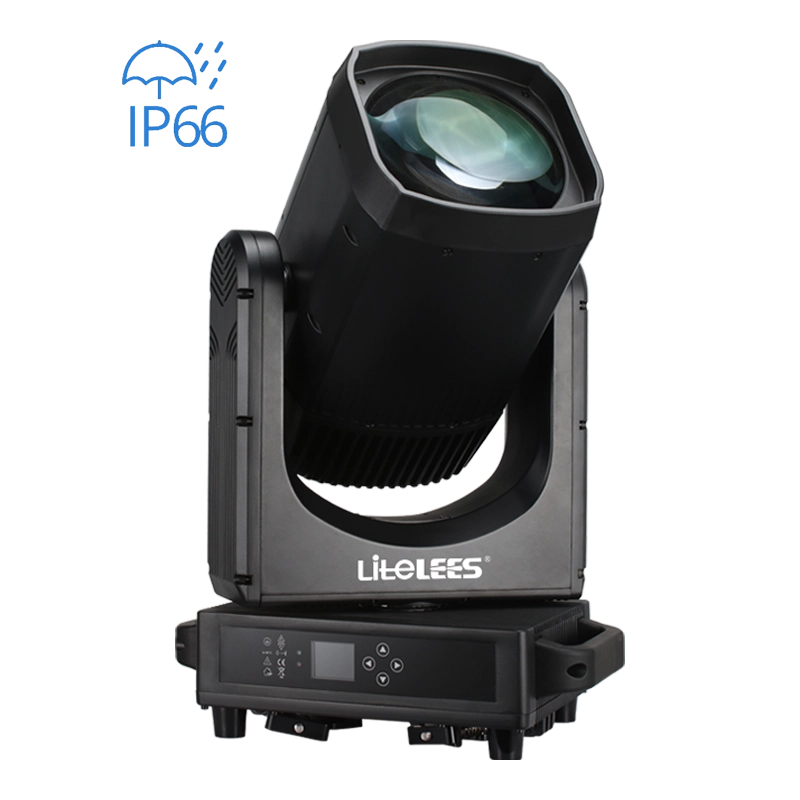
LiteLEES LUMIX BEAM 420 IP

Stormy Shake Blinder IP
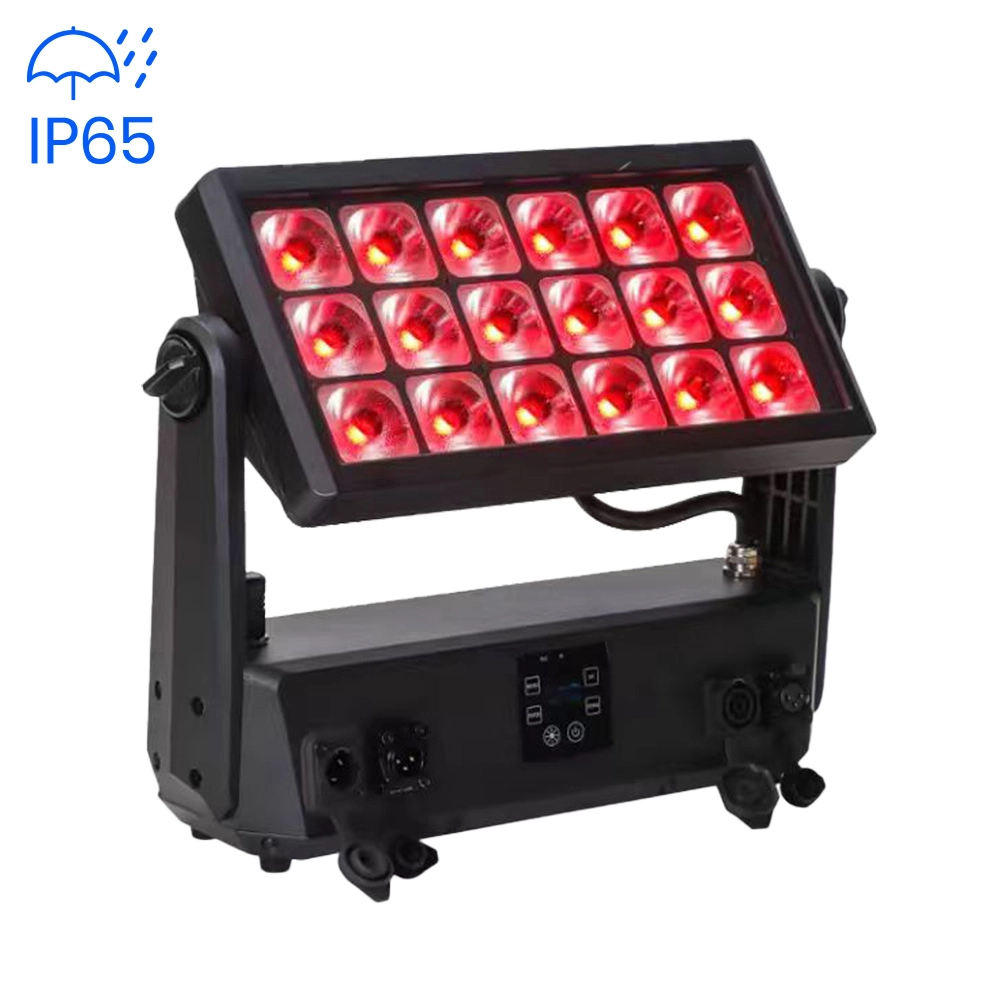
Stormy Battery Flood Light 1820 IP
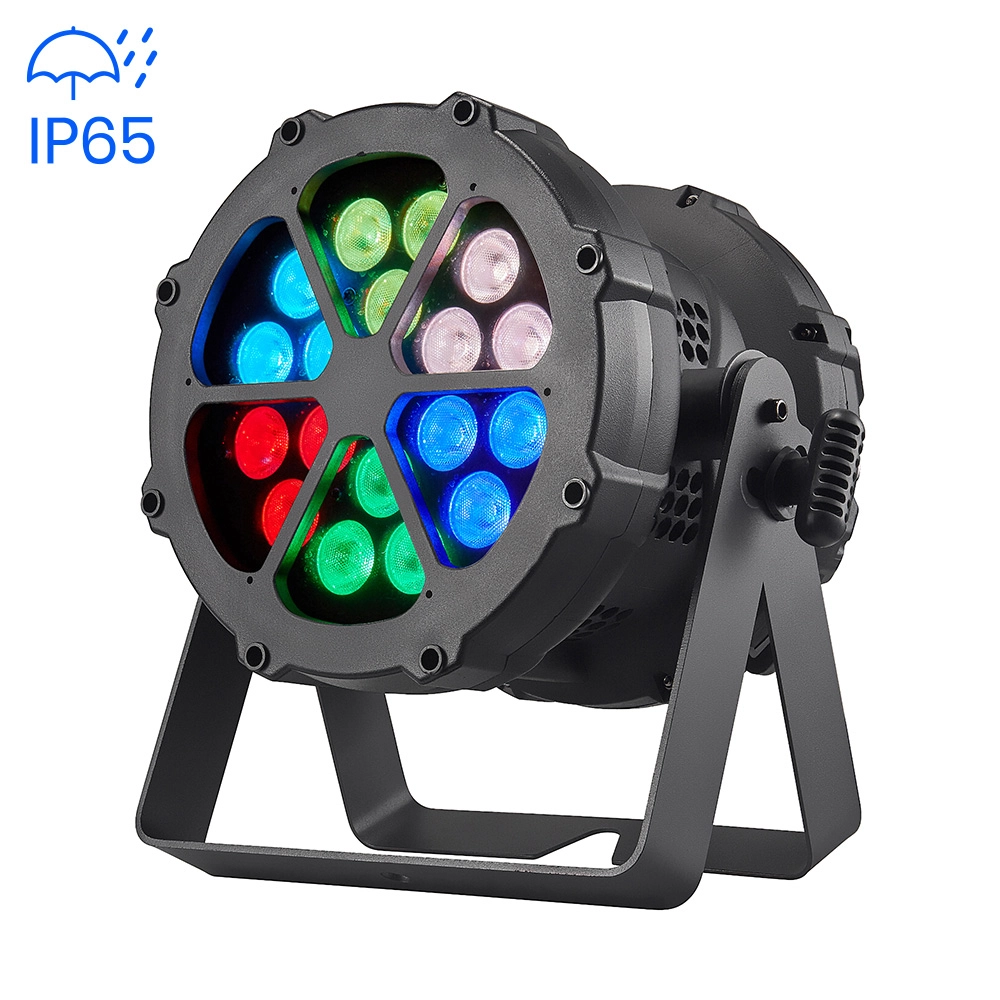
Stormy par 1812 IP
Want to get more up-to-date news?
If you have any comments or good suggestions, please leave us a message; later our professional staff will contact you as soon as possible.

We are professional stage lighting manufacturers offering OEM and ODM LED stage lights.
Contact
Email us
Call us
Address
No.6 Longnan Road, Huashan Town, Huadu District Guangzhou, Guangdong Province, China.
LiteLEES Professional
Less Lighting