
What are the best LED stage lights for concerts and tours?
- What are the best LED stage lights for concerts and tours?
- 1. Which features matter most for concert and touring LED fixtures?
- 2. What fixture types should a concert rig include?
- 3. How do I evaluate brightness and photometric performance?
- 4. What environmental and touring durability specs are critical?
- 5. What are practical control, networking and power considerations?
- 6. Should I buy or rent? How to compute total cost of ownership (TCO)?
- 7. What procurement checklist should I use before placing an order?
- 8. Which brands and product families are commonly trusted for concerts and tours?
- Closing — LiteLEES advantages for concert and touring customers
- References and sources
What are the best LED stage lights for concerts and tours?
Choosing LED stage lights for concerts and tours means balancing raw output, color quality, reliability, serviceability and transport-friendly design. Below are the top 7 questions buyers and technical directors ask when selecting fixtures—each answered with practical procurement guidance you can apply when creating spec sheets or RFPs.
1. Which features matter most for concert and touring LED fixtures?
Prioritize these attributes (in roughly this order) when specifying or purchasing for tours:
- Photometric output and usable beam at distance — check lux/footcandles at typical stage distances and request IES files for accurate planning.
- Optical type — beam, spot, wash, hybrid (spot/beam/wash) depending on your production needs.
- Color quality — high-quality LEDs with wide color gamut, linear white tuning and CRI/TM-30 info (tour-grade fixtures often aim CRI 90+ for flattering skin tones when needed).
- Control and compatibility — DMX512, RDM, Art‑Net/sACN compatibility and reliable wireless DMX options (LumenRadio or equivalent) for remote rigs.
- Duty-cycle and thermal design — effective cooling that prevents derating during long shows and in hot load-in conditions.
- Ruggedness and serviceability — roadworthy housing, spare parts, user-replaceable modules and global service network.
- Powering and connectors — compatible with touring standards (powerCON, True1, stage-friendly inrush behaviour) and optional 100–240V auto-switching.
- Weight and rigging points — lighter units reduce truss load and truck volume; clearly rated M10/M12 suspension points and quick-mount clamps are essential.
2. What fixture types should a concert rig include?
A balanced concert rig typically includes a mix of fixture types to cover all looks and production tasks:
- Moving-head beams: narrow, high-contrast shafts for long-throw stage effects and aerial looks.
- Moving-head spots/profile: framing shutters or framing modules for precise shaping and gobos.
- Moving-head washes: wide-field, soft-edged fixtures for front and key lighting with high CRI/color mixing.
- Hybrid fixtures: combine beam/spot/wash in one moving head — useful for inventory efficiency on smaller tours.
- Static LED bars/battens and blinders: audience washes, cyc lighting and strobe/blinder effects.
- Blinders and strobes: for impact and audience-facing effects; choose LED arrays with adequate diffusion and high refresh rates for cameras.
3. How do I evaluate brightness and photometric performance?
Manufacturers often quote lumens, but lumens alone can be misleading for theatrical/concert use. Follow this procurement approach:
- Request photometric reports (IES or LDT) and sample lux charts at specific distances (e.g., 10 m, 20 m, 30 m) matching your typical venue sizes.
- Compare beam angle and beam quality (hot-spot, edge definition). For long-throw aerial beams you want narrow beam angles with tight center intensity; for washes you want even distribution and soft edges.
- Check PWM/frequency and flicker specs — flicker-free drivers and high PWM frequency are critical if the production will be filmed or live-streamed.
4. What environmental and touring durability specs are critical?
Touring fixtures face heavy handling, variable weather and long hours. Ensure:
- IP rating appropriate to use: IP20 is typical for indoor-only fixtures; for unpredictable outdoor festivals choose IP65-rated wash/beam fixtures or weatherhoods for heads and outputs.
- Rugged enclosures and replaceable lens/optic modules to reduce field downtime.
- Serviceability features: accessible fuses, user-replaceable fans/LED modules, clear spare-parts lists and worldwide repair centers or depot support.
- Good-quality locking connectors (powerCON TRUE1 or similar) and durable DMX connectors; avoid non-locking mains connectors when possible.
5. What are practical control, networking and power considerations?
Modern touring lighting relies on robust networking and power planning:
- Control protocols: ensure fixtures support DMX512 and RDM for configuration. For large rigs, Art‑Net or sACN compatibility simplifies distribution.
- Wireless: if using wireless DMX, prefer proven systems (e.g., LumenRadio CRMX) and plan for RF density and frequency management.
- Flicker and camera-safe modes: look for dedicated video/flicker-free modes and PWM specs that support the frame rates you’ll use on cameras.
- Power management: check inrush current, power factor correction (PFC) and whether fixtures support universal voltage. Plan circuits to avoid tripping on hot starts.
6. Should I buy or rent? How to compute total cost of ownership (TCO)?
Decide based on utilization, capital and logistics:
- Buy when you run frequent tours or have fixed inventory needs — owning reduces per-show cost after the payback period but requires storage, maintenance and spare parts investment.
- Rent when show profiles vary, tours are short or you need high-end specialty fixtures irregularly — rental frees you from depot repairs and spare inventory.
- Estimate TCO: initial price + shipping + insurance + maintenance + spare parts + expected lifetime hours. Compare that to average rent-per-show from trusted rental houses to find payback horizon.
7. What procurement checklist should I use before placing an order?
Use this checklist when evaluating fixtures or issuing an RFP:
- Request IES files, lux charts at common distances and beam-edge diagrams.
- Confirm CRI/TM-30, white-point control (CCT range), color-mixing method (CMY, RGBW, etc.).
- Verify photometric reports and sample images (preferably from independent testers or rental houses).
- Confirm DMX/Art‑Net/sACN compatibility, RDM support and wireless DMX options.
- Check IP rating for intended use (indoor vs outdoor festival use) and specify protective accessories if needed.
- Ask about warranty, optional service contracts, expected LED module lifetime (hours) and availability of consumables/parts.
- Evaluate weight per fixture and rigging hardware, power draw and inrush behaviour; request circuit-loading examples for a full rig.
- Plan for spares (typically 5–10% of fleet, or at least spare drivers/LED modules/fans for large tours).
8. Which brands and product families are commonly trusted for concerts and tours?
Industry-recognized manufacturers with proven touring track records include (not exhaustive): Robe, Martin (Harman), Claypaky, Ayrton, Elation Professional, Chauvet Professional, Vari‑Lite and ADJ. These manufacturers offer a range of moving-head beams, washes, hybrids and battens designed for touring. When selecting among them, compare the specific feature set, photometric data and local depot support rather than basing a decision on brand name alone.
Closing — LiteLEES advantages for concert and touring customers
LiteLEES delivers touring-oriented LED fixtures designed for the needs summarized above. Key strengths often sought in LiteLEES products include robust mechanical design for road use, modular optics for quick field service, video/camera-friendly flicker control, IP-rated options for outdoor festival work, and competitive pricing that improves fleet acquisition economics. LiteLEES also emphasizes clear spare-parts lists and customer support options that reduce downtime on the road.
References and sources
- U.S. Department of Energy — LED Lighting Basics. Accessed 2024-06-01. https://www.energy.gov/energysaver/led-basics
- Illuminating Engineering Society (IES) — Lighting guidance and standards. Accessed 2024-06-01. https://www.ies.org/
- LumenRadio — Wireless DMX (CRMX) product and whitepapers. Accessed 2024-06-01. https://www.lumenradio.com/
- Robe Lighting — product and touring fixture information. Accessed 2024-06-01. https://www.robe.cz/
- Elation Professional — fixture families and photometric resources. Accessed 2024-06-01. https://www.elationlighting.com/
- Chauvet Professional — touring fixtures and product documentation. Accessed 2024-06-01. https://www.chauvetprofessional.com/
- Projection, Lights & Staging News (PLSN) — industry articles on touring lighting and product reviews. Accessed 2024-06-01. https://plsn.com/
- Lighting & Sound International / LSi Online — technical articles about LED fixtures and touring best practice. Accessed 2024-06-01. https://www.lsionline.com/
![Moving Head Stage Lighting Guide: Mastering the Technical and Artistic Essence [2026 Edition] - LiteLEES](https://static.gooecloud.com/upload/img/GY160908357145/moving-head-stage-lighting-guide-mastering-the-technical-and-artistic-essence-2026-edition.png?x-oss-process=image/format,webp/quality,Q_100 "Moving-Head-Stage-Lighting-Guide:-Mastering-the-Technical-and-Artistic-Essence-[2026-Edition] - LiteLEES")
Products
What is the lifespan of your LED stage lights?
Our LED lights use high-quality chips with a rated lifespan of over 50,000 hours. Proper usage and maintenance ensure long-term reliability and stable performance, making them a smart investment for any venue.
Are your lights suitable for large-scale events and outdoor use?
Yes. Our professional stage lights—especially the Beam, BSW 3-in-1, and LED Par Series—are engineered with high-output brightness, wide beam angles, and robust housing. Some models come with IP-rated protection, making them suitable for outdoor applications like concerts, festivals, and sports events.
Can I customize the functions or software of the lights?
Absolutely. As a manufacturer with independent R&D capabilities, we offer customization for both hardware and software (such as DMX channel layout, built-in programs, or UI language). Contact us with your project needs, and our team will provide tailored solutions.
Company
What certifications do your products have?
All LiteLEES products are certified by CE, RoHS, FCC, and BIS. Our factory is ISO9001 quality management system certified.
Where is LiteLEES located?
Our headquarters and manufacturing facility are located in Guangzhou, China, with products exported to over 70 countries worldwide.
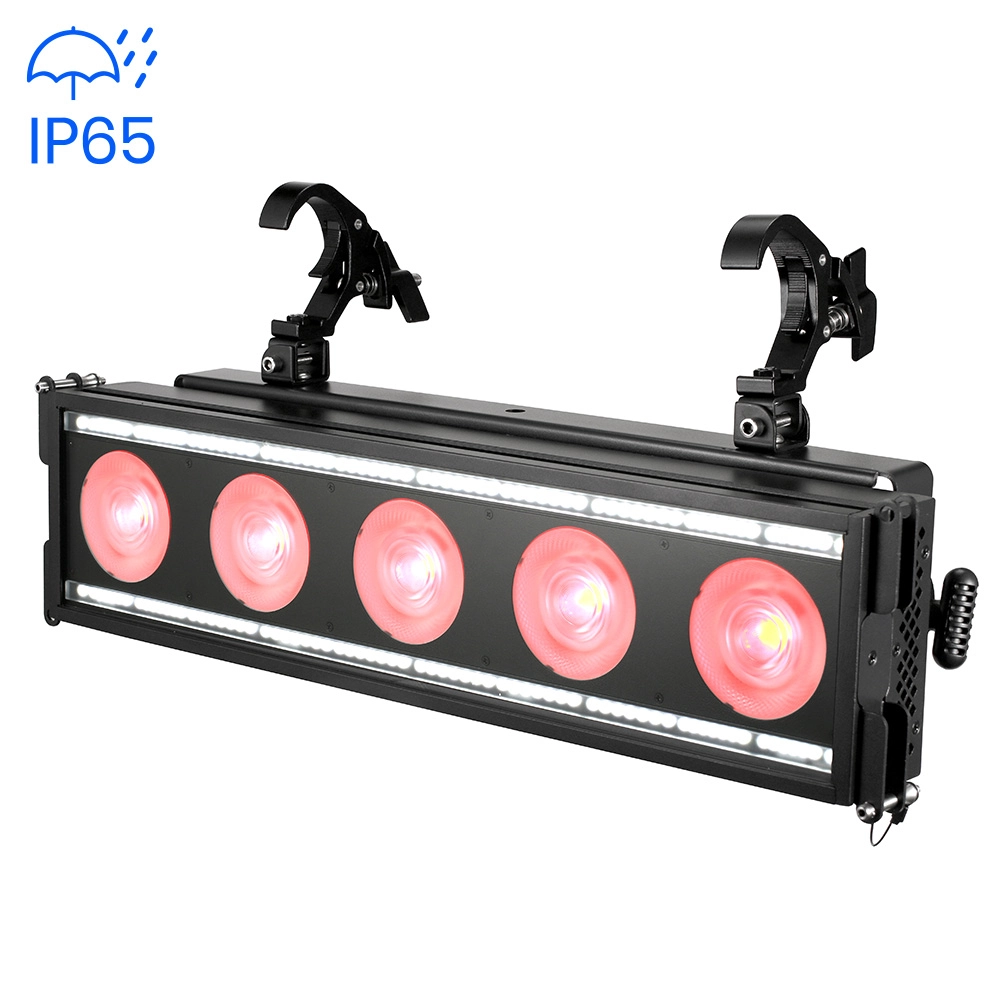
Stormy Flash 550 lP
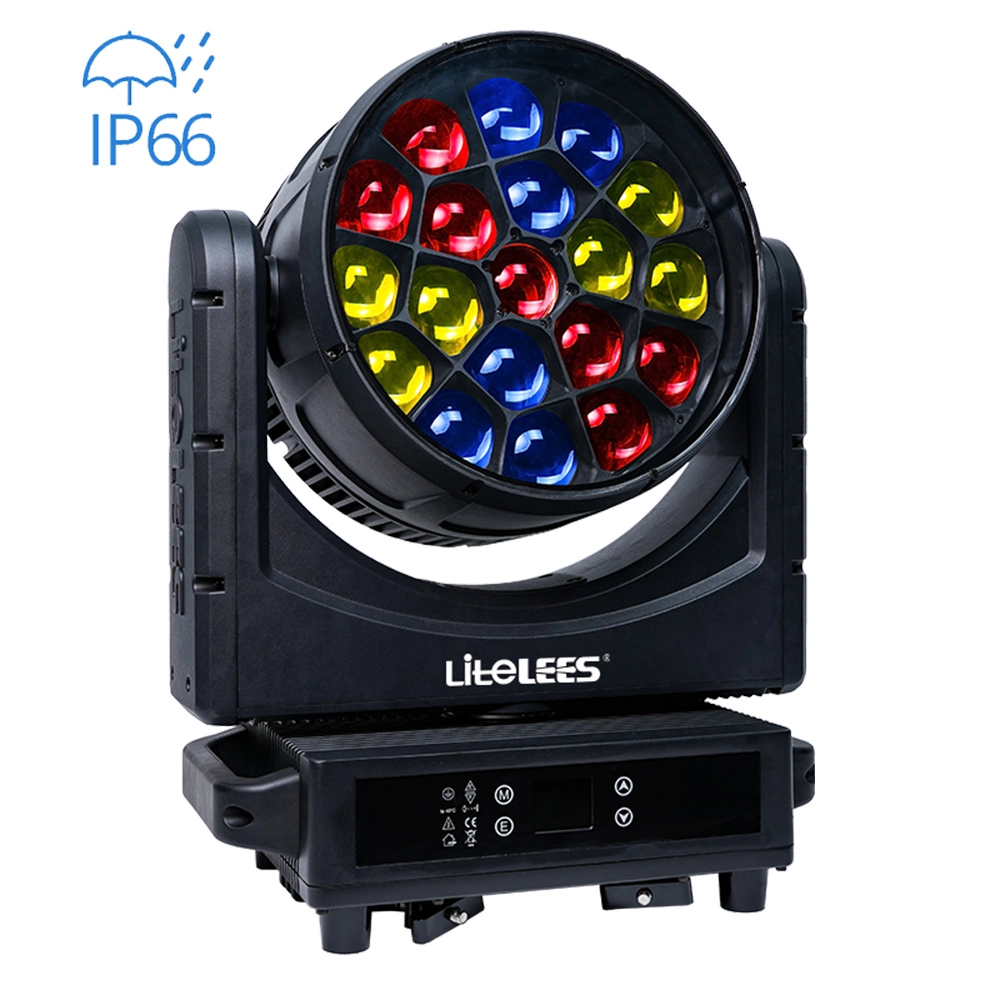
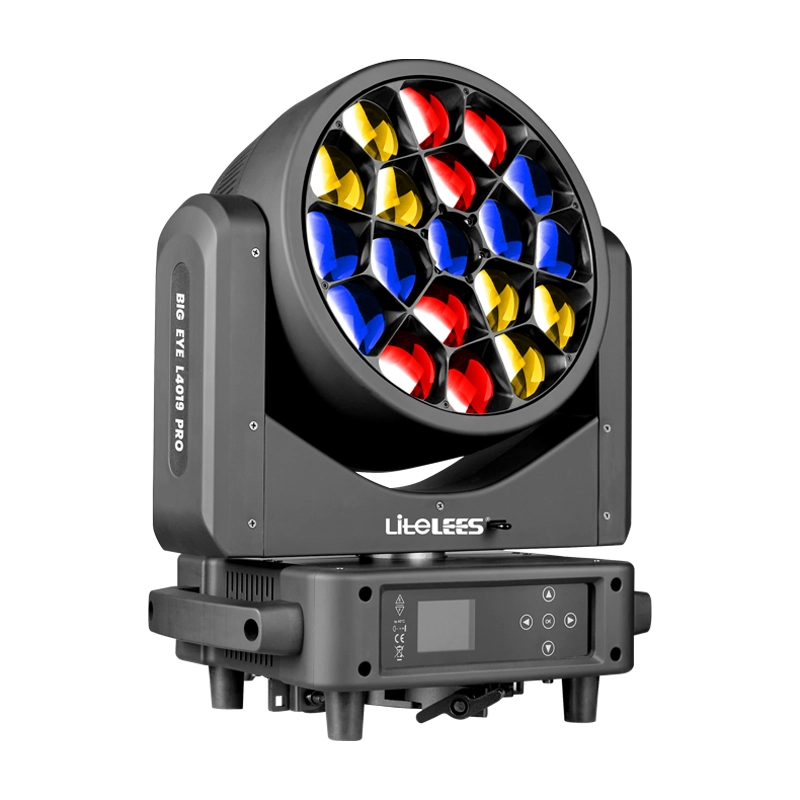
BIG EYE L4019 IP
Want to get more up-to-date news?
If you have any comments or good suggestions, please leave us a message; later our professional staff will contact you as soon as possible.

We are professional stage lighting manufacturers offering OEM and ODM LED stage lights.
Contact
Email us
Call us
Address
No.6 Longnan Road, Huashan Town, Huadu District Guangzhou, Guangdong Province, China.
LiteLEES Professional
Less Lighting