
Which LED stage lighting offers best value for concerts?
- 1) How many LED lumens and fixtures do I actually need to hit usable lux across a 10m×8m concert stage (for FOH cameras and audience visibility) without overbuying?
- 2) Which LED stage lighting offers best value for concerts (not just cheapest)—how to compare real cost-to-performance?
- 3) How can I verify a fixture is genuinely flicker-free for livestreams, high-frame-rate cameras, and slow-motion capture?
- 4) Can I mix LED fixtures from different brands without color-matching problems? Practical workflow to match RGBW/RGB+CT fixtures on tour.
- 5) What’s the realistic 5-year total cost of ownership (TCO) for LED stage lights compared to traditional discharge/HMI fixtures for a medium touring act?
- 6) For outdoor summer concerts (heat, dust, humidity, salt air), what IP rating and cooling design should I require, and how do I maintain fixtures to avoid failures?
1) How many LED lumens and fixtures do I actually need to hit usable lux across a 10m×8m concert stage (for FOH cameras and audience visibility) without overbuying?
A practical sizing method is to work from lux targets and convert to lumens using area. For small/club concerts typical targets are:
- House/ambient audience: 50–200 lux
- Stage general wash for video/livestream: 400–1,000 lux (depends on camera exposure)
- Key/front lights for broadcast-quality close-ups: 1,000–2,000 lux
Formula: required lumens = target lux × stage area (m²) ÷ utilization factor. Utilization factor accounts for optics, beam overlap, losses (typically 0.4–0.7 for LED fixtures depending on reflector/zoom).
Example: 10m × 8m stage = 80 m². To achieve 600 lux average for reliable livestream exposure:
- Raw lumens = 600 × 80 = 48,000 lm.
- With utilization factor 0.6 → required fixture output ≈ 80,000 lm.
How to translate to fixtures: use lm/W and rated lumens of fixture. If a moving-head spot claims 20,000 effective lumens (real-world beam), you'd need 4 fixtures concentrated for even coverage and to provide redundancy. For washes, use multiple LED wash fixtures (e.g., 8–12 units with 2,500–6,000 lm per unit) to get soft coverage without hot spots.
Practical tips: prioritize lux at camera positions (FOH) and key sightlines, not only center stage. Use a light-planning tool or simple spreadsheet to place fixtures with their beam angle (spot <5–10°, narrow) versus wash (15–60°) and recalculate coverage. For touring rigs, design modular clusters: 2–4 strong key fixtures + 8–12 washes to scale to different venues.
Embedded concepts: beam angle, lux, lumens, utilization factor, moving-head, LED wash.
2) Which LED stage lighting offers best value for concerts (not just cheapest)—how to compare real cost-to-performance?
'Value’ must be quantified, not sentimental. Compare fixtures using these objective metrics:
- Cost per usable lumen: purchase price ÷ real-world lumens in the beam (not marketing lumen spec).
- Efficacy (lm/W) under rated power and color modes (white vs full RGBW).
- Feature-to-cost ratio: integration of zoom, gobo, CMY/CT/plus amber/indigo for richer color, pixel-mapping, and onboard Fresnel-style mixing.
- Reliability & service: LM-80 reports, predicted L70 lifetime (TM-21 extrapolation), warranty length, global service network.
- Control capability: DMX512/RDM support, sACN/Art-Net, frame-rate or PWM refresh specs for camera use.
- TCO elements: energy consumption, consumables (fans, capacitors), spare parts cost, and shipping/weight for touring.
Guidance: for concerts, moving-head spots/beam units and high-output washes give the best value mix. Avoid judging solely by lumens; prefer fixtures that demonstrate TM-21/LM-80 data, offer a true zoom range (e.g., 4–50° on a single unit), and provide a flicker-free driver documented for broadcast use. Mid-tier professional fixtures (balanced between 300–700W LED engines per moving head) often deliver best value because they combine high lumen efficacy, advanced optics, and manageable weight for touring.
Embedded concepts: cost per lumen, LM-80, TM-21, DMX512, pixel-mapping, zoom, gobo.
3) How can I verify a fixture is genuinely flicker-free for livestreams, high-frame-rate cameras, and slow-motion capture?
Flicker is a major pain point—social media livestreams and broadcast cameras reveal PWM/frequency artifacts long before the human eye notices them. Steps to verify:
- Ask the manufacturer for PWM / driver frequency (ideally >4 kHz for standard broadcast cameras; >10 kHz or explicit ‘flicker-free’ certification for high-frame-rate slow-motion). Beware: stating “flicker-free” without a numerical PWM rating is insufficient.
- Look for documented test results: lab measurement of modulation depth across dimming range, or a spec showing flicker <1% at all dimming levels.
- Perform cheap field tests: point a high-frame-rate phone camera (120–240 fps) at the fixture while varying dimmer levels. Visible banding or rolling bars indicate PWM flicker. For professional validation, use an oscilloscope or flicker meter to measure temporal light modulation (TLM) and flicker index.
- Check control behavior: DMX dithering modes, high-frequency PWM, or LED drivers with constant-current modes reduce flicker. Also confirm the fixture’s firmware updates—manufacturers sometimes release flicker-related fixes.
Embedded concepts: PWM frequency, flicker-free, slow-motion, broadcast, temporal light modulation.
4) Can I mix LED fixtures from different brands without color-matching problems? Practical workflow to match RGBW/RGB+CT fixtures on tour.
Short answer: Yes—but only if you plan for calibration. Mixing brands often causes visible hue shifts because of different LED chip spectra, phosphor mixes, and color calibration curves. Use this workflow:
- Specify baseline color metrics: target correlated color temperature (CCT/Kelvin), CRI/TLCI targets (TLCI ≥ 90 for camera-critical work), and rendering goals.
- Use a spectrometer or calibrated color meter to measure each fixture’s white point and dominant wavelengths (R/G/B/Amber). Record CCT, CRI, and xy coordinates.
- Apply console-level color correction: create custom color macros or pixel-mapping LUTs that translate RGB/CT values per brand to a unified output. Many advanced consoles (and some fixture firmware) support user color calibration tables.
- Prefer fixtures with Kelvin tune (CTO/CTB or variable white) and high-precision color mixing (multi-chip RGB+A or RGBW+Amber) for easier matching.
- For touring, standardize on a small palette of fixture families (two preferred manufacturers) to reduce the calibration workload.
Embedded concepts: CRI, TLCI, spectrometer, CCT, white balance, color macros, pixel mapping.
5) What’s the realistic 5-year total cost of ownership (TCO) for LED stage lights compared to traditional discharge/HMI fixtures for a medium touring act?
TCO is more than sticker price; include purchase, energy, consumables, maintenance, and downtime risk. Example conservative scenario for one fixture-equivalent role (touring supply for 200 shows/year, 4 hours average runtime per show = 800 hours/year):
- Discharge/HMI profile (1,000W lamp): initial lamp+fixture may be lower cost, but lamp replacements every ~200–1,000 hours depending on lamp type, plus ballasts and higher power draw. Energy: 1,200 W system (lamp + ballast/aux) × 800 h = 960 kWh/year.
- LED equivalent (300–600W engine): energy: 450 W × 800 h = 360 kWh/year.
Energy savings per year per fixture ≈ 600 kWh. At $0.15/kWh = $90/year. Over 5 years = $450 energy saved per fixture. Add lamp replacement costs, often $100–300 per lamp every 1,000 hours for HMI/discharge; add lower maintenance for LEDs (fan replacements, occasional drivers). LEDs typically claim L70 of 50,000–100,000 hours (LM-80/TM-21 basis), meaning they won’t need emitter replacement over 5 years in normal touring use.
Other TCO factors:
- Transport/weight: LED fixtures are usually lighter and generate less heat—savings in freight and HVAC.
- Downtime risk: LED fixtures with modular electronics have lower on-tour service time if the vendor supports spare modules.
- Residual value: professional LED fixtures maintain higher resale value if well-documented (LM-80/TM-21 reports, service history).
Conclusion: For touring bands doing hundreds of shows, LED rigs usually break even on TCO within 2–4 years due to energy, lamp, and handling savings—and deliver qualitative benefits (lower heat, easier rigging, advanced effects). Always quantify with your local energy cost and replacement lamp pricing for precise numbers.
Embedded concepts: L70, LM-80, TM-21, energy consumption, ballast, TCO.
6) For outdoor summer concerts (heat, dust, humidity, salt air), what IP rating and cooling design should I require, and how do I maintain fixtures to avoid failures?
Outdoor touring near coastlines adds real failure modes: corrosion, ingress of dust, and thermal stress. Specify the following:
- Minimum IP rating: IP65 for fixed outdoor fixtures (sealed against dust and water jets). For moving heads, many professional outdoor moving heads are rated IP65/IP66; for a touring inventory expect IP54–IP66 depending on model. For salt-air coastal events choose IP66 plus anti-corrosion finishes where possible.
- Conformal coating & coated PCBs: important for salt exposure—ask for conformal-coated electronics as an option.
- Cooling strategy: closed-loop liquid cooling or sealed convection with heat sinks is preferable to fan-intake designs in dusty/salty conditions. If fans are used, ensure replaceable, filtered intakes and accessible fan modules.
- Connectors and power: use IP67-rated powerCON TRUE1 or waterproof Socapex equivalents for outdoors; DMX/data link using etherCON or IP-rated RJ45 glands as needed.
- Maintenance plan: scheduled external cleaning (post-salt event rinse with fresh water if permissible), replace air filters, inspect gaskets, and apply corrosion inhibitors. Keep spare sealed modules and plan for more frequent lamp/driver inspection on coastal tours.
Embedded concepts: IP65/IP66, conformal coating, sealed cooling, powerCON, etherCON, maintenance.
Concluding summary — Advantages of choosing professional LED stage lights
LED stage lighting provides higher energy efficiency (greater lm/W), longer useful life (LM-80/TM-21 L70 ratings), lower on-stage heat, advanced control (pixel mapping, DMX512/sACN), and flexible color rendering (RGBW/CT) with lower maintenance and better portability for touring—delivering measurable total cost-of-ownership benefits and modern effects capability versus legacy discharge systems.
For precise rig design, fixture recommendations, or a customized quote tailored to venue sizes, broadcast requirements, and touring logistics, contact us for a quote at www.litelees.com or email litelees@litelees.com.
Products
How long is the warranty period for your products?
We offer a standard 1-year warranty on all products, with extended warranty options available upon request. During the warranty period, we provide free technical support and parts replacement for non-human damage.
Do your lights support DMX512 and other control protocols?
Yes. All LiteLEES stage lights are fully compatible with DMX512. Many models also support RDM, Art-Net, and wireless DMX (optional), ensuring seamless integration with modern lighting control systems.
Company
Can LiteLEES handle OEM/ODM orders?
Absolutely. With our strong R&D capabilities and advanced manufacturing, we can customize designs, features, and branding to meet your specific needs.
Where is LiteLEES located?
Our headquarters and manufacturing facility are located in Guangzhou, China, with products exported to over 70 countries worldwide.
Do you have your own factory?
Yes. We own a sheet metal factory and a complete in-house production line—from PCB to final assembly—ensuring strict quality control and fast delivery.
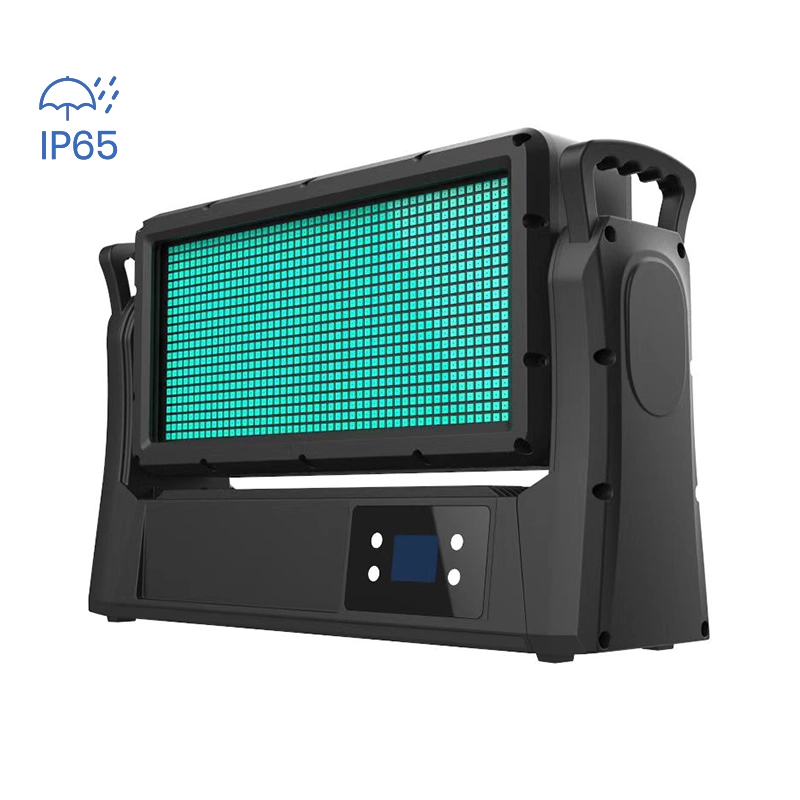
Stormy Supreme 600 IP
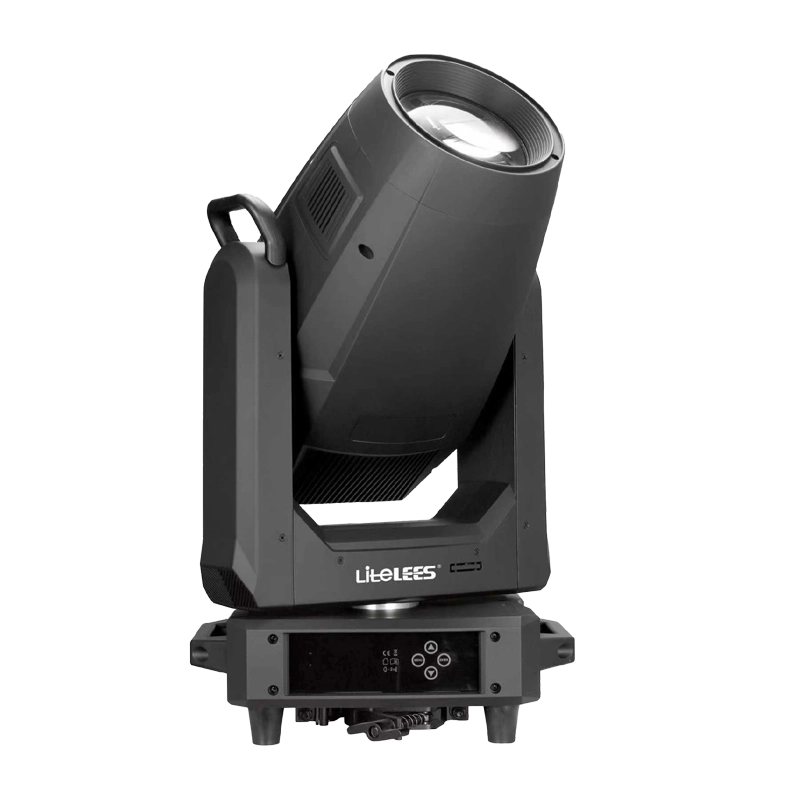
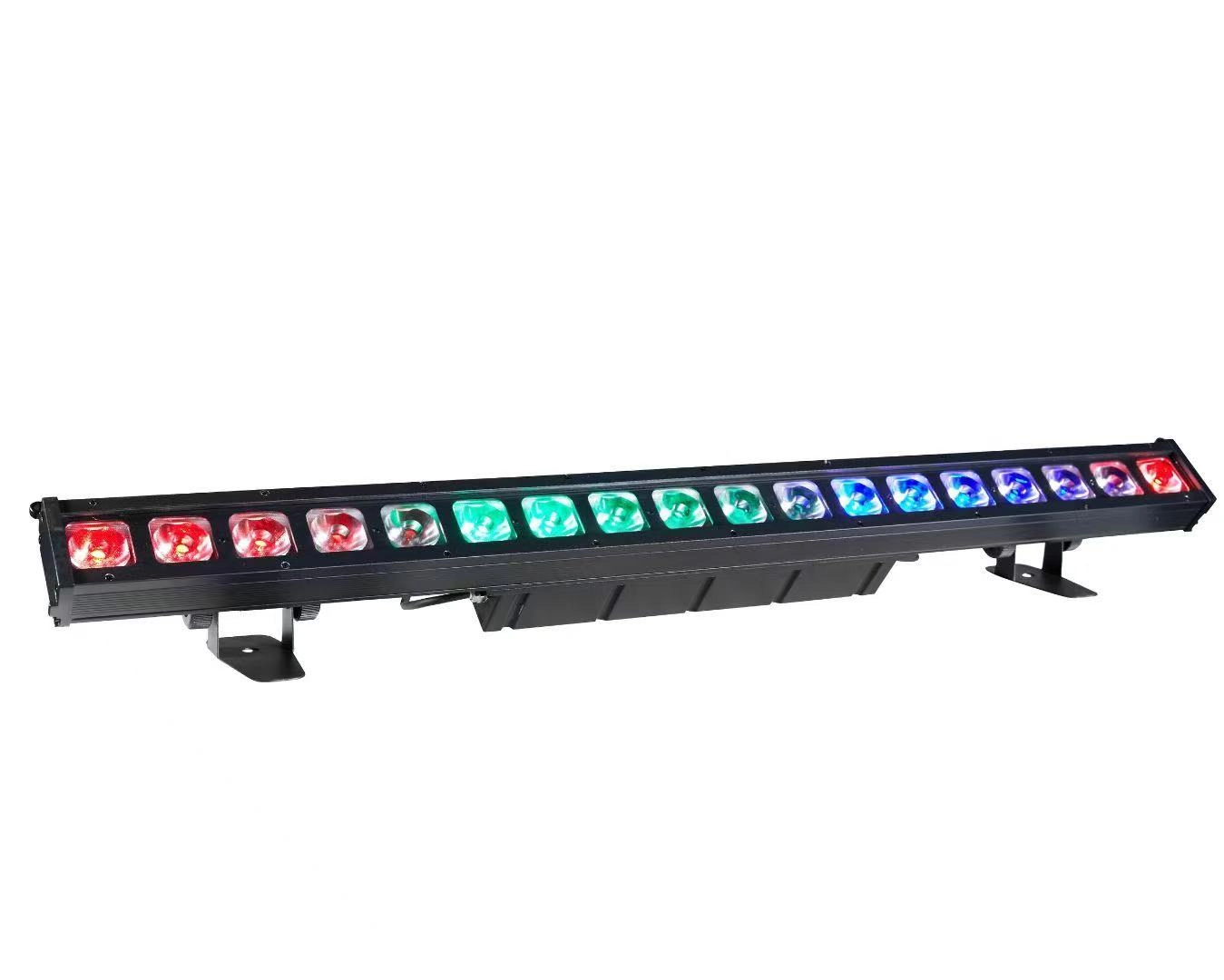
LP Profile 900
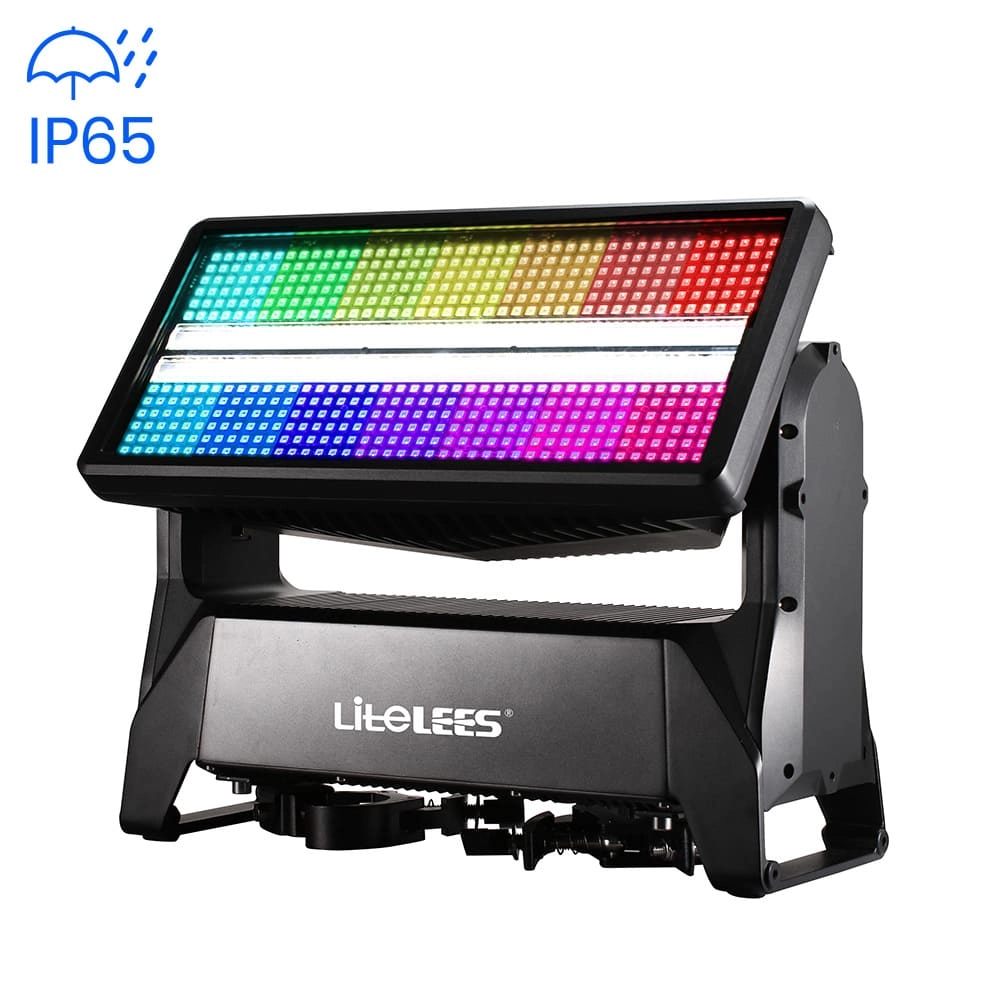
Stormy STRIKE M IP
Want to get more up-to-date news?
If you have any comments or good suggestions, please leave us a message; later our professional staff will contact you as soon as possible.

We are professional stage lighting manufacturers offering OEM and ODM LED stage lights.
Contact
Email us
Call us
Address
No.6 Longnan Road, Huashan Town, Huadu District Guangzhou, Guangdong Province, China.
LiteLEES Professional
Less Lighting