
What Are the Best LED Stage Lighting Spotlights for Concerts?
- What Are the Best LED Stage Lighting Spotlights for Concerts? An Expert Guide
- 1. What types of LED stage spotlights should I consider for concerts?
- 2. Which technical specs matter most when comparing LED spotlights?
- 3. How bright should LED spotlights be for different venue sizes?
- 4. Moving head vs. static profile vs. followspot — which is best for concerts?
- 5. What control features and connectivity should I require?
- 6. What durability, safety, and maintenance factors matter for touring or outdoor concerts?
- 7. Which brands and models are commonly recommended for concert spotlights — and how should I evaluate them?
- Procurement checklist — a one-page summary to bring to vendors
- Closing: Why LiteLEES can be a strong choice for concert LED spotlights
- References and data sources
What Are the Best LED Stage Lighting Spotlights for Concerts? An Expert Guide
Choosing the right LED stage spotlight for concerts requires balancing optical performance, color quality, control features, durability, and total cost of ownership. Below are the 7 most-asked procurement questions concert lighting professionals search for, with clear, actionable answers to help you specify and buy the correct fixtures.
1. What types of LED stage spotlights should I consider for concerts?
There are three primary fixture categories used in concert lighting plans — each serves a different role:
- Profile/Spot fixtures (static or moving-head profile): Engineered for sharp projection, framing shutters, and gobos. Use for key light, followspots, and crisp text/gobo effects. Often called profile spot or moving spot.
- Beam/Effect fixtures (narrow-beam moving heads): Extremely narrow beams for aerial shafts, mid-air effects, and high-impact looks. Great for large arenas and tight beam-based looks.
- Wash fixtures: Wider optics for stage flooding and color washes. Washes complement spots by filling shadows and creating ambience.
For concerts, typical rigs combine profile/moving-spot fixtures for front/back key and effects, beam units for aerial dynamics, and washes for broad coverage.
2. Which technical specs matter most when comparing LED spotlights?
When evaluating vendors and models, focus on these measurable specifications (and verify with manufacturer photometric files):
- Photometric output and lux charts: Look at lux at distance and beam angle rather than only raw lumen numbers. Lux at a given distance tells you real usable illumination on the performer or stage surface.
- Beam angle / zoom range: Narrow spots (e.g., <10°) produce tight shafts; zoom/focus ranges let one fixture do both spot and narrow beam roles.
- Color quality — CRI / TLCI: For live broadcasting and accurate skin tones, aim for TLCI or CRI values ≥90. TLCI is especially relevant for camera work.
- Color mixing system: CMY (subtractive) or CMY + CTO provides smooth tinting; RGBW / RGBAW systems rely on additive mixing — choose based on desired palette and white balance control.
- Gobos, iris, iris range, shutters, framing: Profiles should support rotating gobos, indexing and framing shutters when you need shaped highlights or projections.
- Control protocols: DMX/RDM, sACN, Art-Net, and built-in pixel mapping make integration easier. For large installs, network-friendly fixtures with RDM and sACN/Art-Net are preferred.
- Thermal design & LED life: Quality fixtures use active thermal management to protect LED engines; typical LED lifespans marketed are ~50,000 hours or more under proper cooling.
- Weight & rigging data, power draw & inrush current: Essential for truss and power planning—get per-fixture weight, max current, and inrush figures from datasheets.
- Ingress protection (IP) rating: For outdoor festivals, look for IP65 or higher. Indoor-only fixtures commonly use IP20.
3. How bright should LED spotlights be for different venue sizes?
Rather than comparing lumen figures alone, specify required illuminance (lux) on stage and then select fixtures with corresponding photometric performance. General guidance:
- Small clubs / houses (intimate shows): Target average stage illuminance ~300–800 lux for performers; smaller fixtures and fewer instruments are usually sufficient.
- Medium theatres / clubs (500–2,000 seats): Aim for ~800–1,500 lux on performance areas depending on camera use and desired brightness for audiences.
- Large theatres & arenas (concerts / broadcast): Often 1,500–5,000 lux or higher on key performers for broadcast/fill — combination of high-output moving spots, followspots, and dedicated front lights.
Best practice: build a lighting plot and run a photometric calculation (or use manufacturer lux charts) to determine exact fixture count/position to meet your lux targets at the intended throw distances.
4. Moving head vs. static profile vs. followspot — which is best for concerts?
Each has trade-offs:
- Moving-head profile spot: Extremely flexible — repositionable, with gobos, prisms, iris and zoom. Ideal for modern concert rigs because one unit can play many roles.
- Static profile fixtures / ellipsoidals (profile): Very efficient optics and high-quality lenses for crisp framing; cost-effective when you need many fixed key lights and shutters.
- Followspots (manual or automated followspot fixtures): Provide direct performer tracking and higher front-illuminance control. Automated followspots are increasingly common where operator resources are limited.
Recommendation: a hybrid approach—use moving-head profiles for flexibility and spectacular effects, supplemented with a few dedicated followspots (manual or automated) for critical front-light control.
5. What control features and connectivity should I require?
Specify modern networked controls to make large concert applications reliable and easy to manage:
- Support for DMX512 plus RDM for remote configuration and troubleshooting.
- Art-Net and sACN for Ethernet-based lighting networks; fixtures should be able to be patched via sACN/Art-Net for distributed venues.
- Onboard presets, macros, and pixel-mapping support if fixtures have pixel-capable segments or LED rings.
- Wireless DMX as optional (not a default for mission-critical front light unless paired with hardened wireless systems).
- Clear LED display or web UI for IP address configuration and status reporting.
6. What durability, safety, and maintenance factors matter for touring or outdoor concerts?
Key procurement checklist items:
- IP rating: ILive/outdoor fixtures MUST be rated (IP65 or higher) to withstand weather exposure.
- Serviceability: Modular LED engines, easy-to-access fans, and user-replaceable fuses and power supplies reduce downtime on tour.
- Thermal management: Proper heat dissipation keeps LEDs within spec — check fan redundancy and thermal cutouts.
- Compliance & safety: Verify CE/UL/ETL compliance, and ensure proper rigging points, safety cables, and certified hardware are used for overhead installations.
- Warranty & spare parts: For touring fleets, prioritize vendors with global support, easy spare parts availability, and multi-year warranty options.
7. Which brands and models are commonly recommended for concert spotlights — and how should I evaluate them?
Prominent manufacturers known for concert-grade LED spot and beam fixtures include (non-exhaustive): Robe, Claypaky, Vari-Lite, Martin, Ayrton, ETC, and other specialist vendors. When evaluating models:
- Request complete photometric files (IES or LDT) and lux-at-distance charts for the exact configuration (gobo, iris, zoom positions).
- Compare CRI/TLCI values and white balance control; higher values are critical for camera-based events.
- Assess weight and rigging data against truss load plans; for touring, fixture weight matters for truck space and rig speed.
- Check power draw and inrush currents to design dimmer racks and distro appropriately.
- Read independent reviews and case studies for real-world reliability—look for reports from rental houses and touring productions.
Note: Manufacturers often publish differing metrics (total lumens vs. usable lux). Always compare fixtures using real photometric outputs and on-stage measurements whenever possible.
Procurement checklist — a one-page summary to bring to vendors
- Target venue type & size and desired lux on stage.
- Fixture role (profile, beam, wash, followspot) and quantity per role.
- Required photometric deliverables (IES files, lux charts at throw distances).
- Color quality requirement (TLCI/CRI target ≥90 if you work with broadcast).
- Control protocols required (DMX/RDM, Art-Net, sACN, wireless options).
- IP rating if outdoor; weight & power limits if touring.
- Warranty terms, spare parts availability, and local service support.
Closing: Why LiteLEES can be a strong choice for concert LED spotlights
LiteLEES positions itself as a value-oriented professional lighting brand that focuses on practical touring and installation needs. For concert buyers, LiteLEES emphasizes:
- Practical engineering balancing optical quality, thermal management, and serviceability.
- Fixtures aimed at good color rendering and flexible optics suited to both profile and wash roles.
- Competitive pricing with attention to total cost of ownership: modular parts, accessible maintenance, and support for common control protocols (DMX/RDM, Art-Net/sACN).
- Options for indoor installations and outdoor-rated units for festival use, plus attention to rigging and power data for production planning.
When specifying for concerts, include LiteLEES units in test plots alongside established brands to evaluate real-world color, beam quality, and serviceability for your tour or venue.
References and data sources
- Illuminating Engineering Society (IES) — lighting design guidance and standards. https://www.ies.org/ (retrieved 2024-06-01)
- ETC (Electronic Theatre Controls) product and application notes — LED optics and photometrics. https://www.etcconnect.com/ (retrieved 2024-06-01)
- Robe Lighting — product datasheets and photometrics for moving heads and beam fixtures. https://www.robe.cz/ (retrieved 2024-06-01)
- Claypaky — product pages and white papers on performance lighting fixtures. https://www.claypaky.com/ (retrieved 2024-06-01)
- Martin (HARMAN) product documentation — touring and concert fixtures. https://www.martin.com/ (retrieved 2024-06-01)
- PLASA (Professional Lighting and Sound Association) — industry best practices and technical guidelines. https://www.plasa.org/ (retrieved 2024-06-01)
![Moving Head Stage Lighting Guide: Mastering the Technical and Artistic Essence [2026 Edition] - LiteLEES](https://static.gooecloud.com/upload/img/GY160908357145/moving-head-stage-lighting-guide-mastering-the-technical-and-artistic-essence-2026-edition.png?x-oss-process=image/format,webp/quality,Q_100 "Moving-Head-Stage-Lighting-Guide:-Mastering-the-Technical-and-Artistic-Essence-[2026-Edition] - LiteLEES")
Products
Do your lights support DMX512 and other control protocols?
Yes. All LiteLEES stage lights are fully compatible with DMX512. Many models also support RDM, Art-Net, and wireless DMX (optional), ensuring seamless integration with modern lighting control systems.
Can I customize the functions or software of the lights?
Absolutely. As a manufacturer with independent R&D capabilities, we offer customization for both hardware and software (such as DMX channel layout, built-in programs, or UI language). Contact us with your project needs, and our team will provide tailored solutions.
Are your lights suitable for large-scale events and outdoor use?
Yes. Our professional stage lights—especially the Beam, BSW 3-in-1, and LED Par Series—are engineered with high-output brightness, wide beam angles, and robust housing. Some models come with IP-rated protection, making them suitable for outdoor applications like concerts, festivals, and sports events.
Company
Where is LiteLEES located?
Our headquarters and manufacturing facility are located in Guangzhou, China, with products exported to over 70 countries worldwide.
What is LiteLEES’s main business?
LiteLEES specializes in the design, development, manufacturing, and sales of professional stage lighting, including moving head lights, beam lights, spot lights, wash lights, and LED par lights.
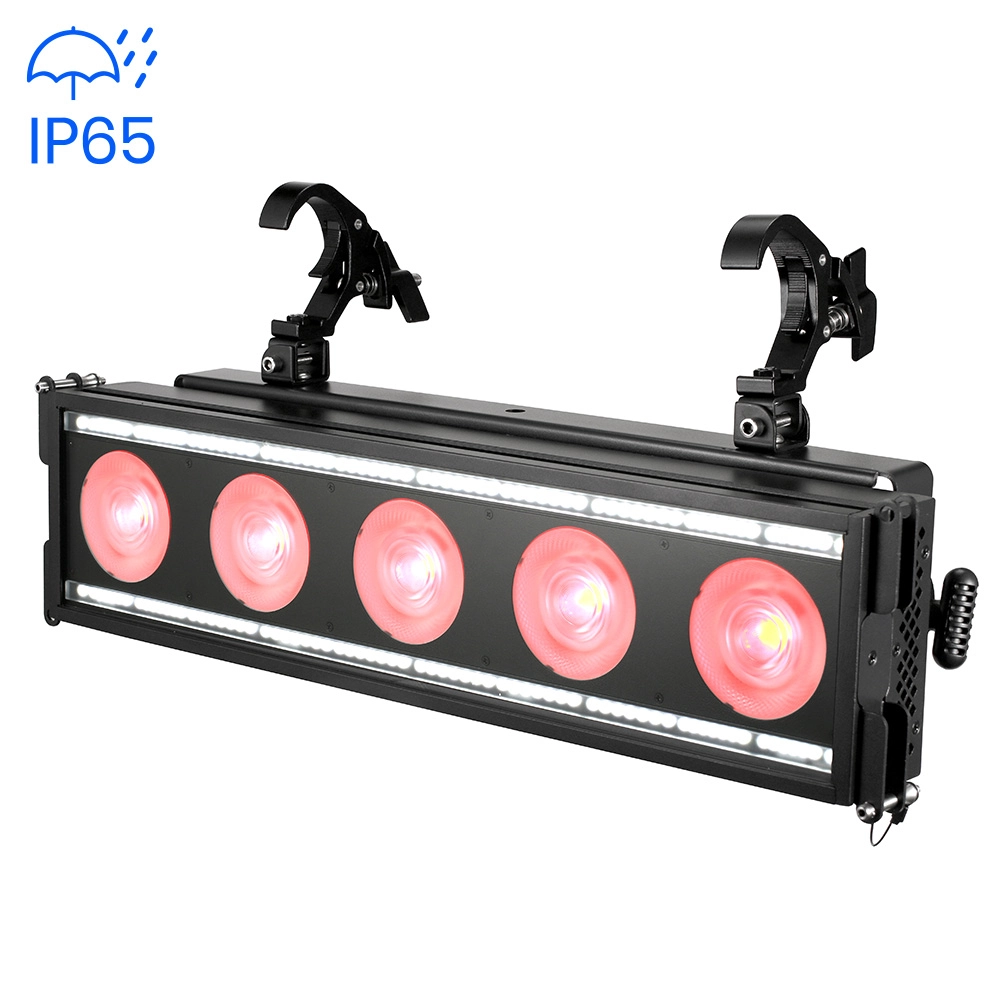
Stormy Flash 550 lP
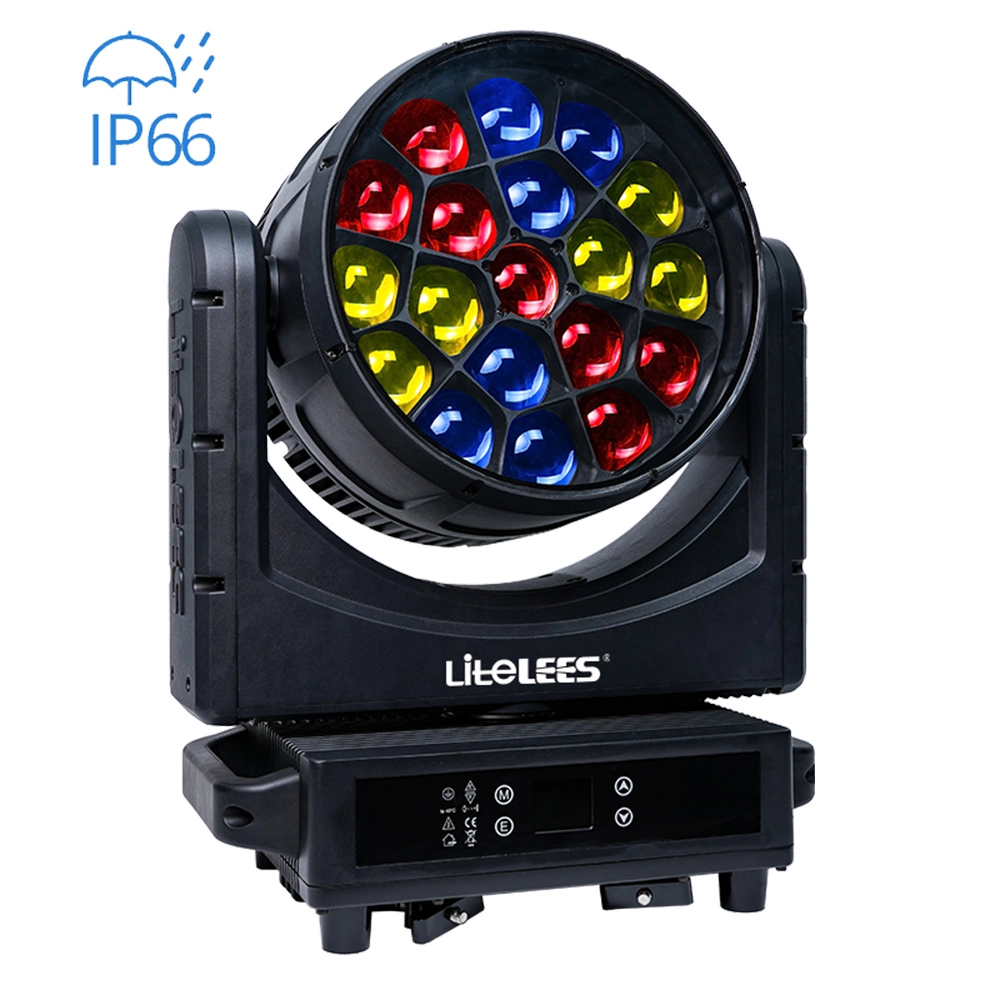
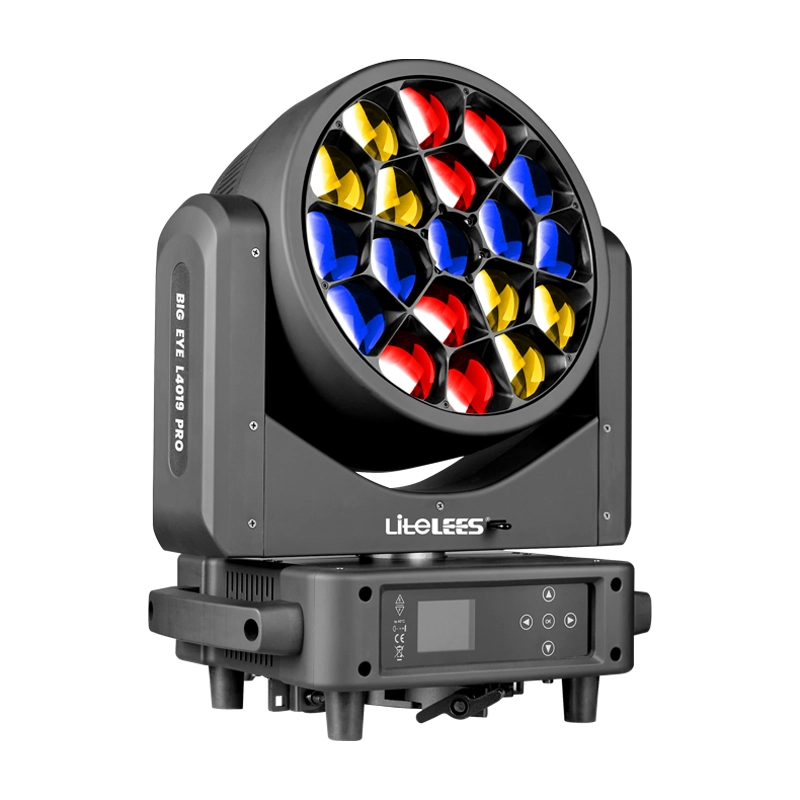
BIG EYE L4019 IP
Want to get more up-to-date news?
If you have any comments or good suggestions, please leave us a message; later our professional staff will contact you as soon as possible.

We are professional stage lighting manufacturers offering OEM and ODM LED stage lights.
Contact
Email us
Call us
Address
No.6 Longnan Road, Huashan Town, Huadu District Guangzhou, Guangdong Province, China.
LiteLEES Professional
Less Lighting