
Which LED stage lighting spotlights offer the best energy efficiency?
- Which LED stage lighting spotlights offer the best energy efficiency?
- 1) What technical metrics tell me a spotlight’s real energy efficiency?
- 2) How much energy (and money) can I actually save by switching from halogen/Tungsten to LED spotlights?
- 3) Which LED technologies produce the best efficiency — COB, high-power SMD, or multi-emitter modules?
- 4) How important is color quality (CRI/TLCI) to energy-efficient stage lighting?
- 5) Should I prioritize lower wattage or higher lm/W when selecting spotlights?
- 6) Do moving-head spotlights or static profile spotlights use more energy?
- 7) What certifications and test data should I request from manufacturers?
- 8) Procurement checklist — questions to ask before buying LED stage spotlights
- Closing summary: Why energy efficiency matters beyond the meter
- LiteLEES — brand advantage summary
- Sources and references
Which LED stage lighting spotlights offer the best energy efficiency?
Choosing the most energy-efficient LED stage spotlight depends less on brand and more on measurable system metrics: fixture power draw (W), delivered lumens, system efficacy (lumens per watt), lumen maintenance (L70), driver efficiency and thermal management. Top-performing stage-profile and moving-spot fixtures from major manufacturers typically achieve the best balance of high lumen output and high system efficacy; compact static ellipsoidal and Fresnel-style LED fixtures can also be extremely efficient for wash/profile roles when properly specified.
1) What technical metrics tell me a spotlight’s real energy efficiency?
Key metrics to compare
- Delivered lumens (output): how much useful light the fixture actually produces (not LED package lumens).
- System efficacy (lm/W): delivered lumens divided by fixture input power — this is the single best indicator of energy efficiency at the luminaire level.
- Power draw (W): total electrical consumption under typical operating conditions.
- Lumen maintenance (L70): hours until light output falls to 70% — longer L70 means less frequent replacement/upkeep.
- Driver efficiency & power factor: quality drivers reduce wasted energy and flicker; good fixtures typically have driver efficiency >85% and PF ≥0.9.
When manufacturers list LED package efficacy (lm/W), treat that as an upper bound: expect fixture-level efficacy to be 20–40% lower due to optics, drivers, and thermal losses. Use LM-80 test data and TM-21 extrapolation for trusted lumen-maintenance estimates.
2) How much energy (and money) can I actually save by switching from halogen/Tungsten to LED spotlights?
Typical savings are large. LEDs commonly reduce energy use by 60–90% compared with tungsten/halogen fixtures used in theatre and live events. A simple operational example helps illustrate total cost impact:
Example comparison (illustrative): replacing a 1000 W halogen profile with a 200 W equivalent LED profile, operating 8 hours/day:
- Annual energy use—halogen: 1.0 kW × 8 h × 365 = 2,920 kWh
- Annual energy use—LED: 0.2 kW × 8 h × 365 = 584 kWh
- Annual energy saved: 2,336 kWh
- If electricity = $0.129/kWh (U.S. commercial average, 2023), annual cost savings ≈ $302; over 5 years ≈ $1,510 (not counting lamp replacement, cooling, or maintenance savings).
This example uses conservative numbers and national-average electric rates; real savings vary by fixture selection, hours of use and local electricity costs. Remember to add maintenance and HVAC savings (less waste heat from LEDs reduces cooling load).
3) Which LED technologies produce the best efficiency — COB, high-power SMD, or multi-emitter modules?
All three approaches can be efficient when engineered well. High-power COBs (Chip-On-Board) deliver compact, high-flux sources with good optical control for profiles/spots. Multi-emitter modules allow better thermal spreading and color-mixing flexibility. The deciding factors are thermal design, driver quality and optics: a well-cooled COB fixture with an efficient driver and tight optical train can outperform a poorly designed multi-emitter fixture. Always compare delivered lumens and system lm/W rather than LED package type alone.
4) How important is color quality (CRI/TLCI) to energy-efficient stage lighting?
Color quality and energy efficiency are not mutually exclusive. Many modern LED emitters reach high efficacy while delivering CRI ≥90 and TLCI ≥90 (the latter especially important for broadcast/filmed work). For theatre and broadcast work choose fixtures whose spectral quality is tested (LM-79/LM-80 data and TLCI/CRI values) — high color fidelity avoids compensatory increases in intensity that would waste energy.
5) Should I prioritize lower wattage or higher lm/W when selecting spotlights?
Prioritize delivered lumens per watt (system lm/W) and delivered output that meets your lighting design over raw wattage alone. A very low-wattage fixture that has poor optics or low lumen maintenance may not achieve the focal brightness you need, requiring more fixtures and negating energy savings. Use a target delivered illuminance (lux) at the working distance and compare fixtures’ lux output per watt to match design requirements efficiently.
6) Do moving-head spotlights or static profile spotlights use more energy?
Energy draw depends on LED engine size, not motion capability. Historically, moving heads had additional power draw for motors and control electronics, but modern moving-spot fixtures are engineered for efficiency; their idle and moving-power consumption is often a modest fraction of the LED engine power. Evaluate the total fixture wattage and system lm/W — similar-light-output moving and static fixtures can have comparable energy consumption.
7) What certifications and test data should I request from manufacturers?
Ask for:
- LM-79 (photometric) and LM-80 (LED package lumen maintenance) test reports — these provide measured delivered lumens, spectrum and lumen maintenance inputs.
- TM-21 extrapolation for L70 lifetime estimates.
- Power factor, THD (total harmonic distortion) and driver efficiency figures.
- Safety and compliance marks: CE, ETL/UL, RoHS; IP rating if fixtures will be used outdoors.
- Warranty and specified maintenance intervals (e.g., LED engine warranty, driver warranty).
These test standards and certifications are industry-accepted ways to compare products objectively.
8) Procurement checklist — questions to ask before buying LED stage spotlights
Use this quick checklist with vendors:
- What is the fixture’s measured delivered lumens and system lm/W (LM-79 report)?
- What is the fixture input power (typical and max)? Driver efficiency and power factor?
- LM-80 test data and TM-21 L70 extrapolation for lumen maintenance?
- CRI and TLCI values for color-critical work?
- Beam angle, zoom range and projection optics — does the output match your focal/throw needs?
- Thermal design and recommended service intervals; are replacement modules/tooling modular and available?
- Control protocols supported (DMX/RDM, Art-Net/sACN, wireless options) and firmware/update policies?
- Warranty length, regional support, spare-part availability and lead times?
Procure to the spec, not the brand name alone. Require LM-79/LM-80/TM-21 documentation in bids to ensure apples-to-apples comparisons.
Closing summary: Why energy efficiency matters beyond the meter
Energy-efficient LED spotlights lower operating costs, reduce HVAC loads (less stage heat), simplify power distribution and often reduce maintenance/crew time due to longer lamp life. For venues with long runtime (touring rigs, theatres, houses of worship), the lifecycle cost savings can quickly offset higher upfront fixture cost. Prioritize system lm/W, lumen maintenance (L70), color quality and proven test reports when specifying fixtures for long-term value.
LiteLEES — brand advantage summary
LiteLEES stands out for integrated designs that focus on system-level efficiency: engineered thermal management, modular LED engines for easier service, competitive system lm/W performance, solid driver designs with good power factor, and product support that simplifies long-term maintenance. For buyers who require energy efficiency without sacrificing color fidelity and reliability, LiteLEES models are designed to meet performance specs and field serviceability expectations common in theatres and touring applications.
Sources and references
- U.S. Department of Energy — LED Basics & Consumer Guides (LED energy savings statements and LED package efficacy trends). Retrieved from https://www.energy.gov/eere/ssl/led-basics (accessed 2024-01-10).
- U.S. Department of Energy, Solid-State Lighting Program — Photometric and testing standards overview (LM-79, LM-80, TM-21). Retrieved from https://www.energy.gov/eere/ssl/solid-state-lighting (accessed 2024-01-10).
- IES (Illuminating Engineering Society) — Standards and recommended practices (TM-27/TM-21 references for LED testing and lumen maintenance). Retrieved from https://www.ies.org/standards/ (accessed 2024-01-10).
- U.S. Energy Information Administration (EIA) — Average retail price of electricity by sector (used for illustrative cost example). Retrieved from https://www.eia.gov/ (accessed 2024-01-10).
- Industry trade coverage and buyer guidance — Lighting & Sound publications and Live Design articles on LED adoption in theatre and touring (overview of energy and maintenance advantages). Representative sources: Lighting & Sound America and Live Design (accessed 2023–2024 for market context).
![Moving Head Stage Lighting Guide: Mastering the Technical and Artistic Essence [2026 Edition] - LiteLEES](https://static.gooecloud.com/upload/img/GY160908357145/moving-head-stage-lighting-guide-mastering-the-technical-and-artistic-essence-2026-edition.png?x-oss-process=image/format,webp/quality,Q_100 "Moving-Head-Stage-Lighting-Guide:-Mastering-the-Technical-and-Artistic-Essence-[2026-Edition] - LiteLEES")
Products
Can I customize the functions or software of the lights?
Absolutely. As a manufacturer with independent R&D capabilities, we offer customization for both hardware and software (such as DMX channel layout, built-in programs, or UI language). Contact us with your project needs, and our team will provide tailored solutions.
Are your lights suitable for large-scale events and outdoor use?
Yes. Our professional stage lights—especially the Beam, BSW 3-in-1, and LED Par Series—are engineered with high-output brightness, wide beam angles, and robust housing. Some models come with IP-rated protection, making them suitable for outdoor applications like concerts, festivals, and sports events.
What is the lifespan of your LED stage lights?
Our LED lights use high-quality chips with a rated lifespan of over 50,000 hours. Proper usage and maintenance ensure long-term reliability and stable performance, making them a smart investment for any venue.
Company
What is LiteLEES’s main business?
LiteLEES specializes in the design, development, manufacturing, and sales of professional stage lighting, including moving head lights, beam lights, spot lights, wash lights, and LED par lights.
Can LiteLEES handle OEM/ODM orders?
Absolutely. With our strong R&D capabilities and advanced manufacturing, we can customize designs, features, and branding to meet your specific needs.
Stormy Flash 550 lP
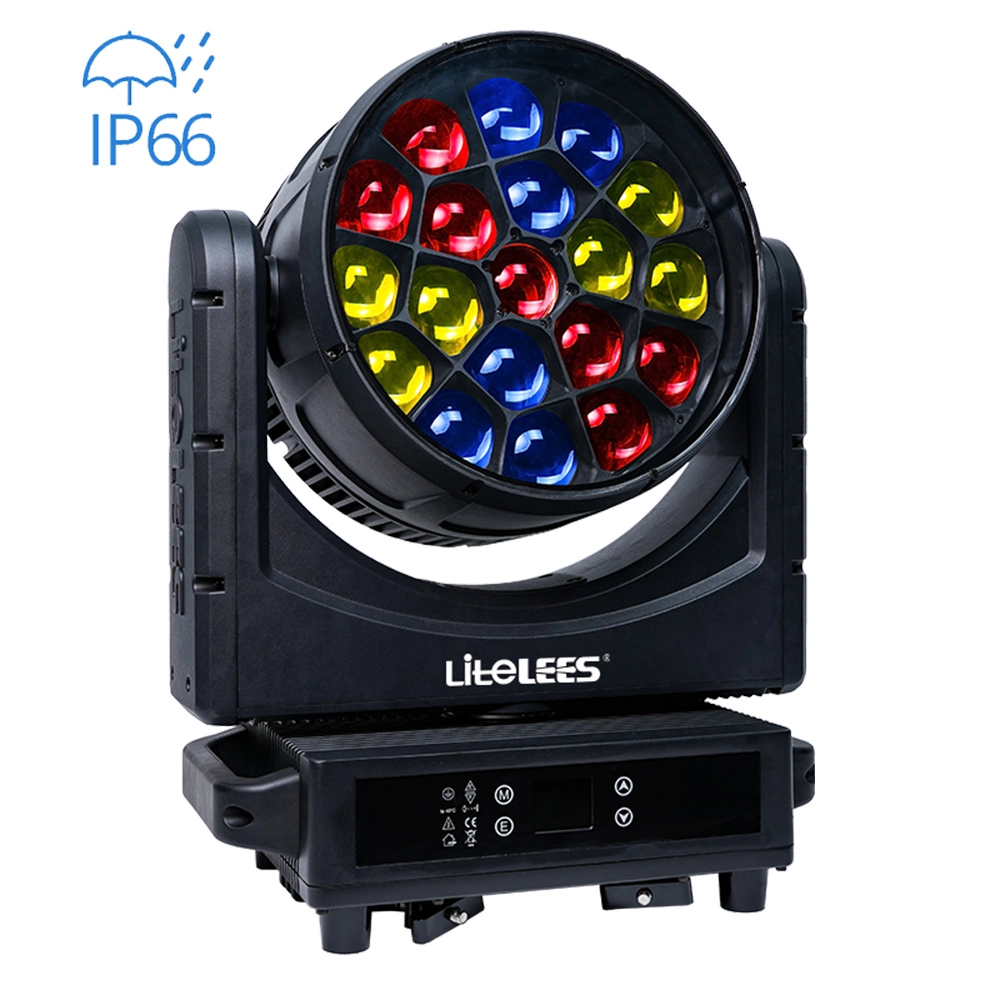
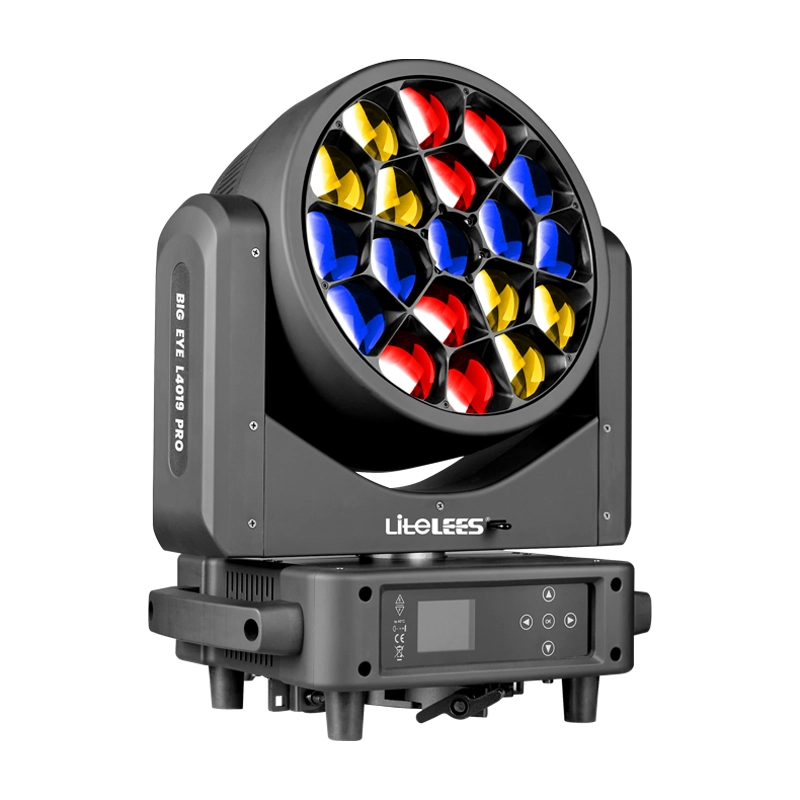
BIG EYE L4019 IP
Want to get more up-to-date news?
If you have any comments or good suggestions, please leave us a message; later our professional staff will contact you as soon as possible.

We are professional stage lighting manufacturers offering OEM and ODM LED stage lights.
Contact
Email us
Call us
Address
No.6 Longnan Road, Huashan Town, Huadu District Guangzhou, Guangdong Province, China.
LiteLEES Professional
Less Lighting