
How to compare LED moving head vs wash lights for stages?
- 1) How many LED wash lights do I need to achieve ~800 lux evenly across a 10 × 8 m stage at 6 m truss height?
- 2) How to compare LED moving head vs wash lights for stages?
- 3) Which LED specifications (CRI, CCT, PWM frequency) matter for filming live concerts with high-frame-rate cameras?
- 4) How should I evaluate beam angle vs zoom range when choosing moving heads that must do both narrow aerial beams and wide washes?
- 5) What power, cooling and duty-cycle concerns should I check to prevent thermal throttling of LED fixtures during multi-hour shows?
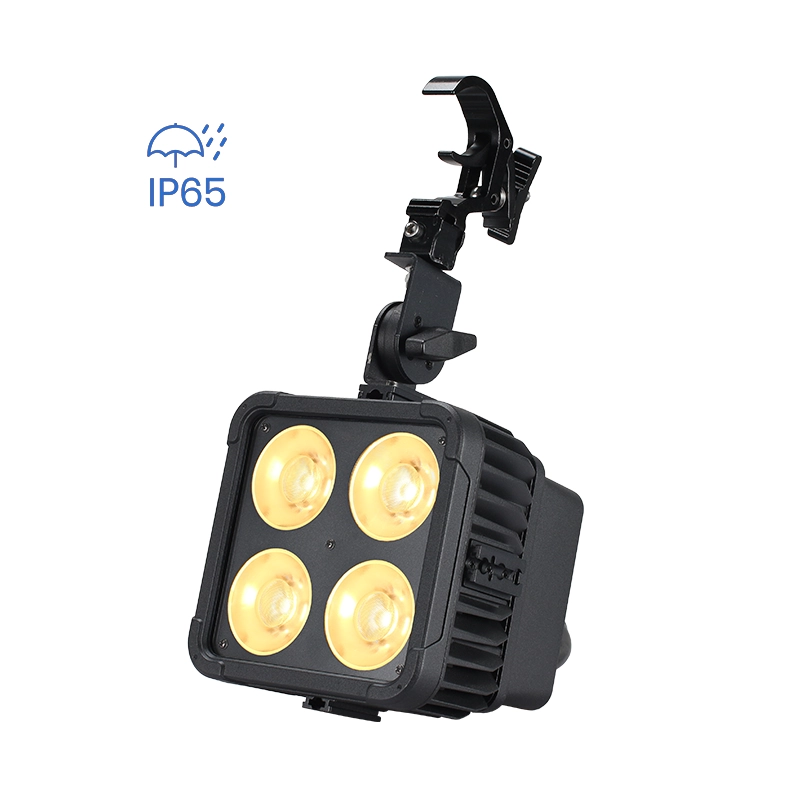
- 6) How do I plan rigging, weight and DMX addressing when mixing indoor IP20 moving heads with IP65 outdoor wash lights for a touring rig?
1) How many LED wash lights do I need to achieve ~800 lux evenly across a 10 × 8 m stage at 6 m truss height?
Beginner pain point: online guides often say “use X fixtures” without showing the math. You must calculate illuminance (lux) from fixture lumen output and beam angle.
Key formula (practical approximation): Illuminance E (lux) ≈ Φ (lumens) / A (m²), where the illuminated area A ≈ π × ². D = distance from fixture to stage (m). θ = beam angle (degrees).
Example: target 800 lux across entire stage area (10 × 8 m = 80 m²). Using a common high-output LED wash spec as example: Φ = 15,000 lm, beam angle θ = 40°, D = 6 m.
- tan(θ/2) = tan(20°) ≈ 0.364 → radius r = 6 × 0.364 ≈ 2.18 m
- Illuminated area by one fixture A ≈ π × 2.18² ≈ 15.0 m²
- Illuminance from one fixture at that distance E ≈ 15,000 lm / 15.0 m² ≈ 1,000 lux
So one 15,000-lumen wash at 6 m covers ~15 m² at ~1,000 lux. To illuminate 80 m² evenly to ~800 lux you’d need approximately:
Required total luminous flux = target lux × area = 800 × 80 = 64,000 lm. Number of fixtures ≈ 64,000 / 15,000 ≈ 4.3 → plan 5 fixtures, spaced for overlap and headroom (color mixing, distribution losses, wiring). Practical layout: 4 front washes + 1 center fill or 6 for redundancy and even blending.
Buying tips:
- Always factor 10–25% headroom for beam overlap, throw distance changes, haze, gel/diffusion and aging LED output (lumen depreciation).
- For HDTV/broadcast, increase target lux or choose CRI ≥ 90 fixtures (see Q3).
- Check photometric charts from the manufacturer (lux at distance graphs) — they replace rough lumen math when available.
2) How to compare LED moving head vs wash lights for stages?
Beginner pain point: suppliers list specs but don’t connect them to show outcomes. Treat moving-head fixtures (spot/beam/beam wash) and wash fixtures as tools with different roles:
Compare on the following parameters:
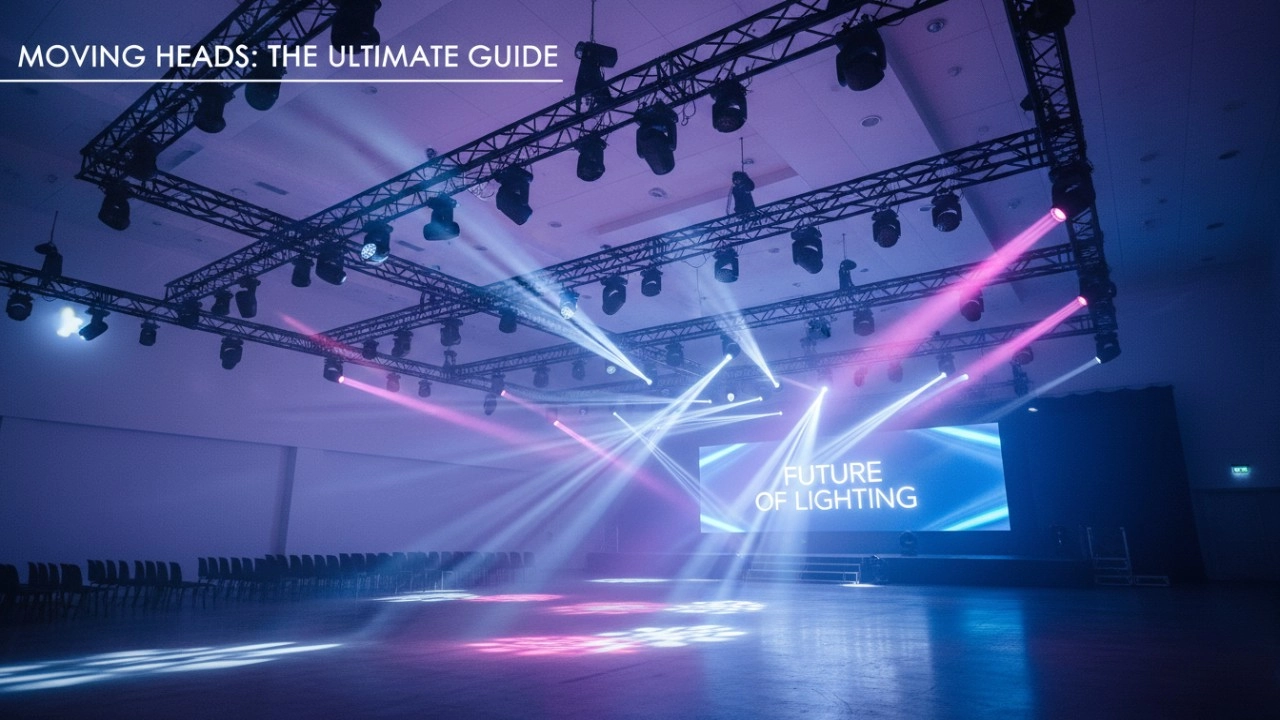
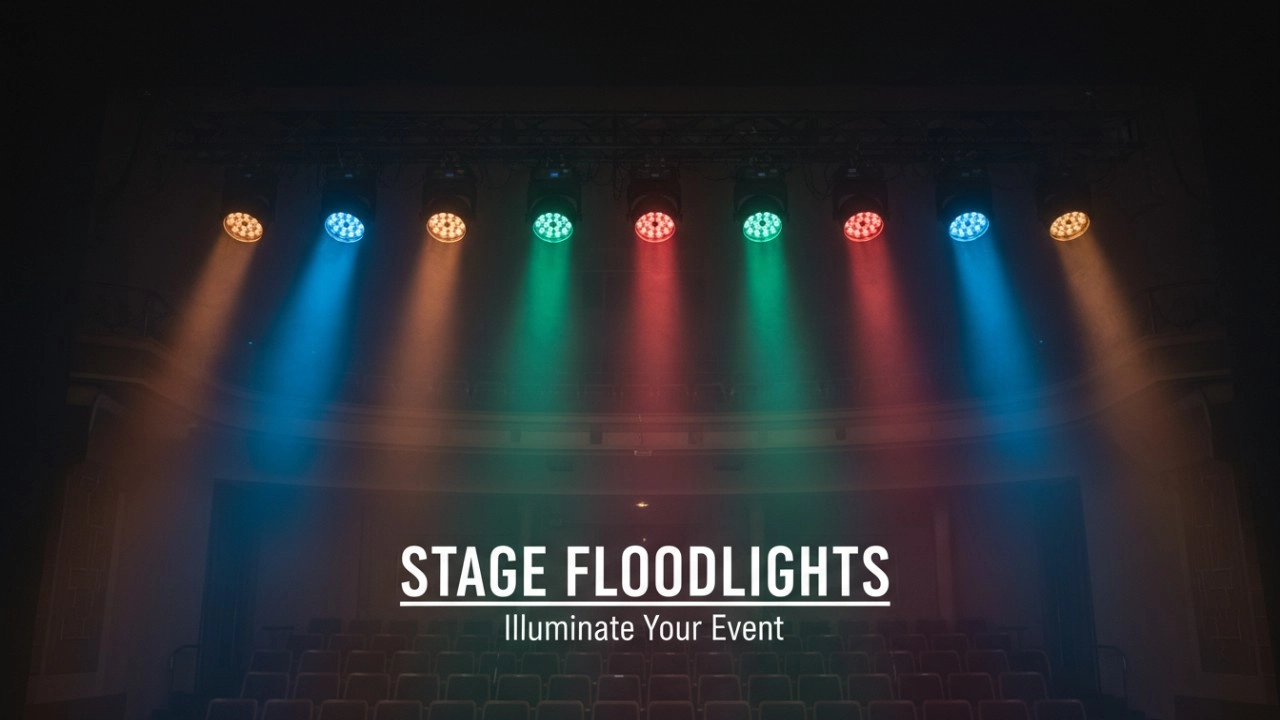
- Primary function: Wash lights provide even color floods and soft front/back washes. Moving-head (beam/spot) are for narrow, high-intensity beams, gobos, and tight aerial effects.
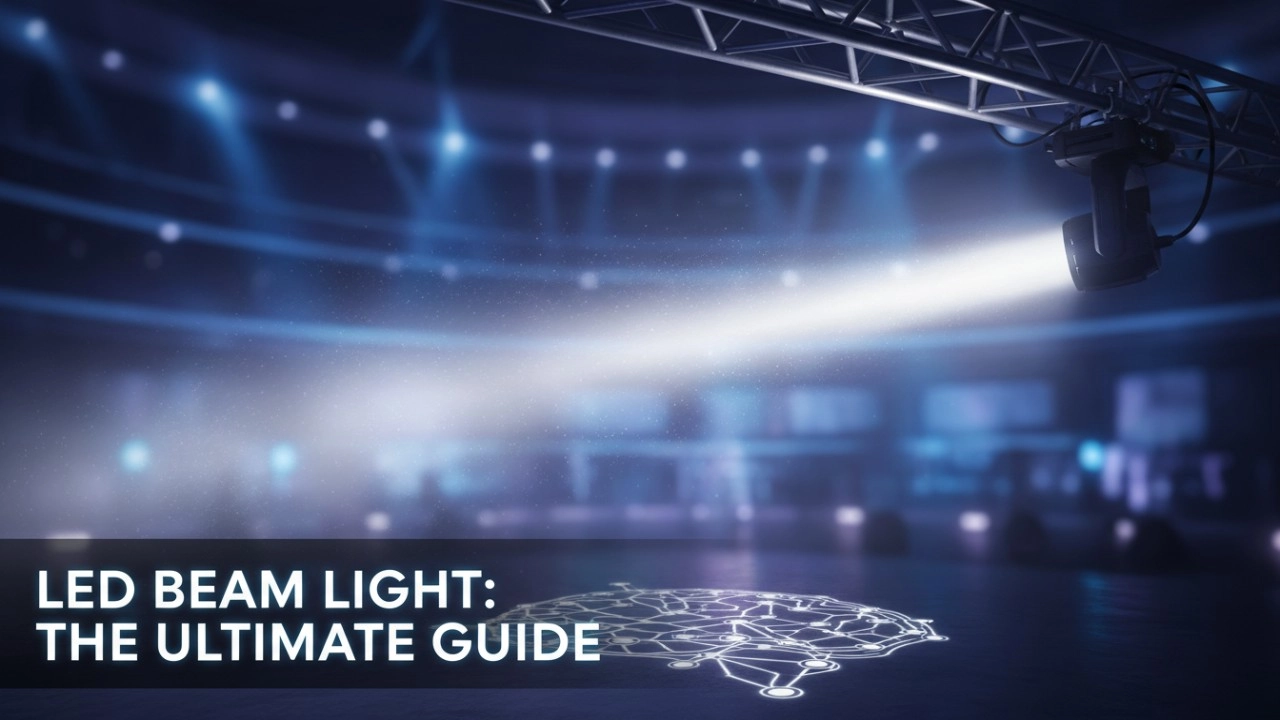
- Luminous distribution: Washes have large beam angles (15°–90°) and aim for even lux across surfaces. Moving heads have narrow beam options (1.5°–25°) and often include zoom to switch between spot and wide beam.
- Optical control: Moving heads commonly include gobos, prisms, iris and motorized focus/zoom for precise shapes; washes prioritize smooth color mixing and even edge falloff (soft field uniformity).
- Color capabilities: Modern washes use RGBW/ RGBA/CMY mixing engines for smooth pastels and high CRI; moving heads often use CMY or CMY+CTO plus color wheels for saturated colors and fast shifts.
- Output metric: For washes use lumens + beam angle and photometric lux-at-distance charts. For beams use lux at distance or candela; look for high intensity (cd) and narrow beam angles for aerial effects.
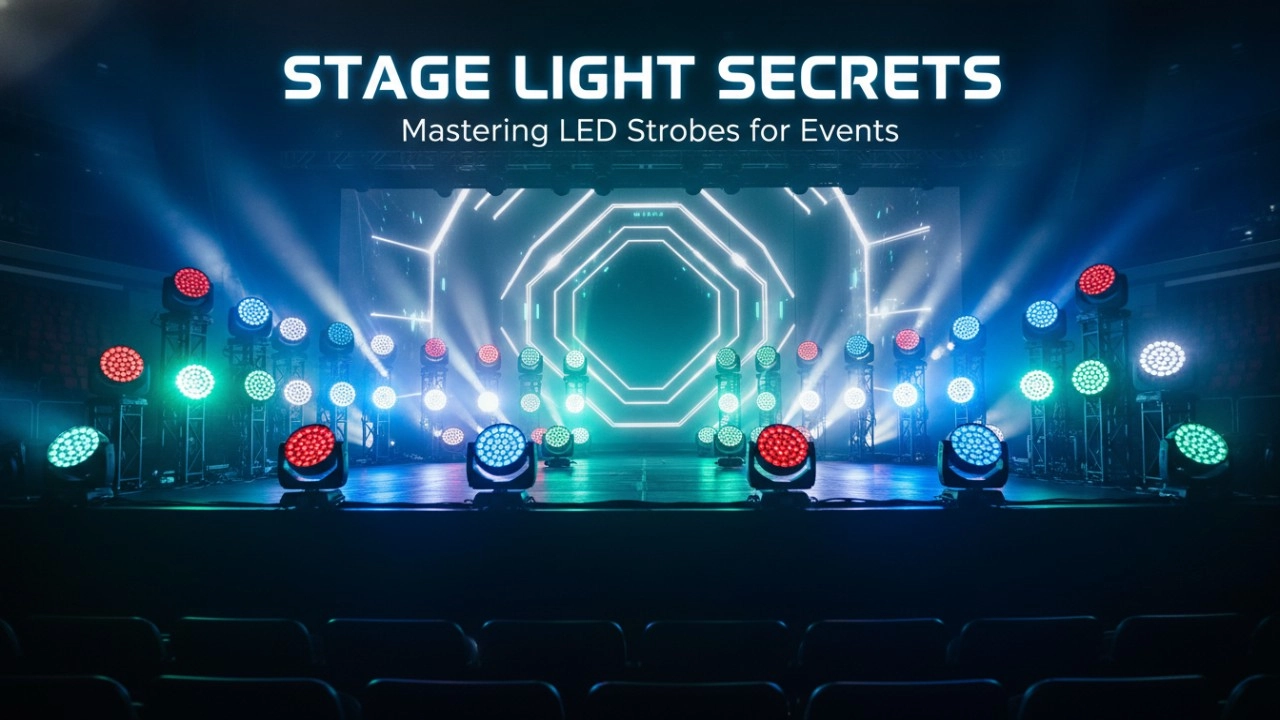
- Video compatibility: For camera work, choose fixtures with high PWM frequency (see Q3) and stable dimming curves. Moving-head gobos and intense beams can create hotspots on camera unless diffused or blended with washes.
- Rigging, weight & power: Moving heads are heavier, need secure clamps and sometimes additional flying points; washes are lighter and easier for fixed truss positions.
Practical buying rule: specify your primary need first — if you need look-driven effects and aerial dynamics choose more moving-heads; if you need flattering, even illumination for performers, prioritize washes. Most professional rigs combine both: front/side/border washes for coverage + moving heads for specials and audience/aerials.
3) Which LED specifications (CRI, CCT, PWM frequency) matter for filming live concerts with high-frame-rate cameras?
Beginner pain point: Many fixtures look great to the eye but flicker or color-shift on camera.
Key specs:
- CRI / TM-30: For accurate skin tones on camera, choose CRI ≥ 90 (Ra) or better — modern broadcast-grade fixtures provide TM-30 values and Rf/Rg scores showing color fidelity. CRI alone can be misleading; prefer manufacturers publishing TM-30 or spectral power distribution curves.
- Correlated Color Temperature (CCT) control: Choose fixtures with motorized CCT or CMY mixing so you can dial precise white balance (2,800–6,500 K). Look for +/- 100 K stability across intensity.
- PWM frequency & flicker control: PWM frequency affects strobing on cameras. Practical guidelines:
- For standard broadcast and LED panels: PWM ≥ 4 kHz can be acceptable for 25–60 fps, but spotting remains possible at high shutter speeds.
- For high-speed or high-frame-rate cameras (120–300+ fps): choose fixtures advertising PWM > 20 kHz or dedicated flicker-free driver modes. Also check for driver behavior at low dim levels.
- Dimming curve: Look for smooth 16-bit dimming or linearized curves for camera use — abrupt gamma/dimming changes will show on video.
- Spectral power distribution (SPD): Avoid fixtures with narrow spikes (cheap phosphor LED) which can create color artifacts under camera sensors. Manufacturers providing SPD plots are preferred.
Practical test: always request a video sample of the exact fixture at the frame rates and shutter angles you’ll use in production. If possible, rent one unit and record at various settings before large purchases.
4) How should I evaluate beam angle vs zoom range when choosing moving heads that must do both narrow aerial beams and wide washes?
Beginner pain point: manufacturers list “1:10 zoom” or “motorized zoom 6–60°” but buyers don’t know how it translates to show needs.
Consider these metrics:
- Zoom range (θmin–θmax): A wide zoom (e.g., 3–45° or 6–60°) gives versatility. Very narrow minimum angles (1.5–3°) are for long-throw beams; maximum angles above 40° produce usable washes when focused close to stage.
- Output scaling with zoom: Expect luminous intensity to concentrate when zoomed narrow (lux increases) and spread when zoomed wide. Check photometric tables the manufacturer provides: lux at distance for multiple zoom steps.
- Optical quality & edge control: For wash use you want even edges and low hot-spot contrast; check manufacturer beam uniformity figures or images. For beam effects you want sharp edges and clear gobo projection capability.
- Pixel-mapping & shuttering: If you need pixel-mapped beam effects, choose moving heads with full LED pixel control or hybrid fixtures that combine wash and pixel LEDs.
Buying guidance: avoid compromise-only fixtures if your show requires both strong, razor beams and very even washes at professional levels — you may be better buying dedicated beam/spot moving heads for specials and high-output wash fixtures for coverage. If budget or truck space forces a hybrid, pick a model with a true wide zoom and strong lumen output at both ends, and validate with photometric charts.
5) What power, cooling and duty-cycle concerns should I check to prevent thermal throttling of LED fixtures during multi-hour shows?
Beginner pain point: fixtures dim or change color after 30–60 minutes due to overheating; online specs sometimes omit continuous-duty ratings.
What to check:
- Continuous duty rating: Look for manufacturer specs stating rated duty cycle (many professional fixtures are rated for 100% duty at specified ambient temps, e.g., 0–40 °C). Consumer fixtures sometimes don’t support full-show duty.
- Ambient temperature & ventilation: High ambient temps (hot outdoor day, packed rigs) reduce cooling efficiency. Allow free airflow around fixtures; avoid stacking tightly in flight cases during operation.
- Cooling design: Active fan-cooled fixtures can be noisy; check fan rpm curves and whether fans are temperature-controlled. Convection-cooled or well-heat-sinked fixtures are preferable for noise-sensitive gigs but often heavier.
- Power management: Check inrush current, power factor, and whether fixtures support universal mains or require specific voltages. For touring, ensure your distro can handle continuous load; include 10–15% spare breaker capacity for safety.
- Thermal derating & output stability: Some fixtures will reduce LED current (and therefore lumen output) once a threshold temperature is reached. Manufacturers should publish thermal derating curves — request them if not public.
Operational tips:
- Plan cooling: maintain ambient <35–40 °C on hot tours; provide forced airflow in enclosed truss pockets.
- Allow runtime validation: schedule a burn-in test under expected conditions (full power, same hang) to detect thermal throttling before live events.
6) How do I plan rigging, weight and DMX addressing when mixing indoor IP20 moving heads with IP65 outdoor wash lights for a touring rig?
Beginner pain point: mixing indoor/outdoor fixtures increases complexity: mounting hardware, safety factors, cable types, DMX and network management differ.
Rigging & mechanical checklist:
- Weight & rated clamps: Always select truss clamps and safety bonds rated above the fixture’s weight plus a minimum safety factor (generally 5:1 for theatrical rigging). Moving heads can be 8–30 kg+; check exact weight per unit.
- Mounting points & orientation: Some fixtures need additional bracing for touring; verify locking mechanisms and locking safety bolts on yokes. For outdoor IP65 fixtures ensure drainage channels are unobstructed.
- Cable type & power distribution: Indoor fixtures often use IEC or powerCON TRUE1 connectors; outdoor IP65 fixtures use sealed powerCON with compatible cabling. For touring create color-coded distro with labeled runs for quick changeovers.
- DMX & network planning: moving heads often use DMX512 or Art-Net/sACN. For long touring runs prefer Ethernet-based control (Art-Net / sACN) with local DMX nodes; use RDM for remote addressing and status monitoring. For wireless control, use proven systems (e.g., LumenRadio) and plan fallback wired paths.
- Addressing strategy: Create a standard DMX addressing map and commit it to a rigging document. Use RDM-capable fixtures to remotely set addresses during load-in. Reserve address blocks per fixture type and space to avoid re-addressing when swapping units.
- Ingress protection & service access: IP65 fixtures reduce failure from weather but complicate field repair; plan for serviceable spare parts (power supplies, fans) and ensure you have a few powered spares per tour.
Operational tips:
- Create one-line diagrams showing power & DMX runs. Label every cable at both ends and include patch lists in the rider.
- Confirm rigging hardware compatibility on advance and share fixture weights, centre-of-gravity and bracket drawings with venue riggers.
- Test RDM & Art-Net mapping during setup so you can remotely configure and monitor fixtures where possible — this saves hours on large rigs.
Concluding summary: LED stage lighting (LED moving head and LED wash lights) offers major advantages: high lumen-per-watt efficiency, flexible color mixing, reduced heat, longer service life, and digital control (DMX/Art-Net) enabling complex looks with fewer physical gels or gels changes. For professional touring rigs, combine high-output washes for even performer illumination with moving heads for specials and aerial dynamics. Prioritize fixtures with good photometric data, broadcast-capable PWM and CRI/TM-30 specs if filming, full duty ratings and clear rigging documentation for safe, reliable operation.
Contact us at www.litelees.com or litelees@litelees.com for a quote or to request photometric sheets and on-site support for your next production.
Company
Can LiteLEES handle OEM/ODM orders?
Absolutely. With our strong R&D capabilities and advanced manufacturing, we can customize designs, features, and branding to meet your specific needs.
Where is LiteLEES located?
Our headquarters and manufacturing facility are located in Guangzhou, China, with products exported to over 70 countries worldwide.
Do you have your own factory?
Yes. We own a sheet metal factory and a complete in-house production line—from PCB to final assembly—ensuring strict quality control and fast delivery.
Products
Are your lights suitable for large-scale events and outdoor use?
Yes. Our professional stage lights—especially the Beam, BSW 3-in-1, and LED Par Series—are engineered with high-output brightness, wide beam angles, and robust housing. Some models come with IP-rated protection, making them suitable for outdoor applications like concerts, festivals, and sports events.
How long is the warranty period for your products?
We offer a standard 1-year warranty on all products, with extended warranty options available upon request. During the warranty period, we provide free technical support and parts replacement for non-human damage.
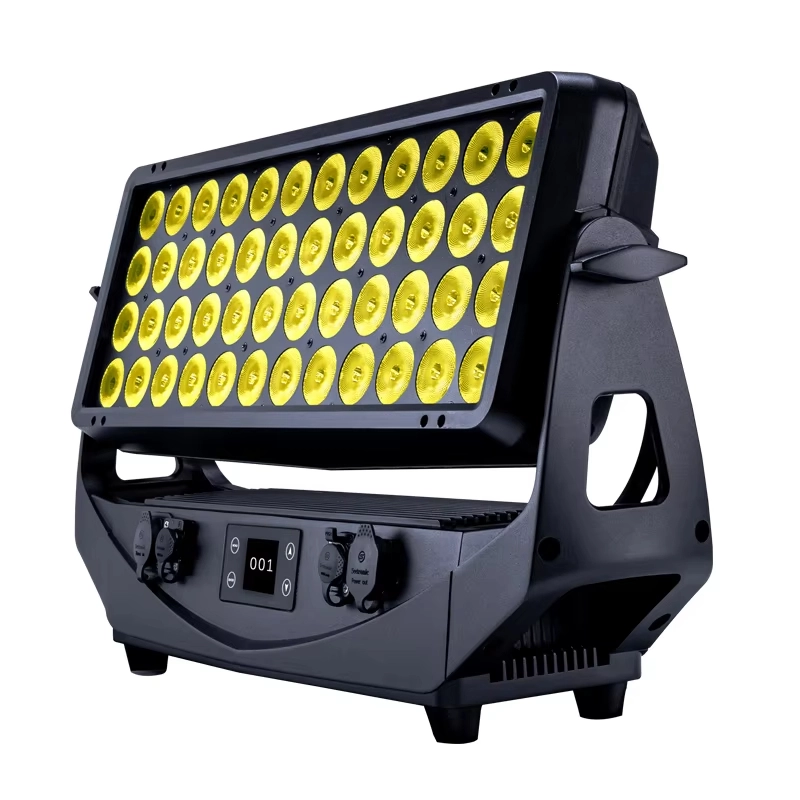
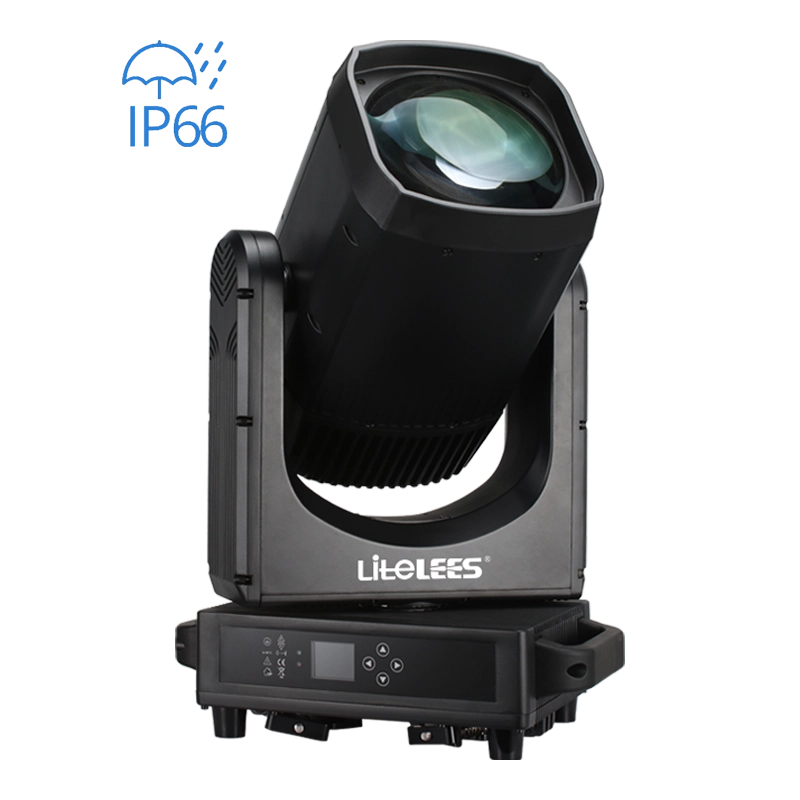
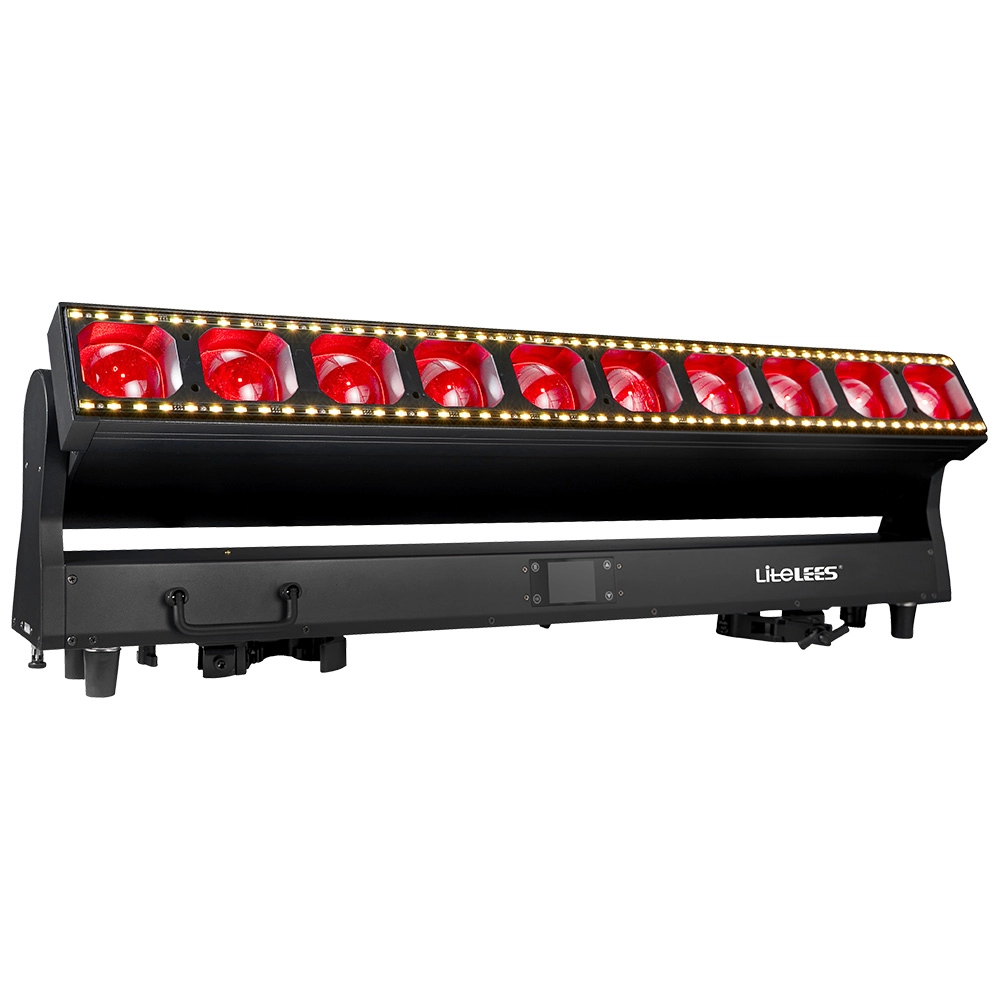
LiteLEES LUMIX BEAM 420 IP
Magic Cube V8 IP
Want to get more up-to-date news?
If you have any comments or good suggestions, please leave us a message; later our professional staff will contact you as soon as possible.

We are professional stage lighting manufacturers offering OEM and ODM LED stage lights.
Contact
Email us
Call us
Address
No.6 Longnan Road, Huashan Town, Huadu District Guangzhou, Guangdong Province, China.
LiteLEES Professional
Less Lighting