
Spotlight vs. Stage Flood Lights: Which One Does Your Production Actually Need?
- Quick Summary: The Core Differences at a Glance
- What Is the Difference Between a Spotlight and a Stage Flood Light?
- Key Distinctions
- Deep Dive: The Power of Stage Floodlights
- Why You Need Them
- Deep Dive: When to Call on the Spotlight
- When to Use Them
- Comparison Matrix: Beam Angles, Throw, and Control
- Gap Analysis: Energy Efficiency & ROI in 2026
- The ROI Factors
- Expert Tips: Avoiding Common Lighting Mistakes
- Practical Solutions
- Frequently Asked Questions (FAQ)
- Can I use a stage floodlight as a spotlight?
- What is the best beam angle for a stage floodlight?
- Do LED stage floodlights work with DMX controllers?
- How many floodlights do I need for a 20-foot stage?
- Are floodlights cheaper than spotlights?
- Conclusion & Call to Action
Quick Summary: The Core Differences at a Glance
Spotlights highlight specific subjects with narrow beams (<45°), while stage floodlights wash wide areas (>45°) to create atmospheric depth and fill shadows.
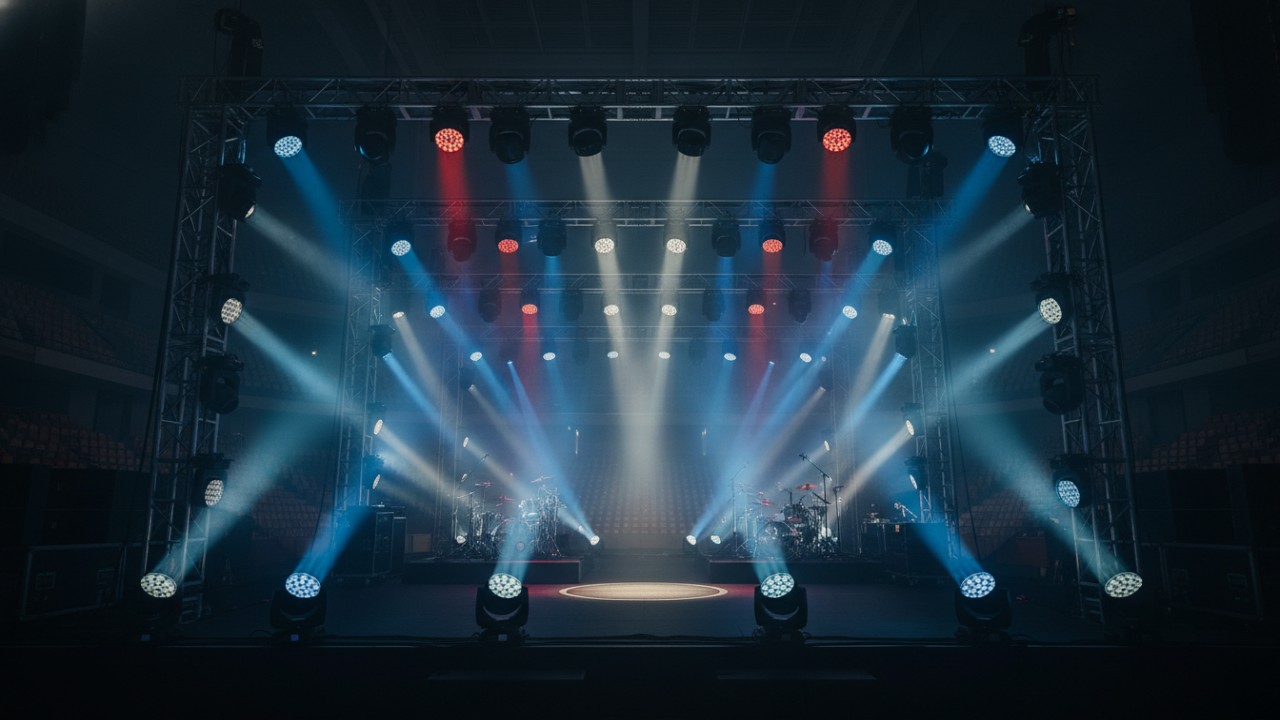
To achieve a professional look, you rarely choose one over the other; instead, you balance them. A spotlight provides the "hard" focus that directs the audience's eye, while a floodlight provides the "soft" context that sets the scene. Most successful lighting designs utilize a strategic mix—often a 70/30 ratio of floods to spots—to ensure both visibility and emotional resonance.
- Spotlights: High intensity, narrow beam (<45 degrees), sharp focus, used for highlighting subjects.
- Stage Flood Lights: Soft intensity, wide beam (>45 to 120 degrees), undefined edges, used for scenic washes and backdrops.
- Verdict: Theatrical lighting design basics dictate that floods provide the canvas, while spots paint the details.
What Is the Difference Between a Spotlight and a Stage Flood Light?
A spotlight projects a narrow, focused beam of light to highlight specific performers or objects, creating sharp shadows and high contrast, whereas a stage floodlight casts a broad, non-directional wash.
Understanding this distinction is critical for spotlight vs floodlight for events. While a spotlight utilizes complex lens systems (like Plano-Convex or Fresnels) to manipulate light into a tight circle, a floodlight often relies on a simple reflector to scatter light across a vast surface. This fundamental mechanical difference dictates their roles: spotlights are for definition, and floodlights are for atmosphere.
Key Distinctions
- Directionality: Spotlights are directional and manipulative; floods are passive and filling.
- Shadow Quality: Spotlights create hard, dramatic edges; floods eliminate shadows for a flatter, even look.
- Intent: Spotlights say, "Look at this," while floods say, "Feel this."
Deep Dive: The Power of Stage Floodlights
Stage floodlights function as the visual foundation of a stage design, acting as a "base coat" that ensures visibility without casting harsh, distracting shadows.
Without adequate flood lighting, a stage would look like a collection of disjointed bright spots in a void. Stage wash lighting techniques rely heavily on these fixtures to blend disparate pools of light into a cohesive image. For companies like Guangzhou Lees Lighting Co., Ltd. (LiteLEES), optimizing the spread and consistency of LED wash lights is a core focus of their R&D team, ensuring that modern fixtures deliver uniform color mixing without the "hotspots" found in older gear.
Why You Need Them
- The Function: Illuminating large scenic elements and cycloramas (cycs).
- Common Types: Traditional Box Floods, LED Battens, and Asymmetric Cyc Lights.
- Best Applications: Creating smooth color gradients (sunsets/skies) and simulating environmental light (daylight/moonlight).
- Modern Tech: Asymmetric reflectors in LiteLEES fixtures are designed to throw light evenly down a vertical surface, preventing the top of a backdrop from looking brighter than the bottom.
Deep Dive: When to Call on the Spotlight
Spotlights are deployed when a director needs to cut through the ambient wash to strictly isolate the subject or action from the background environment.
The mechanics of a spotlight allow for high-precision adjustments. Using shutters, irises, and focus knobs, a lighting designer can shape the beam to avoid spilling onto scenery or other actors. This isolation is what gives stage performances their dramatic tension. However, a common mistake is over-reliance; using too many spotlights can create a "polka-dot" effect, breaking the immersion of the scene.
When to Use Them
- The Function: Isolate the subject and guide audience focus.
- Key Mechanics: Adjustable lenses for beam sizing and sharp/soft edge control.
- Best Applications: Solos, keynote speakers, and highlighting specific props.
- The Limit: Spotlights require manual tracking (follow spots) or precise pre-programming (moving heads) to be effective on moving targets.
Comparison Matrix: Beam Angles, Throw, and Control
The primary technical distinction lies in the beam angle, with spotlights ranging from 10° to 45° and floodlights exceeding 45° to cover wider sectors.
Below is a beam angle comparison chart breakdown to help visualize where each fixture fits in your rig:
- Beam Spread:
- Spotlights: Tight focus (10°-45°). Ideal for long throws.
- Flood Lights: Wide dispersion (45°–120°+). Ideal for short to medium throws.
- Throw Distance:
- Spotlights: Maintain intensity over long distances (e.g., from the back of the house).
- Flood Lights: Intensity dissipates quickly; best placed near the object or backdrop.
- Edge Quality:
- Spotlights: Hard/sharp edges (controllable).
- Flood Lights: Soft/diffused edges (blends naturally).
- Control:
- Spotlights: Shutters, gobos, and irises.
- Flood Lights: Barn doors (for rough shaping) or simple dimming curves.
Gap Analysis: Energy Efficiency & ROI in 2026
Modern LED stage floodlights offer superior ROI by reducing power consumption by up to 75% compared to traditional halogen fixtures, drastically lowering venue utility costs.
For small to mid-sized venues, the shift to LED is not just aesthetic; it is financial. According to the Department of Energy, residential and commercial LEDs use at least 75% less energy and last up to 25 times longer than incandescent lighting. In a theatrical context, this means a venue can run a full wash rig without tripping breakers or overheating the stage. LED stage floodlights' energy efficiency also translates to reduced HVAC costs, as modern fixtures from brands like LiteLEES generate significantly less heat than traditional 1000W halogen floods.
The ROI Factors
- Power Consumption: Running 20 LED floods often uses less power than 2 halogen floods.
- Heat Generation: Reduced strain on air conditioning systems.
- Maintenance: LiteLEES products are certified to CE and RoHS standards, ensuring longevity that eliminates the weekly bulb replacements required by older systems.
- Case Study: Touring productions utilizing smart LED floods have reported setup time reductions of 40% due to built-in DMX cabling and lighter fixture weights.
Expert Tips: Avoiding Common Lighting Mistakes
A common error is the "washout effect," where excessive flood lighting eliminates shadows entirely, flattening the actors' features and reducing visual drama.
To avoid this, you must treat floodlights as the background layer, not the main source of illumination for faces. Additionally, failing to match color temperatures is a frequent issue. According to the National Renewable Energy Laboratory, advancing LED technology now allows for precise color tuning, but mixing cool white LEDs with warm halogen spots without adjustment will result in an unnatural, jarring visual for the audience.
Practical Solutions
- The Washout Effect: Always ensure your key light (spot) is at least 30% brighter than your fill light (flood).
- Color Mismatch: Use LiteLEES variable-zoom fixtures or RGBW floods to color-match your spots (Kelvin temperature) for a cohesive look.
- Positioning Errors: Avoid placing floodlights too far back; this causes light to spill into the audience. Keep them close to the backdrop.
- Industry Solution: Utilize "barn doors" or "top hats" on floodlights to control spill without sacrificing the soft quality of the light.
Frequently Asked Questions (FAQ)
Can I use a stage floodlight as a spotlight?
Generally, no. Floodlights lack the lens systems required to focus light into a sharp beam. While you can use barn doors to shape the light, it will not achieve the intensity or definition of a dedicated spotlight.
What is the best beam angle for a stage floodlight?
For general washes, a beam angle between 60 and 90 degrees is standard. For cycloramas or wide backdrops, asymmetric floods with wider lateral spreads are preferred to ensure even coverage.
Do LED stage floodlights work with DMX controllers?
Yes, most modern LED floodlights are fully DMX compatible. This allows for remote dimming, color changing (RGBW), and strobing effects directly from the lighting console, a standard feature in all LiteLEES professional fixtures.
How many floodlights do I need for a 20-foot stage?
A general rule is to space fixtures every 3 to 5 feet for an even wash. For a 20-foot stage, 4 to 6 flood fixtures are typically recommended to ensure overlap and eliminate dark spots.
Are floodlights cheaper than spotlights?
Typically, yes. Floodlights have simpler mechanics (no complex lens trains or focus gears). However, high-end LED floods with advanced color mixing can rival the cost of mid-range spotlights.
Conclusion & Call to Action
Choosing between spotlights and stage floodlights isn't an "either/or" decision; it's about finding the right ratio to support your artistic vision. Floods provide the canvas, while spots paint the details. By understanding beam angles, throw distances, and the energy benefits of modern LEDs, you can build a versatile rig that handles any performance.
Contact Guangzhou Lees Lighting Co., Ltd. (LiteLEES) today to discuss your specific needs, and let our experienced R&D team help you design the perfect lighting rig.
![Moving Head Stage Lighting Guide: Mastering the Technical and Artistic Essence [2026 Edition] - LiteLEES](https://static.gooecloud.com/upload/img/GY160908357145/moving-head-stage-lighting-guide-mastering-the-technical-and-artistic-essence-2026-edition.png?x-oss-process=image/format,webp/quality,Q_100 "Moving-Head-Stage-Lighting-Guide:-Mastering-the-Technical-and-Artistic-Essence-[2026-Edition] - LiteLEES")
Company
Can LiteLEES handle OEM/ODM orders?
Absolutely. With our strong R&D capabilities and advanced manufacturing, we can customize designs, features, and branding to meet your specific needs.
Where is LiteLEES located?
Our headquarters and manufacturing facility are located in Guangzhou, China, with products exported to over 70 countries worldwide.
What is LiteLEES’s main business?
LiteLEES specializes in the design, development, manufacturing, and sales of professional stage lighting, including moving head lights, beam lights, spot lights, wash lights, and LED par lights.
Products
What is the lifespan of your LED stage lights?
Our LED lights use high-quality chips with a rated lifespan of over 50,000 hours. Proper usage and maintenance ensure long-term reliability and stable performance, making them a smart investment for any venue.
Are your lights suitable for large-scale events and outdoor use?
Yes. Our professional stage lights—especially the Beam, BSW 3-in-1, and LED Par Series—are engineered with high-output brightness, wide beam angles, and robust housing. Some models come with IP-rated protection, making them suitable for outdoor applications like concerts, festivals, and sports events.
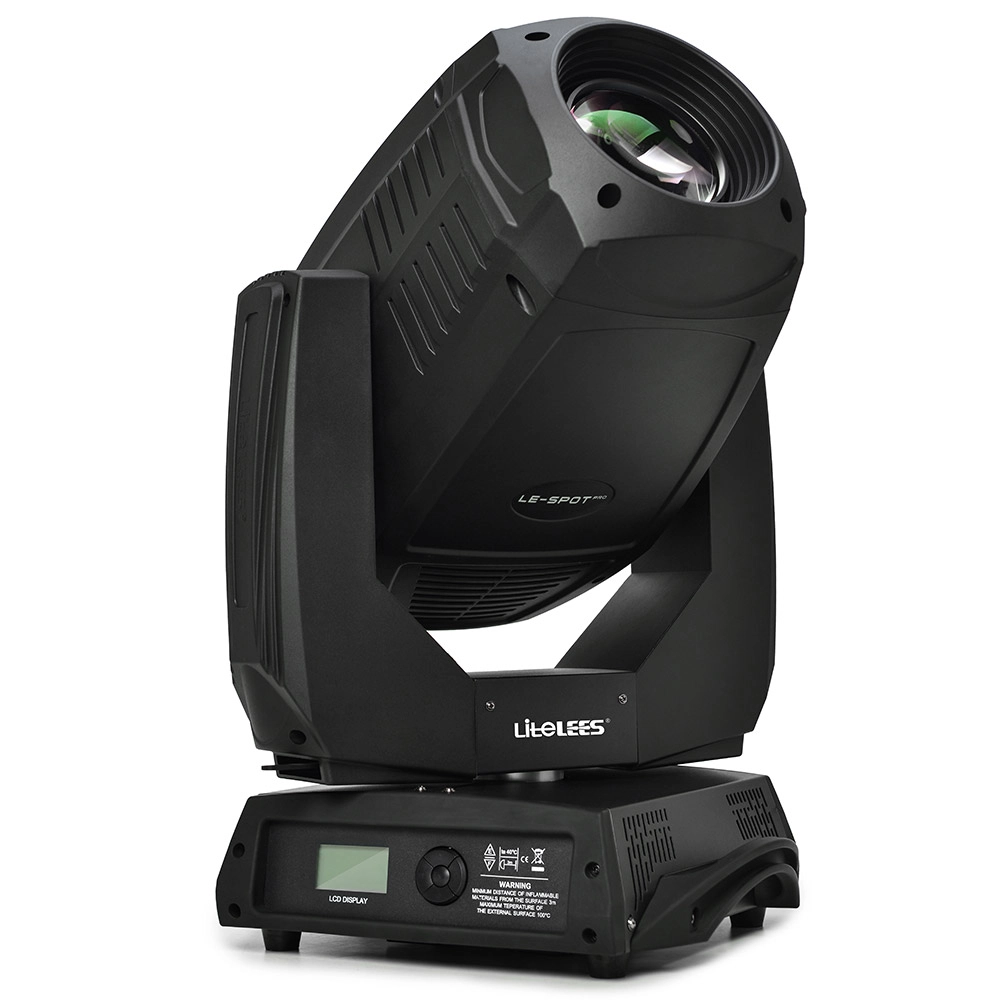
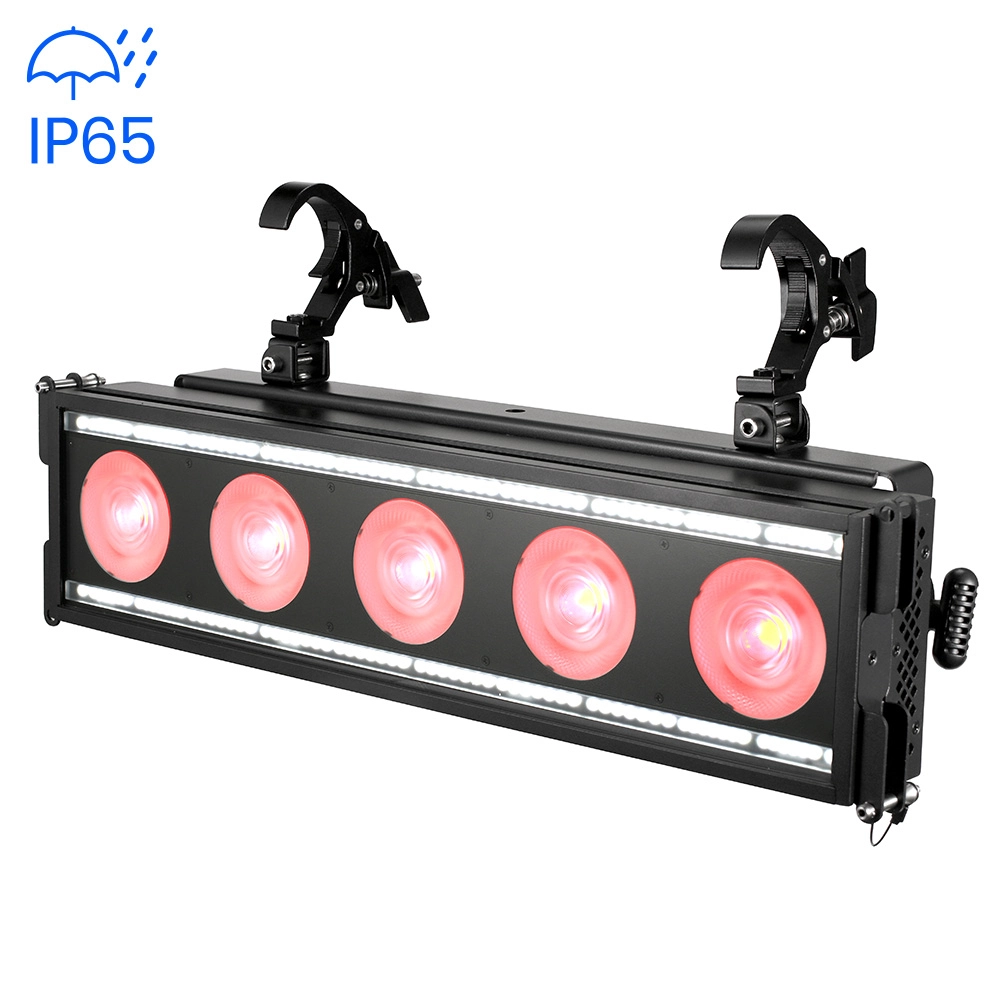
Stormy Flash 550 lP
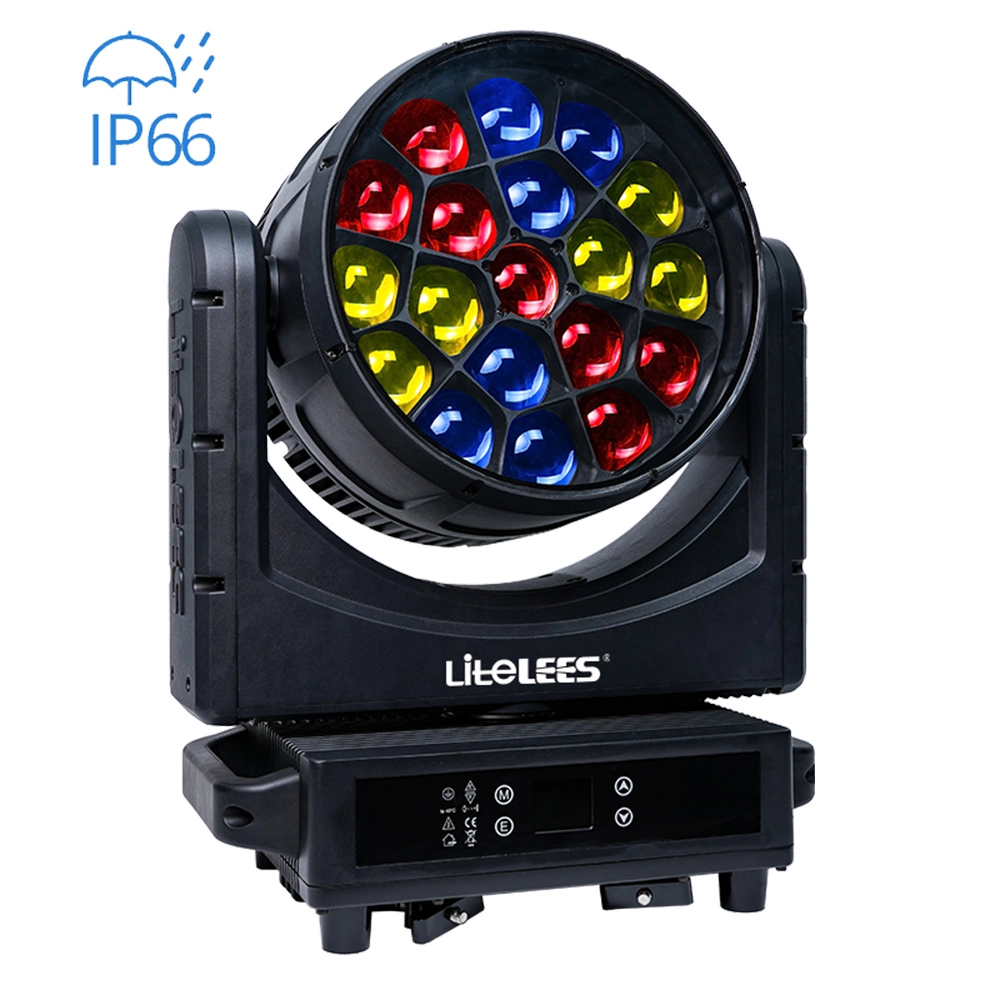
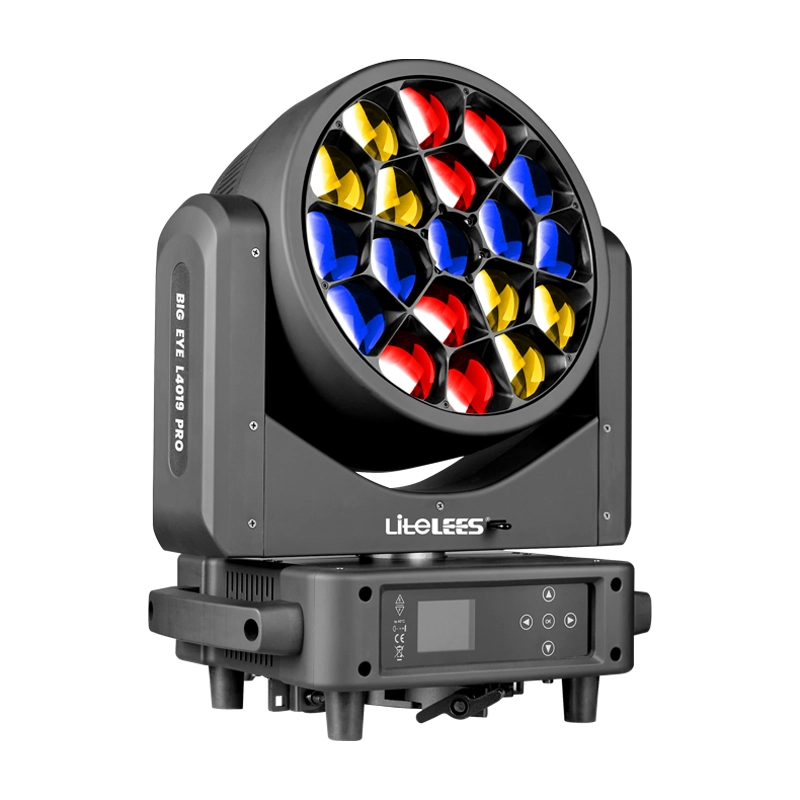
BIG EYE L4019 IP
Want to get more up-to-date news?
If you have any comments or good suggestions, please leave us a message; later our professional staff will contact you as soon as possible.

We are professional stage lighting manufacturers offering OEM and ODM LED stage lights.
Contact
Email us
Call us
Address
No.6 Longnan Road, Huashan Town, Huadu District Guangzhou, Guangdong Province, China.
LiteLEES Professional
Less Lighting