
The Buyer’s Checklist: 5 Crucial Features Your White LED Stage Floodlight Must Have (2026 Guide)
- Key Takeaways: The 30-Second Summary
- What defines a professional White LED Floodlight for stage?
- Feature #1: High Color Rendering Index (CRI & TLCI)
- Why It Matters
- The Buyer’s Standard
- Feature #2: Tunable White CCT (Variable Color Temperature)
- Why It Matters
- The Buyer’s Standard
- Feature #3: Theater-Grade 16-Bit Dimming Curves
- Why It Matters
- The Buyer’s Standard
- Feature #4: High PWM Refresh Rate (Flicker-Free)
- Why It Matters
- The Buyer’s Standard
- Feature #5: Silent Cooling Systems
- Why It Matters
- The Buyer’s Standard
- Expert Tips: Common Mistakes to Avoid When Buying
- Conclusion
- FAQ
- What is the best color temperature for stage floodlights?
- Why is CRI important for white LED stage lights?
- Can white LED floodlights be dimmed smoothly?
- What is the difference between warm white and cool white LEDs?
- How do I prevent LED stage lights from flickering on video?
- Do white LED floodlights require DMX controllers?
- What is the typical lifespan of a white LED stage floodlight?
- Are asymmetrical reflectors better for stage washing?
In the world of professional theatre and broadcast, the "good enough" era of LED lighting is over. Modern productions demand precision, silence, and flawless camera compatibility. Whether you are retrofitting a university theater or specifying a rig for a hybrid event space, the quality of your white light determines the visual fidelity of the entire production.
This guide serves as your technical checklist. We move beyond basic brightness to the nuanced specifications that separate industrial utility lights from professional artistic tools, such as Tunable White CCT Technology and theater-grade dimming engines.
Key Takeaways: The 30-Second Summary
- Color Quality: High CRI Stage Lighting (90+) is essential for natural skin tones and costume vibrancy.
- Flexibility: Tunable white engines allow you to match any time of day, from warm tungsten to cool daylight.
- Camera Ready: A Flicker-Free PWM Refresh Rate prevents strobing on video, a critical requirement for modern streaming.
- Control: 16-bit dimming ensures smooth fades to zero without the "pop-off" effect.
- Acoustics: Silent Cooling Systems are mandatory for noise-sensitive dramatic environments.
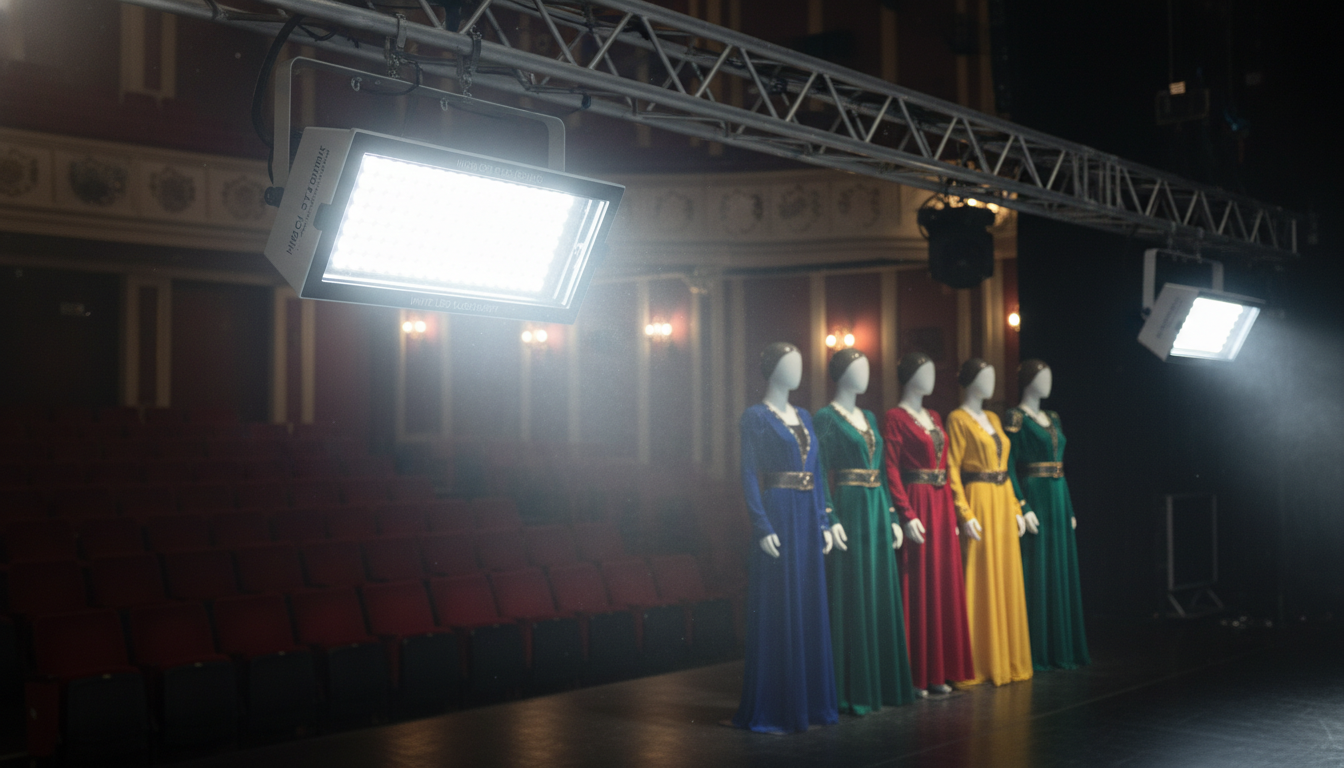
What defines a professional White LED Floodlight for stage?
A professional white LED stage floodlight is a wide-angle fixture engineered to deliver a uniform wash of light with high spectral fidelity and precise control. Unlike standard security floodlights, these units prioritize the quality of light—specifically color rendering and dimming smoothness—over raw efficiency. They are the workhorses of the stage, used to paint backdrops, illuminate cycloramas, and provide general area wash without creating hotspots.
Feature #1: High Color Rendering Index (CRI & TLCI)
High CRI Stage Lighting is a metric that measures a light source's ability to reveal the faithful colors of objects compared to a natural light source.
Why It Matters
Standard commercial LEDs often suffer from a "spectral gap," typically lacking in the red spectrum. This makes skin tones look grey or sickly and causes vibrant costumes to appear muddy. In a theatrical setting, where emotion is conveyed through the face, poor color rendering can ruin a performance. For broadcast, the Television Lighting Consistency Index (TLCI) is equally important, as it predicts how a camera sensor will interpret the light.
According to Wikipedia, the Color Rendering Index (CRI) is the quantitative measure of this ability, and for critical applications, a score below 90 is often considered unacceptable.
The Buyer’s Standard
- CRI (Ra): Must be > 90.
- R9 Value: Look for an R9 (saturated red) score > 50. This is vital for skin tones.
- TLCI: Aim for > 90 if the performance will be streamed or recorded.
Feature #2: Tunable White CCT (Variable Color Temperature)
Tunable White CCT Technology refers to an LED fixture's ability to adjust its Correlated Color Temperature (CCT) dynamically, typically ranging from warm white to cool white.
Why It Matters
In the past, lighting designers had to choose between "Tungsten" (3000K) or "Daylight" (5600K) fixtures, or use messy gels to correct them. Tunable white fixtures use a mix of warm and cool diodes to allow you to slide seamlessly between these extremes. This flexibility allows a single fixture to simulate a sunrise, a sterile hospital room, or a cozy living room interior instantly.
The Buyer’s Standard
- Range: 2700K (Warm) to 6500K (Cool/Daylight) is the industry sweet spot.
- Presets: Ensure the fixture has built-in DMX channels for rapid CCT adjustment.
- Blending: The transition should be seamless, with no visible color separation (or "rainbow shadows") at the edge of the beam.
Feature #3: Theater-Grade 16-Bit Dimming Curves
16-bit Dimming Curves utilize high-resolution processing to provide 65,536 steps of brightness control, ensuring ultra-smooth transitions at the bottom end of the intensity scale.
Why It Matters
Standard 8-bit dimming only offers 256 steps. When fading a light from 10% to 0% over a 10-second cue, 8-bit dimming results in visible "stepping" or choppiness. Even worse, many industrial drivers simply cut power once the light hits 5%, causing the light to snap off distractingly. 16-bit dimming mimics the natural thermal fade of a halogen bulb, allowing for a perfectly smooth fade to black.
The Buyer’s Standard
- Resolution: 16-bit (interpolated or true).
- Curve Modes: The fixture should offer selectable curves:
- Linear: Direct relationship between DMX value and output.
- Square Law: Matches the human eye's perception of brightness changes.
- S-Curve: Provides the finest control at both the top and bottom of the range.
Feature #4: High PWM Refresh Rate (Flicker-Free)
A Flicker-Free PWM Refresh Rate ensures that the pulsing of the LED occurs at a frequency high enough to be imperceptible to digital camera shutters.
Why It Matters
LEDs are dimmed using Pulse Width Modulation (PWM), which turns the light on and off thousands of times per second. If this frequency is too low, it creates rolling black bars or strobing effects on video cameras, ruining live streams and archival recordings. As reported by Waveform Lighting, sources with low flicker frequencies (under 1000 Hz) are particularly problematic for video, while high-frequency PWM is required to mitigate these artifacts effectively.
The Buyer’s Standard
- Minimum Frequency: 4,000 Hz (4kHz) is the baseline for standard video.
- Ideal Frequency: 12,000 Hz to 25,000 Hz for high-speed or slow-motion capture.
- Adjustability: Professional fixtures often allow you to adjust the PWM frequency via the menu to sync with specific shutter speeds.
Feature #5: Silent Cooling Systems
Silent Cooling Systems utilize advanced thermal management, such as fanless convection designs or smart ultra-quiet fans, to dissipate heat without generating audible noise.
Why It Matters
In a rock concert, fan noise is irrelevant. In a dramatic play, a church service, or a broadcast studio, the hum of cheap cooling fans can be picked up by microphones and distract the audience. As fixtures get brighter, they generate more heat, making thermal management a critical engineering challenge.
The Buyer’s Standard
- Fanless: Convection cooling is preferred for TV studios and intimate theaters (0 dB noise).
- Smart Fans: If fans are necessary for high-power units, they must have a "Studio Mode" that limits fan speed (and noise) at the expense of a small output reduction.
- Noise Rating: Look for specs stating < 25dB at 1 meter.
Expert Tips: Common Mistakes to Avoid When Buying
- Ignoring the Beam Angle: Don't buy a symmetrical flood when you need an asymmetrical throw for a cyc wall.
- Overlooking RDM: Remote Device Management allows you to change DMX addresses from the console, saving you from climbing a ladder.
- Mixing Binning Batches: Ensure all your fixtures come from the same LED bin (batch) to guarantee the "White" looks identical across all units.
Conclusion
Selecting the right white LED stage floodlight is about balancing raw output with the nuances of light quality. By prioritizing High CRI Stage Lighting for color accuracy, Tunable White CCT Technology for versatility, and ensuring your rig features Silent Cooling Systems, you protect the artistic integrity of your production. Do not compromise on the technical backbone of your stage; the difference is visible to every member of the audience.
Contact us today to optimize your stage lighting strategy with our professional LED solutions.
FAQ
What is the best color temperature for stage floodlights?
It depends on the mood. 3000K-3200K mimics traditional tungsten for warm, intimate scenes, while 5600K-6000K simulates daylight. Tunable white fixtures offer the best of both worlds, allowing you to adjust the temperature to fit the scene perfectly.
Why is CRI important for white LED stage lights?
CRI (Color Rendering Index) measures how accurately a light reveals colors. Low CRI LEDs make actors look sickly and costumes look dull. Aim for CRI 90+ to ensure that skin tones appear natural and set designs retain their intended vibrancy.
Can white LED floodlights be dimmed smoothly?
Yes, provided they have 16-bit Dimming Curves capabilities. Cheap industrial floods often snap off below 10%, whereas professional stage LEDs fade smoothly to zero, mimicking the behavior of traditional incandescent fixtures.
What is the difference between warm white and cool white LEDs?
Warm white has a yellow/amber undertone (cozy, traditional), while cool white has a blue undertone (clinical, bright, modern). Tunable fixtures can produce both, giving lighting designers maximum flexibility without changing fixtures.
How do I prevent LED stage lights from flickering on video?
Ensure your fixtures have a high Flicker-Free PWM Refresh Rate, ideally above 4,000Hz. This ensures the light pulses faster than the camera's shutter speed, preventing the rolling shutter artifacts commonly seen with cheaper LEDs.
Do white LED floodlights require DMX controllers?
For professional control (dimming, CCT adjustments), DMX is required. However, many units have manual on-board menus for static setups, allowing them to be used as standalone work lights or set-and-forget architectural washes.
What is the typical lifespan of a white LED stage floodlight?
Professional LED diodes are typically rated for 50,000 hours of operation. This is significantly longer than traditional halogen bulbs, drastically reducing maintenance costs and the need for frequent lamp replacements.
Are asymmetrical reflectors better for stage washing?
Often, yes. Asymmetrical reflectors project light further up a cyclorama or backdrop while keeping the floor even, creating a more uniform wash from short distances compared to symmetrical reflectors which create a circular hotspot.
A Stage of Limitless Possibilities: Moving Head lights Deliver Precise Control and Versatile Effects
LED Stage Strobe Light Comparison: Performance, Power, and Pricing Guide
Why Your Venue Needs LED Beam Lights: A Cost-Benefit Analysis
Spotlight vs. Stage Flood Lights: Which One Does Your Production Actually Need?
Spotlight vs. Floodlight vs. Beamlight: A Comparison of Moving Stage Lighting Fixtures
Mastering the Flash: 7 Advanced Strobe DJ Light Techniques for Pro Entertainers
Products
How long is the warranty period for your products?
We offer a standard 1-year warranty on all products, with extended warranty options available upon request. During the warranty period, we provide free technical support and parts replacement for non-human damage.
Do your lights support DMX512 and other control protocols?
Yes. All LiteLEES stage lights are fully compatible with DMX512. Many models also support RDM, Art-Net, and wireless DMX (optional), ensuring seamless integration with modern lighting control systems.
Company
Where is LiteLEES located?
Our headquarters and manufacturing facility are located in Guangzhou, China, with products exported to over 70 countries worldwide.
Do you have your own factory?
Yes. We own a sheet metal factory and a complete in-house production line—from PCB to final assembly—ensuring strict quality control and fast delivery.
What certifications do your products have?
All LiteLEES products are certified by CE, RoHS, FCC, and BIS. Our factory is ISO9001 quality management system certified.
LP Profile 900
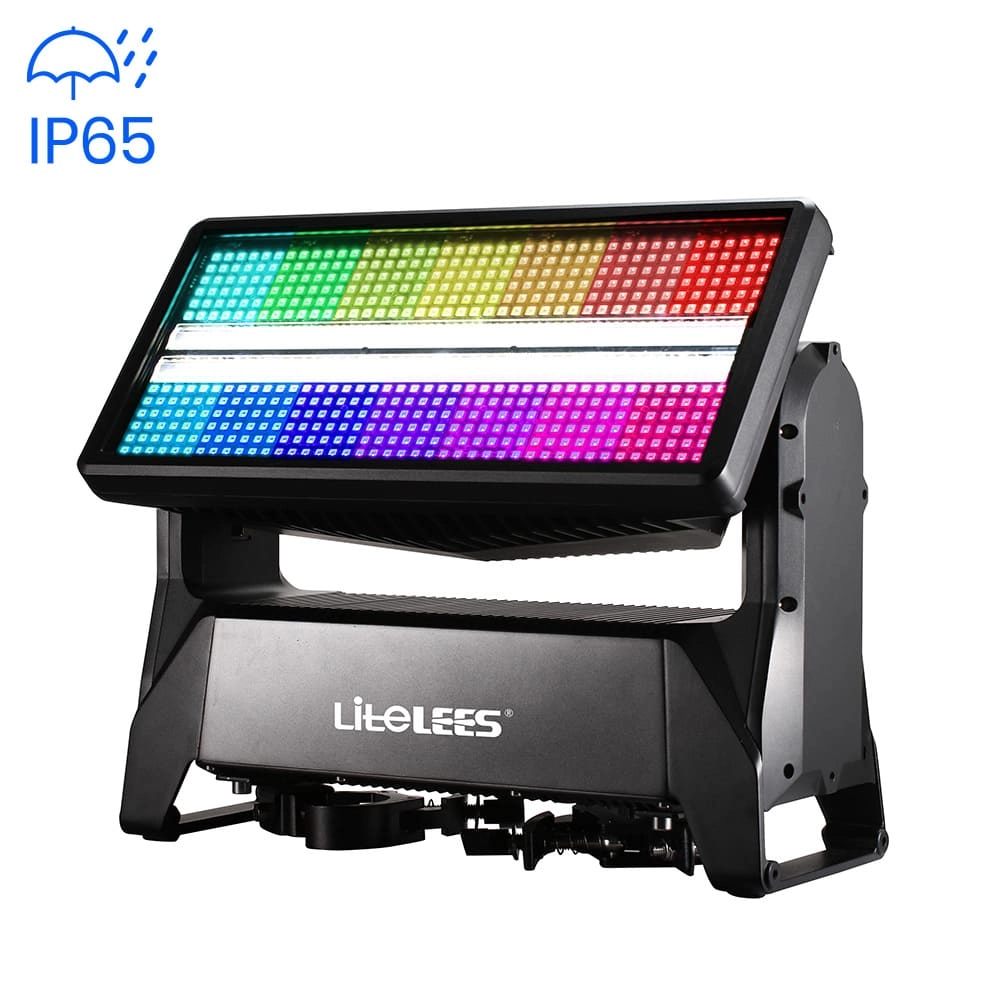
Stormy STRIKE M IP
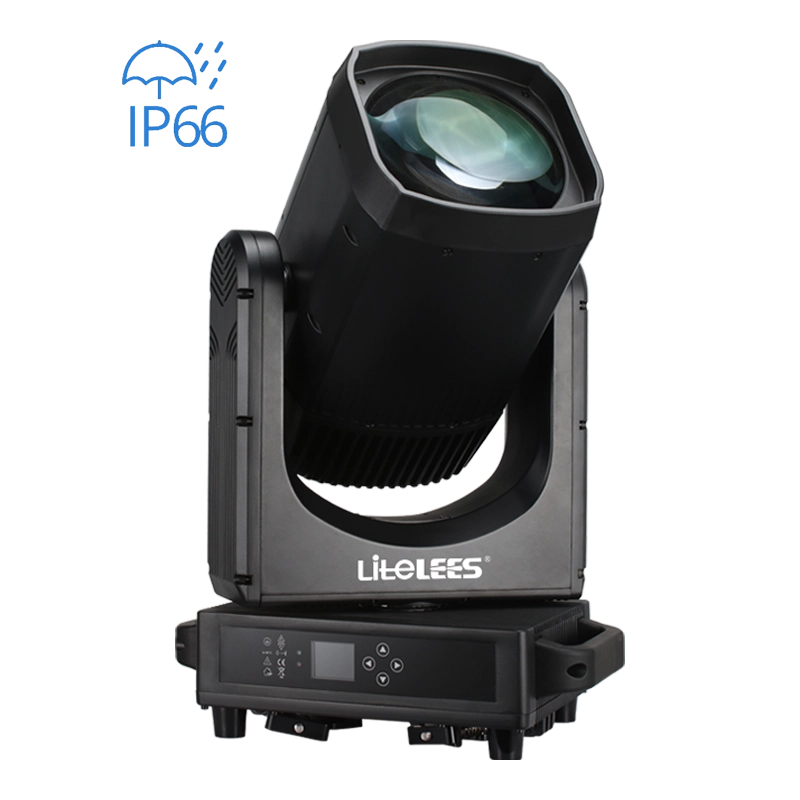
LiteLEES LUMIX BEAM 420 IP
Want to get more up-to-date information?
If you have any comments or good suggestions, please leave us a message; later our professional staff will contact you as soon as possible.

We are professional stage lighting manufacturers offering OEM and ODM LED stage lights.
Contact
Email us
Call us
Address
No.6 Longnan Road, Huashan Town, Huadu District Guangzhou, Guangdong Province, China.
LiteLEES Professional
Less Lighting