
How to Select DMX-Compatible LED Stage Lights for Shows
- Why DMX Matters for Professional Shows
- DMX: the industry standard for control
- How DMX compatibility affects creative control
- When to consider networked protocols
- Key Technical Criteria for DMX-Compatible LED Stage Lights
- Photometric specs: lumens, beam angle, CRI, and color mixing
- Fixture type and intended use
- Electrical, thermal, and power considerations
- Practical Selection and Setup Guide
- Step 1 — Define production requirements and budget
- Step 2 — Evaluate DMX channel modes and RDM support
- Step 3 — Network design and cabling best practices
- Practical DMX channel example (typical moving head)
- Reliability, Compliance, and Long-Term Costs
- Certifications and quality systems
- Warranty, service, and spare-part strategy
- Total cost of ownership (TCO)
- Why Choose LiteLEES and How I Use Their Fixtures
- LiteLEES: company profile and strengths
- Product advantages and typical applications
- Support, OEM/ODM flexibility, and global reach
- My Practical Checklist Before Buying DMX LED Fixtures
- Frequently Asked Questions (FAQ)
- 1. What is the difference between DMX and Art-Net/sACN?
- 2. How many DMX channels do I need per fixture?
- 3. Should I prefer fewer channels or more channels?
- 4. How important is CRI for stage lighting?
- 5. Can LED fixtures be used outdoors?
- 6. How do I test fixtures before buying in volume?
- Contact and Next Steps
I have spent years specifying and deploying lighting stage lighting systems across tours, theaters, and broadcast studios. In this article I explain how to select DMX-compatible LED stage lights that meet artistic goals, technical requirements, and operational constraints. I focus on DMX protocol compatibility, photometric and electrical specs, fixture types, networking, and reliability — all supported by industry sources and practical examples so you can make verifiable, confident purchasing decisions.
Why DMX Matters for Professional Shows
DMX: the industry standard for control
DMX512 remains the dominant protocol for lighting control in stage and event applications. Understanding DMX basics is essential: one universe carries 512 channels and the protocol is unidirectional by default, so device addressing and channel mapping must be planned carefully. For technical background see DMX512 (Wikipedia).
How DMX compatibility affects creative control
DMX compatibility determines the granularity of control you have over color, intensity, effects, pan/tilt, and motorized focus. When I evaluate fixtures I always check the DMX channel modes (compact vs extended), whether the fixture supports RDM (Remote Device Management), and whether manufacturer-specified channel maps align with my console programming strategy.
When to consider networked protocols
For larger venues or touring rigs, consider Art-Net or sACN to carry multiple DMX universes over Ethernet. These protocols reduce cabling complexity and scale more easily than pure DMX wiring, but require suitable network hardware and careful latency planning.
Key Technical Criteria for DMX-Compatible LED Stage Lights
Photometric specs: lumens, beam angle, CRI, and color mixing
Photometric data tells you what the audience will actually see. Lumen output (or lux at distance), beam angle, and CRI (Color Rendering Index) are the fundamentals. For solid-state lighting performance and luminous efficacy references, consult the U.S. Department of Energy Solid-State Lighting resources: DOE SSL. In practice, compare manufacturer lux charts (measured at different distances) and prefer fixtures with published LM-79/L70 data where possible.
Fixture type and intended use
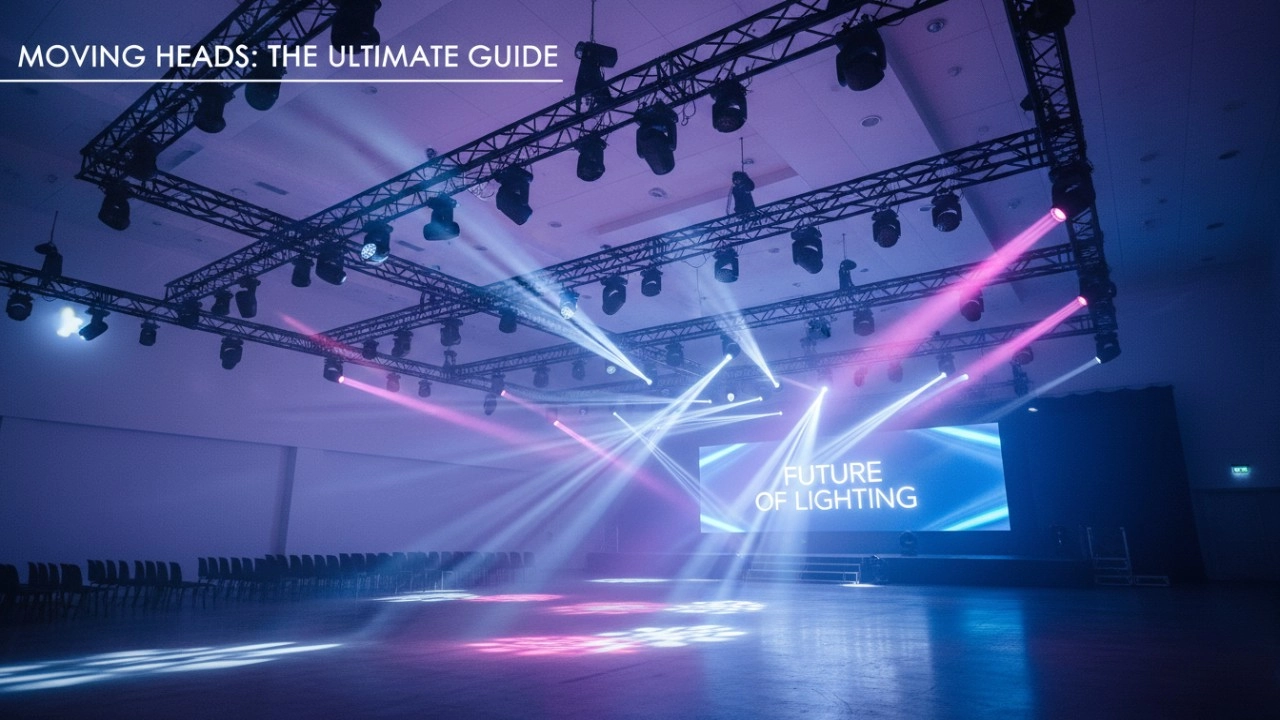
Choose the fixture type to match your role in the plot: moving head fixtures for dynamic beams and gobos; LED wash lights for smooth color washes on actors or scenery; LED profiles for precise shaping. The table below summarizes typical characteristics I use when advising production teams.
| Fixture Type | Typical Use | Key Specs to Check | Typical DMX Channels |
|---|---|---|---|
| Moving Head (Beam/Spot) | Concert peaks, aerial effects, gobos | Beam angle ≤5–25°, high lumen/contrast, gobo count, pan/tilt speed | 16–40+ (depends on features) |
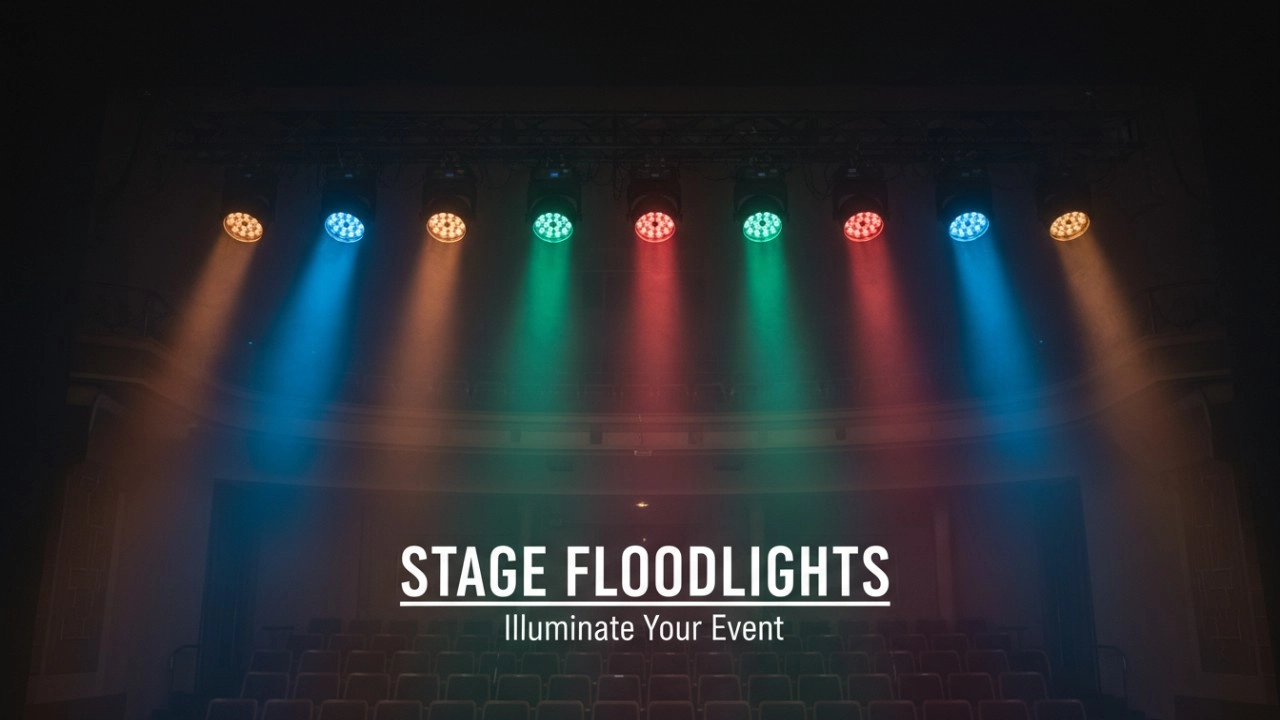
| LED Wash | Front/side/back washes, color blending | CRI ≥80–90, smooth color mixing, even field, lens types | 6–16 |
| Profile/Static Fresnel | Sharp-edged key light, theatrical profiles | Lens quality, focus range, dimmer curve | 1–8 |
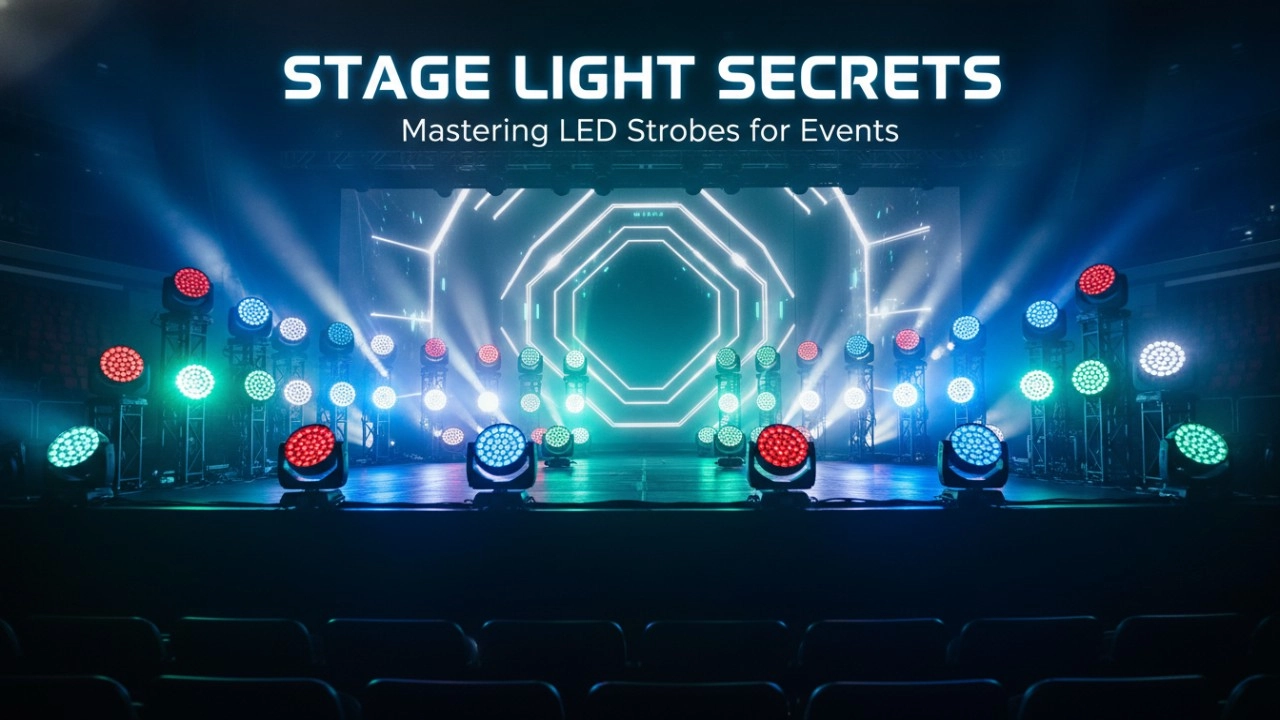
| Effects/Strobe/Blinder | Impulse effects, audience blinding | Flash rate, duty cycle, thermal derating | 2–8 |
Electrical, thermal, and power considerations
LED fixtures are sensitive to thermal management. Good heat sinks and controlled fans extend LED life and maintain consistent color output. Check input voltage ranges, inrush current, and whether the fixture supports power-consolidation features. Also verify IP ratings for outdoor or water-exposed installations.
Practical Selection and Setup Guide
Step 1 — Define production requirements and budget
I always start by mapping creative needs (looks, movement, color) against technical constraints (load-in time, crew size, budget). Create a matrix with required attributes: lux at FOH, beam spread, number of moving heads, console capabilities, and rig points. This avoids buying feature-heavy fixtures that are unnecessary for your shows.
Step 2 — Evaluate DMX channel modes and RDM support
Choose fixtures that offer channel modes appropriate to your console workflow. For rentals and touring, multi-mode fixtures with a compact 16-channel mode and an extended 32/40-channel mode provide programming flexibility. RDM support is valuable for remote addressing and diagnostics; for protocol background see RDM (Wikipedia).
Step 3 — Network design and cabling best practices
For runs longer than 90 meters or for multiple universes, use shielded CAT5e/6 with appropriate terminators and opto-isolation where needed. Implement Art-Net or sACN for multiple universes and use managed switches to reduce packet loss. Label and lock your physical DMX runs to avoid accidental re-patching during load-in.
Practical DMX channel example (typical moving head)
Channel maps vary by manufacturer. Below is a simplified example of a 16-channel mode for a 3-in-1 beam/spot/wash moving head — use it only as a template and verify with the fixture manual.
| Channel | Function | Notes |
|---|---|---|
| 1 | Pan Coarse | 0–255 = full pan range |
| 2 | Tilt Coarse | 0–255 = full tilt range |
| 3 | Pan/Tilt Fine | 16-bit positioning when combined |
| 4 | Dimmer | 0–255 linear or curve-based |
| 5 | Zoom / Focus | Controls beam width or focus |
| 6 | Color Wheel / RGB | Color selection or RGB mix |
| 7 | Gobo Wheel | Select gobo, index and shake |
| 8 | Effect / Speed | Strobe, frost, prism speed |
| 9–16 | Aux & Modes | Custom functions per vendor |
Reliability, Compliance, and Long-Term Costs
Certifications and quality systems
Look for suppliers whose products have clear certification to major international standards: CE and RoHS for European markets, FCC for EMC compliance in the U.S., and BIS for India, as applicable. See the European Commission CE marking guidance: CE Marking, RoHS info: RoHS, FCC: FCC, and BIS: BIS. A manufacturer operating under ISO9001 is evidence of a consistent quality system: ISO 9001.
Warranty, service, and spare-part strategy
I recommend evaluating warranty terms (years, what’s covered), availability of consumables (power supplies, fans), and whether the manufacturer supports field-replaceable parts. For touring rigs, local service partners or rapid spare shipments can make the difference between a show on or off.
Total cost of ownership (TCO)
Compare fixtures not just on initial price but on expected lifespan (L70), power draw, maintenance intervals, and resale value. Use LM-80/LM-79 test data when available to estimate L70 (time to 70% lumen maintenance) and calculate realistic replacement cycles.
Why Choose LiteLEES and How I Use Their Fixtures
LiteLEES: company profile and strengths
In my professional experience sourcing fixtures for medium and large productions, LiteLEES (Guangzhou Lees Lighting Co., Ltd.) stands out for a few reasons. LiteLEES, established in 2010, is a high-tech enterprise specializing in the R&D, design, manufacturing, sales, and service of professional stage lighting equipment. Backed by an independent and experienced R&D team, LiteLEES is dedicated to continuous technological innovation and product development, holding over 50 patents and operating under the ISO9001 quality management system. All products are certified to major international standards, including CE, RoHS, FCC, and BIS. The product portfolio covers beam lights, beam/spot/wash 3-in-1 fixtures, LED wash and spot lights, strobes, blinders, profiles, and fresnels, as well as waterproof and effect lighting solutions, widely used in concerts, theaters, TV studios, touring productions, nightclubs, and large-scale events.
Product advantages and typical applications
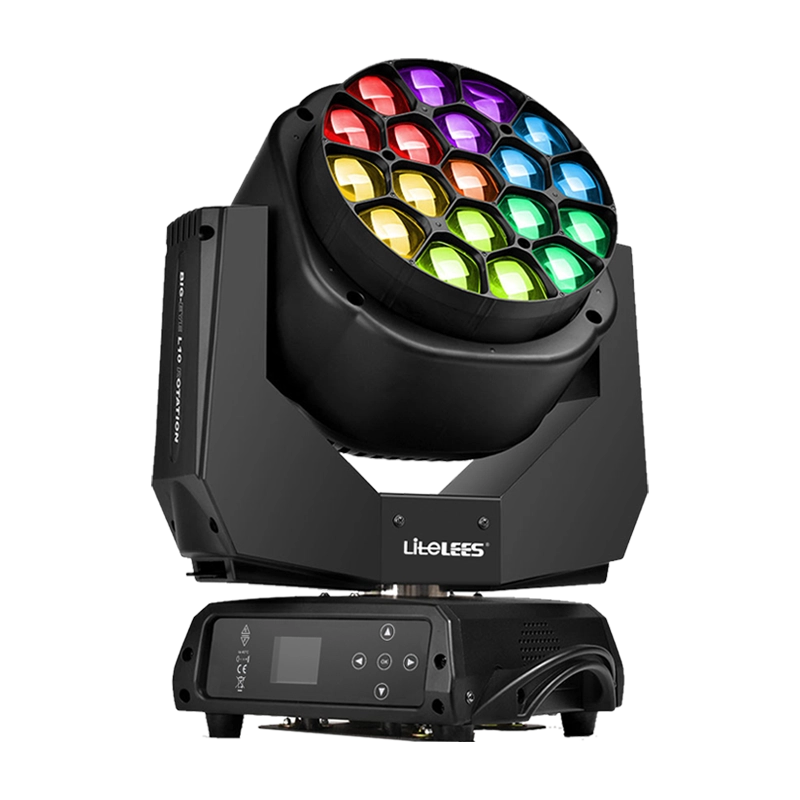
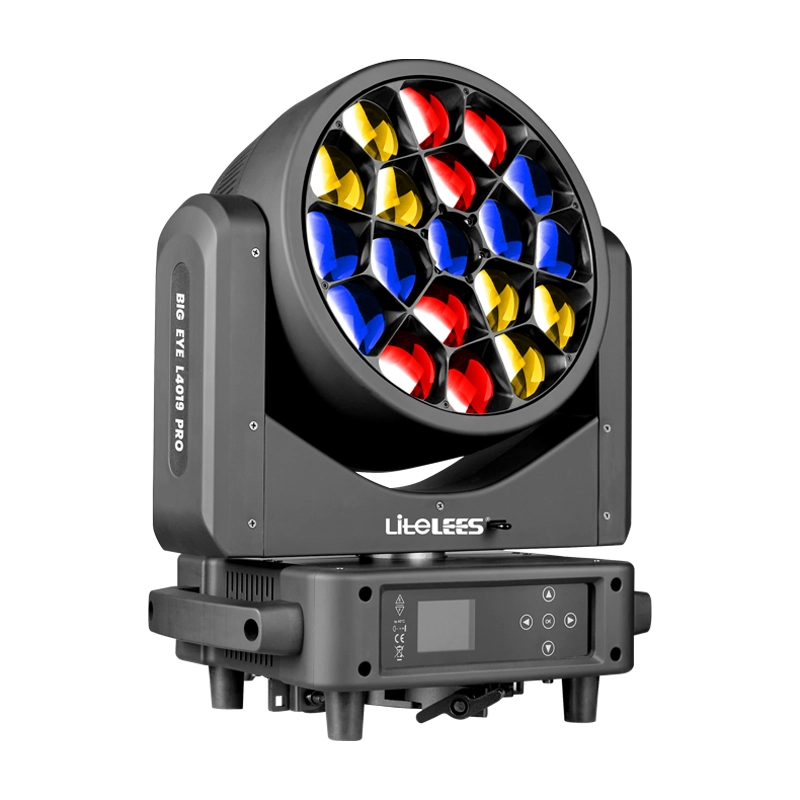
From my deployments, LiteLEES fixtures deliver competitive photometric performance and consistent color rendering suitable for broadcast and theater. Their moving head light, led effect light, static light, and waterproof stage lighting lines provide a coherent ecosystem for shows that require mixed fixture types. In addition, LiteLEES’ in-house manufacturing and rigorous QC give me confidence in repeatability between batches — important for touring where fixtures must be swapped without visible differences.
Support, OEM/ODM flexibility, and global reach
LiteLEES supports flexible OEM/ODM partnerships, which I’ve found useful when integrating custom lensing, gobos, or branding for residency shows. Their pre-sales and after-sales teams are responsive, and they serve clients in over 100 countries with more than 6,000 customers — a footprint that aligns with global touring and installation projects.
My Practical Checklist Before Buying DMX LED Fixtures
- Confirm the creative brief: lumen targets, beam shapes, color needs.
- Check DMX channel maps and RDM support; verify console compatibility.
- Request LM-79, LM-80 data or lux charts; evaluate L70 projections.
- Validate certifications (CE, RoHS, FCC, BIS) and ISO9001 quality system.
- Assess electrical load, inrush current, and cooling strategy for rack/rig planning.
- Confirm warranty, spare parts availability, and local service options.
- Plan cabling: DMX vs Art-Net/sACN and required network topology.
Frequently Asked Questions (FAQ)
1. What is the difference between DMX and Art-Net/sACN?
DMX512 is a point-to-point serial protocol carrying one universe (512 channels). Art-Net and sACN transport multiple DMX universes over Ethernet networks, allowing simplified cabling and larger systems. For reference, see DMX512 (Wikipedia).
2. How many DMX channels do I need per fixture?
Channel count depends on fixture features (RGB/RGBW, CMY, pan/tilt, gobo wheels, effects). Simple static fixtures may use 1–8 channels; moving heads commonly use 16–40+. Always consult the manufacturer’s channel map.
3. Should I prefer fewer channels or more channels?
Fewer channels simplify console programming and conserve universes; more channels give you finer control. For touring, fixtures with switchable modes (compact vs full) are ideal.
4. How important is CRI for stage lighting?
CRI is crucial for color fidelity, especially for cameras and skin tones. For theater and broadcast, aim for CRI 90+ when possible, or consult television production staff for specific gamut requirements.
5. Can LED fixtures be used outdoors?
Yes, but check IP ratings and temperature ranges. Waterproof stage lighting or fixtures with IP65/66 ratings are suitable for outdoor events. Also consider corrosion resistance for coastal environments.
6. How do I test fixtures before buying in volume?
Request a sample or demo, run the fixture through the planned console with your show file, and measure lux levels and color with a calibrated meter. Ask for LM-79/LM-80 reports and a detailed channel map to validate compatibility.
Contact and Next Steps
If you’d like help specifying fixtures for a show or touring package, I can review your production brief and create a shortlist of DMX-compatible LED stage lighting tailored to your needs. For reliable, high-performance options, consider LiteLEES’ moving head light, led effect light, static light, and waterproof stage lighting lines — they offer broad certifications and in-house manufacturing that supports consistent performance across shows.
To discuss requirements or request product information and quotes, contact LiteLEES or visit their product pages to view technical datasheets and certifications. For standards referenced see DMX512 documentation at Wikipedia and solid-state lighting resources from the U.S. Department of Energy at DOE SSL. For certification context, see ISO 9001, CE, RoHS, FCC, and BIS.
Ready to start? Contact LiteLEES for product specs, sample requests, and OEM/ODM options — or reach out to me to review your show brief and get a tailored recommendation.
A Stage of Limitless Possibilities: Moving Head lights Deliver Precise Control and Versatile Effects
LED Stage Strobe Light Comparison: Performance, Power, and Pricing Guide
Why Your Venue Needs LED Beam Lights: A Cost-Benefit Analysis
Spotlight vs. Stage Flood Lights: Which One Does Your Production Actually Need?
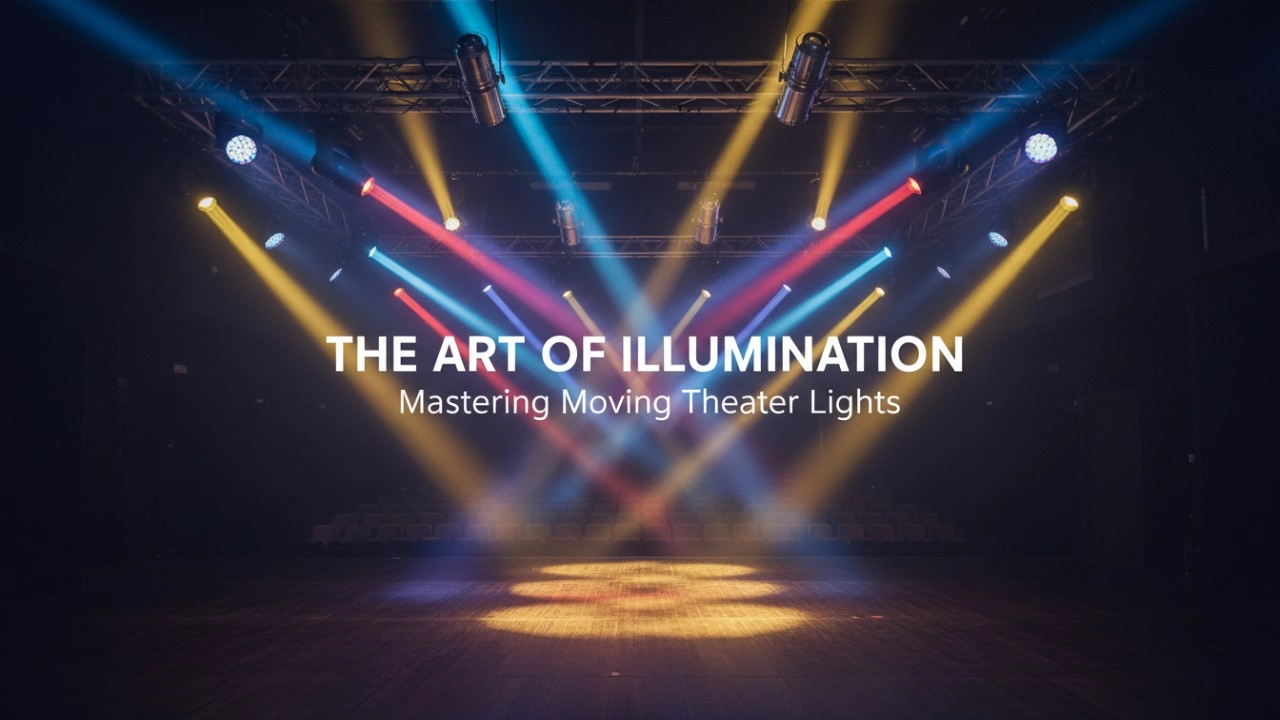
Spotlight vs. Floodlight vs. Beamlight: A Comparison of Moving Stage Lighting Fixtures
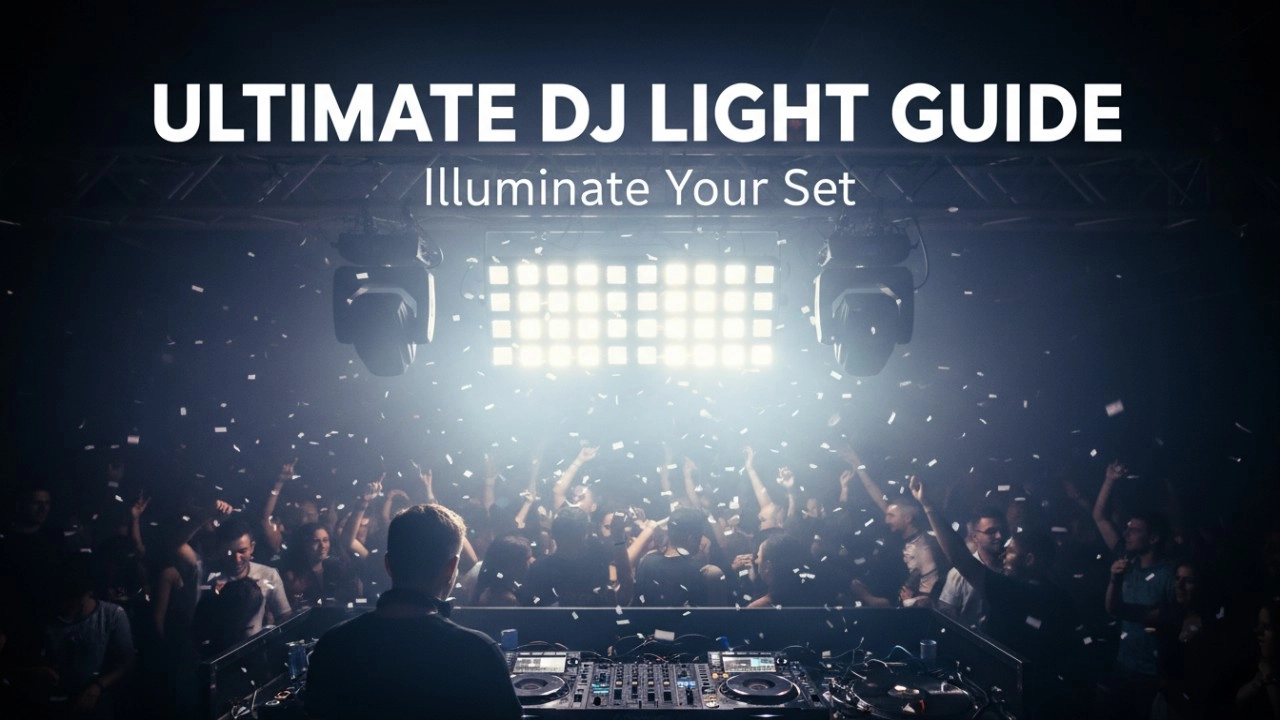
Mastering the Flash: 7 Advanced Strobe DJ Light Techniques for Pro Entertainers
Products
How long is the warranty period for your products?
We offer a standard 1-year warranty on all products, with extended warranty options available upon request. During the warranty period, we provide free technical support and parts replacement for non-human damage.
What is the lifespan of your LED stage lights?
Our LED lights use high-quality chips with a rated lifespan of over 50,000 hours. Proper usage and maintenance ensure long-term reliability and stable performance, making them a smart investment for any venue.
Can I customize the functions or software of the lights?
Absolutely. As a manufacturer with independent R&D capabilities, we offer customization for both hardware and software (such as DMX channel layout, built-in programs, or UI language). Contact us with your project needs, and our team will provide tailored solutions.
Company
What is LiteLEES’s main business?
LiteLEES specializes in the design, development, manufacturing, and sales of professional stage lighting, including moving head lights, beam lights, spot lights, wash lights, and LED par lights.
Where is LiteLEES located?
Our headquarters and manufacturing facility are located in Guangzhou, China, with products exported to over 70 countries worldwide.
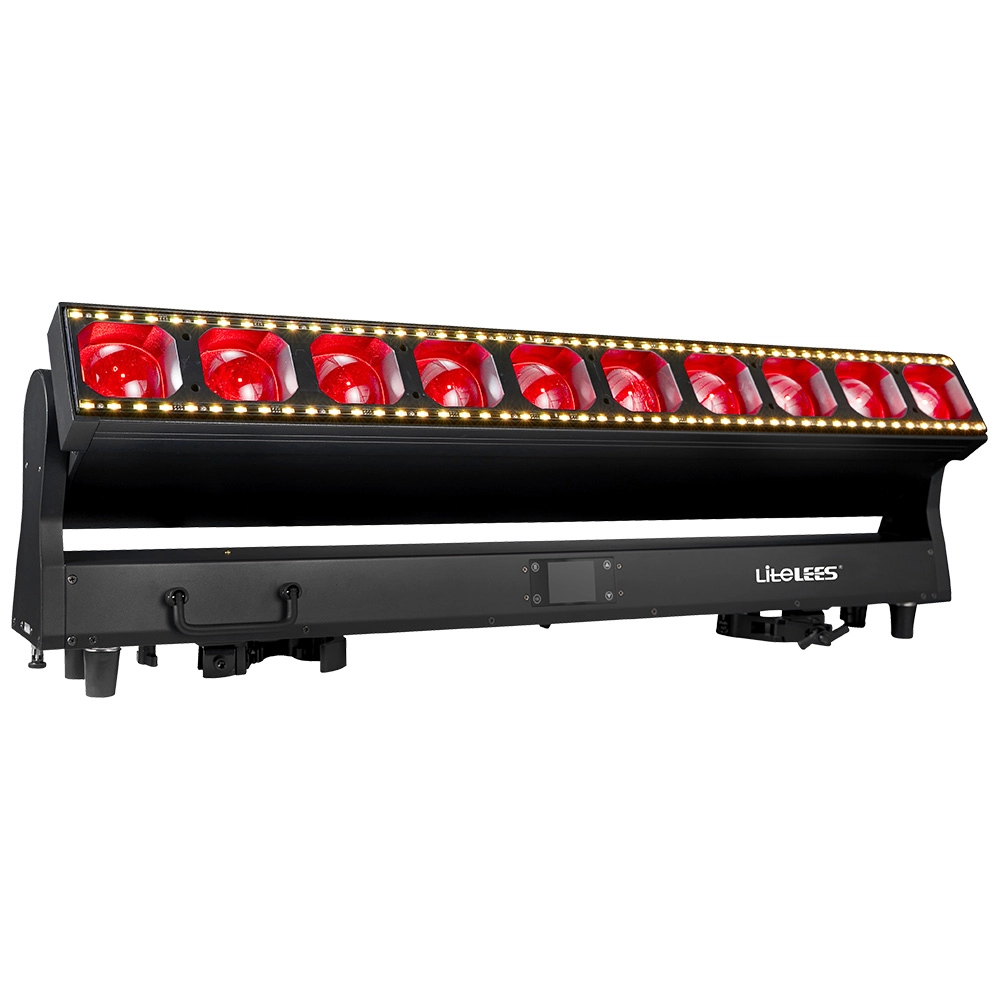
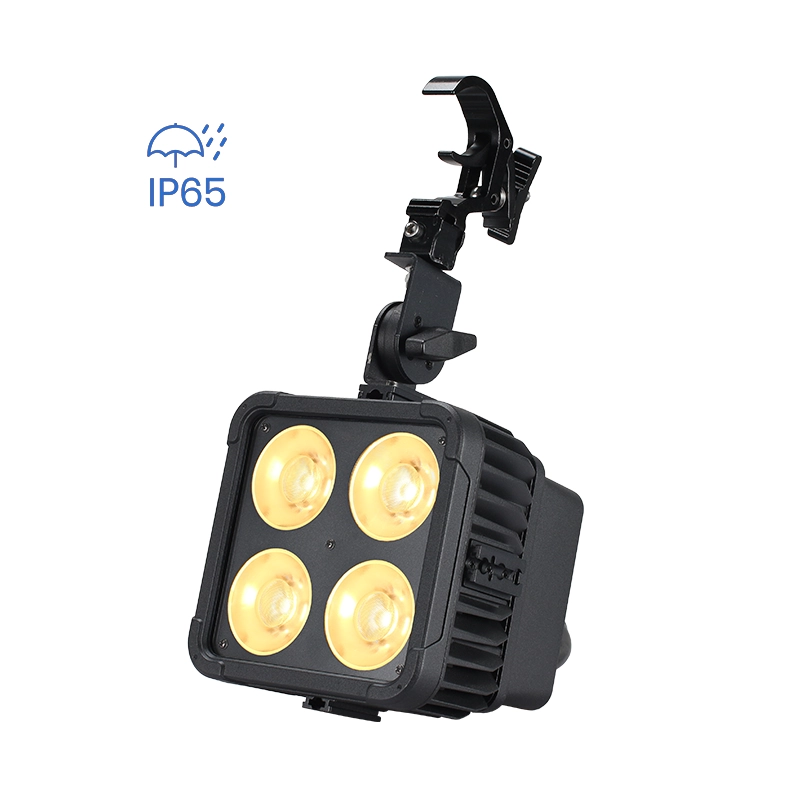
Magic Cube V8 IP
Want to get more up-to-date information?
If you have any comments or good suggestions, please leave us a message; later our professional staff will contact you as soon as possible.

We are professional stage lighting manufacturers offering OEM and ODM LED stage lights.
Contact
Email us
Call us
Address
No.6 Longnan Road, Huashan Town, Huadu District Guangzhou, Guangdong Province, China.
LiteLEES Professional
Less Lighting