
LED stage lighting vs moving heads: which to buy for tours?
- 1) For a 1,000-seat theatre tour needing consistent front wash and key-profile coverage each show, how do I size LED wash lights vs moving head spots — and how do I estimate lux on stage without photometric software?
- 2) On multi-week tours with daily load-ins, what are the most common LED stage light and moving head failure modes — and which spare parts and tools should I carry?
- 3) Can battery-powered LED movers replace mains-powered moving heads on small, remote tours — what are realistic runtimes and control limitations?
- 4) For fast-change theatrical scenes requiring tight color-mixing and gobo/textures, should I prioritize high-CRI LED washes or moving head spots with CMY/CTO and gobo wheels?
- 5) What DMX/network topology, redundancy and addressing strategy minimizes dropouts and latency on large touring rigs using LED pixel-mapping and moving heads?
- 6) Are IP65-rated LED stage lights necessary for outdoor festival tours, and how do IP ratings affect cooling strategy, lumen depreciation and manufacturer warranties?
- Concluding summary
LED Stage Lighting vs Moving Heads: Which to Buy for Tours?
Touring lighting decisions must balance reliability, transport logistics, photometrics and control. This guide answers six specific, pain-point questions beginners and small production techs often search for but rarely find fully covered online. It embeds practical touring advice about LED par cans, LED wash lights, moving head spot and wash fixtures, DMX512/Art-Net topology, pixel-mapping, IP ratings and maintenance strategy.
1) For a 1,000-seat theatre tour needing consistent front wash and key-profile coverage each show, how do I size LED wash lights vs moving head spots — and how do I estimate lux on stage without photometric software?
Why this matters: Buyers often receive fixture wattages and marketing lumen numbers but don’t know how many fixtures to buy to reach required lux for front light, key and specials. Touring budgets and truck space are finite — get sizing right up front.
Practical sizing steps (non-software method) — use these validated photometric principles and double-check with IES files when possible:
- Decide target illuminance. Typical targets: front wash for musical theatre 300–750 lux on performer face (depending on broadcast needs); key/profile for solos 750–1500 lux. Use the higher end for camera/broadcast.
- Use realistic fixture lumen assumptions. Modern LED stage fixtures typically deliver 80–140 lm/W (fixture dependent). A 300W LED wash may therefore produce ~24,000–42,000 lumens, but usable output depends on optics, beam angle and CRI.
- Estimate central lux from lumens and beam angle. A quick center-beam candela approximation: beam distribution concentrates lumens into a solid angle. For a rough field estimate: center lux ≈ (total lumens × beam efficiency) / beam area at distance. Beam area at distance d (meters) ≈ π × (d × tan(θ/2))^2, where θ is the beam angle in radians. Use a beam efficiency of 60–80% (fixtures lose some light in optics and diffusion). Example: a 30,000 lm fixture with a 40° beam at 8m: beam radius = 8 × tan(20°) ≈ 2.9m, beam area ≈ 26.4 m²; center-area lux ~ (30,000 × 0.7) / 26.4 ≈ 795 lux (center). This gives a realistic order-of-magnitude check before doing IES-based layouts.
- Decide coverage and overlap. Washes should overlap to create even coverage. Two fixtures with overlapping 40° beams can give smooth coverage across a 10–12m stage width; moving heads with zoom (4°–60°) offer more flexibility but cost more.
- Translate to fixture count. If target front wash is 500 lux across stage and one 300W wash yields ~800 lux center at your working distance, plan for 2–4 fixtures across the front with 50–75% overlap to even out the field, depending on throw distance and house geometry. For key/profile, use moving head spots (narrower beams, gobos) placed for front/side angles.
Key guidance:
- Always get IES photometric files from the manufacturer and check them in a lighting CAD (Capture, WYSIWYG) for final layouts — the rough math above is only for planning and truck/weight decisions.
- Prioritize high lumen output per watt and good optical efficiency over raw wattage. Check candela and lux charts; lumen ratings alone can mislead unless paired with beam angle data.
- Use LED wash lights (LED par cans or LED IP-rated washes) for broad, even coverage and moving head spots for specials, key lighting and gobo work. Combining both reduces the number of expensive movers required while delivering flexibility.
2) On multi-week tours with daily load-ins, what are the most common LED stage light and moving head failure modes — and which spare parts and tools should I carry?
Why this matters: A single failed mover or wash can cripple a show. Touring environments cause specific wear patterns; being prepared with the right spares and tools prevents show cancellations.
Common failure modes and mitigation:
- Power connectors and cables: powerCONs, IECs and multicore tails take abuse. Spares: 4–6 powerCON cables, spare multicore tails, and a stock of locking AC plugs. Carry a portable power-strip rack and label every cable.
- Fans and thermal management: Most LED fixtures use forced-air cooling. Fans are the #1 mechanical failure on tours (dust, salt, humidity). Spares: 2–4 manufacturer-specific fan modules and a can of electronics cleaner. Where possible, choose passive-cooled fixtures for dusty/outdoor routes or fixtures with removable filters.
- Control electronics: DMX/Network ports and PCBs may fail after vibration. Spares: at least one spare fixture of the same model for critical positions and a small stock of commonly failing control PCBs if available from the manufacturer.
- Optics and glass: cracked lenses, loose gobos and broken gobos on movers. Spares: gobo sets, spare gobos, spare lens assemblies or a backup moving head for front-of-house special positions.
- LED engine modules: LEDs age but rarely die catastrophically. For long tours, ask the manufacturer about modular LED arrays and the availability of replacement LED boards; carry at least one LED module for the critical fixture if the design allows field replacement.
- Pan/tilt gear and encoders: mechanical backlash and encoder failure happen with heavy use. Spares: a spare motor/encoder assembly and tools to reindex (some manufacturers recommend RDM-based encoder rehome). Maintain a simple rigging skid to protect heads in transit.
Recommended touring tool kit:
- Multimeter, DB25/DMX terminator, spare XLR and RJ45 DMX leads, screwdriver set, zip ties, Duct tape, spare shackles/clamps, a portable UPS (for control desks), and a laptop with manufacturer service/software tools installed.
- Maintain a clear spare inventory list and a contact for expedited manufacturer spares in each territory. For international tours, pre-ship critical spares to key hubs to avoid customs delays.
3) Can battery-powered LED movers replace mains-powered moving heads on small, remote tours — what are realistic runtimes and control limitations?
Why this matters: Battery fixtures promise cable-free setups, but buyers need realistic runtime, brightness and control expectations — especially for long sets or broadcasts.
Current reality and trade-offs:
- Runtimes: Battery LED moving heads are available, but typical runtimes at full output are commonly 1.5–4 hours depending on battery capacity and fixture power draw. Many vendors include power-saving modes that extend runtime at reduced brightness. For full-intensity multi-hour headline sets or multiple shows per day, batteries alone are often insufficient without swapping batteries or intermittent mains charging.
- Brightness: Battery heads are constrained by battery size and thermal limits. They typically produce less continuous lumen output than an equivalent mains-powered fixture of the same physical size. For front-of-house key work and broadcast, mains fixtures often still outperform battery units in usable lux.
- Control limitations: Battery fixtures usually support full DMX512/RDM over wireless protocols (sACN/Art-Net via Wi-Fi or proprietary wireless DMX). Wireless adds latency and potential dropouts; always test in venue RF conditions. Use a hybrid approach: battery fixtures for quick pop-up sites and mains movers for critical broadcast positions.
- Charging and logistics: Plan battery charging cycles and bring spare battery packs. Batteries must be transported under IATA rules for air freight (lithium-ion restrictions) — factor in extra shipping complexity and cost.
Recommendation: For small remote tours where cable runs are prohibitive and shows are short, battery movers can be a reliable choice. For multi-hour headline sets, broadcast requirements, or no-room-for-error tours, use mains-powered moving heads with backup fixtures and routed powerCON circuits.
4) For fast-change theatrical scenes requiring tight color-mixing and gobo/textures, should I prioritize high-CRI LED washes or moving head spots with CMY/CTO and gobo wheels?
Why this matters: Productions often need both accurate skin-tone rendering and quick on-stage transitions. The choice affects fixture types, number of channels, and patching strategy.
Decision-making framework:
- Skin tones and CRI: High-CRI or TLCI-optimized LED wash lights (CRI/TLCI 90+) are essential for flattering face rendering and camera work. For front wash and cyc, specify LED wash fixtures with COB or multi-channel RGBW/RGBA engines designed for high CRI rather than cheap RGB pars with CRI 60–75.
- Color mixing and CTO: For precise color temperature control and subtle skin-tone corrections, moving head spots or profiles with CMY (or CMY + CTO) systems provide continuous color mixing and clean spectral output. They also offer narrow-beam gobo projection and iris/zoom control for tight specials.
- Fast changes: If you need rapid, repeated scene changes, prioritize fixtures with reliable preheat-free LEDs and fast cooling. Use movers with fast pan/tilt motors and internal presets for recall. Static LED wash fixtures with zoom (LED wash with motorized zoom) offer faster physical reliability (no moving parts besides the zoom) compared to heavy pan/tilt units.
- Hybrid approach: Use high-CRI LED wash fixtures for most coverage and add a limited number of moving head spots for hard-edge gobos, aerial specials and tight profiles. This minimizes moving head count while delivering the necessary texture and gobo work.
Practical tip: Test the exact fixtures in-situ with your director and DOP. Bring a color-calibrated camera or monitor and evaluate TLCI/CRI charts, gobo detail and focus falloff before committing to a purchase.
5) What DMX/network topology, redundancy and addressing strategy minimizes dropouts and latency on large touring rigs using LED pixel-mapping and moving heads?
Why this matters: Touring rigs increasingly use pixel-mapping and Art-Net/sACN; poor network design causes flicker, dropouts and long debugging sessions. Beginners need clear, implementable topology guidance.
Recommended touring network design:
- Prefer sACN/Art-Net over long wired DMX runs for pixel-mapped LED strips and many movers. Use dedicated lighting network switches (managed switches that support IGMP snooping to limit multicast traffic) and separate lighting/network VLANs to isolate show traffic from FOH/backstage traffic.
- Topology rules: Networked fixtures (Ethernet/IP) should be daisy-chained with managed switches per rig section; avoid single-switch fanouts without redundant paths. Use ring or link-redundant topologies when supported (RDM over IP and devices that support redundant streams). For critical FOH devices, plan dual-network interfaces or a redundant Art-Net/sACN sender (primary + backup) with automatic failover.
- DMX over copper: For traditional DMX512 runs, keep cable runs under recommended lengths (max ~1200m with proper cable but in practice much shorter to avoid noise), use correct termination, and supplement with fiber conversion where long distances and noisy electrical environments exist.
- Addressing and universes: Keep consistent addressing templates and document everything in a digital version-controlled file (CSV or lighting CAD). Use universes to separate pixel-mapped LED strips from movers so large multi-LED updates don’t flood movers’ DMX channels. For pixel-mapping rigs, a single 10,000-pixel universe via Art-Net/sACN requires careful bandwidth planning; prefer multi-universe segmentation and RDM-based auto-address where available.
- Latency and buffer: Keep console and processor firmware updated. For high-pixel-count work, use hardware pixel processors or media servers rather than routing all pixels through a single console. Monitor packet loss and enable QoS on your managed switches for lighting protocols.
Practical backups and troubleshooting items to bring on tour:
- Portable managed switch with IGMP snooping; spare fiber transceivers; spare DMX/RDM nodes; laptop with network monitoring tools; and an offline copy of the addressing plan and fixture profiles.
- Practice failover scenarios during load-in and have a documented contingency patch (e.g., reduced pixel-update rate or simplified scene) to keep the show running while you troubleshoot.
6) Are IP65-rated LED stage lights necessary for outdoor festival tours, and how do IP ratings affect cooling strategy, lumen depreciation and manufacturer warranties?
Why this matters: Many buyers think IP rating only matters for rain protection. In reality, IP-rated designs change cooling, serviceability and lifetime performance.
What IP ratings mean for touring lights:
- IP protection basics: IP65 (dust-tight, water jets) and higher (IP66/67) protect against ingress but require sealed housings. Sealed fixtures avoid water or dust damage during outdoor festivals, especially in coastal or dusty conditions.
- Cooling trade-offs: Sealed IP65 fixtures typically use convection cooling or sealed heat sinks and may include passive cooling or sealed fans. Passive-cooled IP65 designs can be quieter and have fewer mechanical failures (no external fan intake), but convection limits peak continuous output because heat cannot be evacuated as aggressively as in ventilated fixtures. This can lead to lower declared lumen output or thermal-mode derating during prolonged full-power operation.
- Lumen depreciation and lumen maintenance: Outdoor-rated fixtures may run hotter for a given output due to sealed designs. Manufacturers often publish L70 or L90 lifetime data (typical LED lifetimes are 50,000–100,000 hours depending on drive current and thermal design). For IP65 fixtures expect more conservative thermal derating curves in hot climates — check the datasheet for ambient temperature derating graphs.
- Serviceability and warranty: IP65 fixtures are harder to service in the field (sealed screws, glued lenses). Verify warranty terms and the availability of factory modules for LED engine replacement. For tours, prefer IP-rated fixtures with modular service-friendly designs (replaceable sealed modules) and clear manufacturer service centers in tour territories.
Recommendation: Use IP65+ fixtures for outdoor festival tours where exposure to rain, salt spray or dust is likely. For covered outdoor stages or short-run appearances where weather will be dry, choose ventilated fixtures if you need higher continuous output and easier field service. Always check manufacturer thermal derating curves and warranty service network before purchase.
Concluding summary
Choosing between LED stage lighting and moving heads for tours is a systems decision. LED wash lights and LED par cans deliver energy-efficient, high-CRI area coverage with low maintenance and are ideal for consistent front wash and cyc work. Moving heads (spot and wash) add flexibility: gobos, zoom, CMY color mixing and dynamic movement, but at higher cost and with mechanical service needs. For most touring rigs a hybrid strategy — high-CRI LED washes for coverage plus a carefully chosen number of reliable moving head spots for specials — yields the best balance of reliability, truck space and creative capability. Prioritize fixtures with available IES files, robust service support networks, modular spare parts and clear thermal/IP specifications to minimize downtime during multi-week tours.
If you’d like a bespoke equipment list, photometric layout or a quote for tour-ready LED stage lighting and moving heads, contact us for a quote — www.litelees.com or litelees@litelees.com.
Products
Are your lights suitable for large-scale events and outdoor use?
Yes. Our professional stage lights—especially the Beam, BSW 3-in-1, and LED Par Series—are engineered with high-output brightness, wide beam angles, and robust housing. Some models come with IP-rated protection, making them suitable for outdoor applications like concerts, festivals, and sports events.
Can I customize the functions or software of the lights?
Absolutely. As a manufacturer with independent R&D capabilities, we offer customization for both hardware and software (such as DMX channel layout, built-in programs, or UI language). Contact us with your project needs, and our team will provide tailored solutions.
Do your lights support DMX512 and other control protocols?
Yes. All LiteLEES stage lights are fully compatible with DMX512. Many models also support RDM, Art-Net, and wireless DMX (optional), ensuring seamless integration with modern lighting control systems.
Company
Where is LiteLEES located?
Our headquarters and manufacturing facility are located in Guangzhou, China, with products exported to over 70 countries worldwide.
Do you have your own factory?
Yes. We own a sheet metal factory and a complete in-house production line—from PCB to final assembly—ensuring strict quality control and fast delivery.
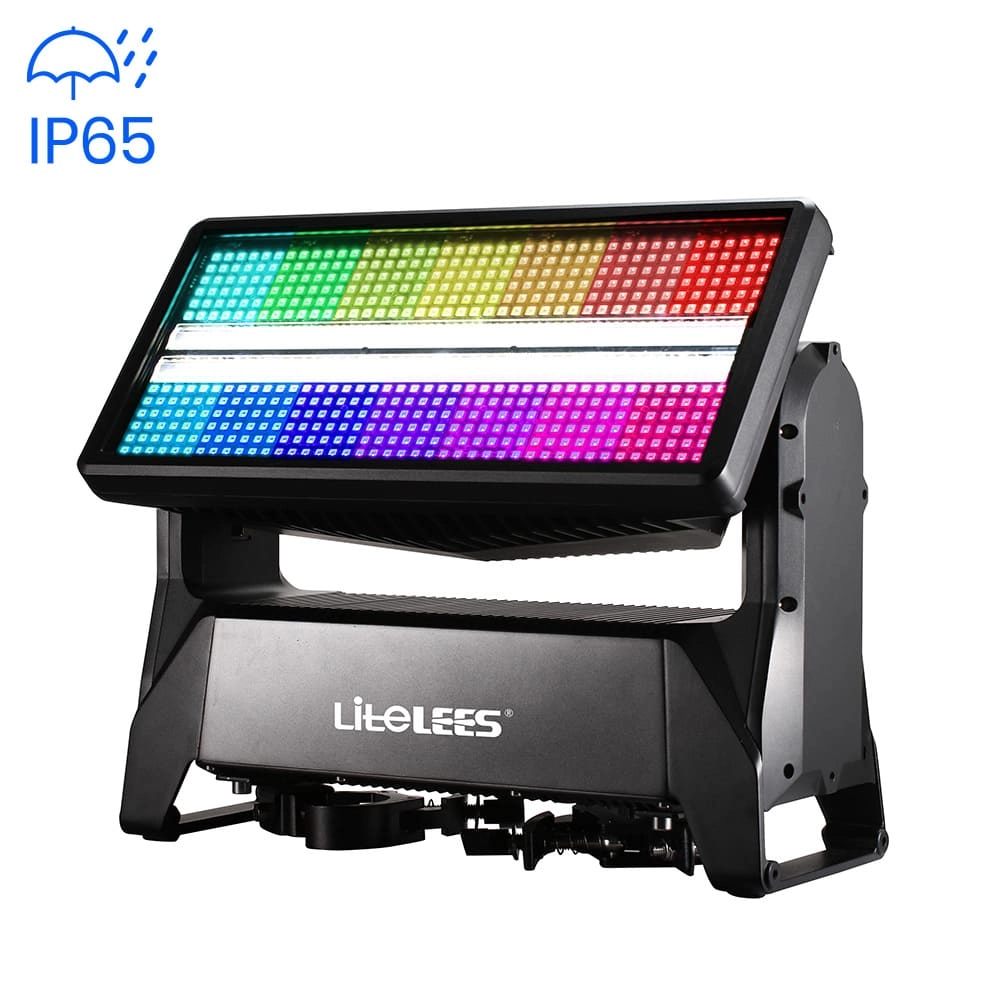
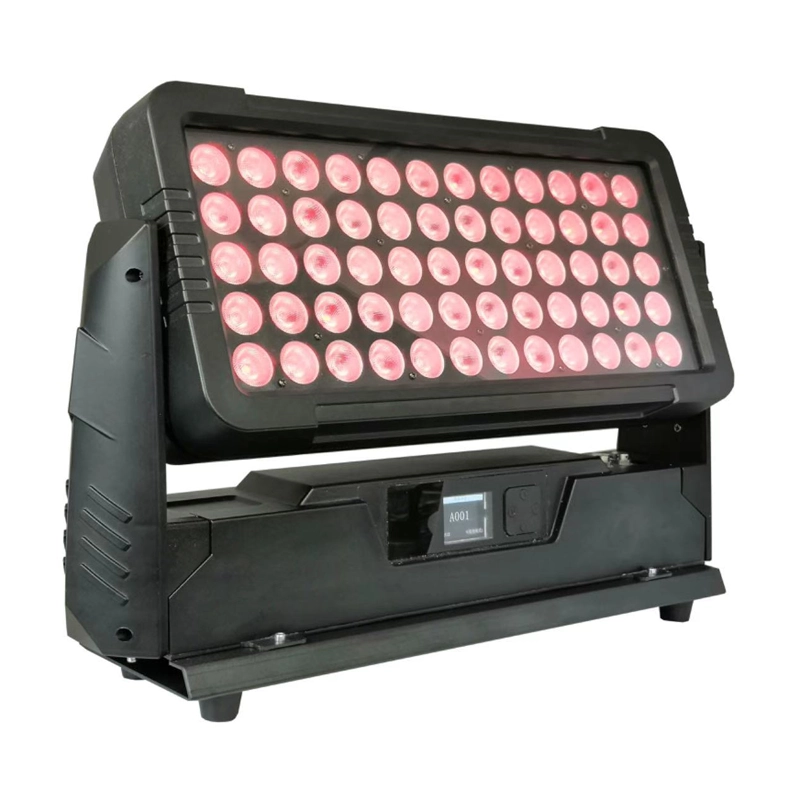
Stormy STRIKE M IP
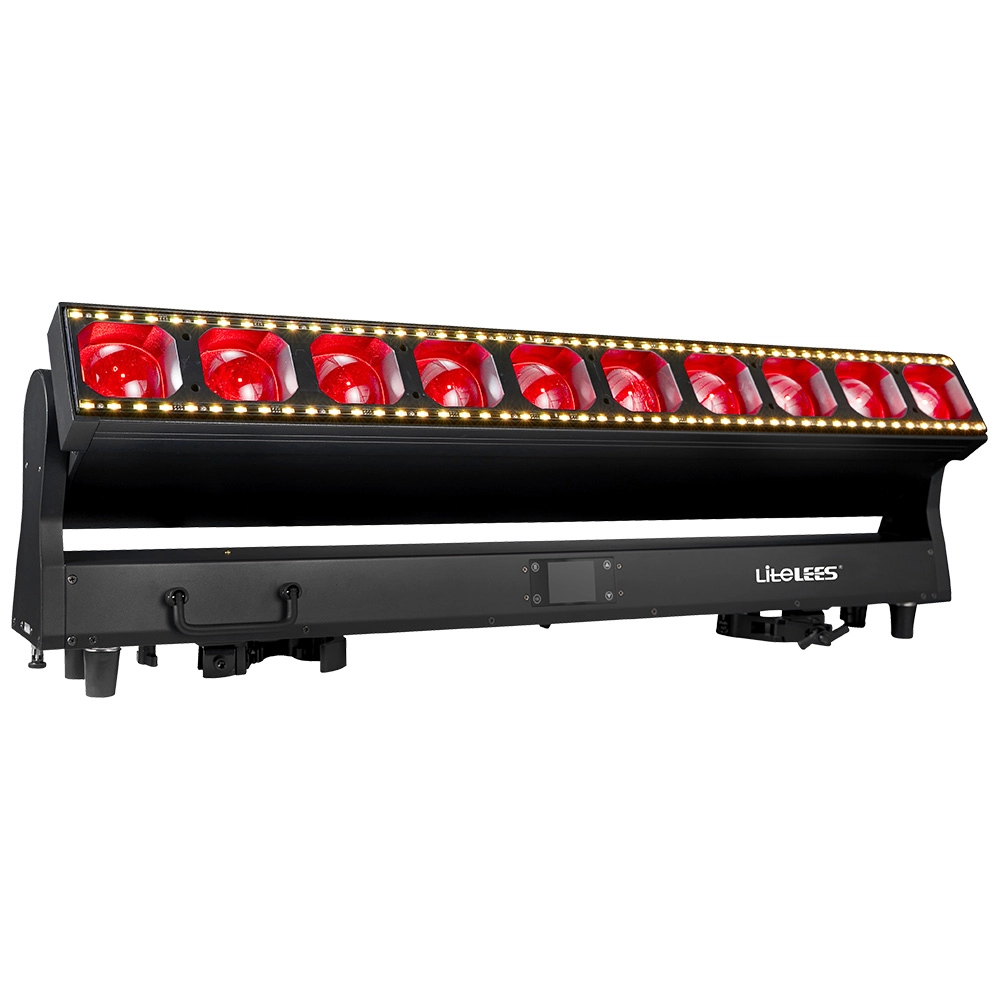
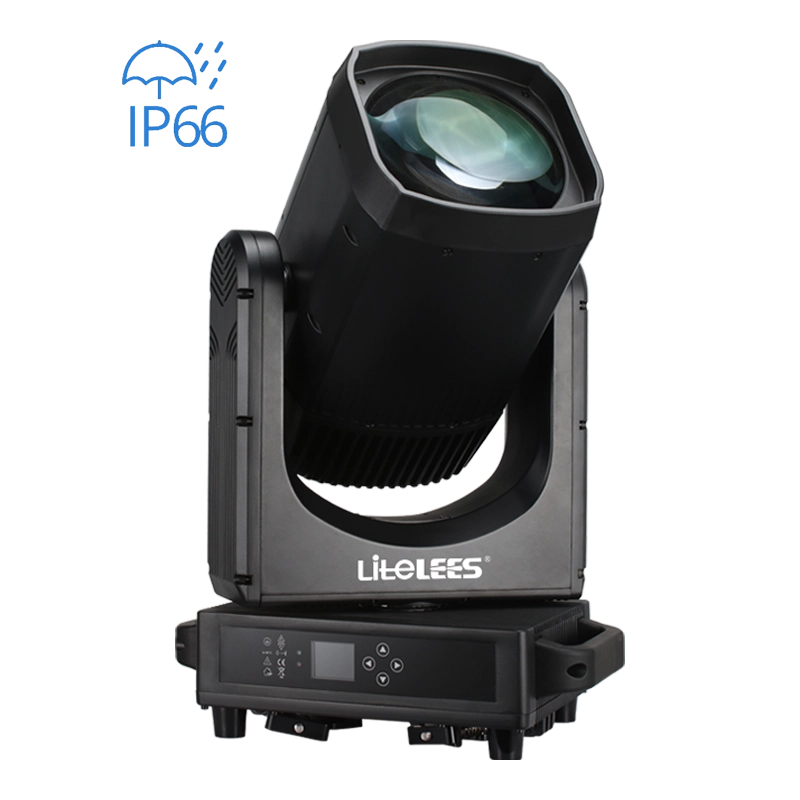
LiteLEES LUMIX BEAM 420 IP
Want to get more up-to-date news?
If you have any comments or good suggestions, please leave us a message; later our professional staff will contact you as soon as possible.

We are professional stage lighting manufacturers offering OEM and ODM LED stage lights.
Contact
Email us
Call us
Address
No.6 Longnan Road, Huashan Town, Huadu District Guangzhou, Guangdong Province, China.
LiteLEES Professional
Less Lighting